03-05-2026 10:57
 Castillo Joseba
Me mandan el material seco de Galicia (España) re
02-05-2026 12:42
Alain BRISSARDBonjour à tousJeuidi 30 avril dernier on m'a remi
02-05-2026 13:06
Pauline. PennaBonjour Please can someone help me with this id
01-05-2026 22:45
 Thierry Blondelle
Bonjour à tous, Une récolte sur bouse séchée d
28-04-2026 20:07
 Lothar Krieglsteiner
... on twig in the air at standing Ceratonia siliq
14-04-2026 05:32
Ethan CrensonHi all, A few weeks back a friend pointed out som
28-04-2026 20:33
Vitus SchäfftleinHello, I found Trochila ilicina on Ilex aquifoliu
30-04-2026 10:28
Rot BojanHello, by appearance I would say that I am dealing
 Buenos días
Este Coprotus sobre heces de conejo, que en un primer momento con micro rápida clasifiqué como C. aurora, ahora al ponerme a escribir parece que también se acerca mucho a C. ochraceus y no soy capaz de decidirme por una especie o la otra.
Esta es la descripción:
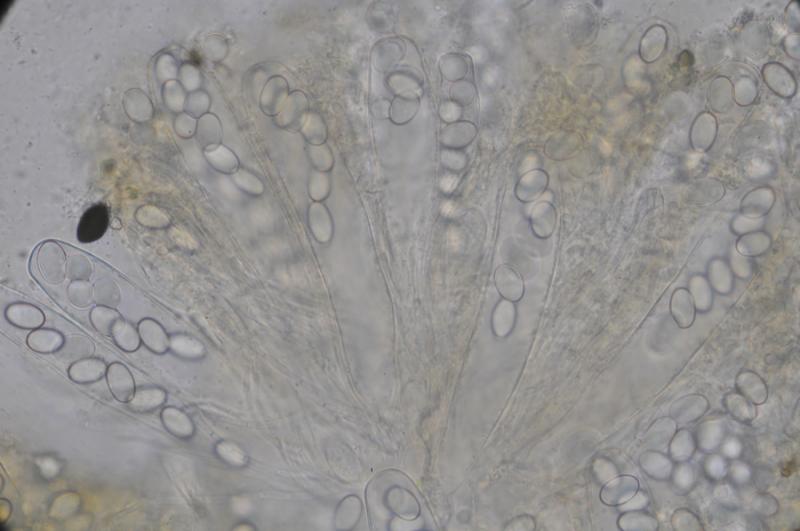
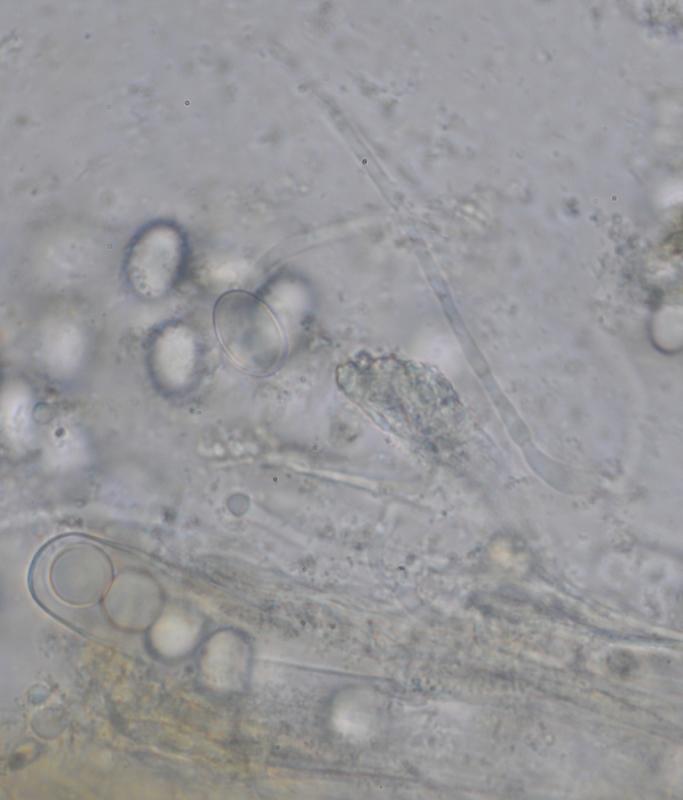
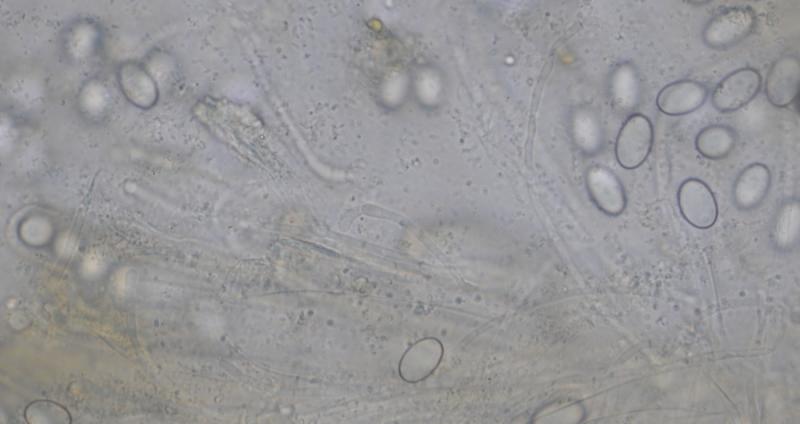
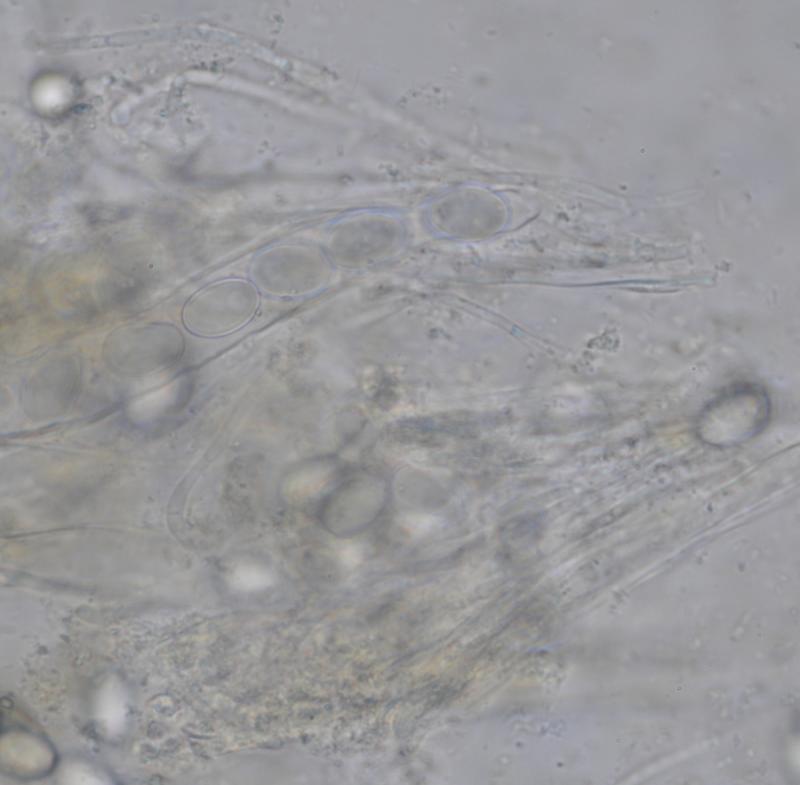
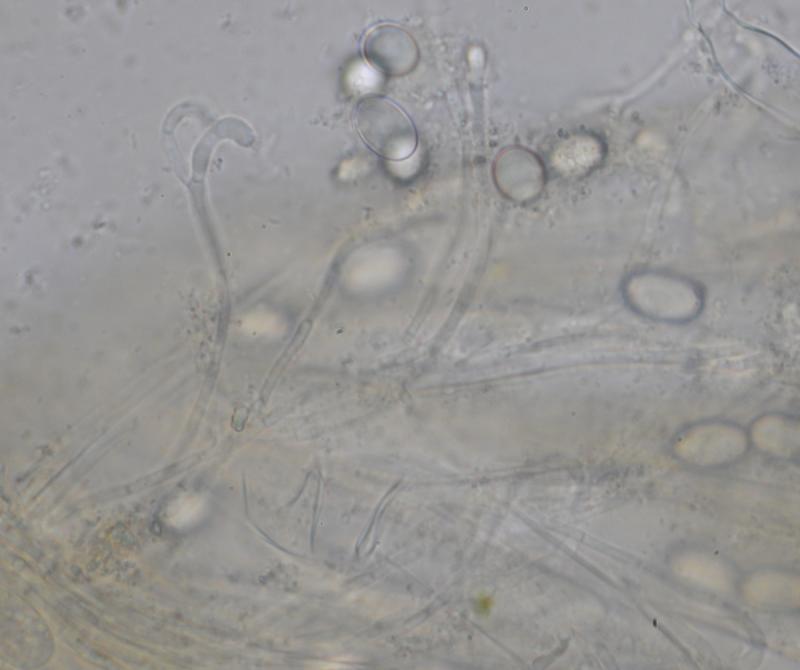
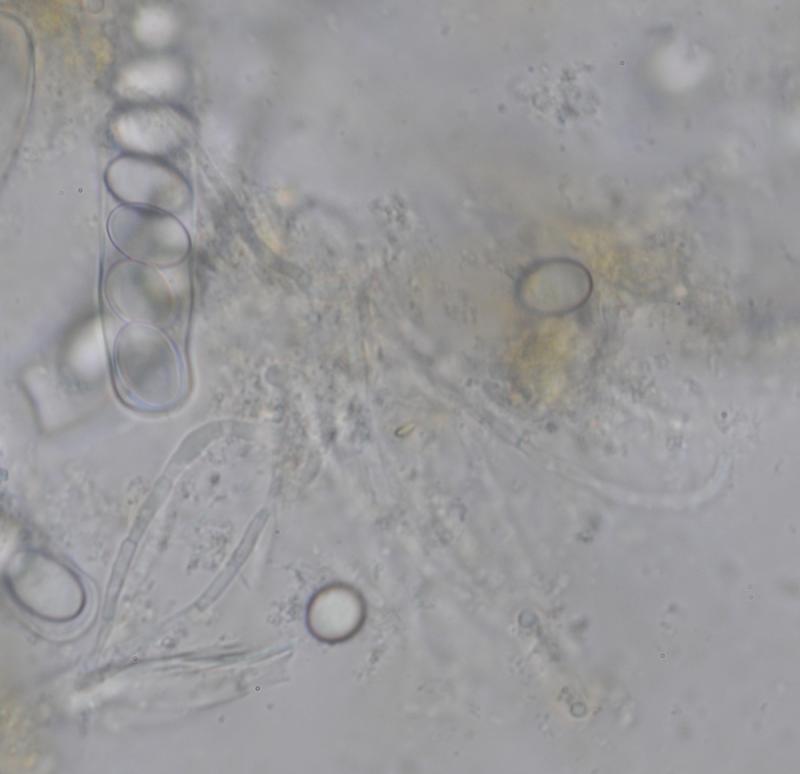
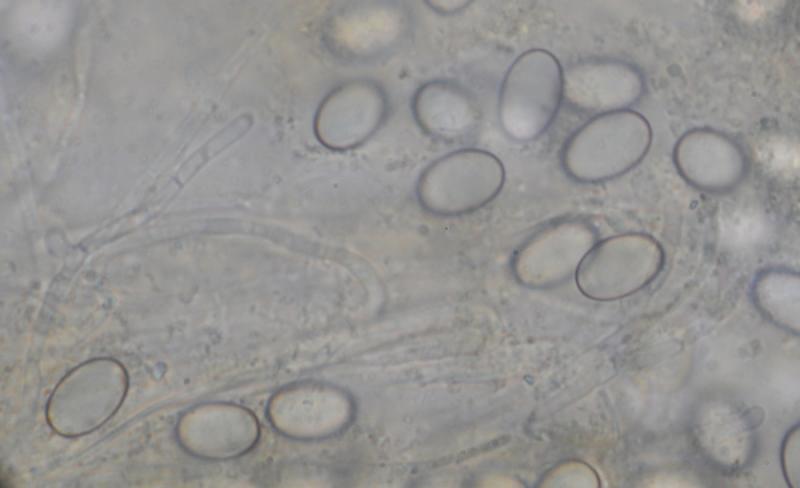
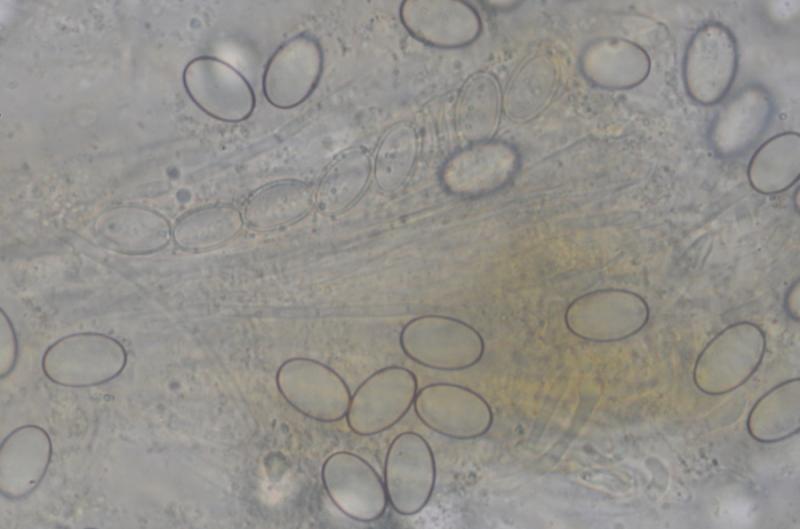
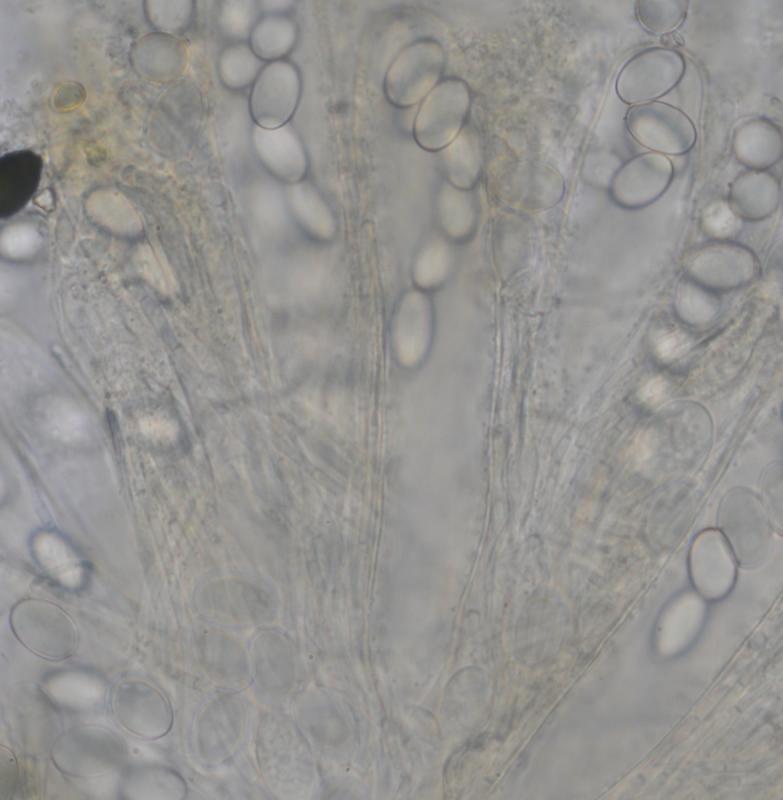
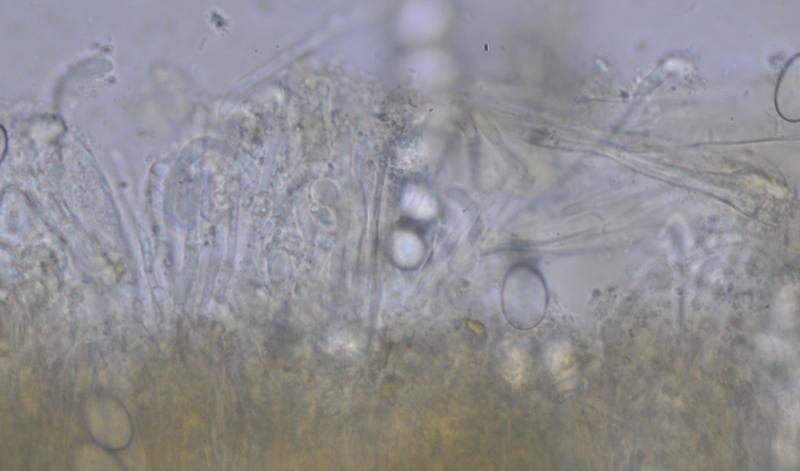
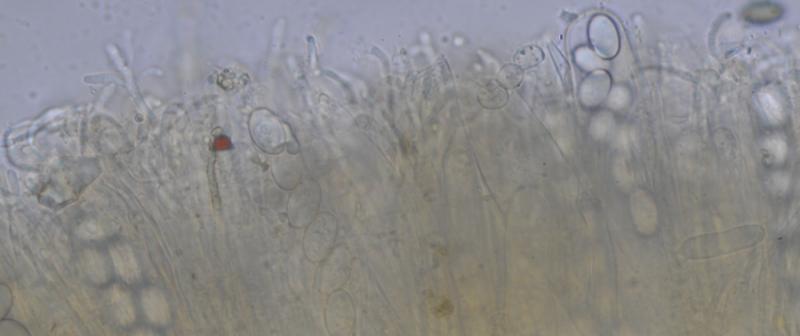
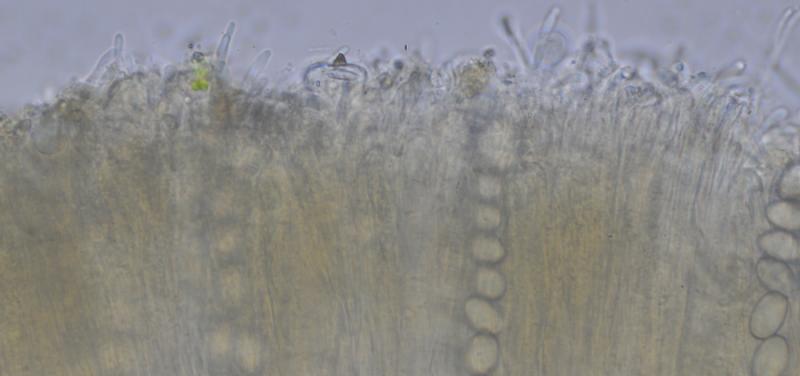
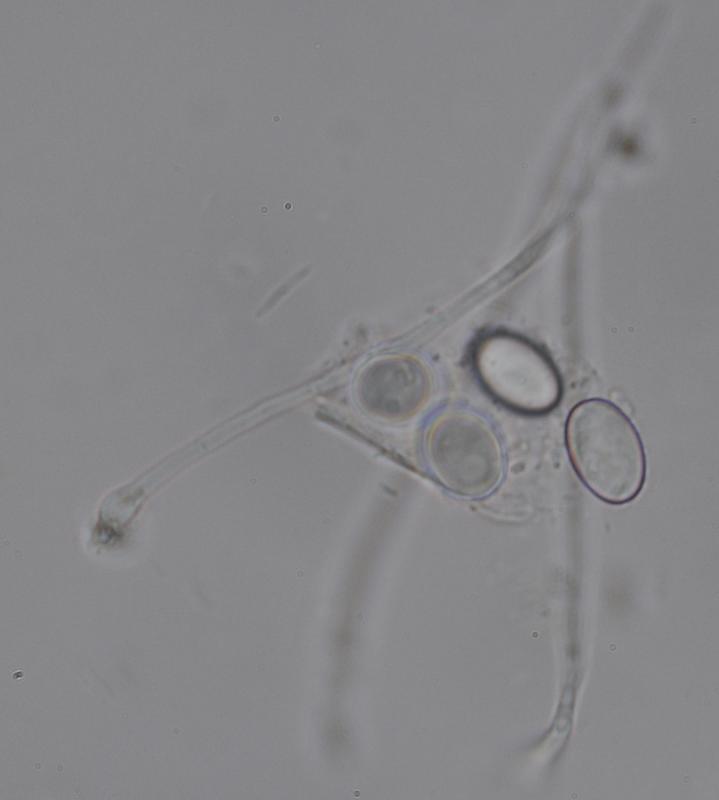
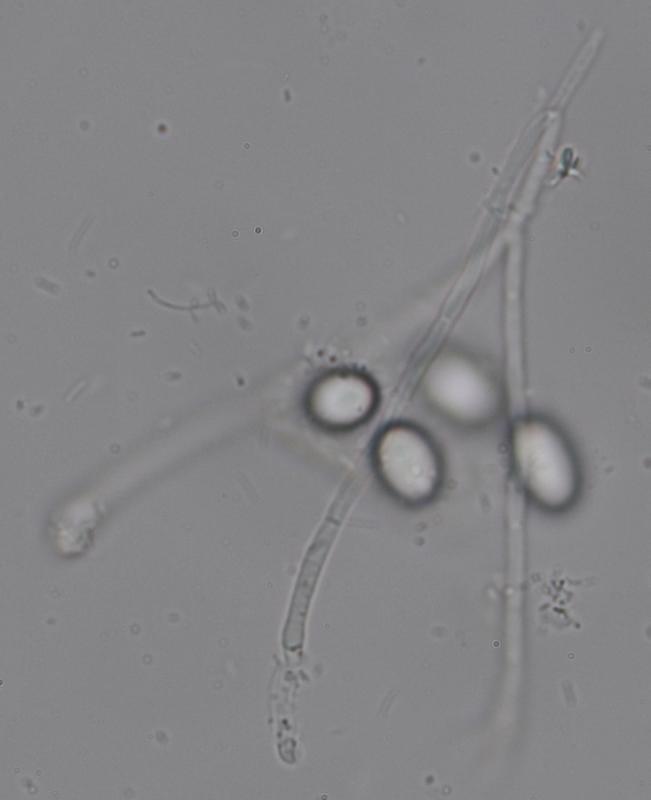
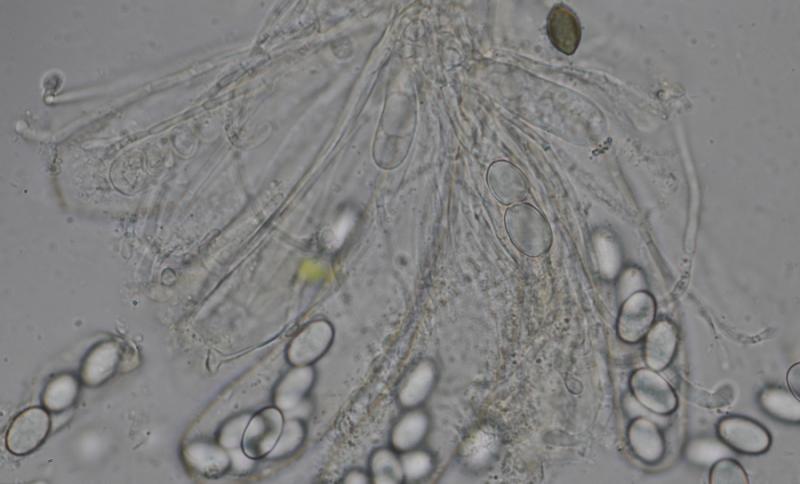
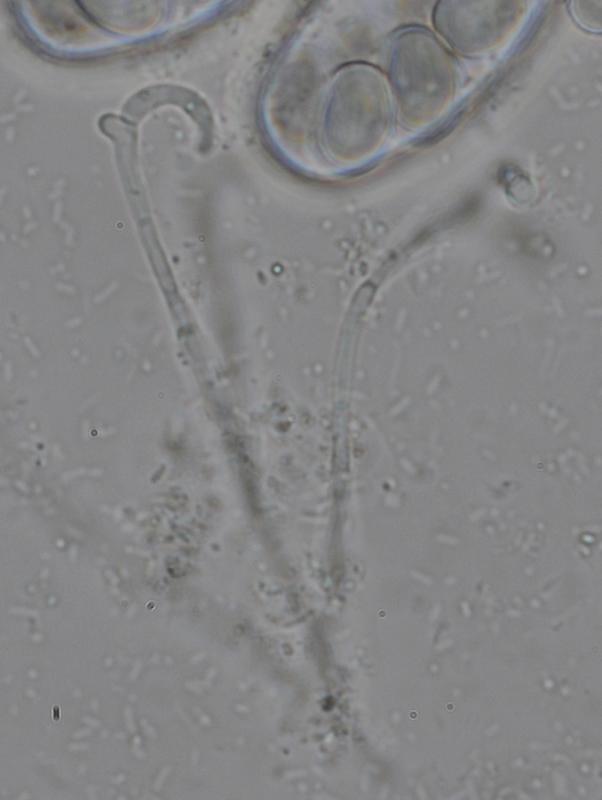
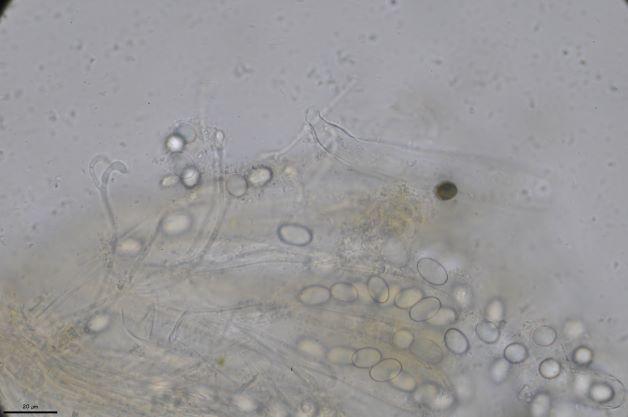
Apotecios discoides pulvinados, con margen irregular, gregarios o poco confluentes, sin estípite, de 1775,2 - 2022 × 938,9 - 1011 µm. Himenio de color amarillento a anaranjado, opaco, plano-convexo. Margen no diferenciado. Exterior del mismo color que el himenio. Ascos cilíndricos, estrechándose y curvándose en la base o en la parte media, operculados, octospóricos, biseriados, con el ápice ligeramente aplanado, aparato apical inamiloide, con uncínulo basal, de (87,1) 89 - 109,3 (110,8) × (15) 15,1 - 19,7 (21,1) µm; N = 32; Me = 101,7 × 18,1 µm. Ascosporas elipsoidales, sin LB, con núcleo y nucleolo visible cercano a un extremo, de (11,3) 11,7 - 12,8 (13,6) × (7,1) 7,5 - 8,2 (8,6) µm; Q = (1,4) 1,45 - 1,6 (1,7); N = 41; Me = 12,2 × 7,9 µm; Qe = 1,5. Paráfisis cilíndricas, multiseptadas, en ocasiones bifurcadas cerca del ápice, ligeramente engrosadas en el ápice, sin VBs. Excípulo medular con textura subglobulosa-angularis con algunas células con textura intricata. Excípulo ectal con textura subglobulosa-angularis y tendiendo a textura prismatica hacia los márgenes. Margen compuesto por células isodiamétiras a ligeramente elongadas.
Con las claves de este artículo, según cómo interprete algunos pasos, llego a ambas especies. KUŠAN I., N. MATO?EC, M. JADAN, Z. TKAL?EC, A. MEŠIC (2018). An overviev of the genus Coprotus (Pezizales, Ascomycota) with notes on the type species and description of C. epithecioides sp. nov. Mycokeys 29: 15-47.
Muchas gracias por vuestra ayuda.
Miguel Á. Ribes
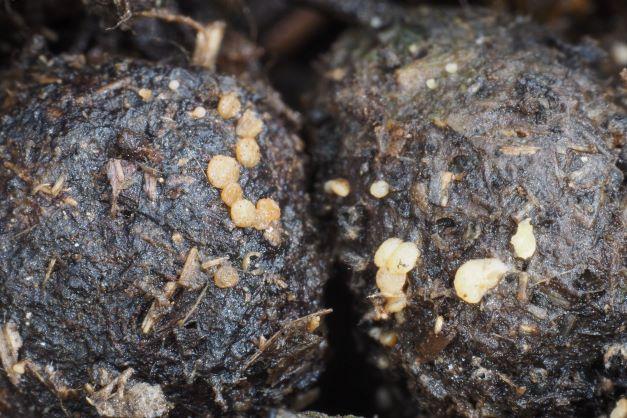
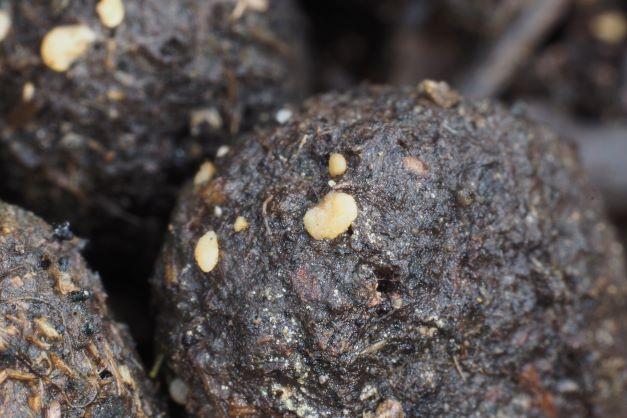
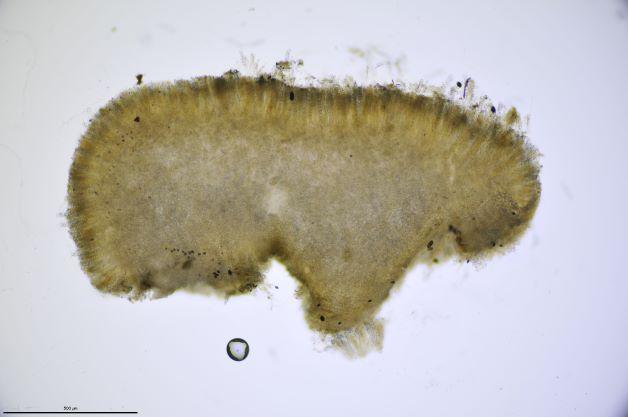
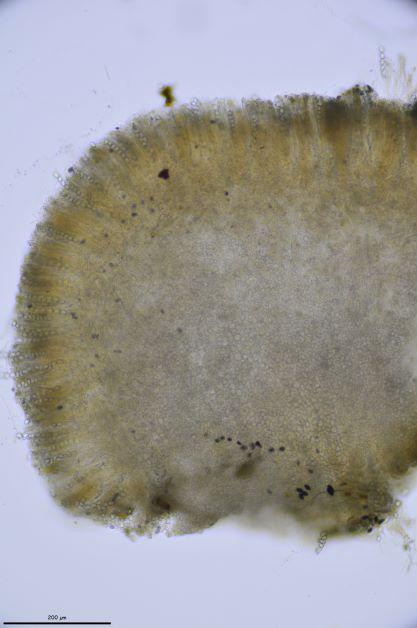
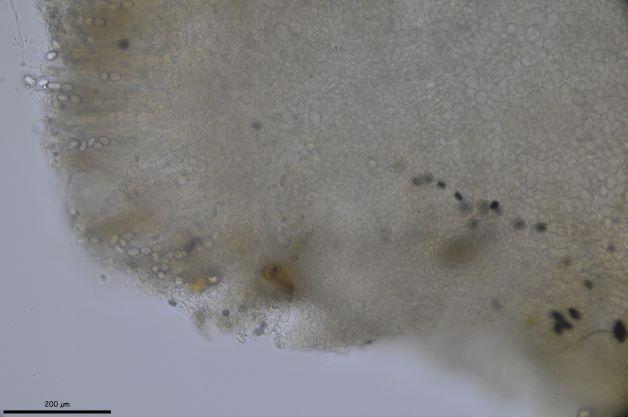
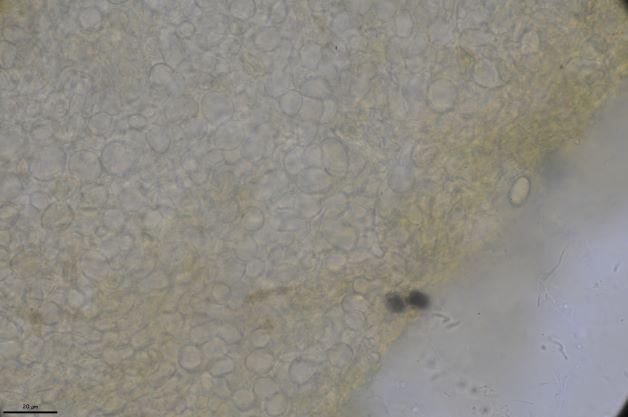
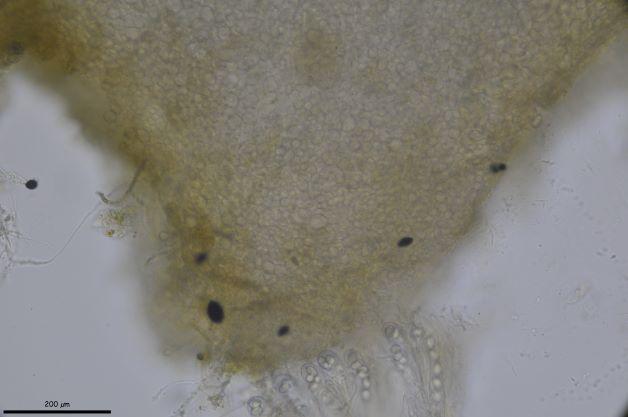
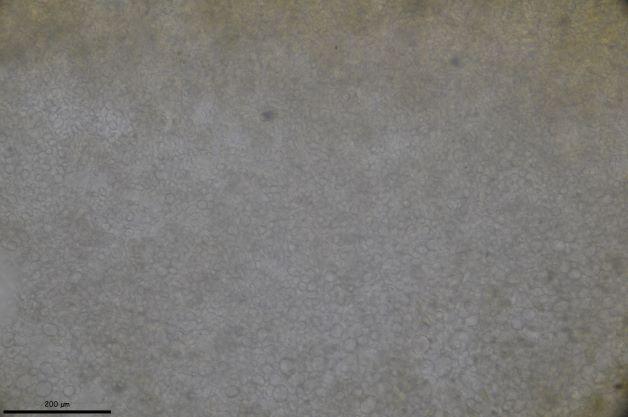
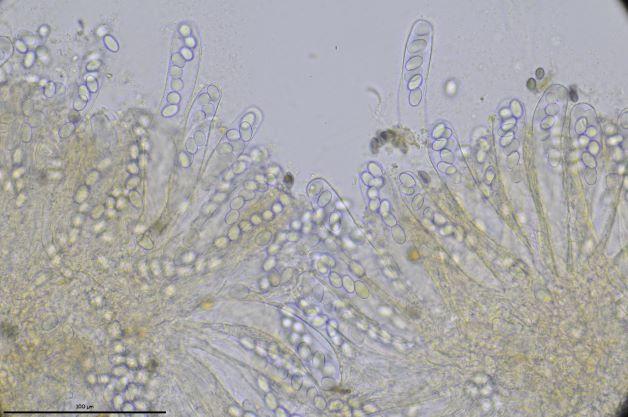
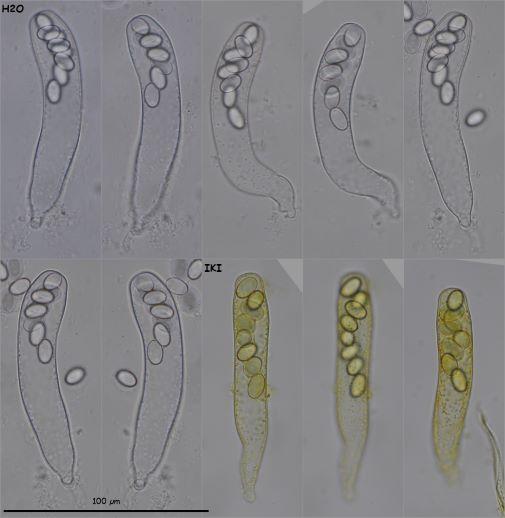
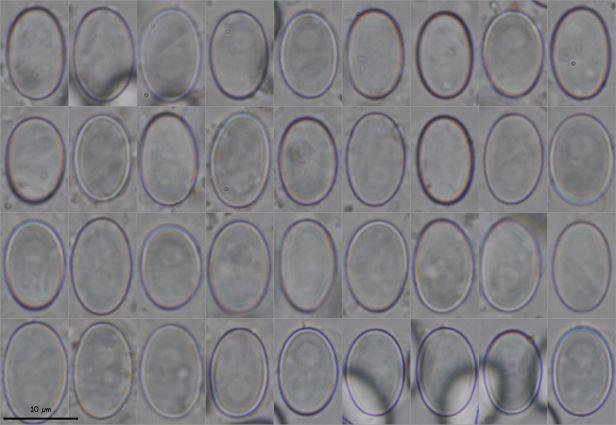

C.ochraceus tiene esporas más largas; tal vez aurora, aunque el color me parece un poco pálido. Mire también en el lado de aff.luteus. Tampoco estoy pensando en C.epithecioides que tiene paráfisis hinchadas en la parte superior.
Un saludo.
Michel.

Michel, is not important the apos size? My collection are 1,7-2 mm, KUSAN & al. said 0,2-0,7 mm for aurora and 0,5-1,8 for ochraceus. Color is a little palid, but asci and spore measuremente and asci and spore Q are better for aurora and aff. luteus than for ochraceus. C. aff. luteus is know for ruminants dung and paraphysis are uncinated and only 1,5-2 µm width.
Norbert, paraphysis have an orange "tint", but not clearly yellow guttule content. See attached pictures, please.
With all macro-micro characters it fits better with aurora and aff. luteus than ochraceus and luteus.
Thanks a lot.
Miguel Á. Ribes