
28-04-2026 20:07
 Lothar Krieglsteiner
... on twig in the air at standing Ceratonia siliq
14-04-2026 05:32
Ethan CrensonHi all, A few weeks back a friend pointed out som
28-04-2026 20:33
Vitus SchäfftleinHello, I found Trochila ilicina on Ilex aquifoliu

30-04-2026 10:28
Rot BojanHello, by appearance I would say that I am dealing
27-04-2026 18:48
Tony MoverleyCollected 23rd April 2026, Norfolk, EnglandSwarms
27-04-2026 20:52
Lothar Krieglsteiner
Found on hanging tiwg of Olea europaea in dried-ou
28-04-2026 22:51
 Bernard CLESSE
Bonsoir à toutes et tous,Pourriez-vous m'aider à
29-04-2026 08:01
Lothar Krieglsteiner
... on twig attached to small tree of Citrus auran
29-04-2026 10:44
Lothar Krieglsteiner
growing at moist, drying-out soil at the side of a
Anamorph on Buxus.
Josep Torres,
15-11-2025 09:21
 Hello.
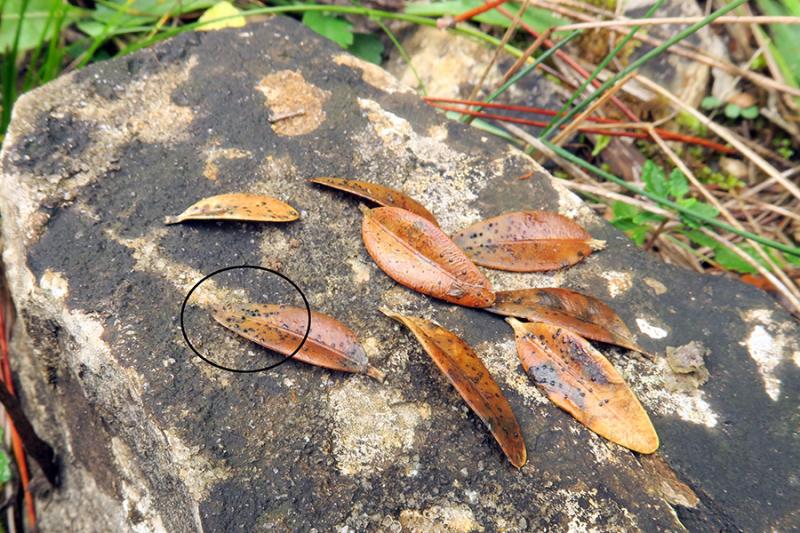
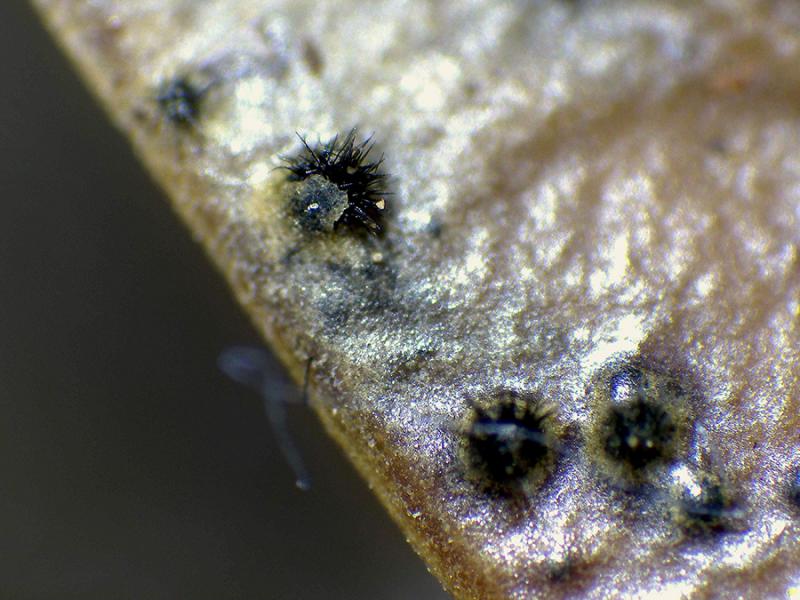
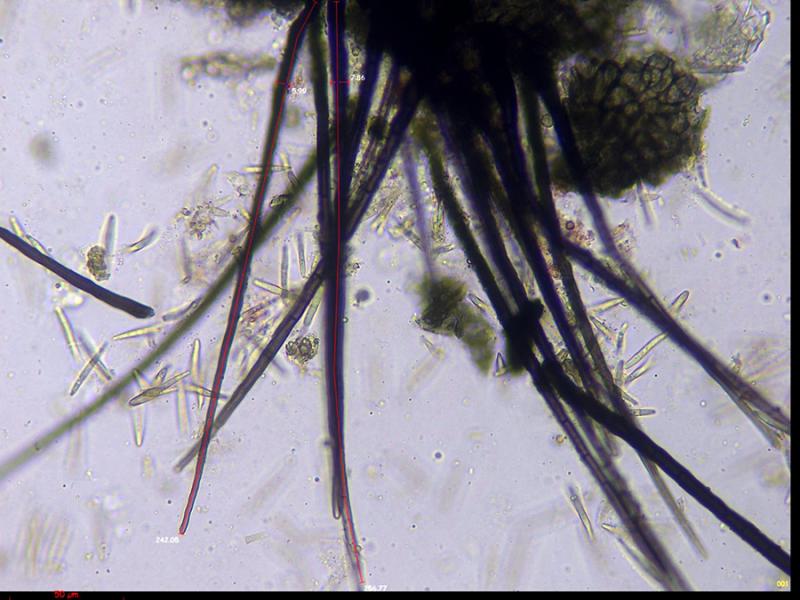
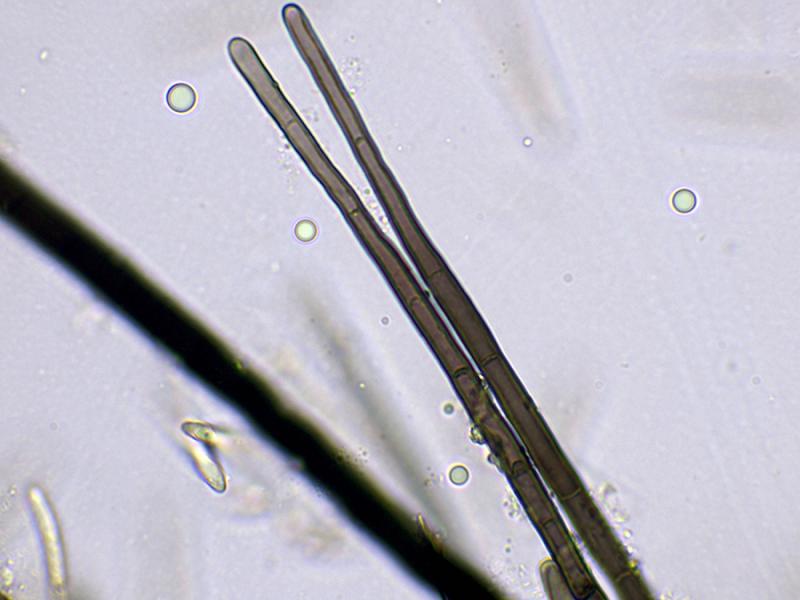
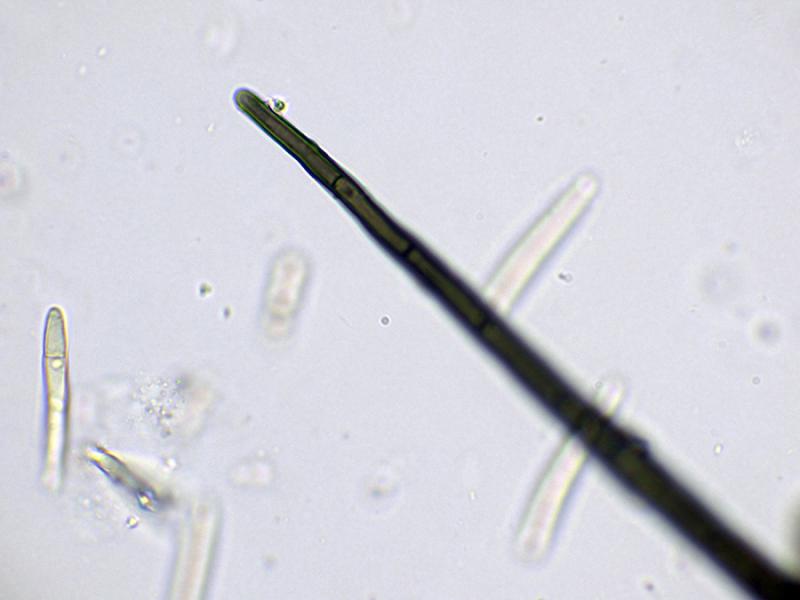
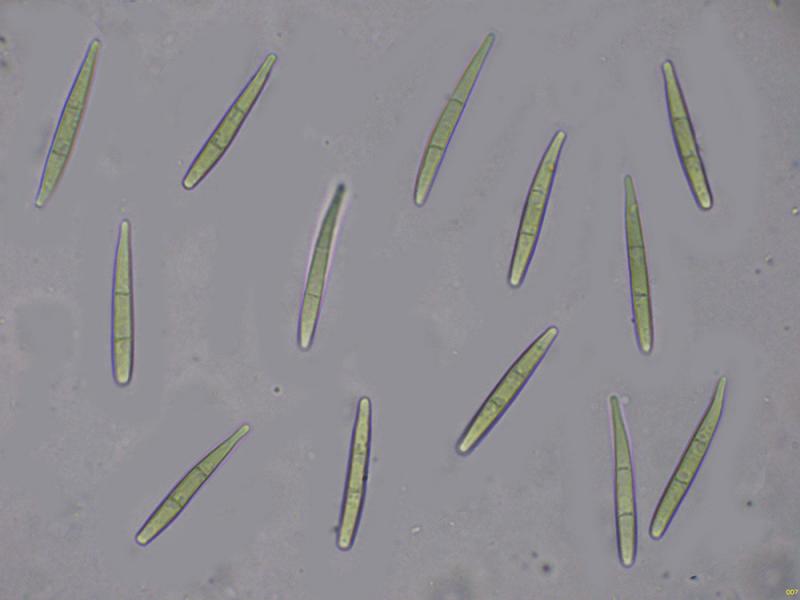
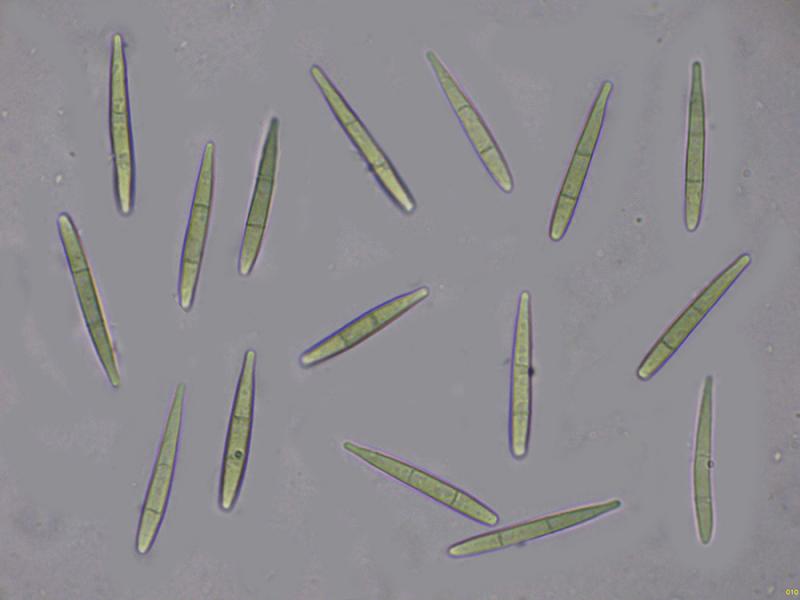
An anamorph resembling Capronia is sprouting on the surface of decaying Buxus sempervirens leaves in the soil, sharing space with ascomata that are supposedly Ceuthospora buxi, although this is still unconfirmed. The ascomata are blackish, with a diameter of 100 to 280 microns (excluding the hairs). Some of the external hairs exceed 250 microns in length and are 6 to 8 microns wide at their base. These thick-walled, septate hairs contain intracellular pigment and end in rounded shapes.
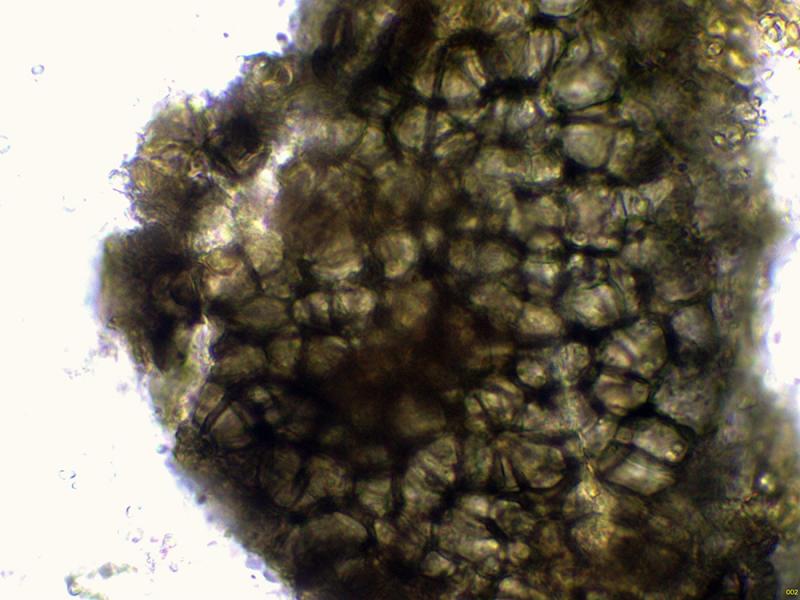
The perithecium wall has a globose-angular texture and is heavily pigmented.
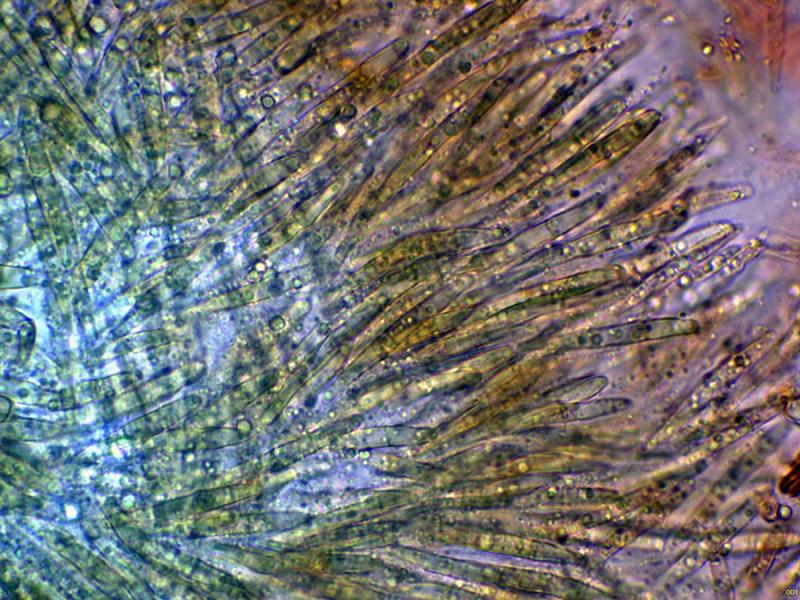
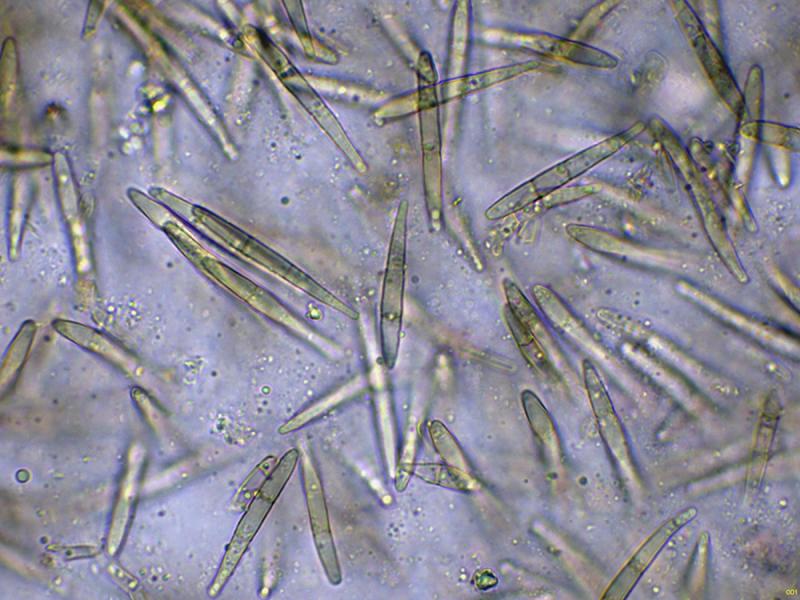
Conidiogenous hyphae are difficult to observe, but a vertical palisade arrangement is discernible. These hyphae produce fusiform conidia with a more pointed end, mostly with two septa and, exceptionally, some with three. These septa are more visible in Melzer's reagent and show no signs of constriction. Measurements of these conidia in water are:
(27.7) 28.9 - 35.6 (37) × (3) 3.1 - 3.9 (4.4) µm
Q = (7.6) 8 - 10.6 (11.4) ; N = 30
Me = 31.8 × 3.5 µm ; Qe = 9.2
I admit that I'm completely lost this time.
Any input would be greatly appreciated.
Thank you in advance.
Best regards.


Angel Pintos,
15-11-2025 11:45

Re : Anamorph on Buxus.
Bon dia Josep,
probablemente
Wojnowicia Ephedrae
Saludos
probablemente
Wojnowicia Ephedrae
Saludos
Josep Torres,
15-11-2025 15:55
Re : Anamorph on Buxus.
Thank you very much, Angel.
I haven't been able to find any information online about the Wojnowicia ephedrae you mentioned, and almost nothing about the genus Wojnowicia, which I was completely unfamiliar with.
I understand that Wojnowicia ephedrae would be associated with Ephedra sp., given its host (Buxus). I'm not sure if we should consider Wojnowicia buxi.
Any information you could provide about the genus would be greatly appreciated
Best regards.
I haven't been able to find any information online about the Wojnowicia ephedrae you mentioned, and almost nothing about the genus Wojnowicia, which I was completely unfamiliar with.
I understand that Wojnowicia ephedrae would be associated with Ephedra sp., given its host (Buxus). I'm not sure if we should consider Wojnowicia buxi.
Any information you could provide about the genus would be greatly appreciated
Best regards.