
12-06-2026 14:50
 François Freléchoux
Bonjour, Voici la brève description d'une Mollis
10-06-2026 21:16
François Freléchoux
Bonsoir,Le dernier du jour, en attendant votre avi
11-06-2026 19:01
 William Slosse
Hello all,In an attempt to make a culture of a sus
11-06-2026 19:03
 Nicolas VAN VOOREN
Chers membres d'Ascofrance,Le site sera placé en

09-06-2026 18:32
Camille MertensSur morceau de roseau immergé 0,5 - 0,7 mm de dia
10-06-2026 12:54
Steve ClementsBonjour encore, Pouvez-vous m'aider, s'il vous pl
10-06-2026 21:07
François Freléchoux
Toutes les tiges de gentianes jaunes de l'an passÃ
10-06-2026 13:41
François Freléchoux
Bonjour à nouveau, Voici une trouvaille d'hier.
Glutinoglossum
Malcolm Greaves,
29-11-2021 23:02
 I was asked to try and identify a Glutinoglossum specimen.
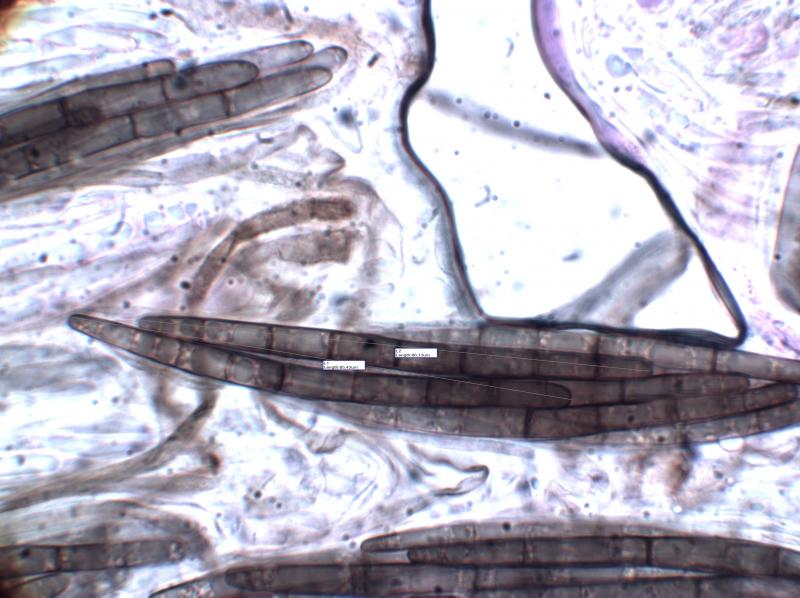
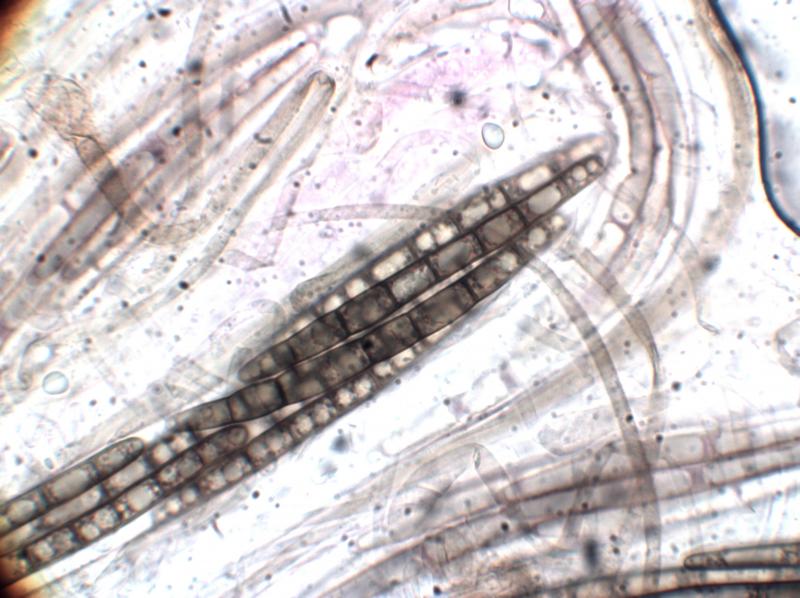
The spores are between 65 and 88 with a mixture of 1-7 septa, many were 7 but less than a quarter reached that stage. Because it was dried I was unable to get a spore drop so I am not sure if many/all of the others might have matured to 7 septa.
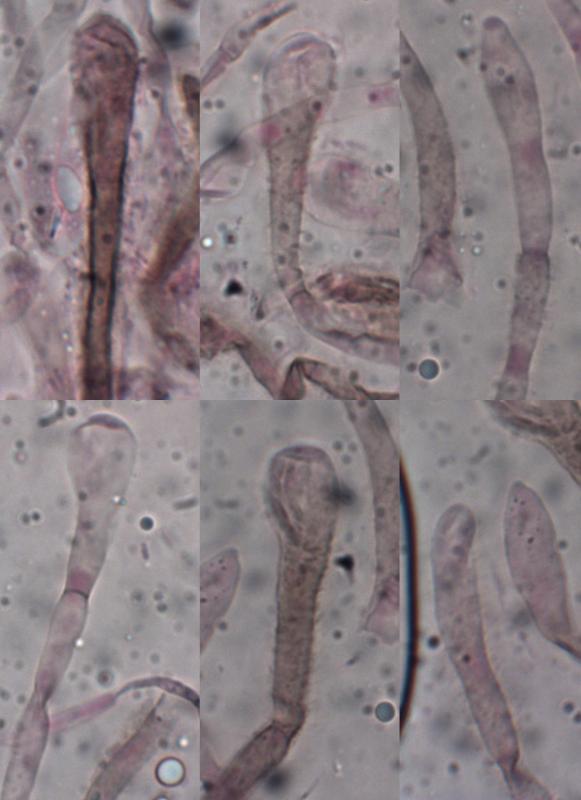
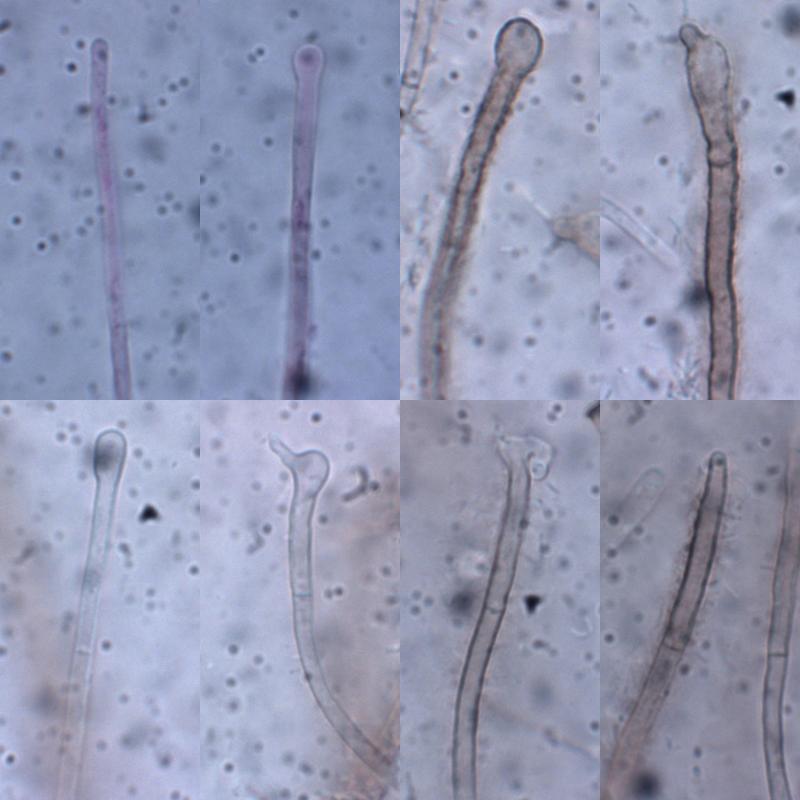
The paraphyses were a mixture of hyaline and brown some swollen and others cylindical. One or two were "beak" shaped and one or two were contorted.
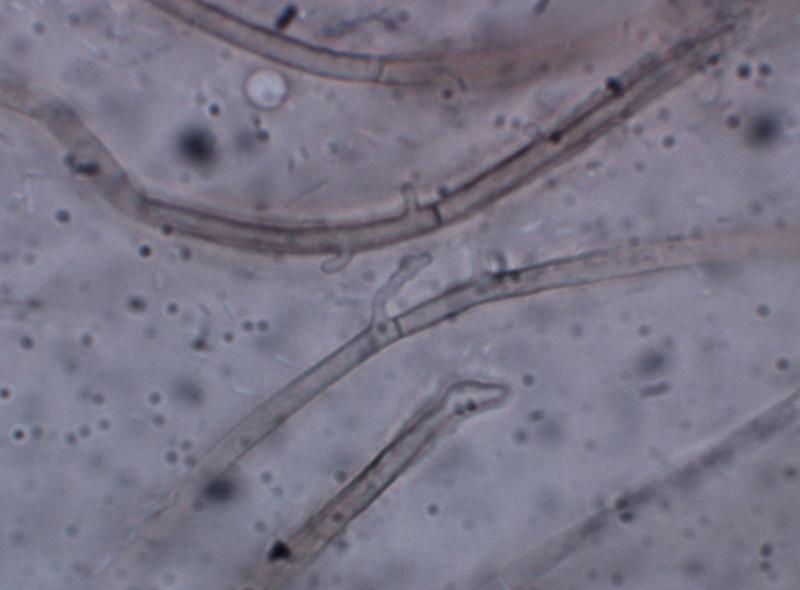
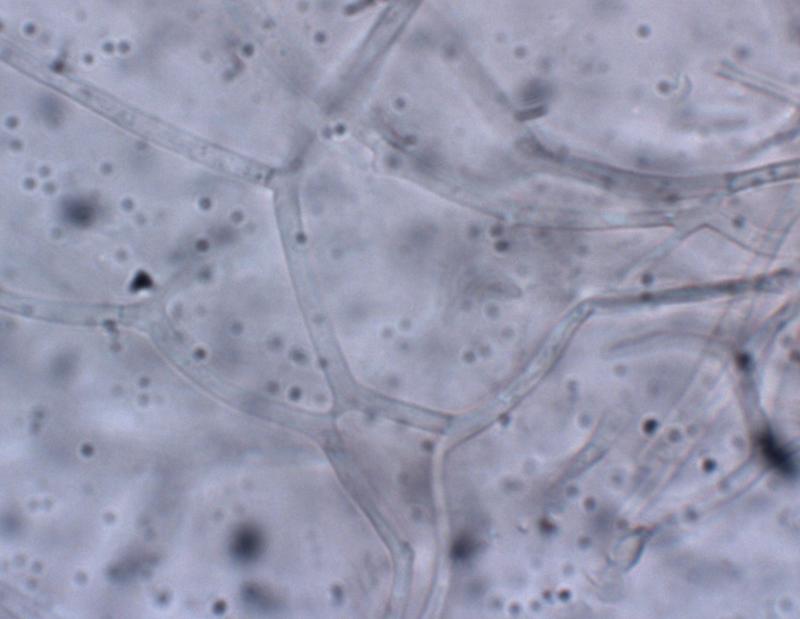
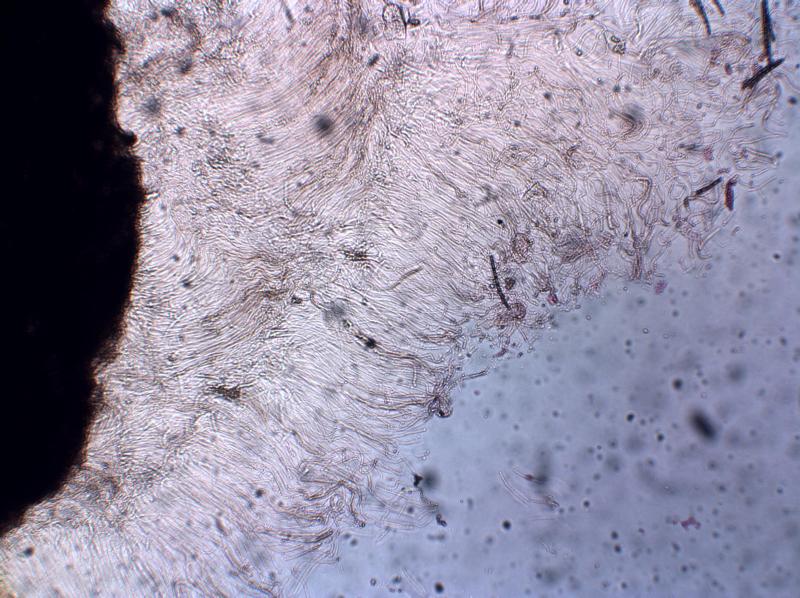
The hyphae of the stipe were also the same mixture of hyaline and brown again with some swollen and others cylindrical. They also showed signs of branching and many had outgrowths which I assume were the start of the branching process.
Could anyone suggest a name?
Thanks.
Mal
Peter Püwert,
29-11-2021 23:33

Re : Glutinoglossum
Hi Malcolm,
I see quite a similarity here, also BENKERT 1976 shows such paraphyses.
Regards Peter.
Malcolm Greaves,
30-11-2021 01:00
Re : Glutinoglossum
Thanks Peter
I expected the photo titles to be displayed but they didn't so I have added them again to clarify. The paraphyses have mostly just simple swollen heads with some with no swelling. The photo of the strange beaked or twisted heads are of the hyphae of the stem which is surrounded by a gelatinous layer and not paraphyses. Not sure if that would make you reconsider?
Mal
I expected the photo titles to be displayed but they didn't so I have added them again to clarify. The paraphyses have mostly just simple swollen heads with some with no swelling. The photo of the strange beaked or twisted heads are of the hyphae of the stem which is surrounded by a gelatinous layer and not paraphyses. Not sure if that would make you reconsider?
Mal