
22-04-2026 20:54
 Enrique Rubio
Hi to everybody.This Pyrenopeziza grew in moist le
24-04-2026 03:16
 David Chapados
Found while looking at something else from wood in
22-04-2026 01:06
 Richard VALERI
Bonjour à tous.Je vous présente cette Nectria s.
22-04-2026 20:17
 Marian Jagers
Is anyone familiar with the Hyphomycetes genus Pse

21-04-2026 13:36
Gernot FriebesHi,I am out of ideas for this one. I collected Sal
Acervus?
Fedorenko Vassiliy,
06-09-2020 22:24

Hello to everyone!
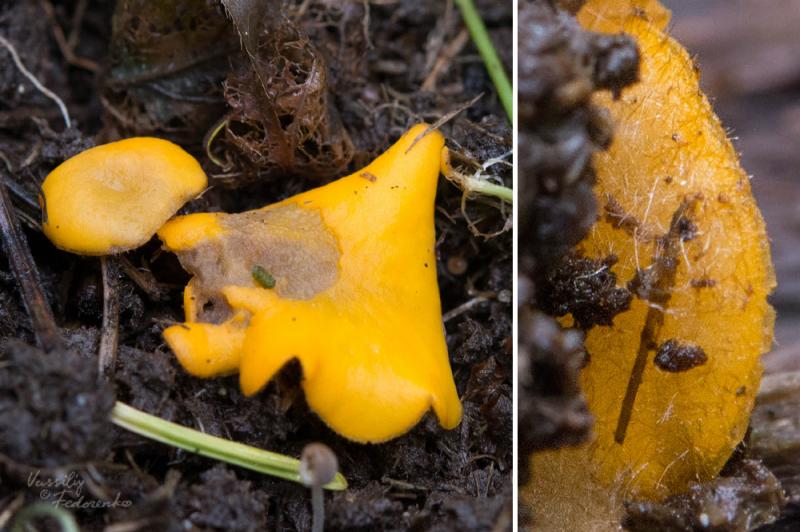
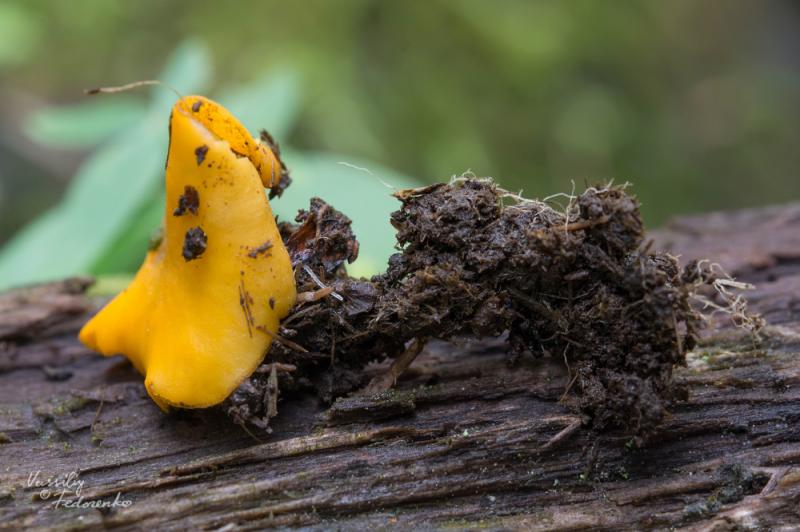
I find it difficult, to be honest, even with the genus of the fungus. While the it's fresh, I would like to understand what it is.
Fungus grows in the mountains in a mixed forest (mostly spruce) on a ground at an altitude of ~ 1800 m.
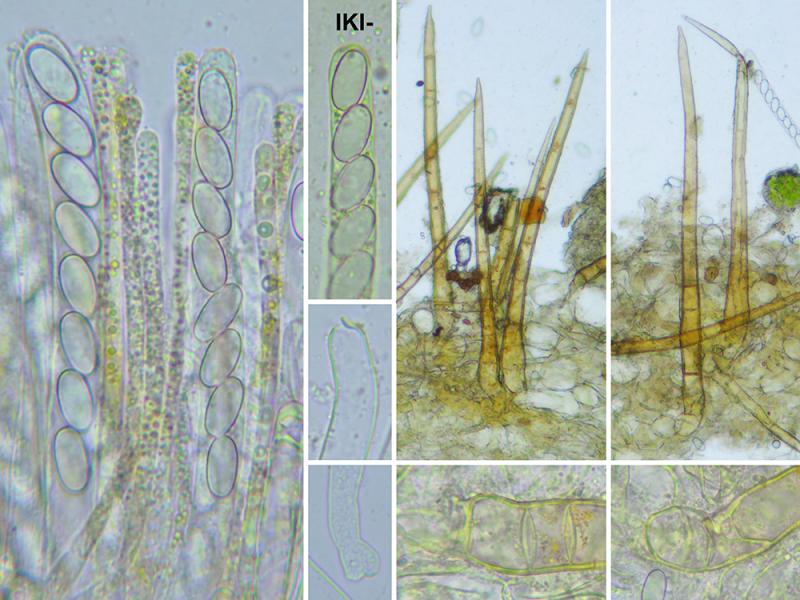
Apothecium 9 and 21 mm. Hairs 200-430 µm long.
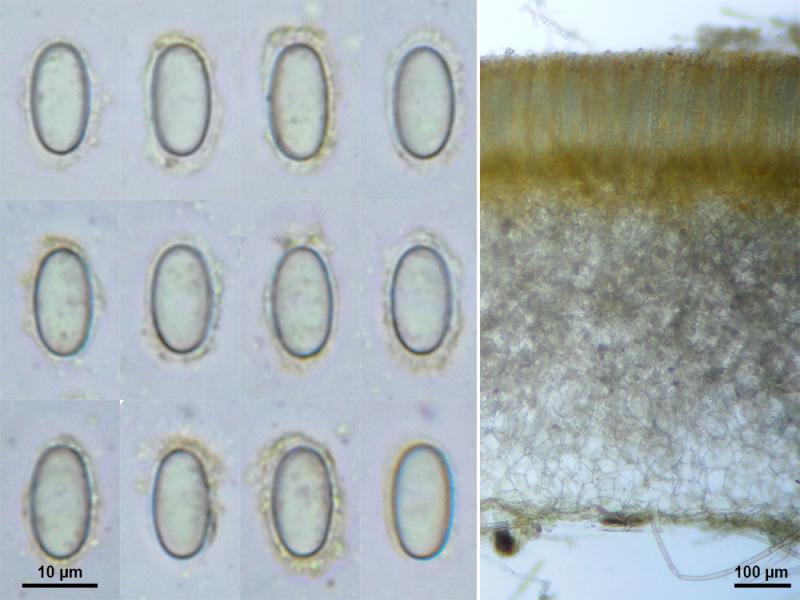
Ascospores in water (on photo): (12.5) 13.7 - 15.1 (15.6) × (7) 7.3 - 8.2 (8.5) µm N = 100 Qe = 1.9
Ascospores in water (on photo): (12.5) 13.7 - 15.1 (15.6) × (7) 7.3 - 8.2 (8.5) µm N = 100 Qe = 1.9
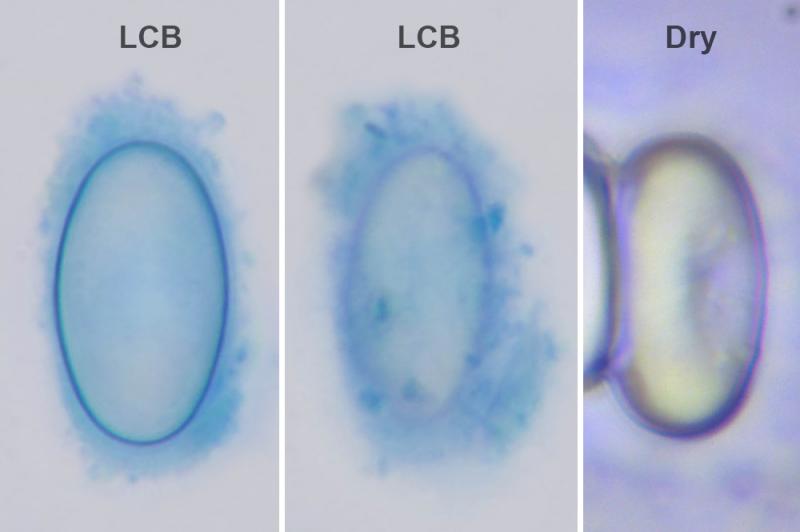
Spores in the water (out of asci) have an additional shell, which is destroyed in most spores. Therefore, it hasn't yet been possible to photograph the ascospores in lactophenol with preservation of this shell.
Koszka Attila,
07-09-2020 12:04
Re : Acervus?
Hello!
I think your fungus is rather a Cheilymenia species.
Acervus has smaller spores and no hairs.
Best wishes: Attila
I think your fungus is rather a Cheilymenia species.
Acervus has smaller spores and no hairs.
Best wishes: Attila
Mirek Gryc,
07-09-2020 14:07
Re : Acervus?
Hi
A few details do not suit me but maybe you can compare it with Cheilymenia vitellina?
View the article:
http://www.czecmycology.org/_cm/CM50305.pdf
Mirek
A few details do not suit me but maybe you can compare it with Cheilymenia vitellina?
View the article:
http://www.czecmycology.org/_cm/CM50305.pdf
Mirek
Fedorenko Vassiliy,
07-09-2020 21:51
Re : Acervus?
Attila, Mirek, thank you!
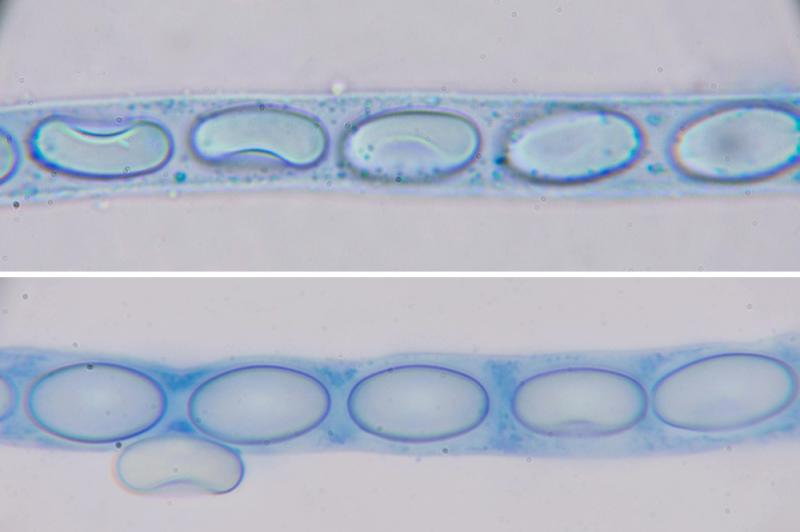
Indeed, Cheilymenia vitellina looks like a good candidate. However, there are some inconsistencies with the description of the referenced article and the article by Peric (2004). The size of the apothecium is larger, while the spores are smaller, and I did't see any striation either in the LCB or on dry spores.
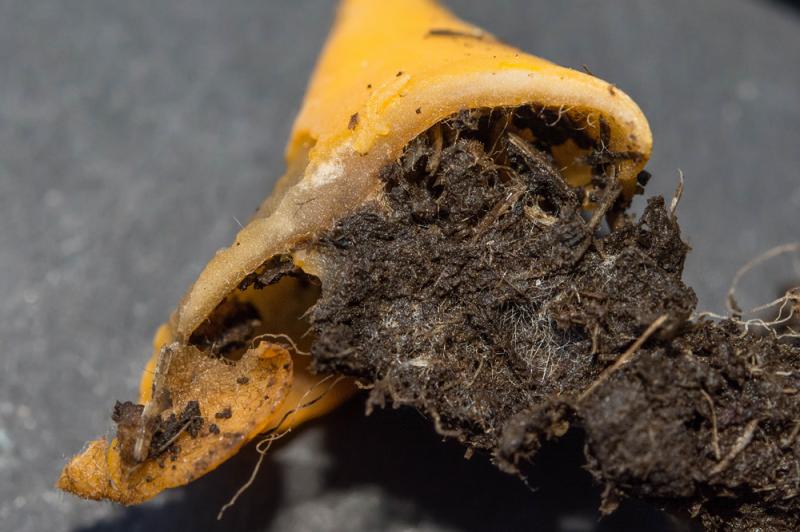
What can you say about the areola around the spores? I have added photos of spores and asci in LCB, and section of the fruitbodie.
Mirek Gryc,
08-09-2020 09:08
Re : Acervus?
Hi Vassiliy.
I do not know any other species with a similar appearance and microscopic features, so I proposed a comparison with this species, although as I mentioned, not all features match it. I meet this species quite often. It grows on humus soil, usually accompanied by nettles (Urtica).
So far, the largest that I have seen were up to 1 cm in diameter.
I haven't been able to observe the spore ornamentation yet. It is said to be hard to spot.
I cannot explain the presence of a gelatinous coating around the spores. Perhaps this is due to the old age of the spores.
If you have younger fruiting bodies, why not check if the spores look similar?
I don't have any more ideas.
Mirek
I do not know any other species with a similar appearance and microscopic features, so I proposed a comparison with this species, although as I mentioned, not all features match it. I meet this species quite often. It grows on humus soil, usually accompanied by nettles (Urtica).
So far, the largest that I have seen were up to 1 cm in diameter.
I haven't been able to observe the spore ornamentation yet. It is said to be hard to spot.
I cannot explain the presence of a gelatinous coating around the spores. Perhaps this is due to the old age of the spores.
If you have younger fruiting bodies, why not check if the spores look similar?
I don't have any more ideas.
Mirek
Fedorenko Vassiliy,
08-09-2020 11:02
Re : Acervus?
Hi Mirek.
Unfortunately, I found only two of these fruitbodies. They show the same picture. The first photo of ascospores in water from a small fruitbodie and photo in LCB from a large one.
Thank you! Nettle was present. Then, while I consider this fungus as Cheilymenia vitellina.
Vassiliy
Mirek Gryc,
08-09-2020 15:42
Re : Acervus?
Sometimes when the spores are overripe they don't look quite natural?
Here are two examples:
Here are two examples:
Mirek
Fedorenko Vassiliy,
09-09-2020 09:22
Re : Acervus?
Thank you, Mirek!