
14-05-2026 05:36
Ethan CrensonHi all, I haven't paid much attention to Lachnu
11-05-2026 12:32
 Bernard CLESSE
Pourriez-vous m'aider à identifier cette héloti
13-05-2026 15:26
 François Freléchoux
Bonjour,Voici une récolte faite il y a quelques j
12-05-2026 15:41
 Nicolas VAN VOOREN
Dear Ascolovers, especially interested in Pezizale
13-05-2026 12:05
 Thierry Blondelle
Bonjour à tous,J'aimerais avoir confirmation de c
10-05-2026 23:17
 Andreas Gminder
Hello,today we found in a moist steep decidous for
28-04-2026 20:07
 Lothar Krieglsteiner
... on twig in the air at standing Ceratonia siliq
27-04-2026 20:52
Lothar Krieglsteiner
Found on hanging tiwg of Olea europaea in dried-ou
11-05-2026 20:22
Lothar Krieglsteiner
on attached twig of standing Ficus caricaquite uns
Terrestric asco from Hungarian lowland
Zuzana Sochorová (Egertová),
06-11-2019 11:49
 Hello,
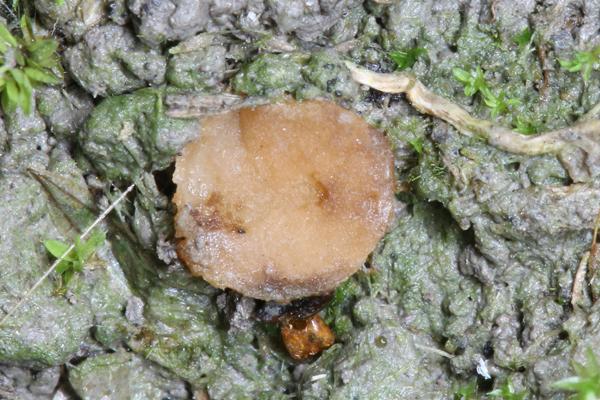
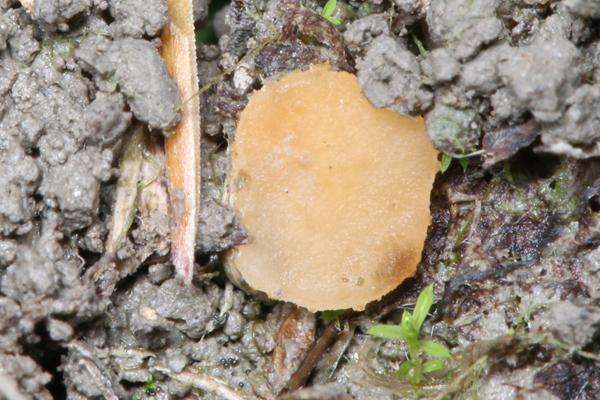
I cannot find a name for this fungus found a few days ago in west Hungary, 120 m asl. It grew on wet soil in a field.
Unfortunately the material was limited and not in the best condition, so I e.g. couldn´t see any vital asci.
Apothecia 2.3-4.5 mm in diameter, brownish-ochre, sessile, without conspicious hairs.
Hymenium about 270 micrometers wide.
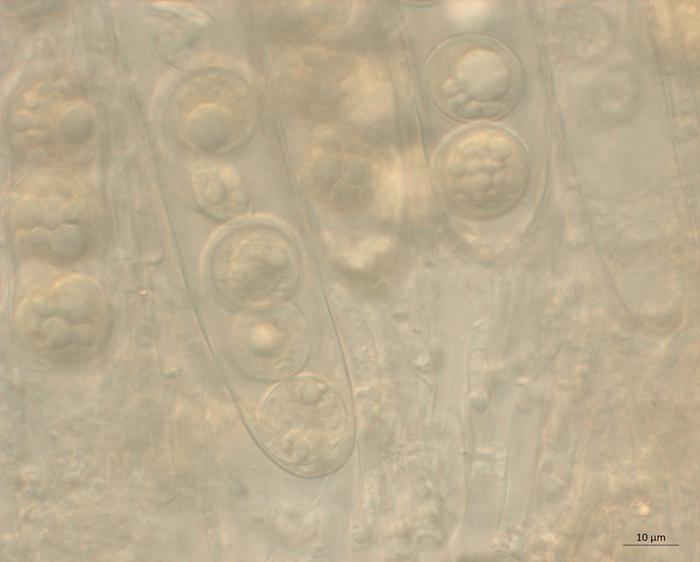
Asci octosporic, uniseriate, clavate, IKI-.
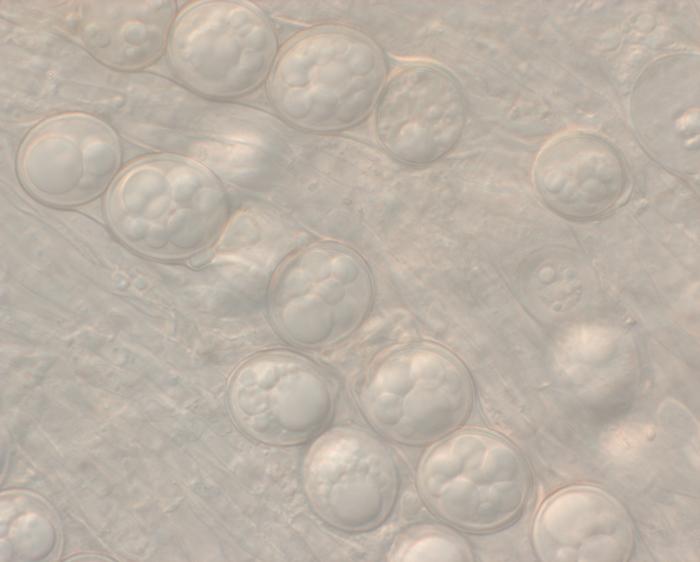
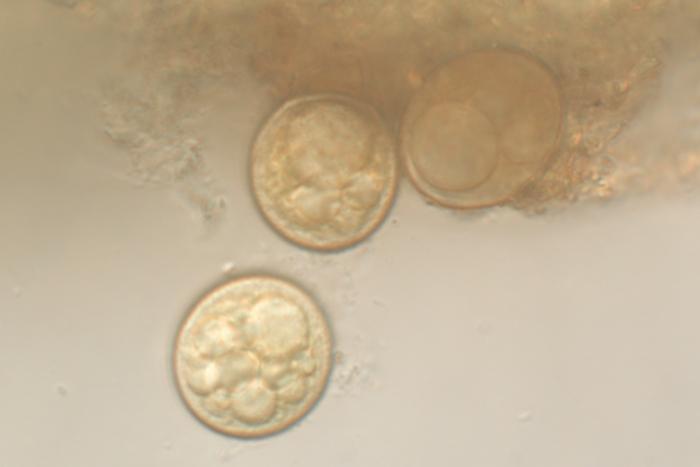
Ascospores subglobose, 17.5-21 x 15-18 micrometers, hyaline, thick-walled, containing several smaller guttules which in dry state fuse into one large guttule. The surface of the ascospore is ornamented with very tiny warts.
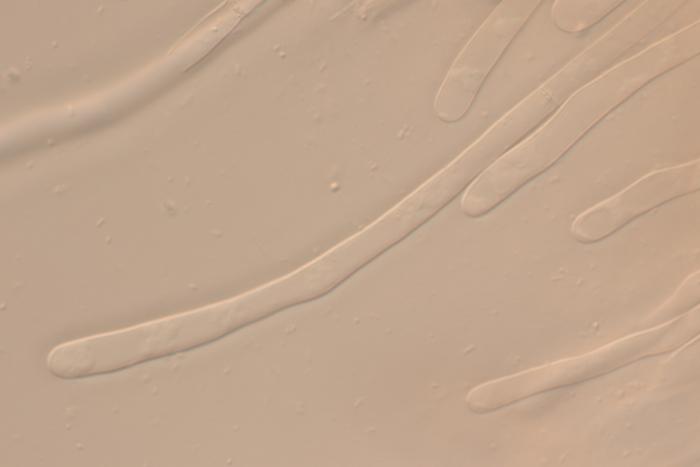
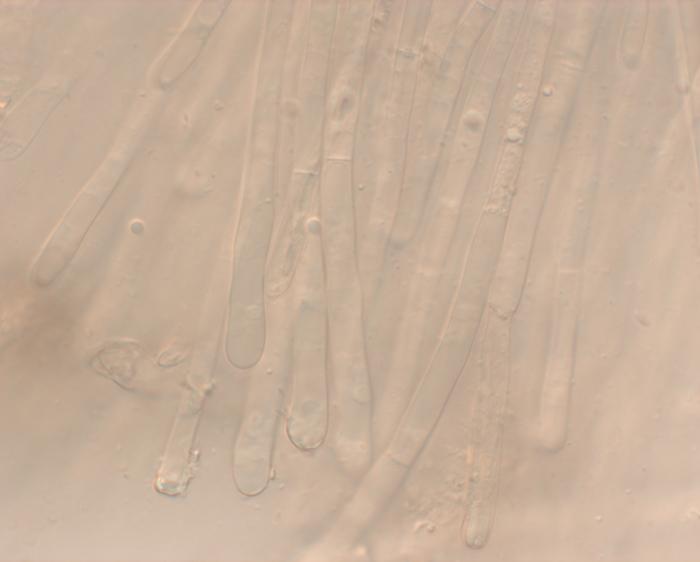
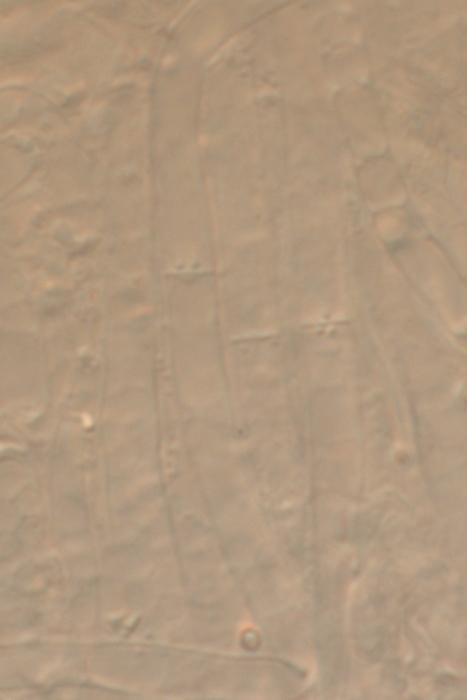
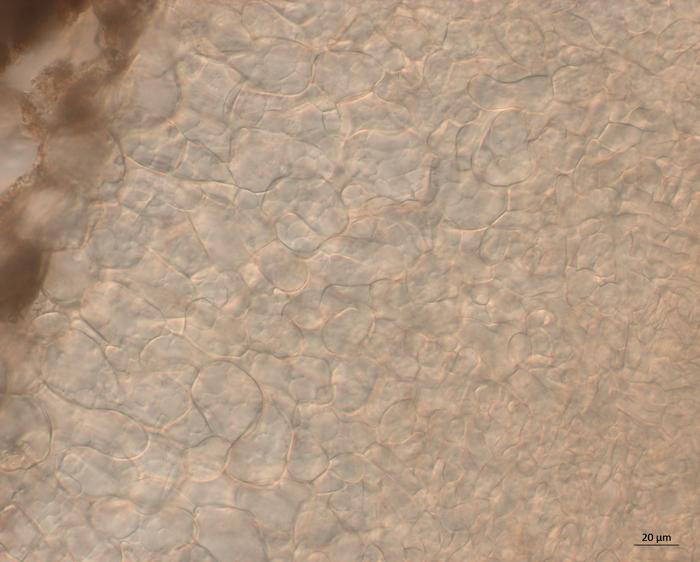
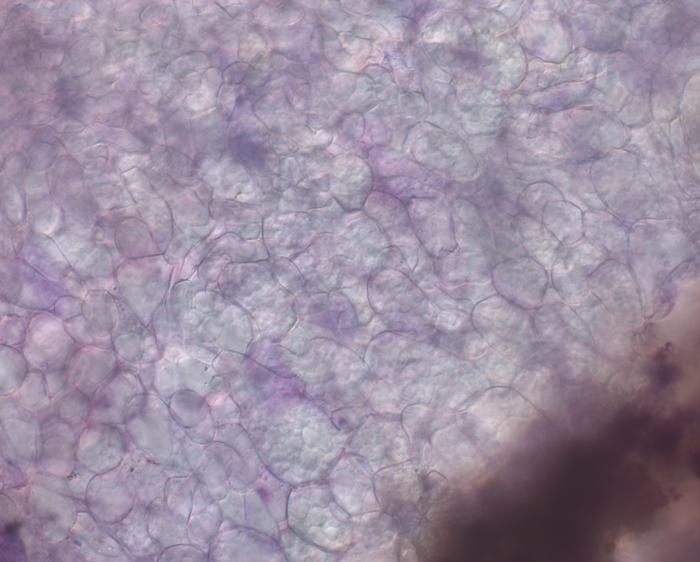
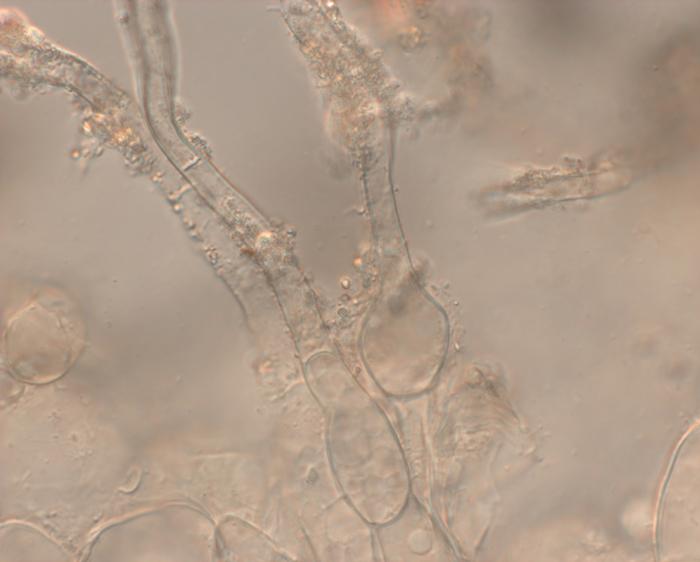
Paraphyses straight, septate, without lipid bodies, 3.5-4.3 micrometers wide in lower parts, apex 5.3-6 micrometers, terminal cell 43-94 micrometers long, close to septa tiny hyaline bodies.
Medulla merged with subhymenium, t. intricata, cells 2-10 micrometers wide, hyaline.
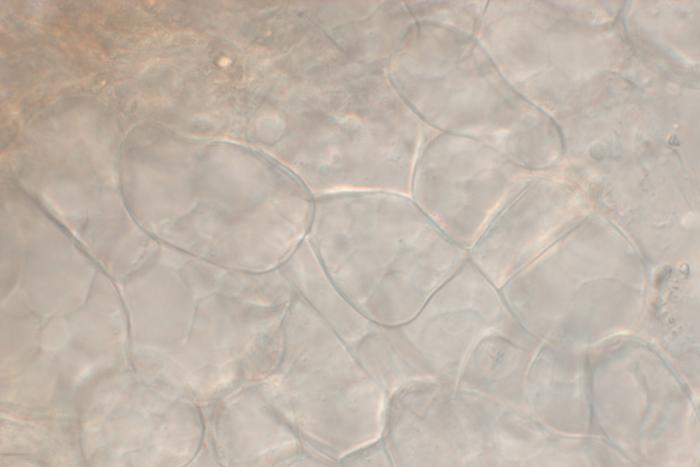
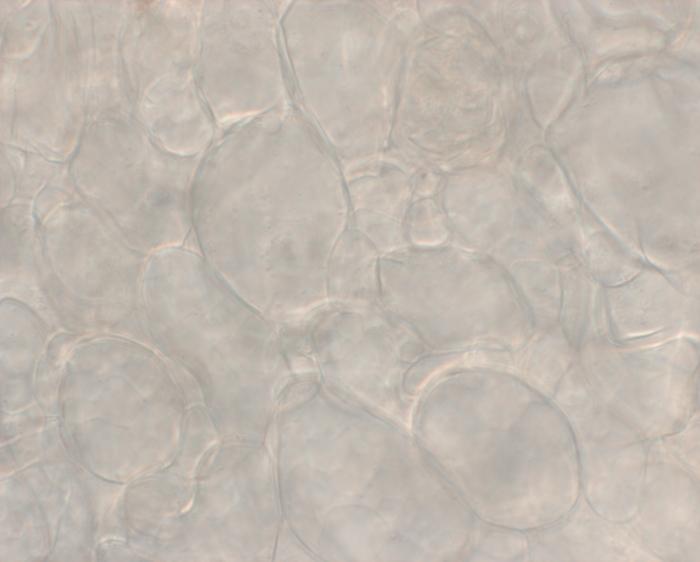
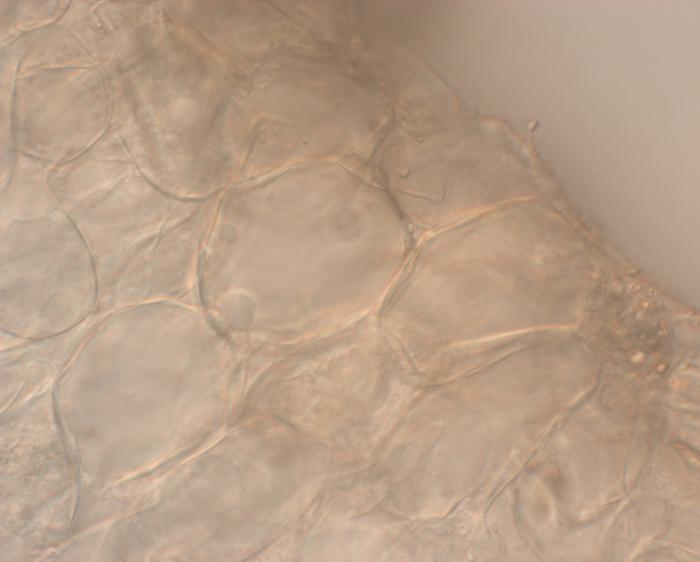
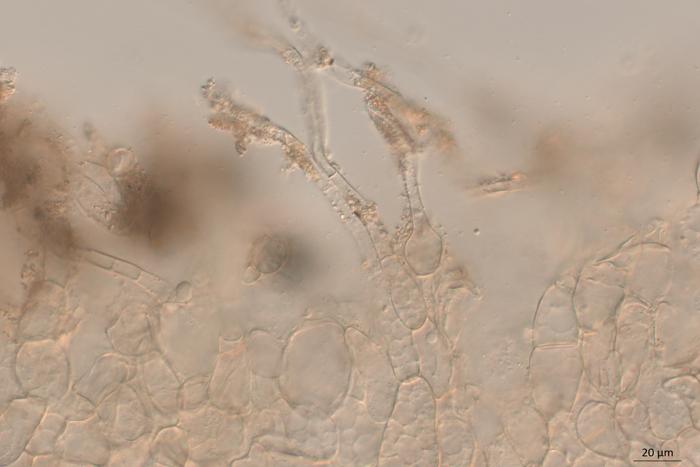
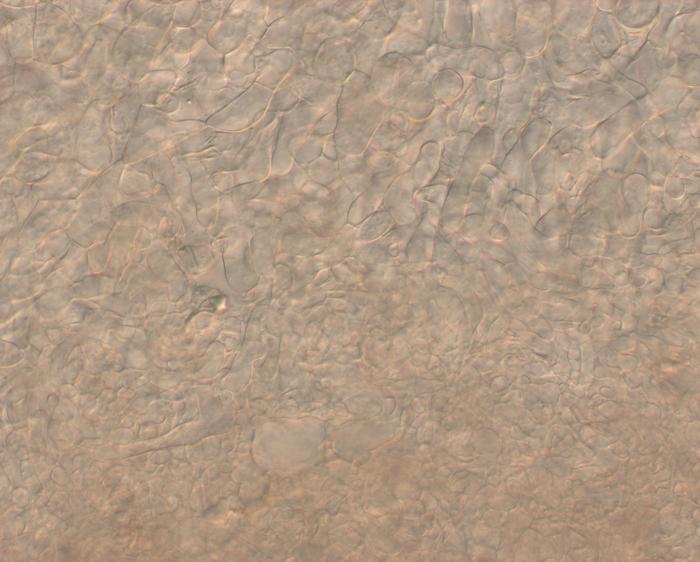
Ectal excipulum 170-210 micrometers wide at base, 75-170 micrometers wide at flanks, t. angularis, cells hyaline, containing non-refractive vacuoles, 13-32 x 14.5-24 micrometers, outermost cells thick-walled (about 1 micrometer), having ochre-brown walls. Brown-walled hairs arise from the cells of ectal excipulum.
Thanks, Zuzana
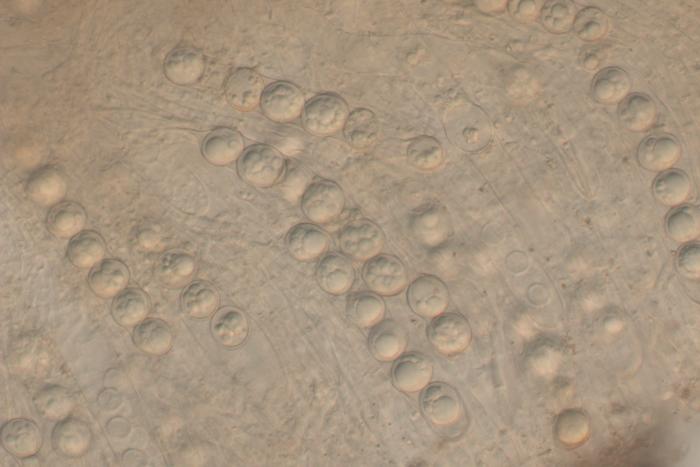
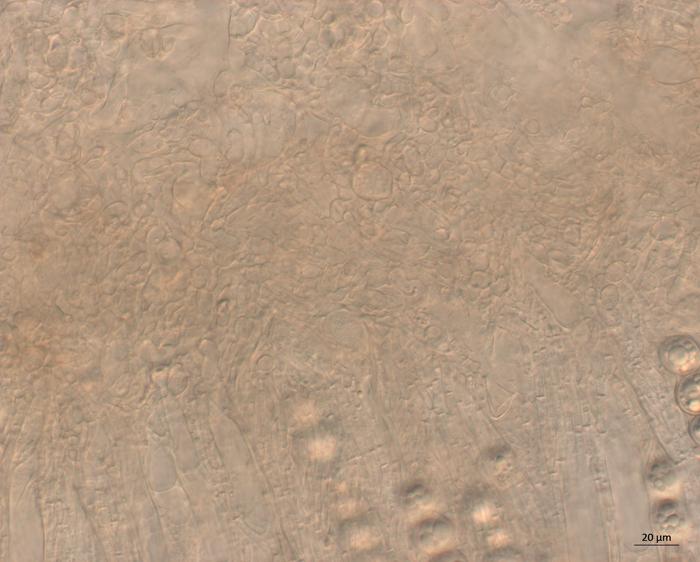
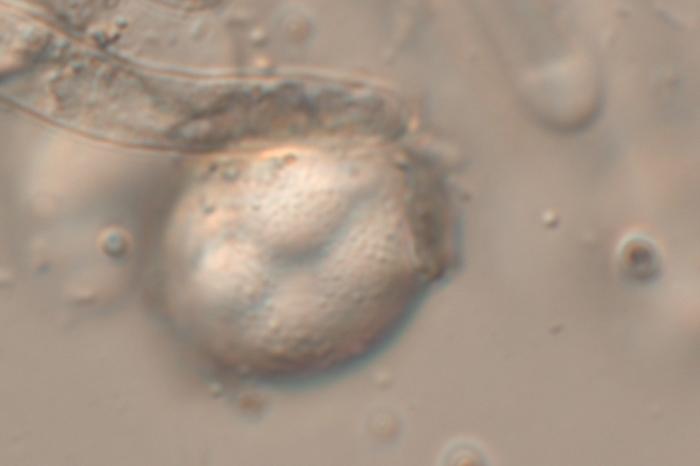
Zuzana Sochorová (Egertová),
06-11-2019 11:52
Re : Terrestric asco from Hungarian lowland
Other photos. In the third one I wanted to catch the bodies surrounding septa in paraphyses.
Zuzana Sochorová (Egertová),
06-11-2019 12:07
Re : Terrestric asco from Hungarian lowland
Next.
Miguel Ángel Ribes,
06-11-2019 15:45

Re : Terrestric asco from Hungarian lowland
Around Pulvinula convexella??
Miguel Ángel
Miguel Ángel
Zuzana Sochorová (Egertová),
06-11-2019 17:00
Re : Terrestric asco from Hungarian lowland
Dear Miguel, thank you very much for your opinion. However, I would exclude Pulvinula due to paraphyses totally different in shape and content and due to the hairs.
Gernot Friebes,
06-11-2019 21:41
Re : Terrestric asco from Hungarian lowland
Dear Zuzana,
interesting find. I don't know this species but my suggestion would be to compare with Tricharina subglobispora. Here is Svrcek's original description: http://www.czechmycology.org/_cm/CM283.pdf#page=7 (on page 136).
Maybe you can have a look at the material cited by Svrcek in herbarium W?
Best wishes,
Gernot
interesting find. I don't know this species but my suggestion would be to compare with Tricharina subglobispora. Here is Svrcek's original description: http://www.czechmycology.org/_cm/CM283.pdf#page=7 (on page 136).
Maybe you can have a look at the material cited by Svrcek in herbarium W?
Best wishes,
Gernot
Zuzana Sochorová (Egertová),
06-11-2019 22:11
Re : Terrestric asco from Hungarian lowland
Dear Gernot,
thank you very much for your reply.
Tricharina subglobispora really seems to be similar, nevertheless, I can see some differences between my find and Svrcek's description:
1) excipulum described as t. globulosa vs. medullary excipulum of t. intricata in the Hungarian find (maybe medulla wasn't distinct in herbarium material studied by Svrcek?)
2) smooth spores vs. finely warted spores (but the warts are really very inconspicuous, easy to overlook)
3) spores without guttules vs. filled with several guttules - believe even in the herbarium material spores would contain one large guttule.
It's a pity the type is so old (from 1908), so probably no chance to obtain sequences.
Best regards, Zuzana
thank you very much for your reply.
Tricharina subglobispora really seems to be similar, nevertheless, I can see some differences between my find and Svrcek's description:
1) excipulum described as t. globulosa vs. medullary excipulum of t. intricata in the Hungarian find (maybe medulla wasn't distinct in herbarium material studied by Svrcek?)
2) smooth spores vs. finely warted spores (but the warts are really very inconspicuous, easy to overlook)
3) spores without guttules vs. filled with several guttules - believe even in the herbarium material spores would contain one large guttule.
It's a pity the type is so old (from 1908), so probably no chance to obtain sequences.
Best regards, Zuzana
Marcel Vega,
07-11-2019 08:26
Re : Terrestric asco from Hungarian lowland
Hi Zuzana,
found this one as well some years ago.
Will send you an email.
Cheers,
Marcel
found this one as well some years ago.
Will send you an email.
Cheers,
Marcel
Uwe Lindemann,
07-11-2019 23:16

Re : Terrestric asco from Hungarian lowland
After Yang & Korf 1985: 522 (their Tricharina monograph) the type of T. subglobispora consists of two different species: 1. Sphaerosporella brunnea and 2. Trichophaea woolhopeia.
Best, Uwe
Mlcoch Patrik,
08-11-2019 07:11

Re : Terrestric asco from Hungarian lowland
Yes, Pulvinula it isn´t. For example Baral has on the Google drive in "C4 Pyronemataceae s.str." collections "Pezizales 19.8.91". Can it be?