
12-06-2026 14:50
 François Freléchoux
Bonjour, Voici la brève description d'une Mollis
10-06-2026 21:16
François Freléchoux
Bonsoir,Le dernier du jour, en attendant votre avi
11-06-2026 19:01
 William Slosse
Hello all,In an attempt to make a culture of a sus
11-06-2026 19:03
 Nicolas VAN VOOREN
Chers membres d'Ascofrance,Le site sera placé en

09-06-2026 18:32
Camille MertensSur morceau de roseau immergé 0,5 - 0,7 mm de dia
10-06-2026 12:54
Steve ClementsBonjour encore, Pouvez-vous m'aider, s'il vous pl
10-06-2026 21:07
François Freléchoux
Toutes les tiges de gentianes jaunes de l'an passÃ
10-06-2026 13:41
François Freléchoux
Bonjour à nouveau, Voici une trouvaille d'hier.
 Hello everybody,
I found this Pyrenopeziza? species on Phalaris arundinacea last weekend.
Apothecia 0,5 mm in diameter with inrolled margin, whitish-hyalin, sessile.
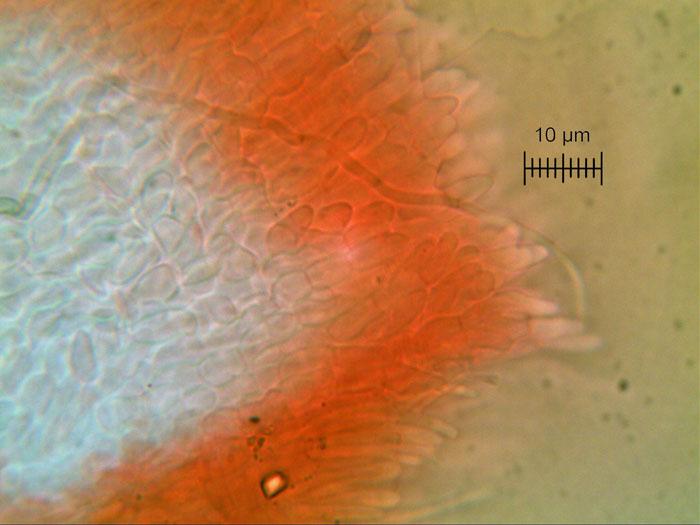
Outer excipulum hyaline, textura angularis to textura globosa,
with difficult to identify, hyaline margincells, slightly clavate at the apex, up to 30 µm long.
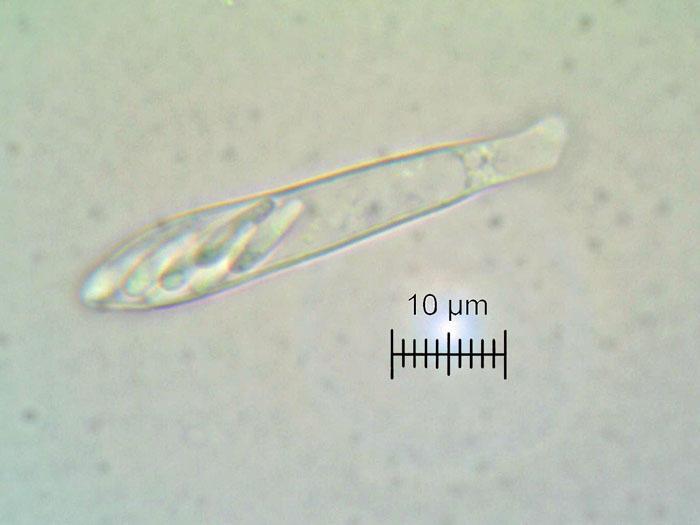
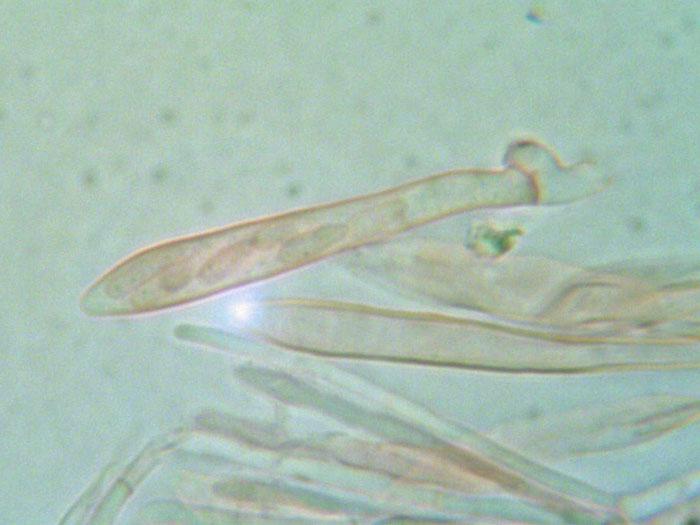
Paraphyses simple, up to 2 µm wide at the apex without content. Asci with croziers 39-42 x 5 µm, IKl+ blue (Calycina-type), spores hyaline, clavate, oil 0-1, (9-11) 9,88 x 2,57 (2-3) µm.
Regards
Maren




Hello Maren,
I do not think this is a Pyrenopeziza. Unfortunately, the views of the paraphyses are rather blurred, but I suggest they contain vacuolar bodies. So, it could (should) be a Mollisia. Maybe, it could be M. hydrophila which has similar spores and appearance. But surely, more competent people will write there opinion.
Yours, Lothar
it was very difficult to get a clear picture of the paraphyses at all, this one is with 500x.
There maybe some vacuolar bodies present, but none refractive. I don't think it is M. hydrophila because there are no crystals in the medulla.
Regards
Maren


I also think it is a Pyrenopeziza, the paraphysis contents are now clear.
On monocots I have nothing with such clavate spores, however.
I assume this is a rather sparse collection? All apos looking like this?
Zotto
ich habe an einem anderen Halm noch eine Gruppe mit Fruchtkörpern fotografieren können. Pyrenopeziza psilocistelloides Baral sp. prov. kann es wohl wegen der septierten Randhaare nicht sein, oder?
Gruß, Maren
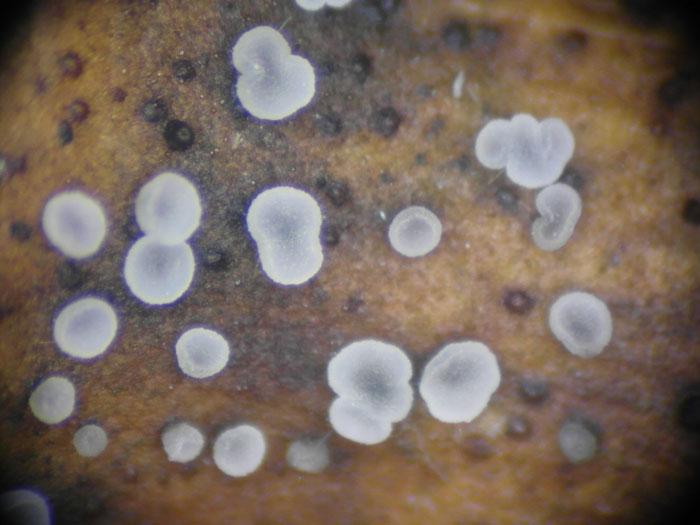
Also das war schon deutlich haarig, und ob es wirklich eine Pyrenopeziza war? War auf ?Deschampsia aus Gerardmer.