
10-06-2026 21:16
 François Freléchoux
Bonsoir,Le dernier du jour, en attendant votre avi
11-06-2026 19:01
 William Slosse
Hello all,In an attempt to make a culture of a sus
11-06-2026 19:03
 Nicolas VAN VOOREN
Chers membres d'Ascofrance,Le site sera placé en

09-06-2026 18:32
Camille MertensSur morceau de roseau immergé 0,5 - 0,7 mm de dia
10-06-2026 12:54
Steve ClementsBonjour encore, Pouvez-vous m'aider, s'il vous pl
10-06-2026 21:07
François Freléchoux
Toutes les tiges de gentianes jaunes de l'an passÃ
10-06-2026 13:41
François Freléchoux
Bonjour à nouveau, Voici une trouvaille d'hier.
10-06-2026 11:53
Steve ClementsBonjour, This disco is abundant on dead stems of
Nectria violacea.
Luc Bailly,
27-10-2009 16:26
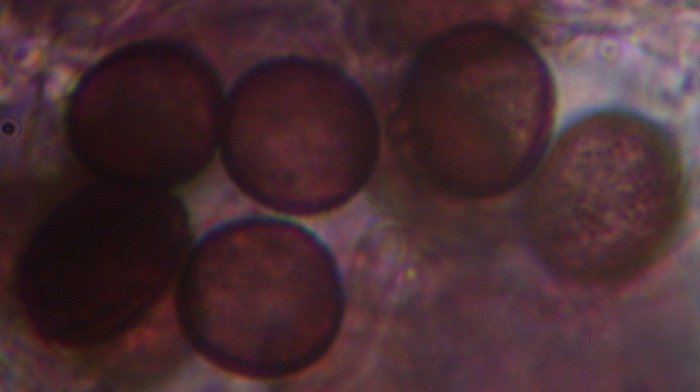
 Quelles sont ces cellules violettes verruqueuses, -> 10 µ, que l'on observe autour des périthèces, dans le stroma de Nectria violacea? L'anamorphe?
Et est-ce Nectria ou Nectriopsis violacea?
Amitiés - Luc BAILLY.
Gary Samuels,
27-10-2009 16:31
Re:Nectria violacea.
Nectriopsis violacea only occurs on the slime mould, Fuligo septa. The round 'cells' might be spores of the Fuligo. The anamorph of N. violacea is acremonium-like, with hyaline, ellipsoidal conidia. N violacea is the only species I know to occur on F septica. It is easily recognized by a crown of white hairs around the ostiolar opening. These can be seen with a loup.
Luc Bailly,
27-10-2009 16:39
Re:Nectria violacea.
Ah, okay, thanks. I was surprised by the color very similar to that of the Nectriopsis's peritheces.
And yes, it was on an old Fuligo septica. And I did notice the white hairs.
Thanks, and cheers - LUC.
And yes, it was on an old Fuligo septica. And I did notice the white hairs.
Thanks, and cheers - LUC.