22-05-2026 18:12
 Lothar Krieglsteiner
... in moist chamber from Portugal.As the fungus s
11-01-2022 16:36
 Jason Karakehian
Hi does anyone have a digital copy of Raitviir A (
20-05-2026 17:47
Margot en Geert VullingsWe found this Mollisia on dead Juncus stems mown l
22-05-2026 14:47
Gernot FriebesHi,superficial ascomata collected on bark of a liv
22-05-2026 14:44
Lothar Krieglsteiner
in unripe condition citrine yellow, then soon fadi
22-05-2026 13:29
Gernot FriebesHi,I am curious to hear your opinion on this mater
22-05-2026 10:59
 Nicolas VAN VOOREN
Trouvé sur Phragmites, ce que je pense être un L
20-05-2026 21:49
Margot en Geert VullingsWe found this Lachnum on Juncus stems mown last ye
21-05-2026 17:01
Pierre RepellinBonjour à toutes et à tous,Je recherche l'articl
20-05-2026 20:08
 Andreas Millinger
Good evening,another quite distinctive find from M
similar to Karstenia but iodine-negative - on Osmunda in moist chamber
Lothar Krieglsteiner,
22-05-2026 18:12
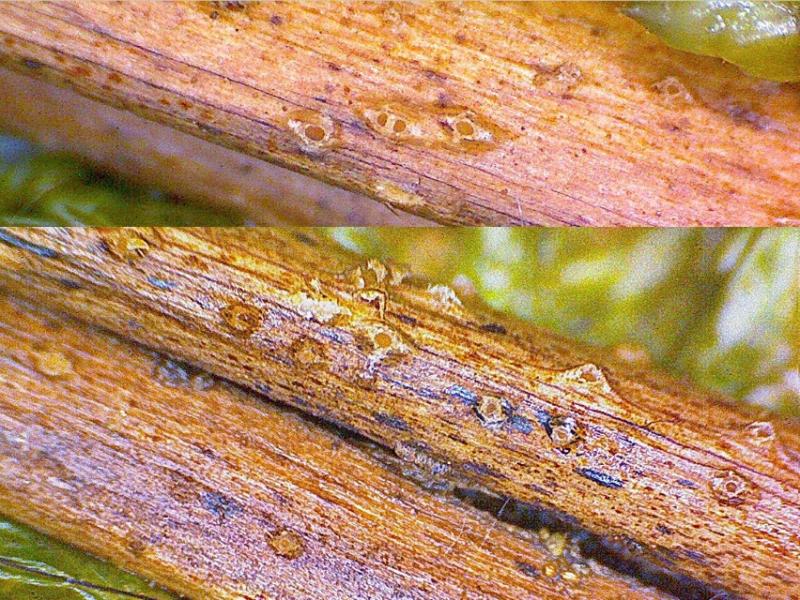
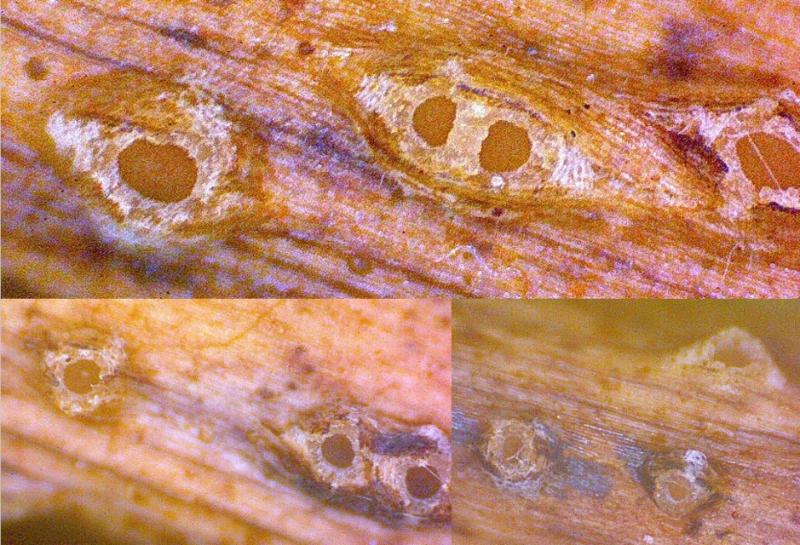
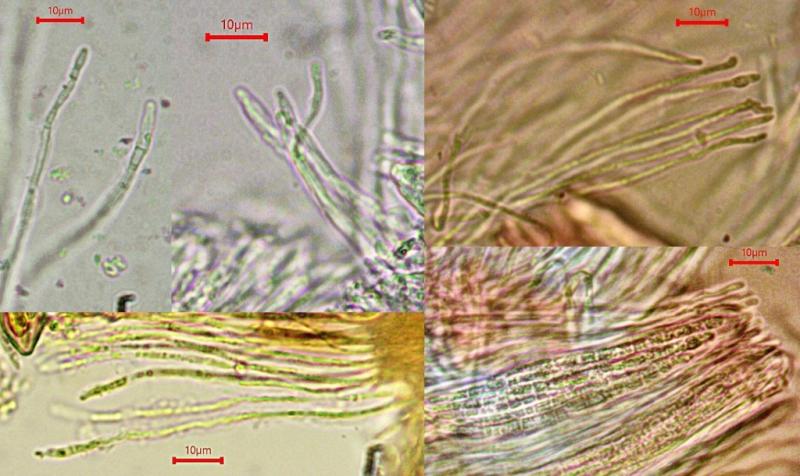
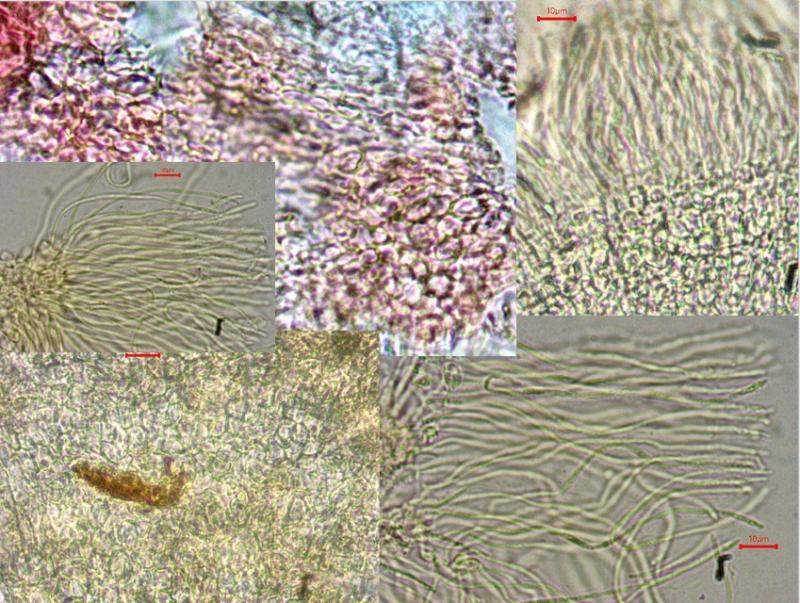
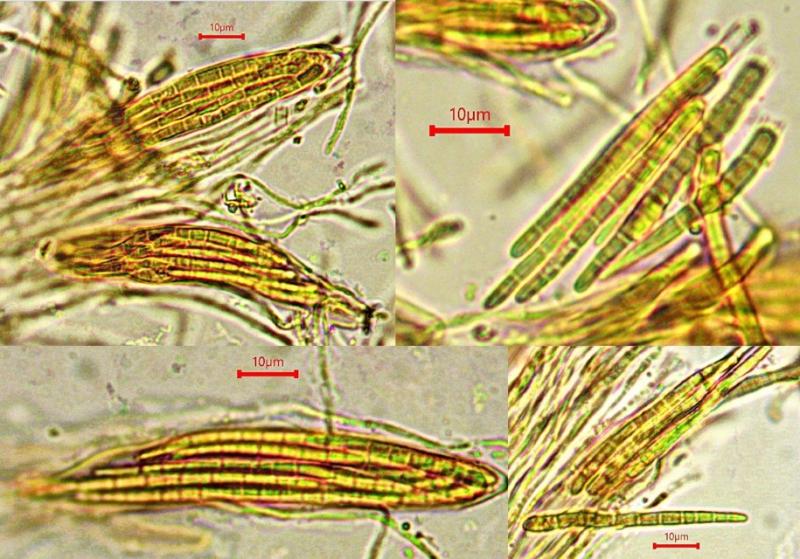
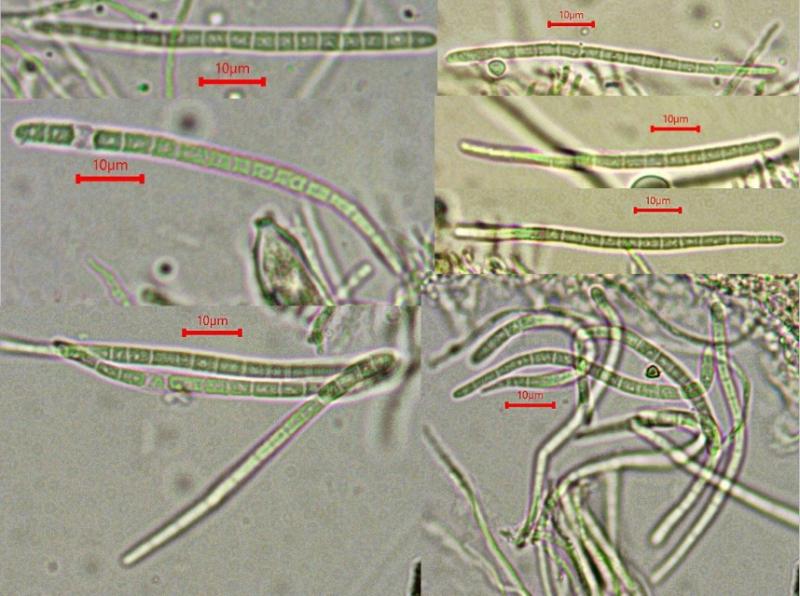
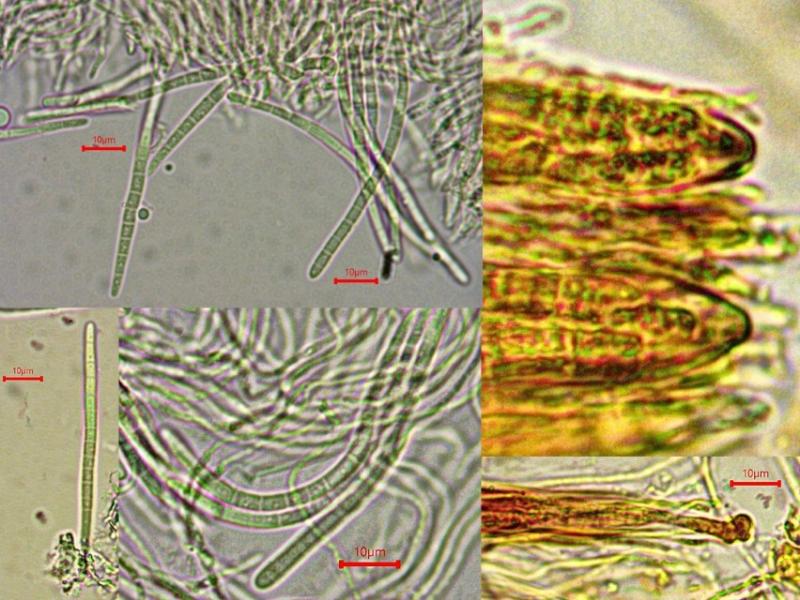
... in moist chamber from Portugal.As the fungus seems to be completely IKI-negative, it seems to be no Cryptodiscus or Karstenia, although the macroscopical appearance and the spores would lead to e.g. Karstenia rubi (not fully fitting also otherwise).
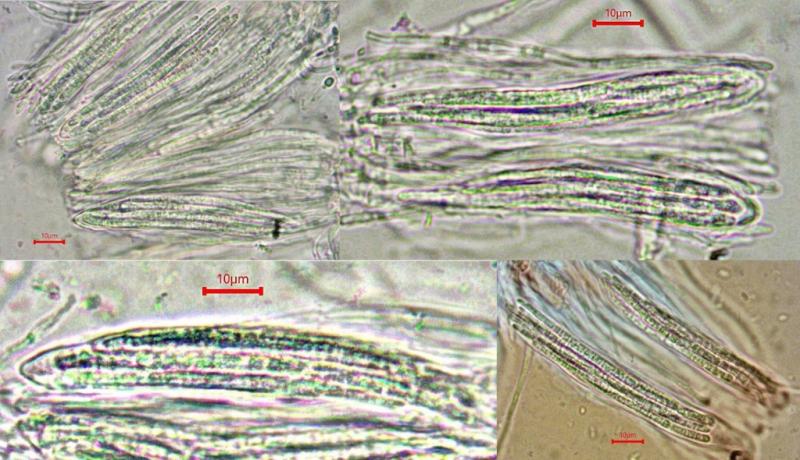
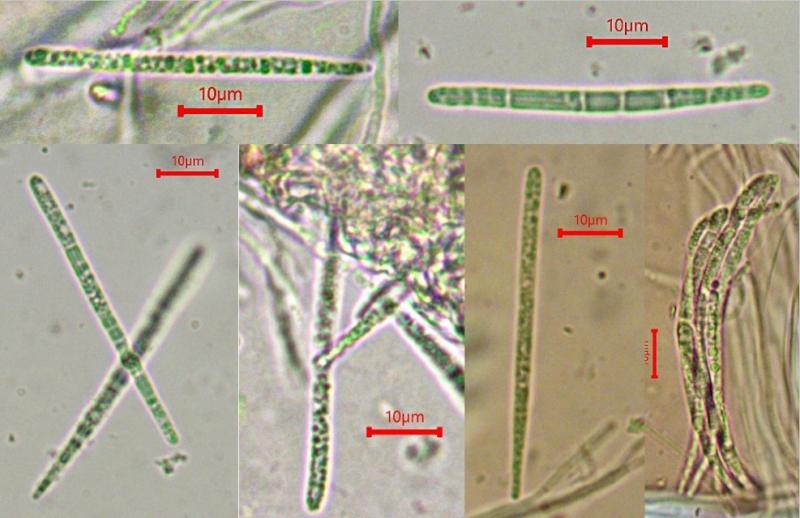
The spores are fully guttulate in living state (first pictures in water - I want to apologize that my pictures are a bit a wild mixture of preparations in H2O, KOH, Kongo-NH3, Baral after H2O and Melzer), showing their septation in dead stage (later pictures). There seem to be between (9) 13-17 septa. The spores are thin and clavate, with a thicker end, and measure about (40 - unriper spores partly set free) 50-65/2-2,5(3) µm. The paraphyses and the periphyses are filiform and a bit irregularly swollen at the apex. The excipulum is of textura angularis.
As I said: no (blue) reaction with Baral or Melzer, also not after KOH-pretreatment. The ascus-apices are a bit conical and maybe a bit more dextrinoid than other tissues. The asci bear croziers at their bases.
Who does have an idea?
Best reagards, Lothar