
06-05-2026 11:25
 Castillo Joseba
Me mandan el material seco de Galicia (España) re
28-04-2026 20:07
 Lothar Krieglsteiner
... on twig in the air at standing Ceratonia siliq
05-05-2026 22:40
Gernot FriebesHi,I believe this is a Plagiostoma growing on a Sa
04-05-2026 18:13
 Stephen Martin Mifsud
ID request for what seems to be a true aquatic fun
04-05-2026 16:39
Stephen Martin Mifsud
ID request: This specimen was collected in Malta o
28-07-2011 18:31
 Alex Akulov
Dear FriendsToday I made the pdf file of Velenovsk
04-05-2026 09:50
Castillo Joseba
Me mandan el material seco de Galicia,(España) re
02-05-2026 12:42
Alain BRISSARDBonjour à tousJeuidi 30 avril dernier on m'a remi
02-05-2026 13:06
Pauline. PennaBonjour Please can someone help me with this id
 Hello everyone,
On 23/03/26, I found the following asco among ground-covering Ficaria verna in a damp deciduous forest. Not a single Anemone nemorosa was growing in the wider area.
The location is situated in Waardamme, Belgium, in the Rooiveldbos on the bank zone of the Rivierbeek.
I suspect I am dealing with Sclerotinia binucleata here, but based on the size of the apethecia, I do not rule out sclerotiorum.
Binucleata was already found on the opposite side of the Rivierbeek in the same forest in March 2024. However, at that time, the apothecia appeared to be significantly larger.
Can my data dispel the doubt?
Macroscopic:
° apothecia: cup-shaped; diameter max up to 16 mm; fawn-colored to dark rust-brown; darkening towards the stalk; weakly hygrophanous
° stalk: dark brown above ground; black below ground; diameter up to 1.5 mm; maximum measured length 53 mm.
° sclerotium: small, up to 5 mm; thin-walled; black; contents white, dry and cottony, not gelatinous.
Microscopic:
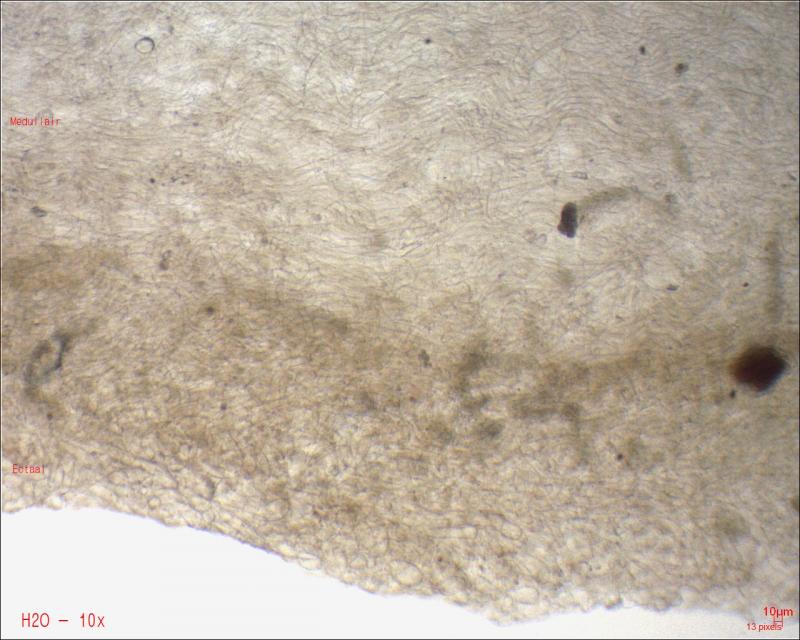
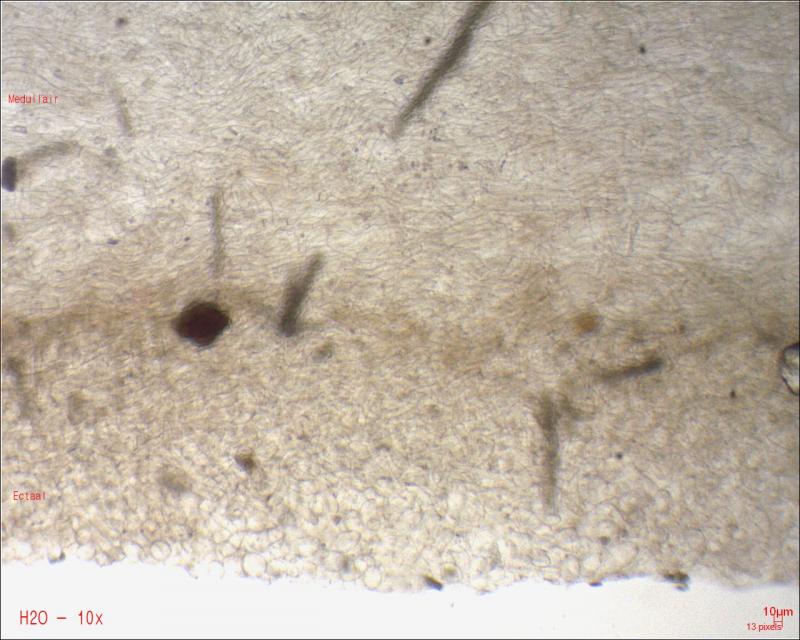
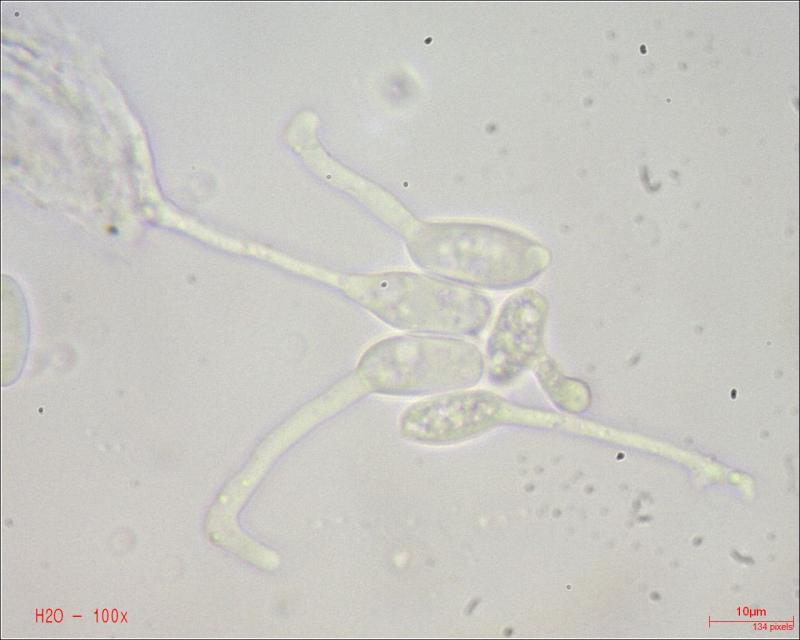
° close to the ectal excipulum lies a zone with relatively straight, elongated cells parallel to the outer wall.
° no reactions in the excipulum to Melzer or Lugol
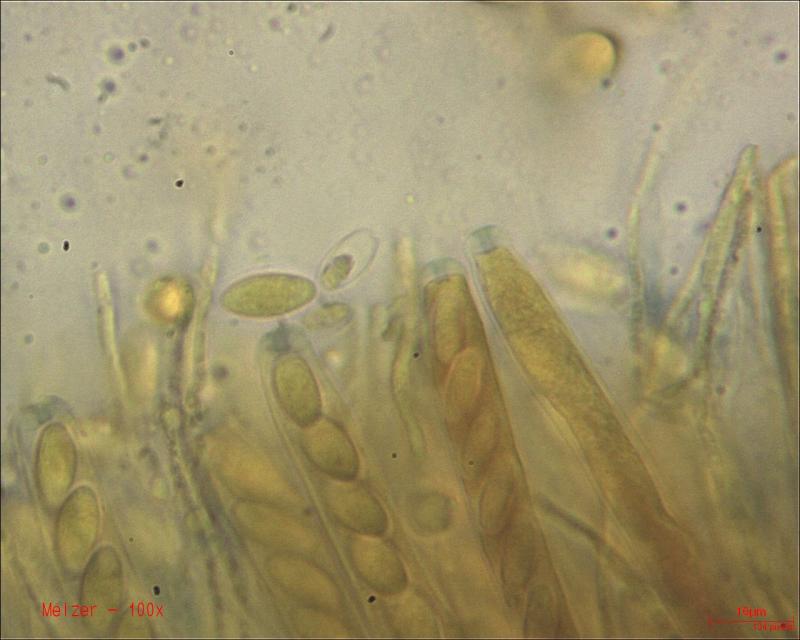
° contents asci (not the spores) dextrinoid in Melzer
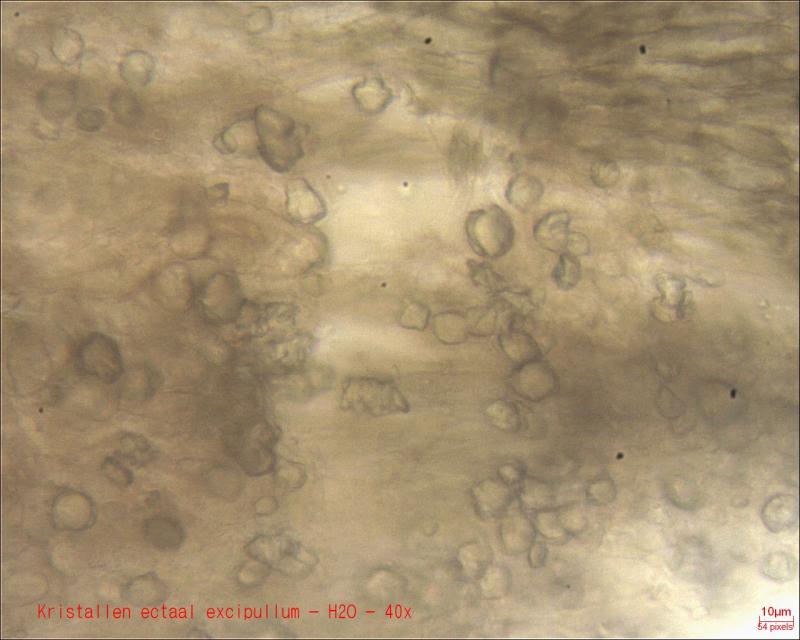
° crystals in (on?) the ectal excipulum present in the zone around the stalk attachment
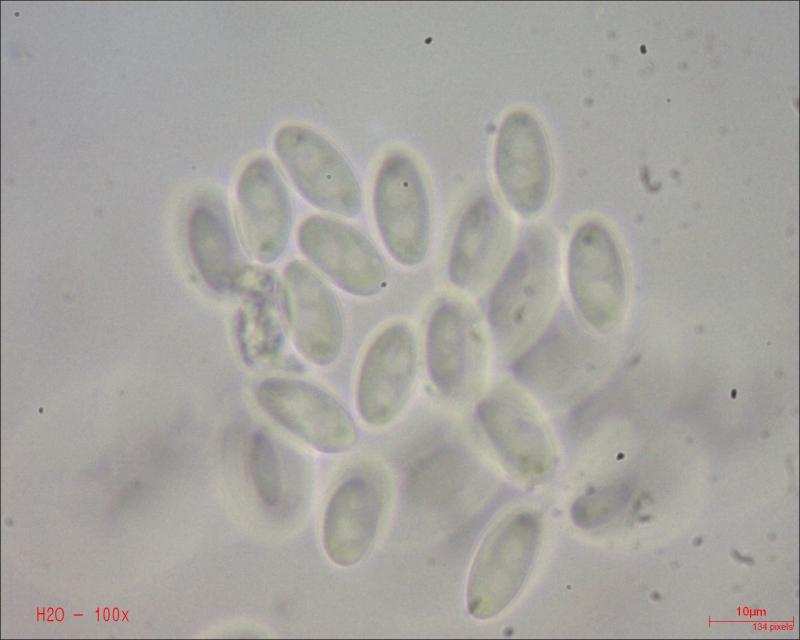
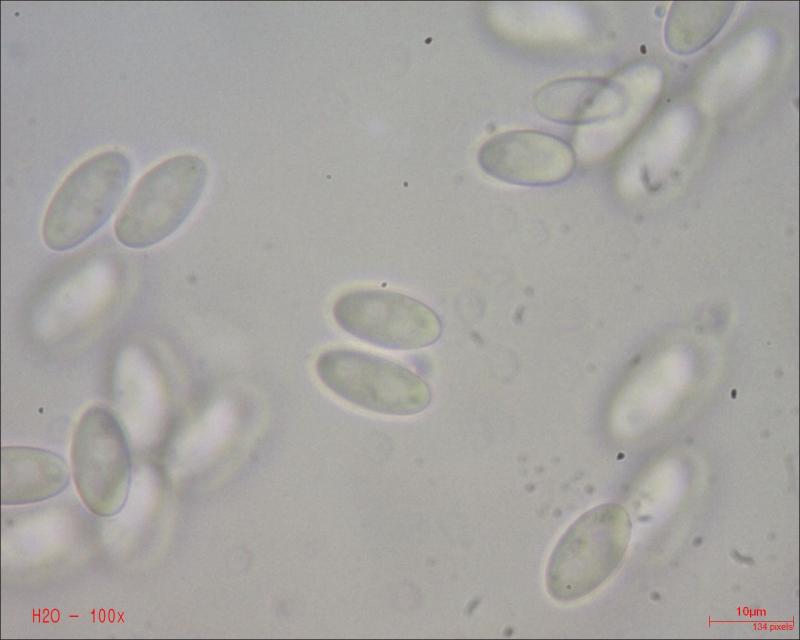
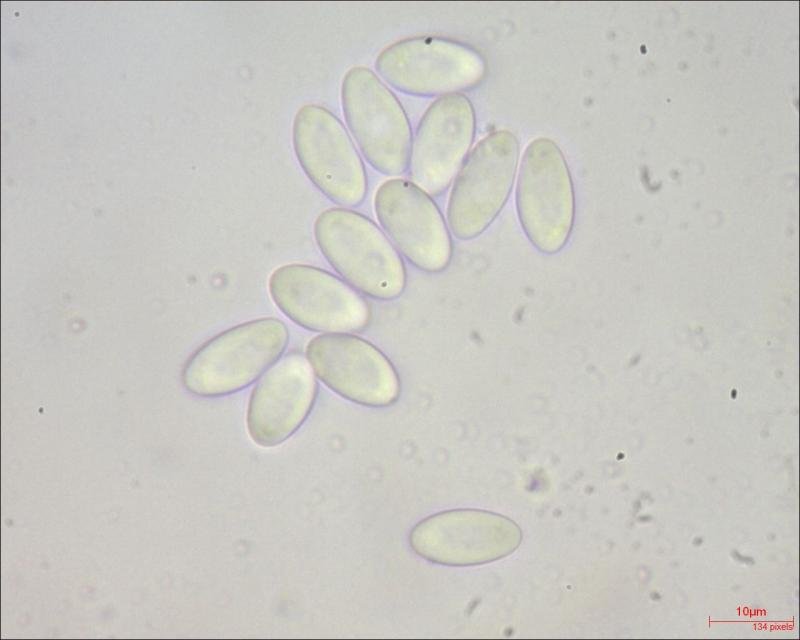
° spores: clearly binucleate; measurement from sporee and in water: (12.1) 12.3 - 14.6 (15.4) × (6.3) 6.5 - 7.1 (7.3) µm
Q = (1.8) 1.81 - 2.2 (2.3) ; N=45
Me = 13.4 × 6.8 µm ; Qe = 2
Many thx in advance,
William
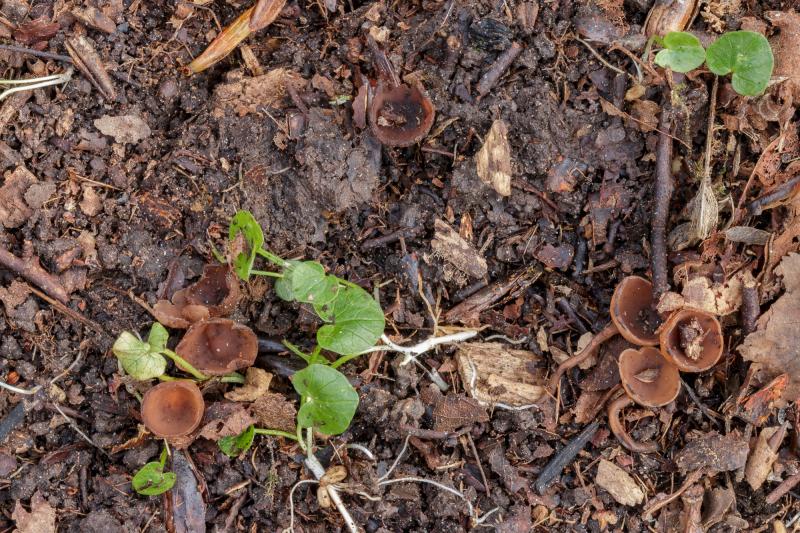
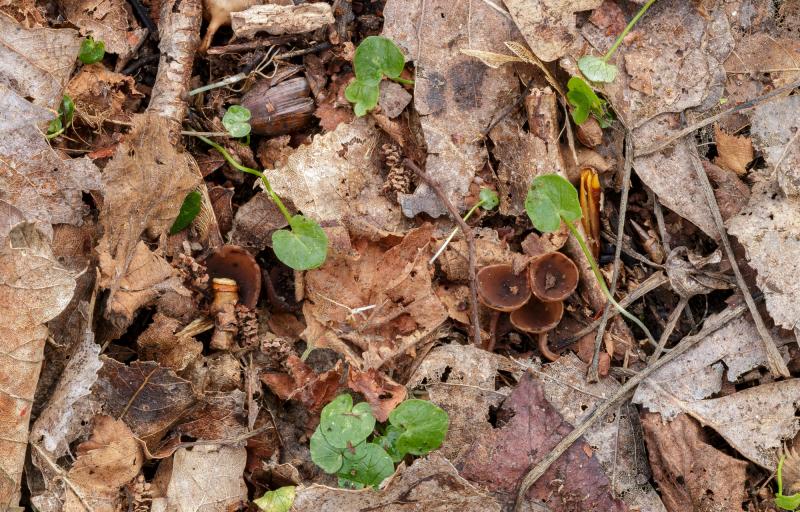
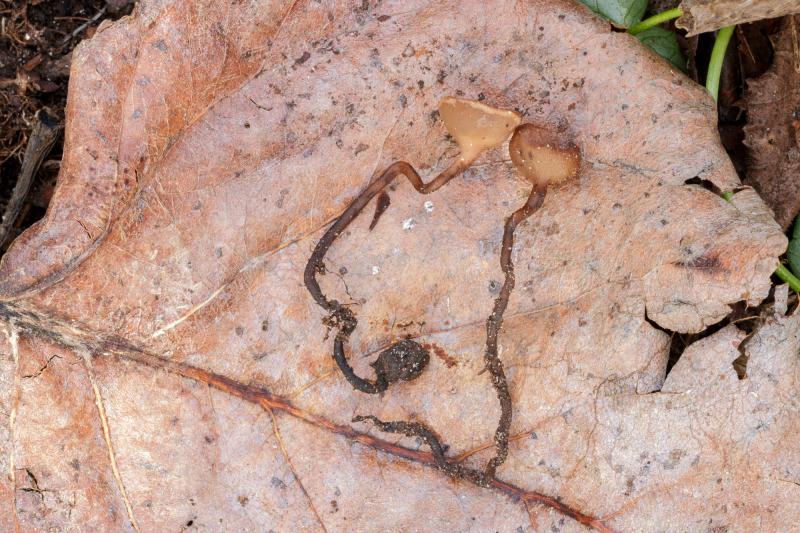
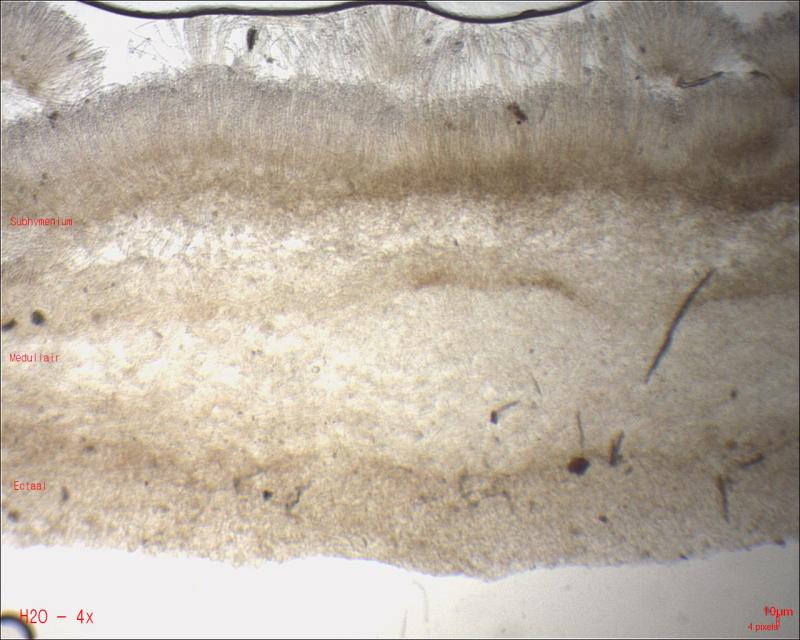

Currently, I still have 4 relatively fresh specimens from the collection. The rest has dried out.
Here are the measurements in mm (apo diameter / stem length / stem thickness below apo / stem thickness against sclero):
1. 9 / 34.5 / 1.2 / 1.1
2. 11 / 32.5 / 2.8 / 0.8
3. 7.1 / 43.5 / 1.5 / 0.5
4. 10.5 / 47 / 1.8 / 0.9
In a few days, I will try to collect new collections, this time in Wingene.