
02-05-2026 12:42
Alain BRISSARDBonjour à tousJeuidi 30 avril dernier on m'a remi
02-05-2026 13:06
Pauline. PennaBonjour Please can someone help me with this id
01-05-2026 22:45
 Thierry Blondelle
Bonjour à tous, Une récolte sur bouse séchée d
28-04-2026 20:07
 Lothar Krieglsteiner
... on twig in the air at standing Ceratonia siliq
14-04-2026 05:32
Ethan CrensonHi all, A few weeks back a friend pointed out som
28-04-2026 20:33
Vitus SchäfftleinHello, I found Trochila ilicina on Ilex aquifoliu
30-04-2026 10:28
Rot BojanHello, by appearance I would say that I am dealing
27-04-2026 18:48
Tony MoverleyCollected 23rd April 2026, Norfolk, EnglandSwarms
27-04-2026 20:52
Lothar Krieglsteiner
Found on hanging tiwg of Olea europaea in dried-ou
 Good evening
I'm unable to identify this Coprotus on cow dung, which was found next to C. leucopocillum. It have very similar characteristics to this species, but is much paler in color and has considerably smaller asci and spores. Matocec's keys lead me to C. disculus or C. dextrinoideus, but it doesn't fit either description.
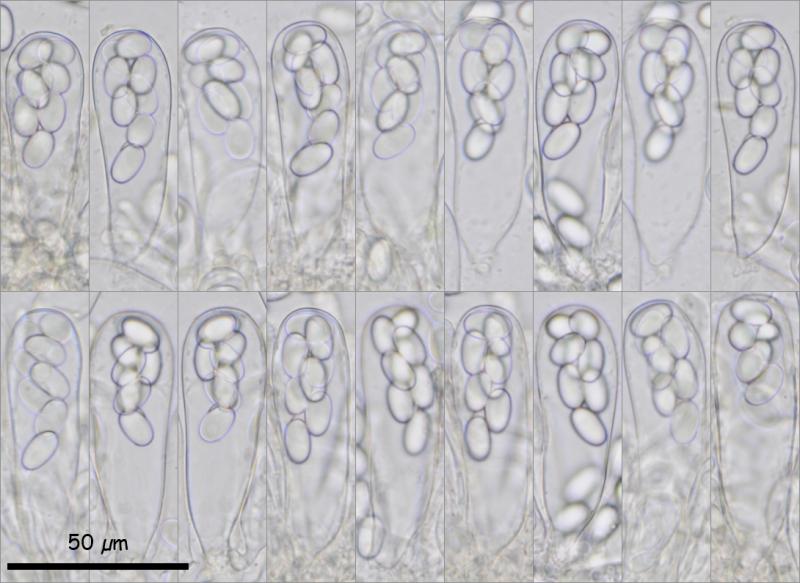
Asci short clavate, biseriate, (63,3) 67 - 76,8 (79,6) × (18,6) 20,4 - 23,4 (23,5) µm; Q = (2,9) 3 - 3,7 (3,8) ; N = 24; Me = 71,4 × 21,8 µm ; Qe = 3,3
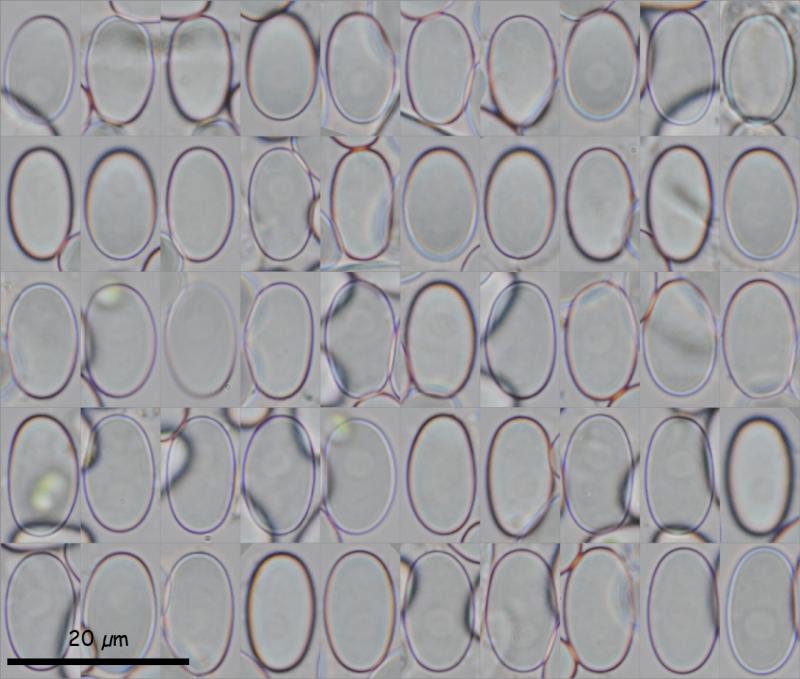
Spores ellipsoid, (11,1) 11,9 - 13,2 (14,4) × (6,9) 7,1 - 7,8 (8,2) µm; Q = (1,4) 1,6 - 1,8 (1,9) ; N = 96; Me = 12,6 × 7,5 µm ; Qe = 1,7
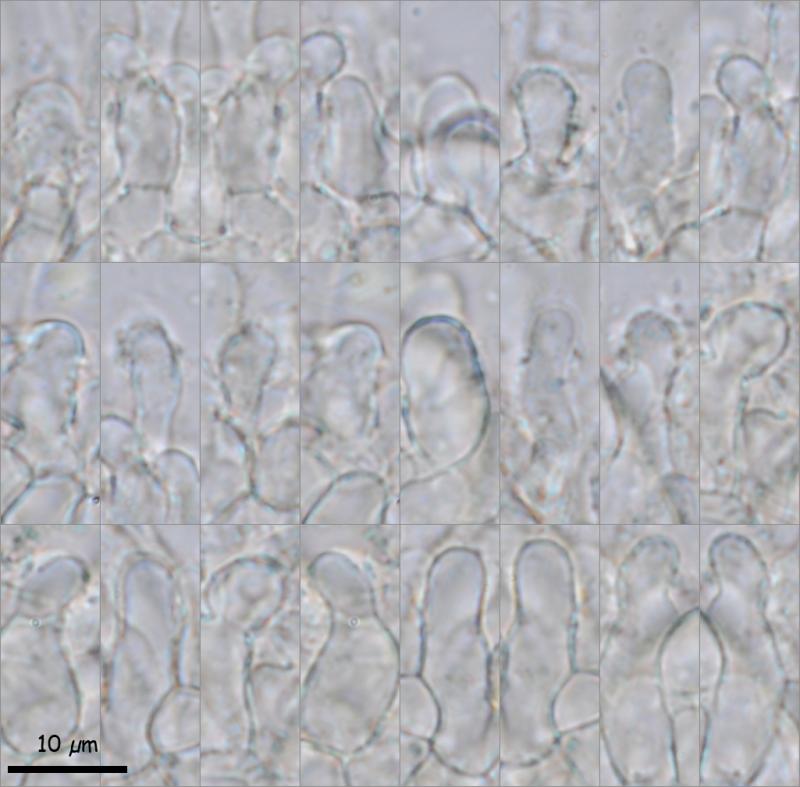
Marginal cells elongated, (9,4) 10,1 - 19,2 (21,4) × (3,4) 3,7 - 7,3 (7,8) µm; Q = (1,7) 1,9 - 4,2 (5,7) ; N = 24; Me = 14 × 5 µm ; Qe = 2,9
Paraphysis inflated at apex up to (4,8) 5,4 - 7,2 (7,5) µm; N = 23; Me = 6,4 µm
Thank you in advance.
Miguel Á. Ribes
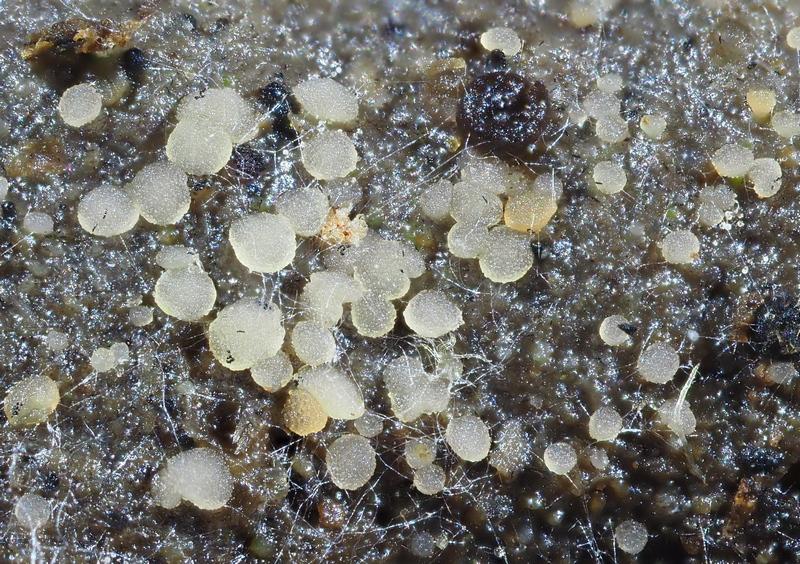
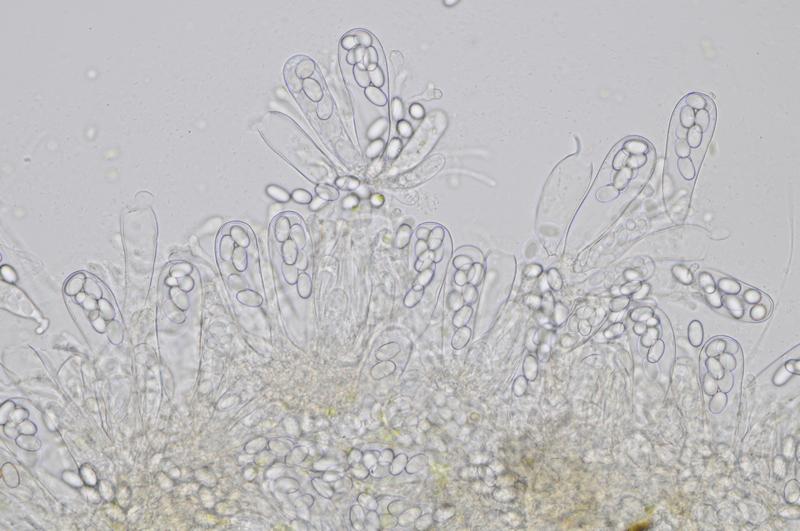
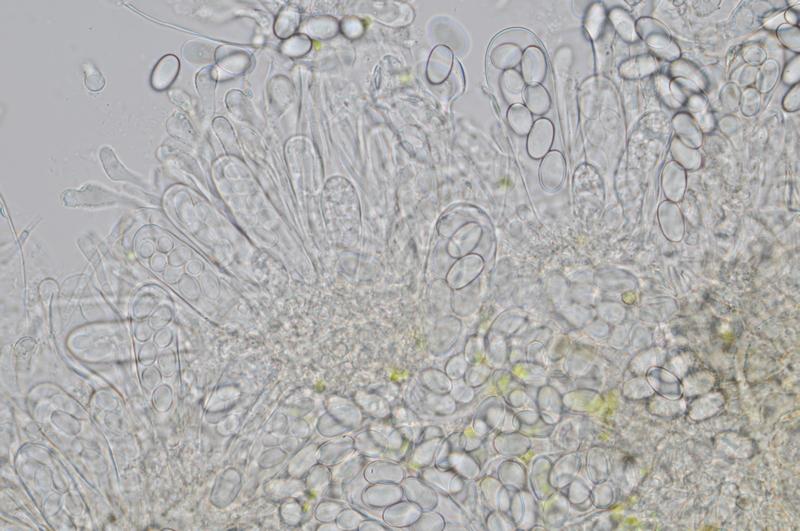
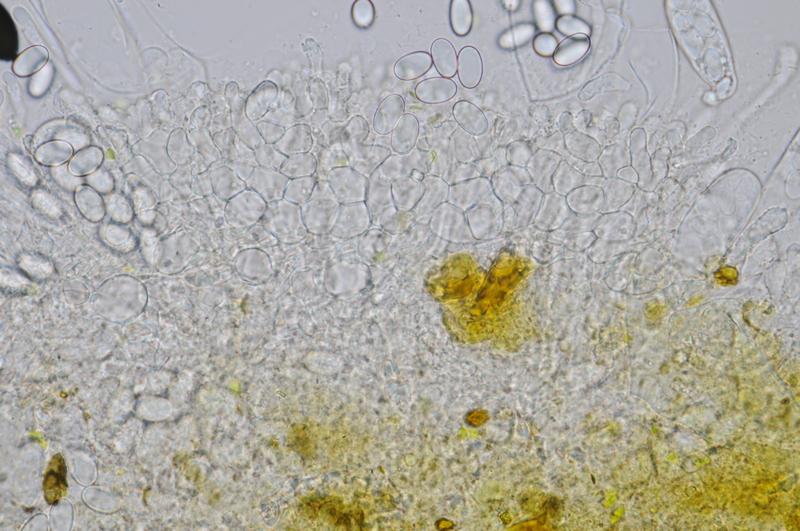

Muchas gracias.
Reviewing the asci and spore measurements of all the species in Kusan and Matocec's key, I arrived at these three species based on spore size, but none of them quite fit:
* C. granuliformis, because its asci are much more clavate and smaller, measuring 38-60 x 14-30.
* C. disculus, because its asci are much more cylindrical.
* C. dextrinoideus, because its asci are much larger, measuring 80-125.
The only thing I can think of is that it might be something similar to C. leucopocillum, which was right next to these apothecia, but with an abnormal development.
Any suggestion?
Thank you in advance.
Miguel Á. Ribes