
27-04-2026 18:48
Tony MoverleyCollected 23rd April 2026, Norfolk, EnglandSwarms
27-04-2026 17:41
 Lothar Krieglsteiner
.. Algarve, same leaf than the last post. The con
27-04-2026 18:05
Lothar Krieglsteiner
... still attached at standing tree. The green con
27-04-2026 17:16
Lothar Krieglsteiner
.. Algarve, moist lying.The conidiomata look like
27-04-2026 12:54
Steve ClementsBonjour. Ce petit champignon blanc résupiné et
27-04-2026 09:59
Pauline. PennaBonjour Can anyone advise me on these pycnidia fo

22-04-2026 20:54
 Enrique Rubio
Hi to everybody.This Pyrenopeziza grew in moist le
24-04-2026 03:16
 David Chapados
Found while looking at something else from wood in
Ostropoloid fungus on Hibiscus
Enrique Rubio,
12-03-2026 19:44
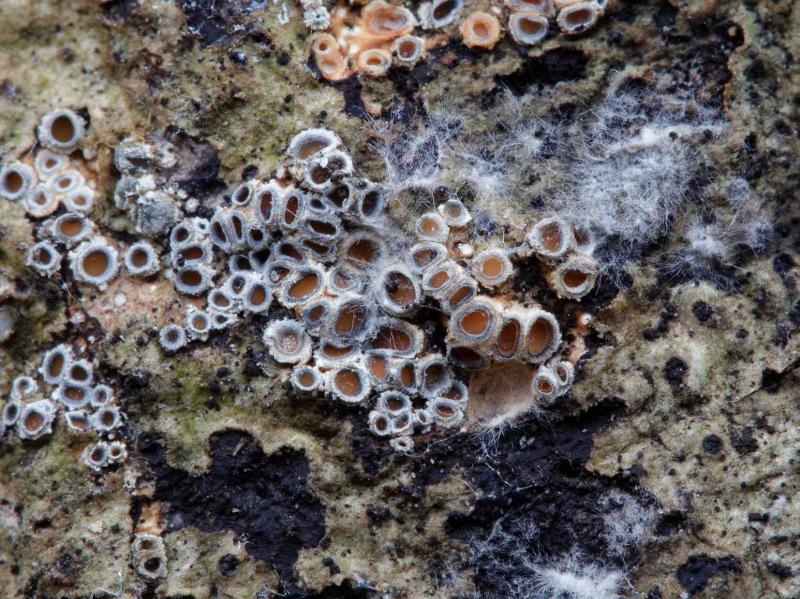
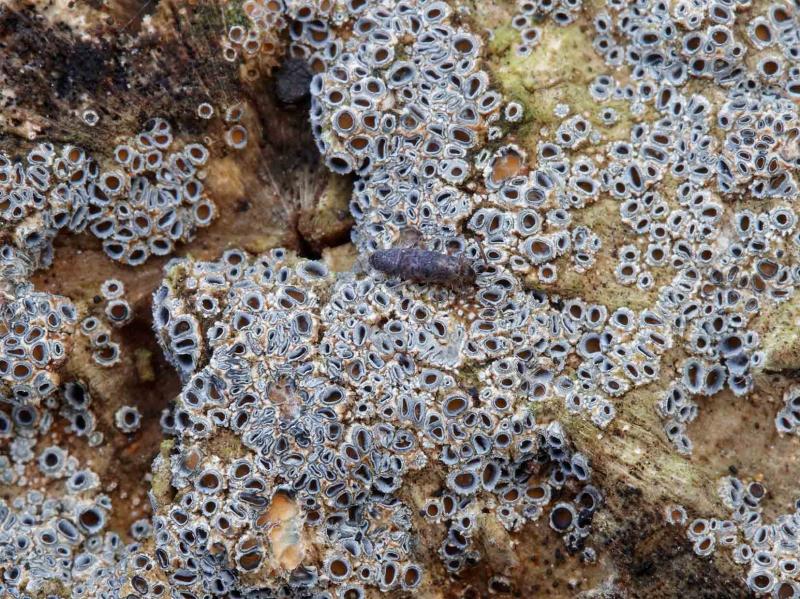
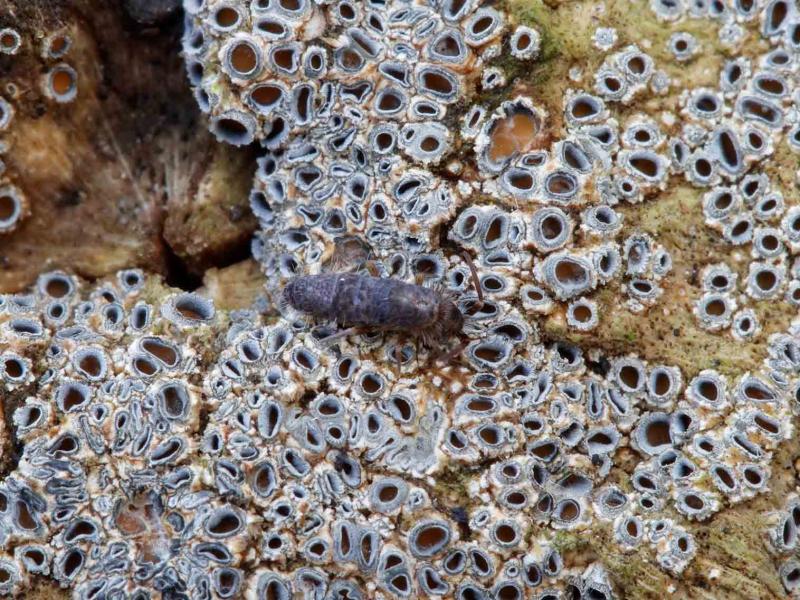
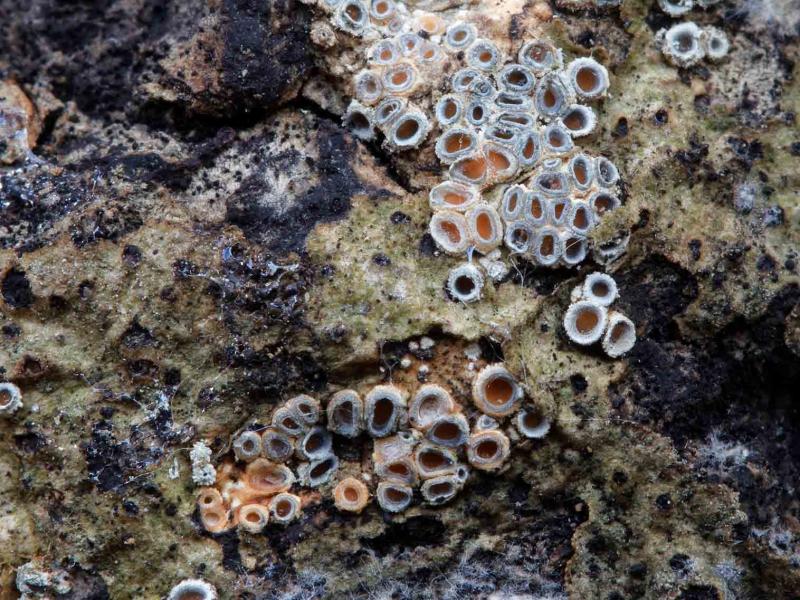
Hi to everybody.Can you give me any suggestions about this ostropoloid fungus that grows in large groups on Hibiscus syriacus wood? The asci show a reddish reaction in IKI even after pretreatment with KOH, the paraphyses lack a pigmented epithecium, and the spores appear to form chains of cuboid, prismatic or almost roundish part-spores that quickly disarticulate.
I don't even know if it is Stictis, Schizoxylon, or some other related genus.
Thank you in advance for your help.
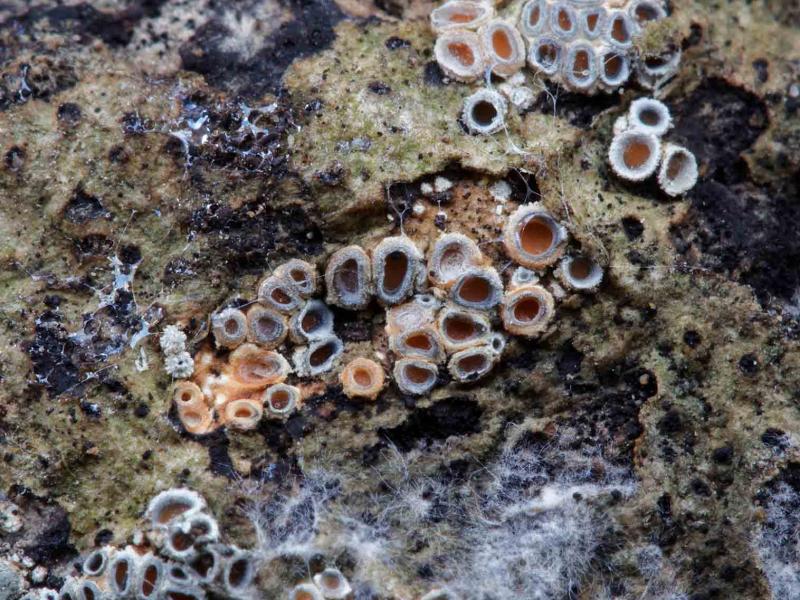
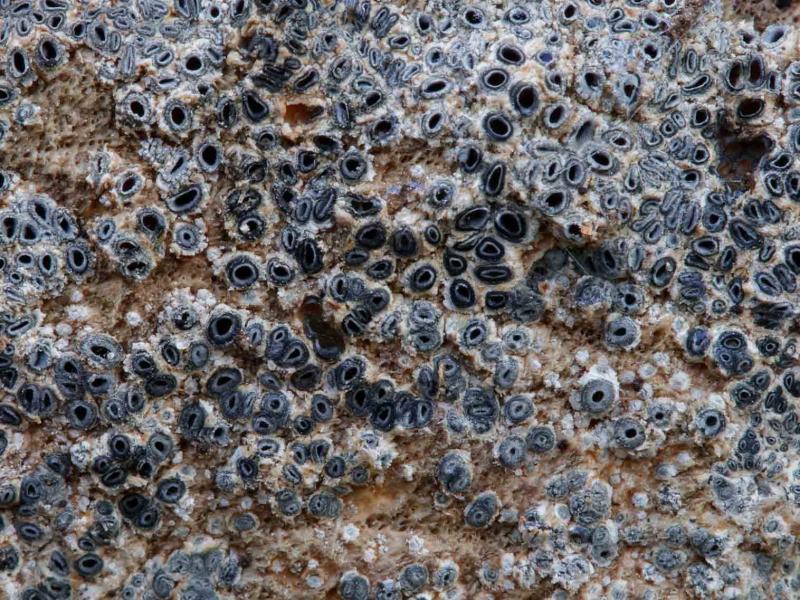
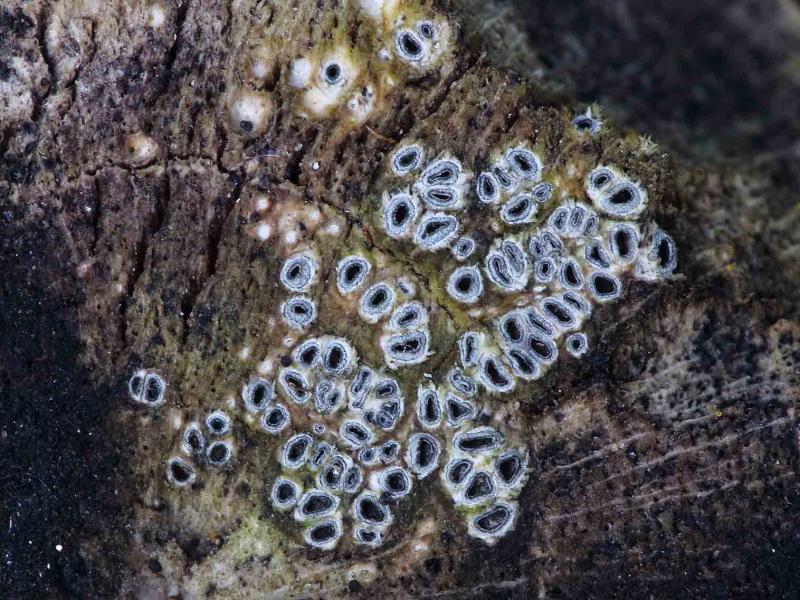
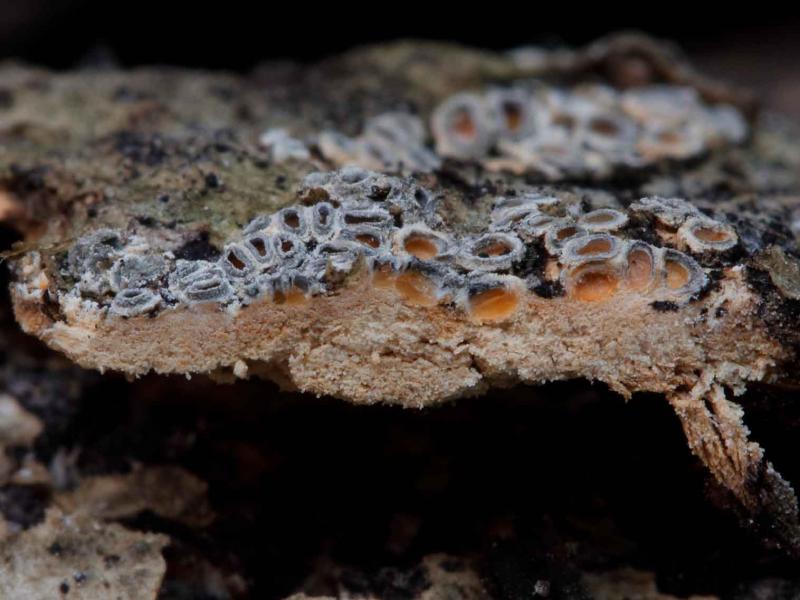
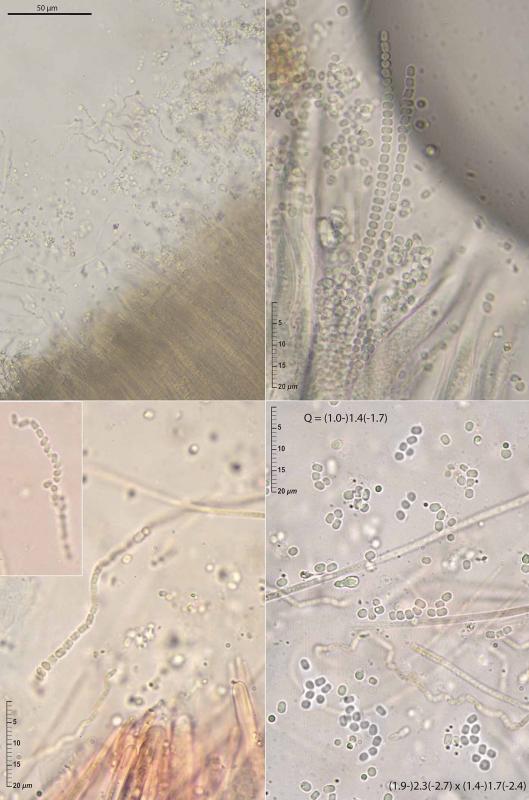
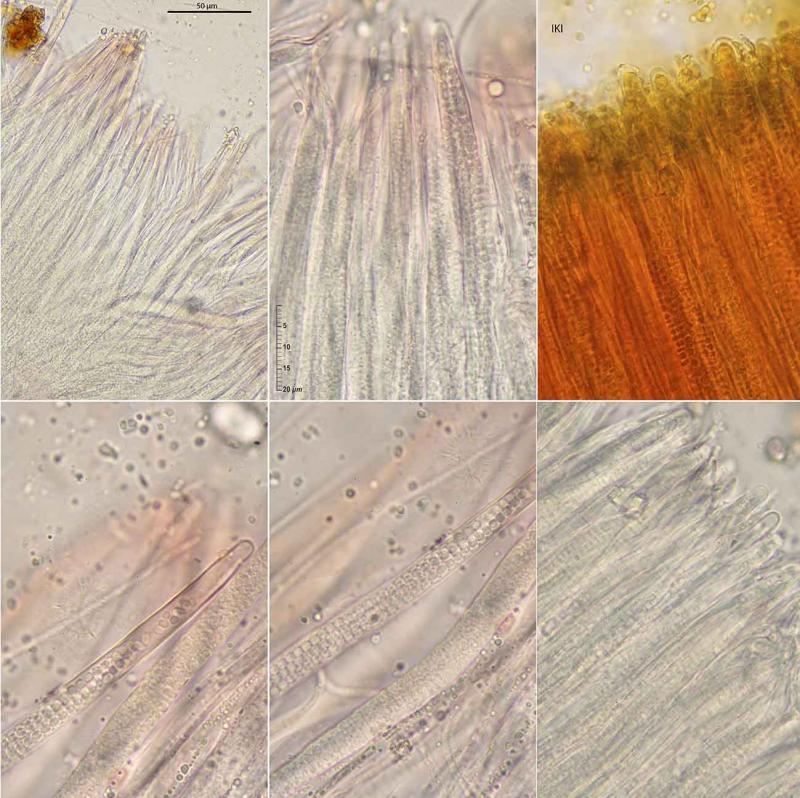
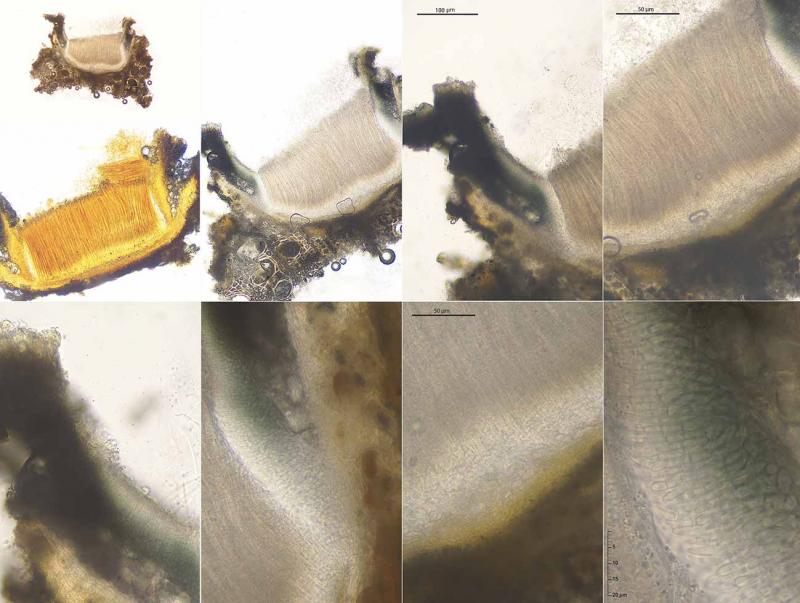
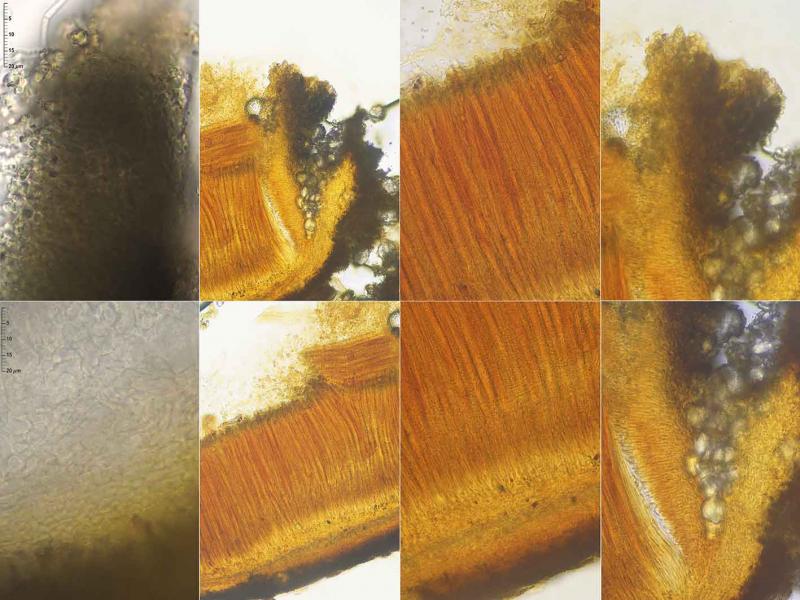
Hans-Otto Baral,
13-03-2026 11:35

Re : Ostropoloid fungus on Hibiscus
It appears that the asci are inamyloid. No idea where this reddish reaction is located, can you exclude the ascus plasma?
Inamyloid asci in Ostropales are rather rare, as far as I know. Robergea is inamyloid (even after KOH), but no wonder for a perithecioid fungus.
Jason Karakehian,
16-03-2026 22:42

Re : Ostropoloid fungus on Hibiscus
Amazing photos! What a cool fungus!
Jason Karakehian,
17-03-2026 12:52
Re : Ostropoloid fungus on Hibiscus
Have you looked at Acarosporina? I was looking at Sherwood 1977. Maybe yours is near Acarosporina monilifera? I didn't try to key out your fungus in Sherwood, just flipping through and looking at drawings. You don't report any bluing reactions though.
Enrique Rubio,
17-03-2026 14:00
Re : Ostropoloid fungus on Hibiscus
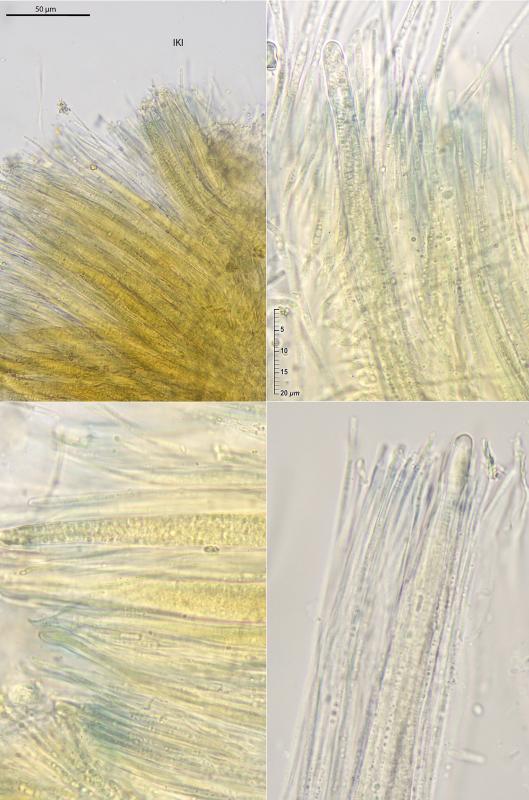
Today I rehydrated some ascomata and, surprisingly, I noticed that the upper parts of both the asci and the paraphyses appear to react to IKI, turning a faint bluish colour that I hadn't been able to observe when they were fresh. I've been reading Sherwood's paper and I can see that Jason's hypothesis might well be correct.
Thank you both for your help
Thank you both for your help
Jason Karakehian,
17-03-2026 14:04
Re : Ostropoloid fungus on Hibiscus
That's great!
Enrique Rubio,
17-03-2026 14:31
Re : Ostropoloid fungus on Hibiscus
As I am not very familiar with Ostropales, I find it puzzling that the examination of fresh specimens reveals an almost uniform reddish reaction, whereas rehydrated specimens show very little reddish reaction and exhibit bluish tones near the tips.
Hans-Otto Baral,
17-03-2026 14:41
Re : Ostropoloid fungus on Hibiscus
I thought I saw a very faint bluing already on your first IKI pic. It seems to me that only the paraphyses react. Good hinz with Acarosporina monilifera, I never saw images of that species.
Jason Karakehian,
17-03-2026 15:23
Re : Ostropoloid fungus on Hibiscus
Thank you. Unfortunately, there is no material here at BPI for me to compare Enrique's images to. It is just a guess, but it may fit.