

05-05-2026 22:40
Gernot FriebesHi,I believe this is a Plagiostoma growing on a Sa
06-05-2026 11:25
 Castillo Joseba
Me mandan el material seco de Galicia (España) re
06-05-2026 17:23
Thomas Læssøehttps://svampe.databasen.org/observations/10594257
28-04-2026 20:07
 Lothar Krieglsteiner
... on twig in the air at standing Ceratonia siliq
04-05-2026 18:13
 Stephen Martin Mifsud
ID request for what seems to be a true aquatic fun
04-05-2026 16:39
Stephen Martin Mifsud
ID request: This specimen was collected in Malta o
28-07-2011 18:31
 Alex Akulov
Dear FriendsToday I made the pdf file of Velenovsk
04-05-2026 09:50
Castillo Joseba
Me mandan el material seco de Galicia,(España) re
Unknown near Pseudohalonectria
Tomaz Vucko,
13-02-2026 03:30
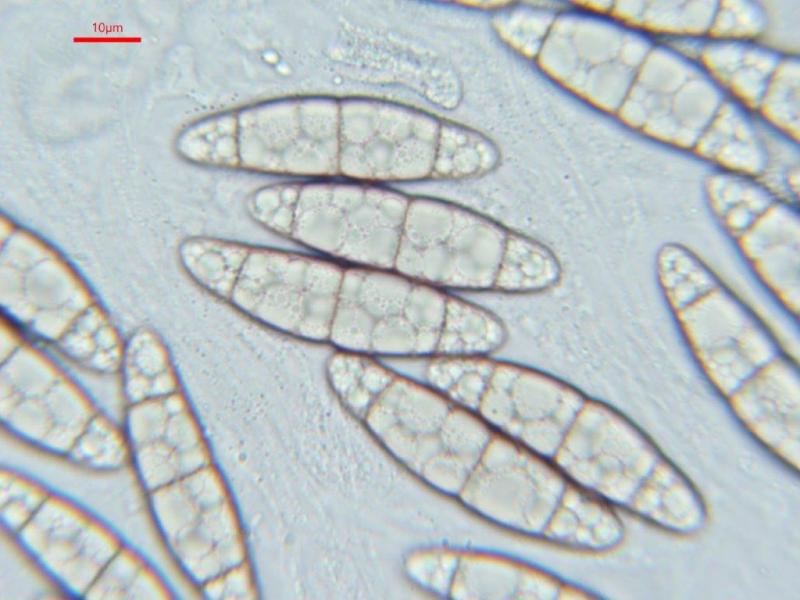
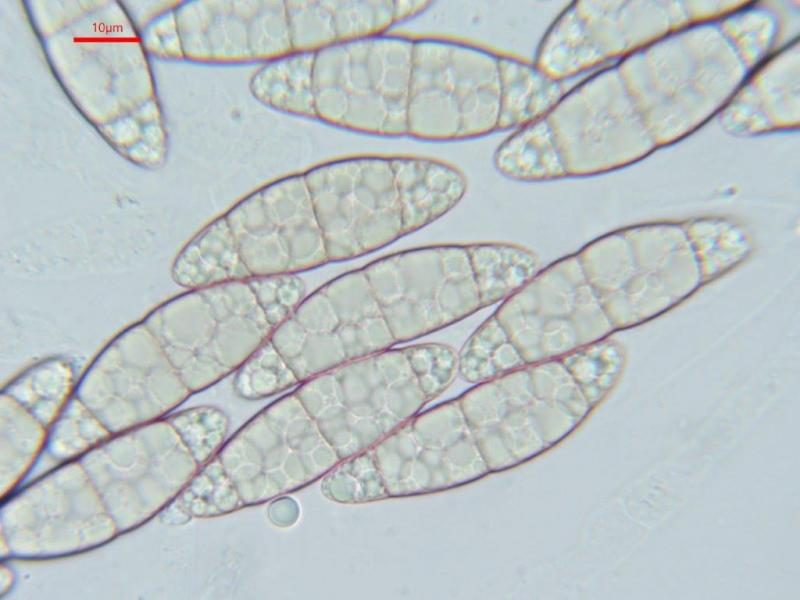
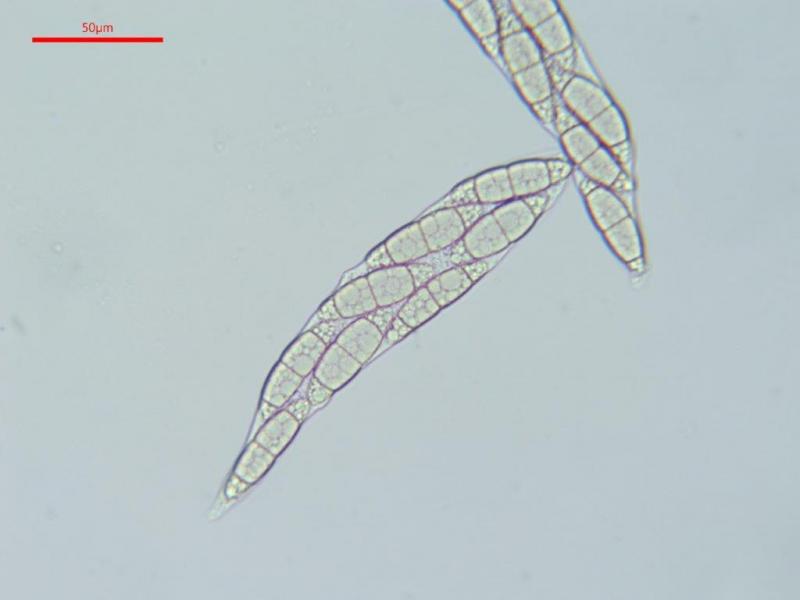
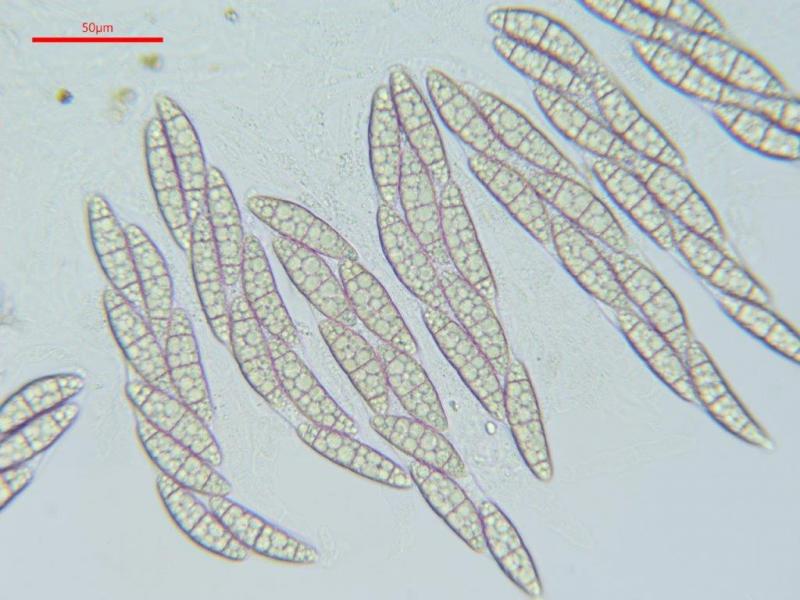
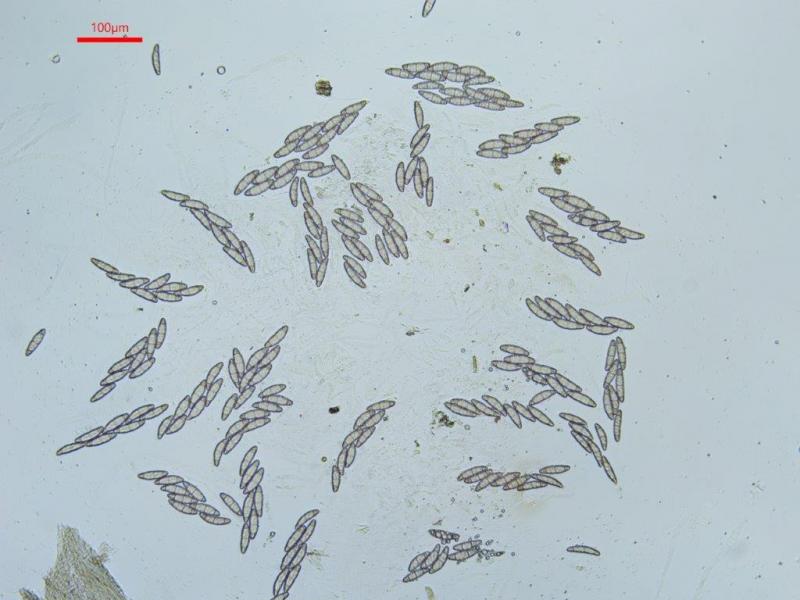
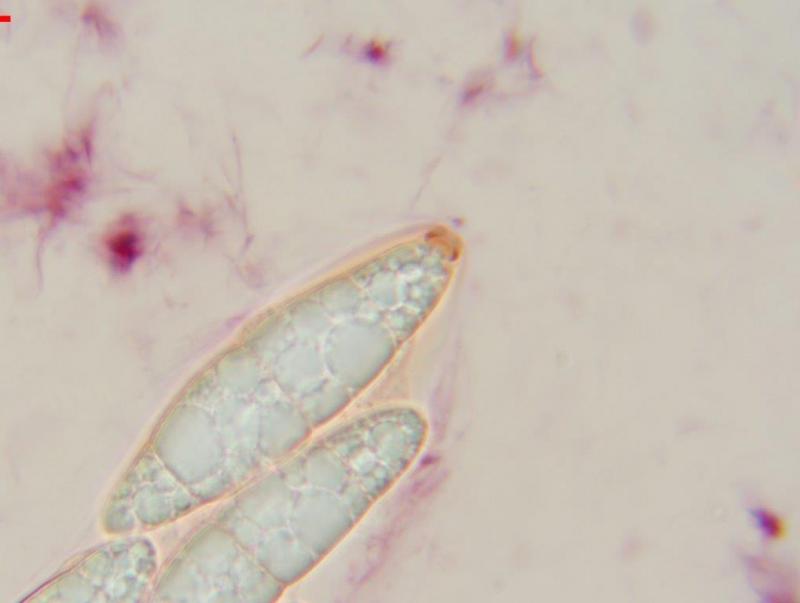
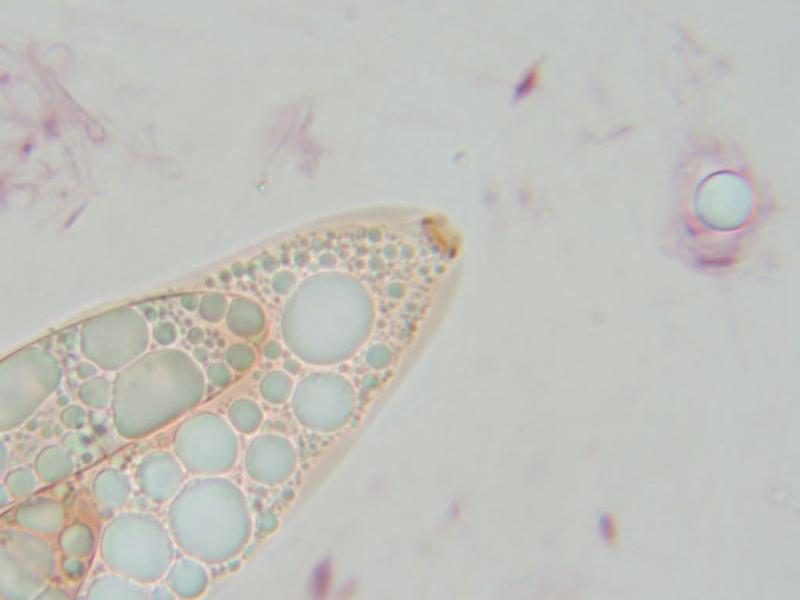
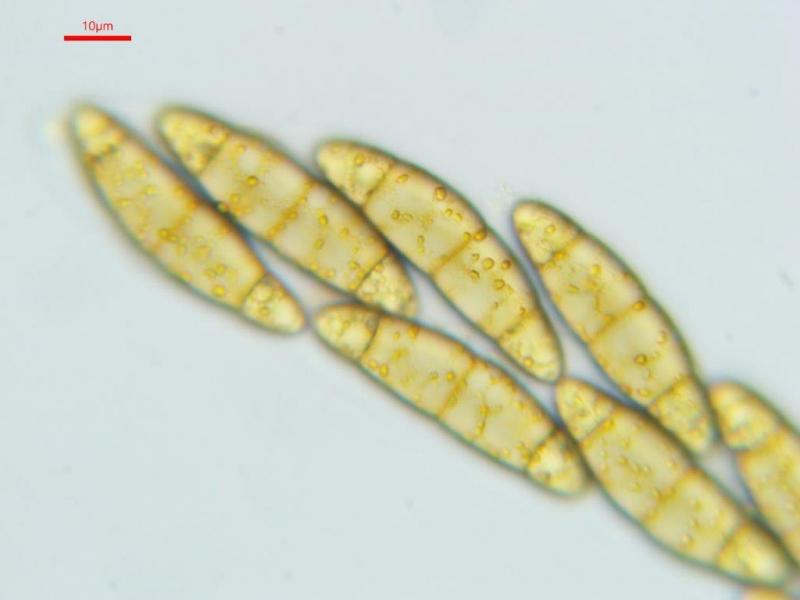
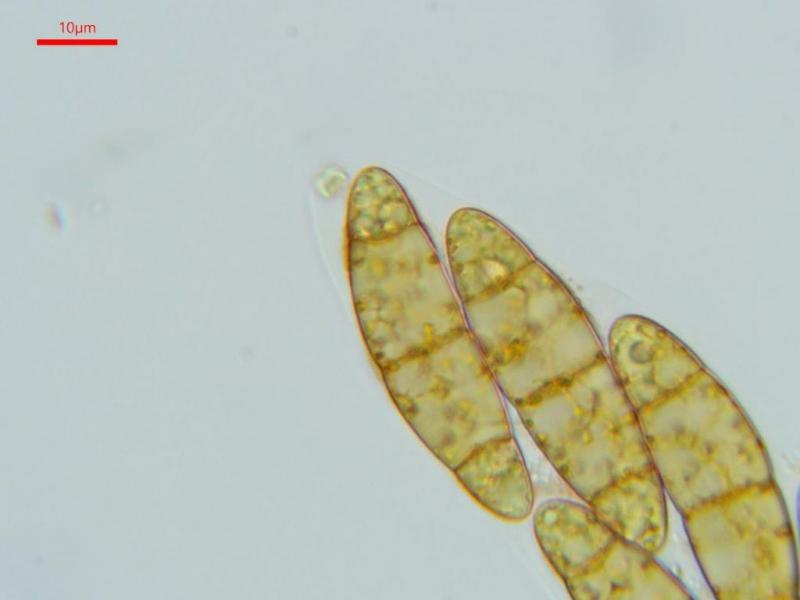
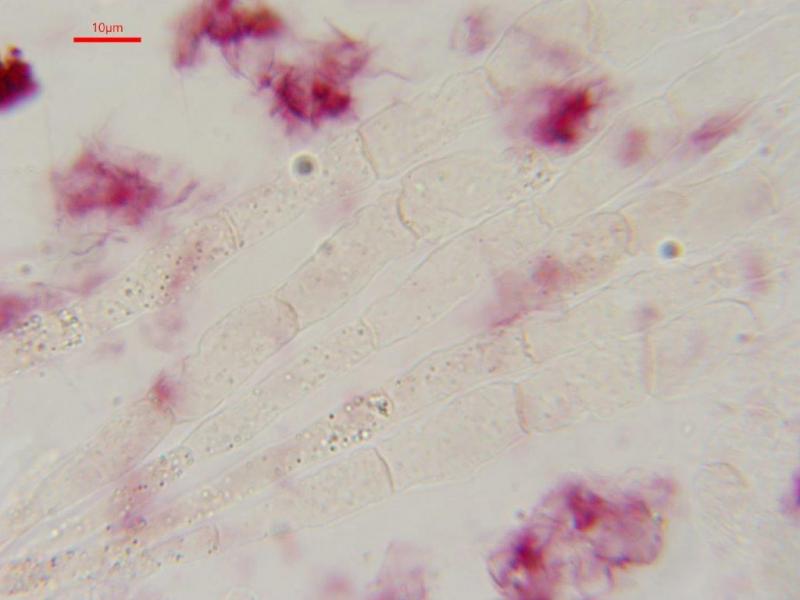
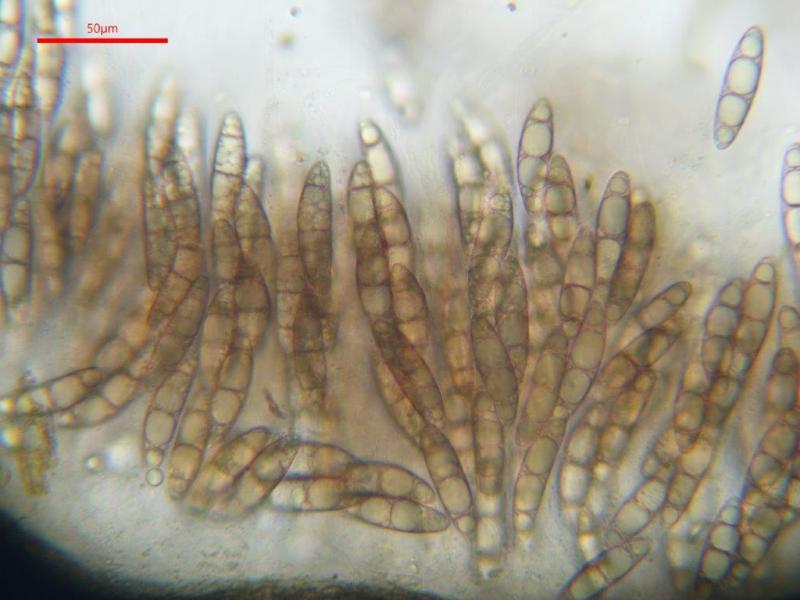
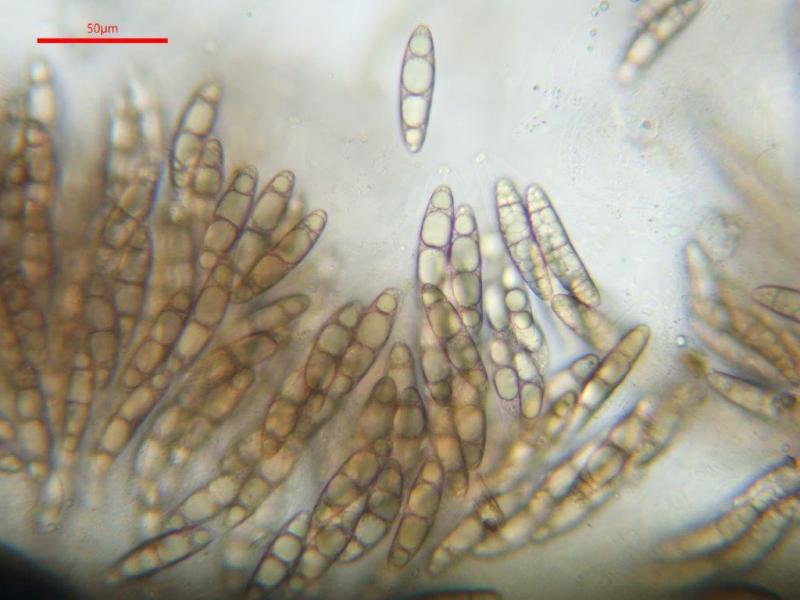
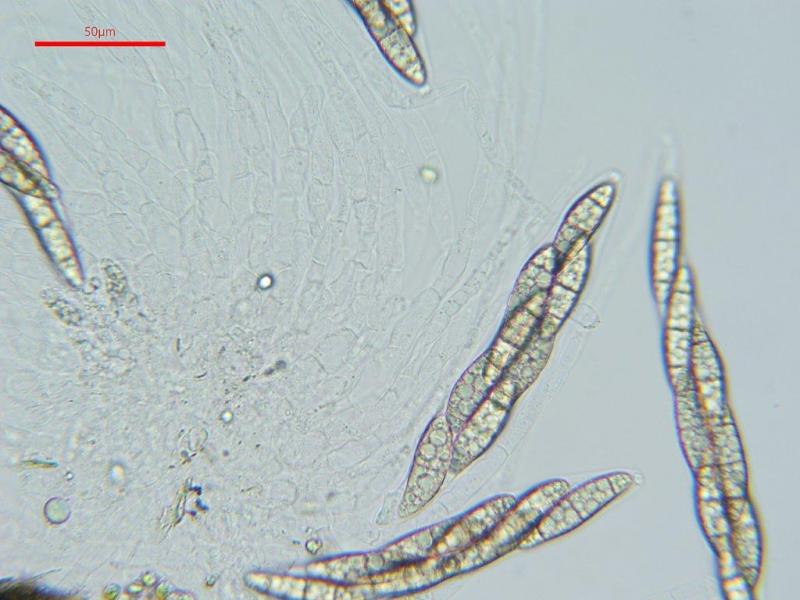
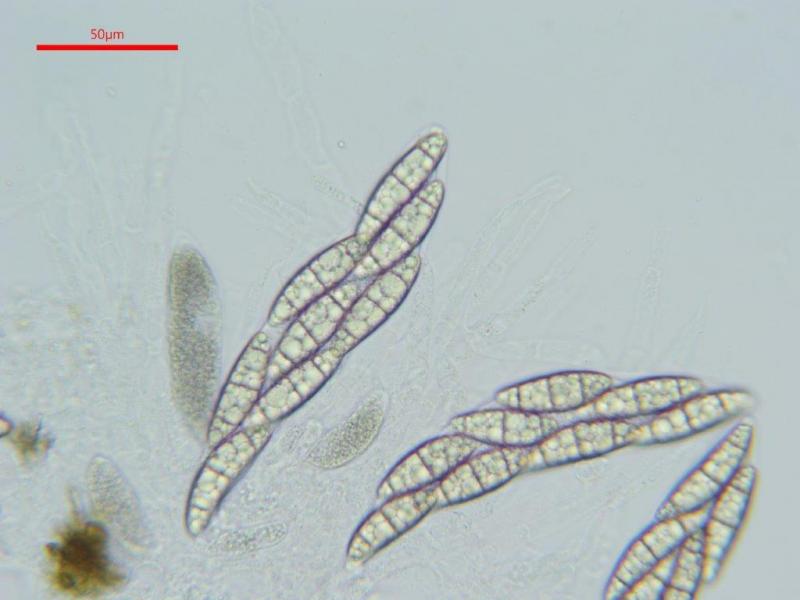
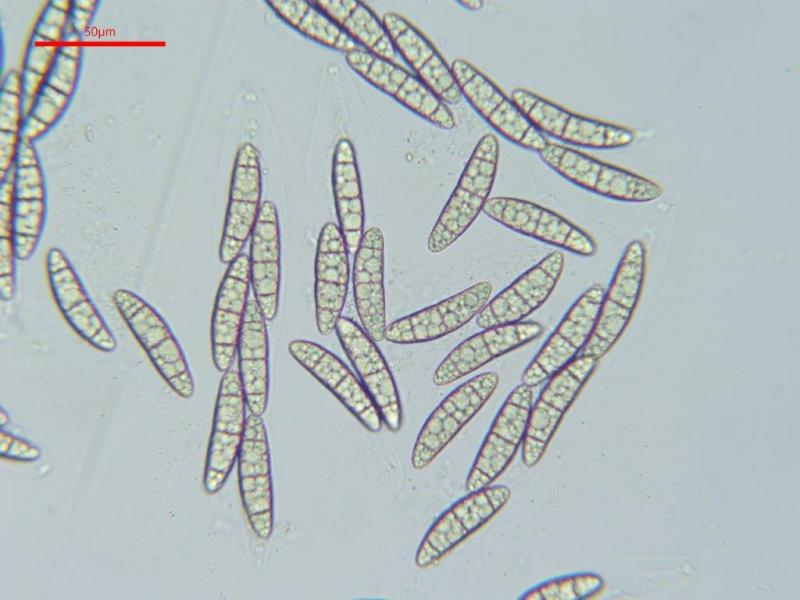
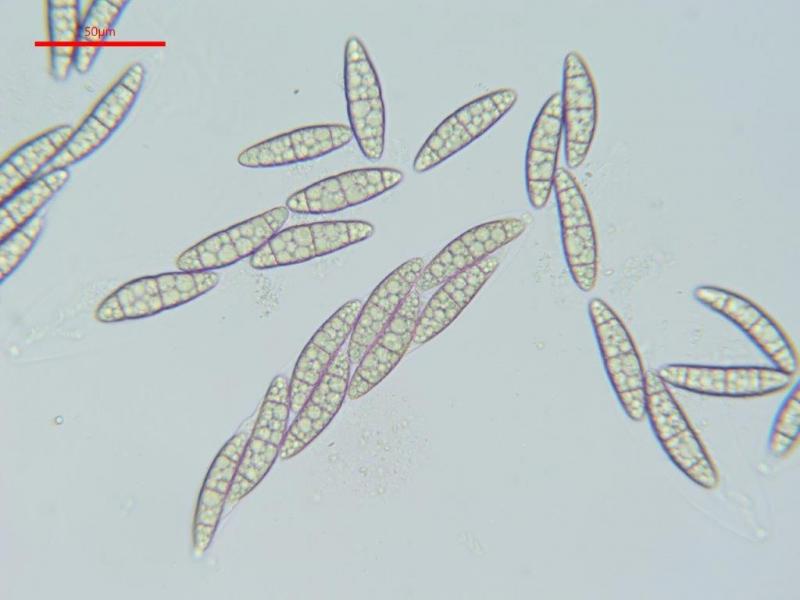
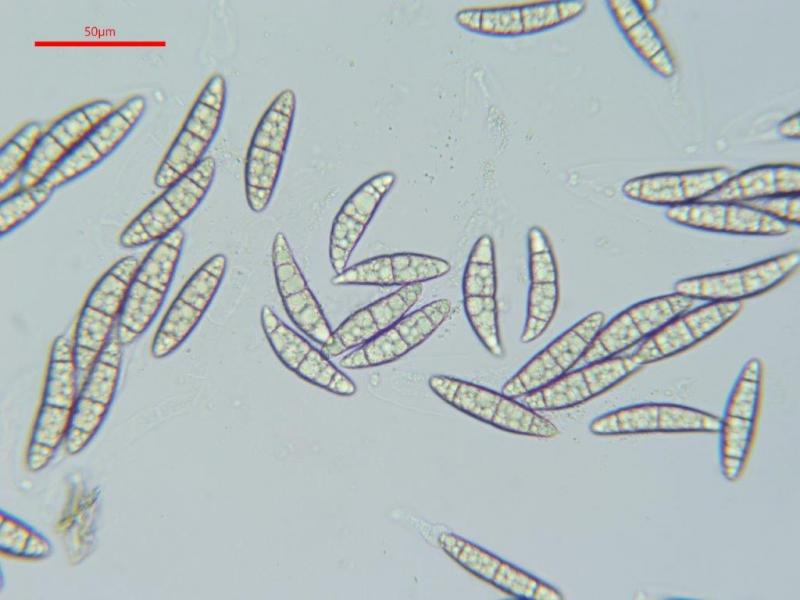
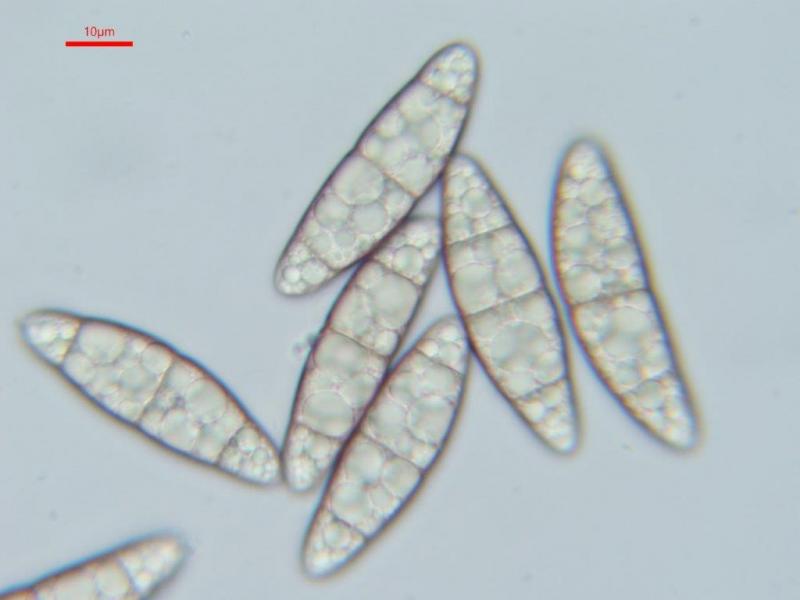
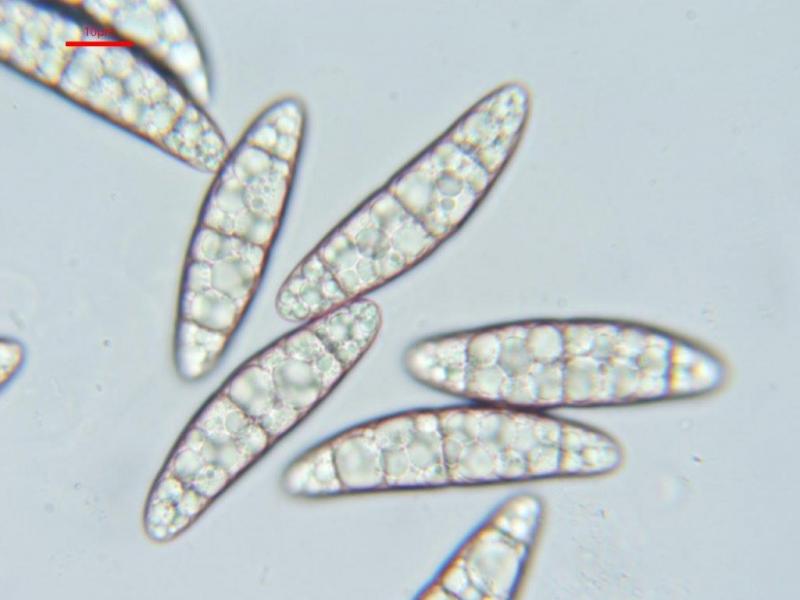
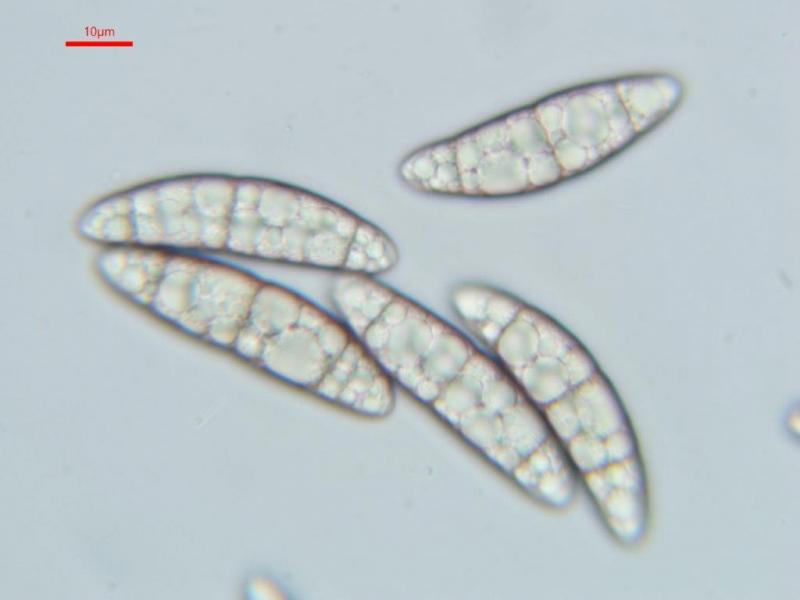
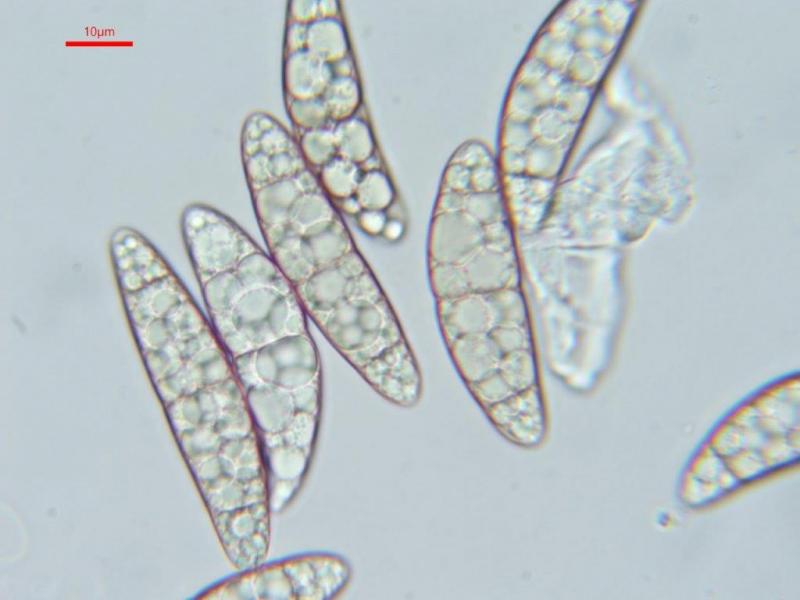
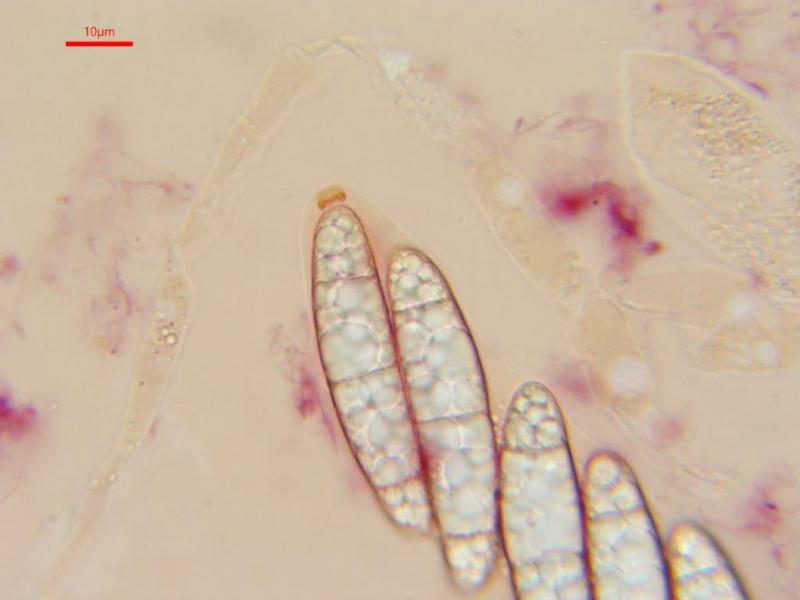
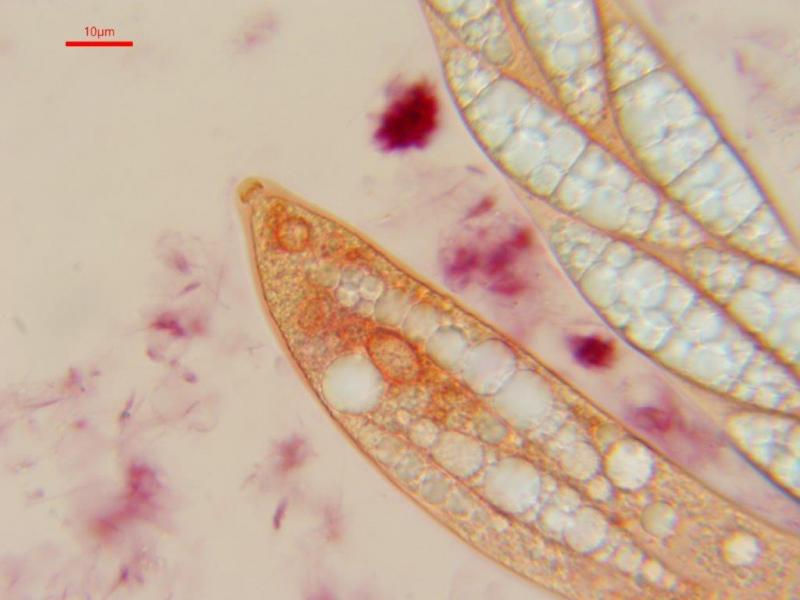
 Hello! I found these immersed perithecia on a stick together with Pseudohalonectria lutea in a boggy area. Very first idea was Annulusmagnus before closer inspection but it is something else. Interior seems to be giving a slight pinkish/orangish hue just like P.lutea. Would someone have an idea about this species? Ascospores smooth. Asci: J-, CR+
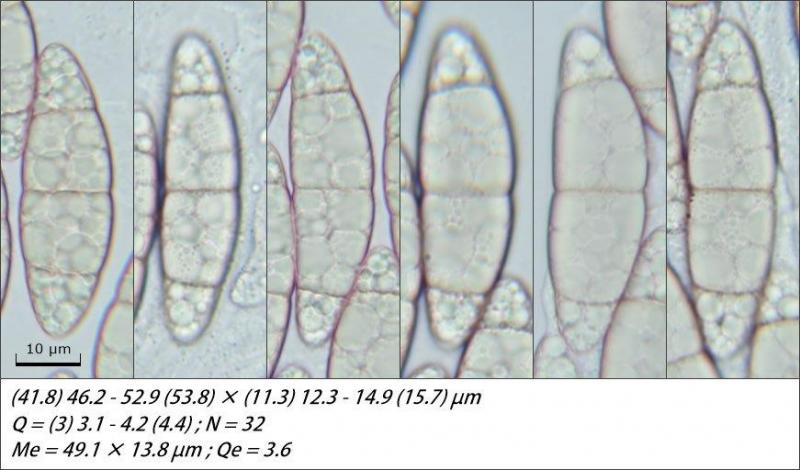
Ascospore measurements are:
(41.8) 46.2 - 52.9 (53.8) × (11.3) 12.3 - 14.9 (15.7) µm
Q = (3) 3.1 - 4.2 (4.4) ; N = 32
Me = 49.1 × 13.8 µm ; Qe = 3.6
February 2026, alluvial forest, Slovenia.
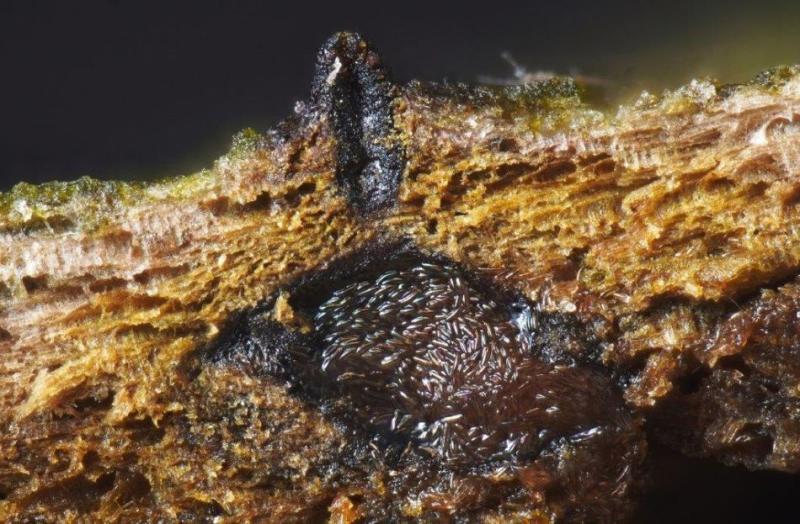
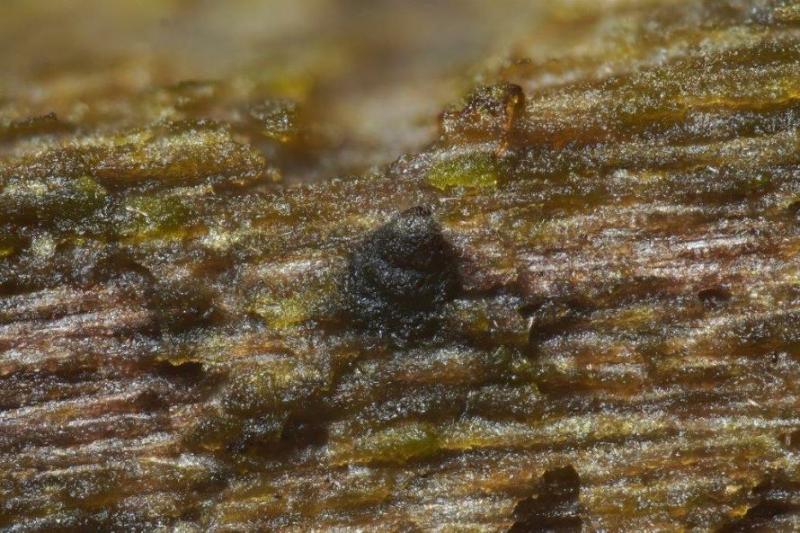
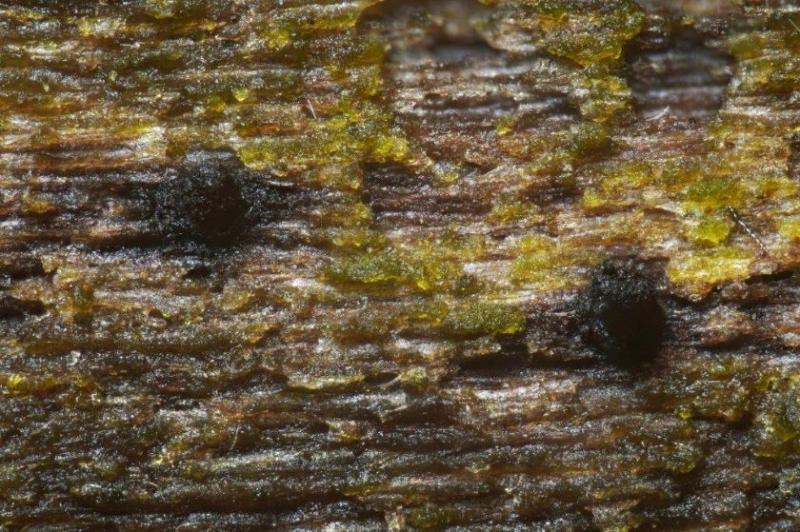
Alain GARDIENNET,
13-02-2026 07:25

Re : Unknown near Pseudohalonectria
Hi Tomaz,
Welcome to the world of freshwater fungi, with several undescribed species. I don't know that one.
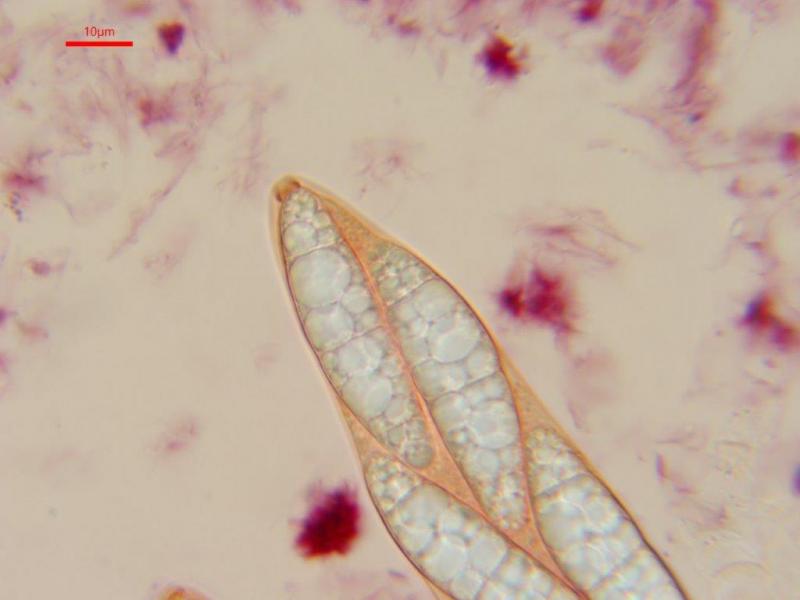
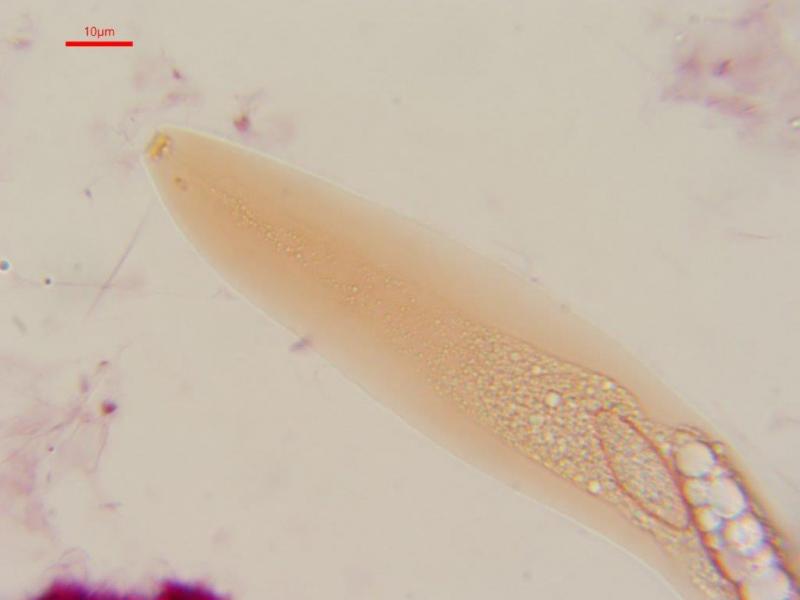
Your analysis is already well advanced; you have noticed that the spores of this fungus are even larger than those of Annulusmagnus triseptatus. You need to look closely at other characteristics, such as the shape and size of the apical apparatus (too small for the Annulusmagnus genus), which is generally clearly visible in Congo red, or the thickness and composition of the peridium. One of the characteristics of your fungus is that it is submerged and resembles Pseudohalonectria. You managed to see that there were two fungi, which is remarkable.
You did a great job in any case, well done!
I don't even have a genus name to suggest, but it's been a few years since I've looked closely at all the publications about freshwater fungi. Let's hope another opinion.
Alain
Welcome to the world of freshwater fungi, with several undescribed species. I don't know that one.
Your analysis is already well advanced; you have noticed that the spores of this fungus are even larger than those of Annulusmagnus triseptatus. You need to look closely at other characteristics, such as the shape and size of the apical apparatus (too small for the Annulusmagnus genus), which is generally clearly visible in Congo red, or the thickness and composition of the peridium. One of the characteristics of your fungus is that it is submerged and resembles Pseudohalonectria. You managed to see that there were two fungi, which is remarkable.
You did a great job in any case, well done!
I don't even have a genus name to suggest, but it's been a few years since I've looked closely at all the publications about freshwater fungi. Let's hope another opinion.
Alain
Tomaz Vucko,
13-02-2026 12:18
Re : Unknown near Pseudohalonectria
Hi Alain.
Thanks for taking time to have a look at my photos. I guess I was also a bit lucky with discovering that there were two species by taking a random sample and finding these ascospores. I might attempt some more microscopy in the evening to try getting some more data, like perithecia section. Interestingly I randomly looked at some photographs of Pseudohalonectria now online and stumbled uppon a species called Pseudohalonectria hampshirensis which seems to be kinda similar in a way. That would also explain why the very similar, pretty much indistinguishable, macro appearance with spore deposits being almost exactly same color as the Pseudohalonectria. I wonder if they are related…
All the best!
Thanks for taking time to have a look at my photos. I guess I was also a bit lucky with discovering that there were two species by taking a random sample and finding these ascospores. I might attempt some more microscopy in the evening to try getting some more data, like perithecia section. Interestingly I randomly looked at some photographs of Pseudohalonectria now online and stumbled uppon a species called Pseudohalonectria hampshirensis which seems to be kinda similar in a way. That would also explain why the very similar, pretty much indistinguishable, macro appearance with spore deposits being almost exactly same color as the Pseudohalonectria. I wonder if they are related…
All the best!
Alain GARDIENNET,
13-02-2026 21:28
Re : Unknown near Pseudohalonectria
The species you mention (which is different from yours), and the other recently published species discovered in recent years, prove that this genus is not so simple and still poorly understood, assuming that it is a single genus...
Your discovery deserves to be sequenced. I encourage you to continue exploring the wonderful and still little-known world of freshwater fungi.
Alain
Your discovery deserves to be sequenced. I encourage you to continue exploring the wonderful and still little-known world of freshwater fungi.
Alain
Tomaz Vucko,
14-02-2026 02:52
Re : Unknown near Pseudohalonectria
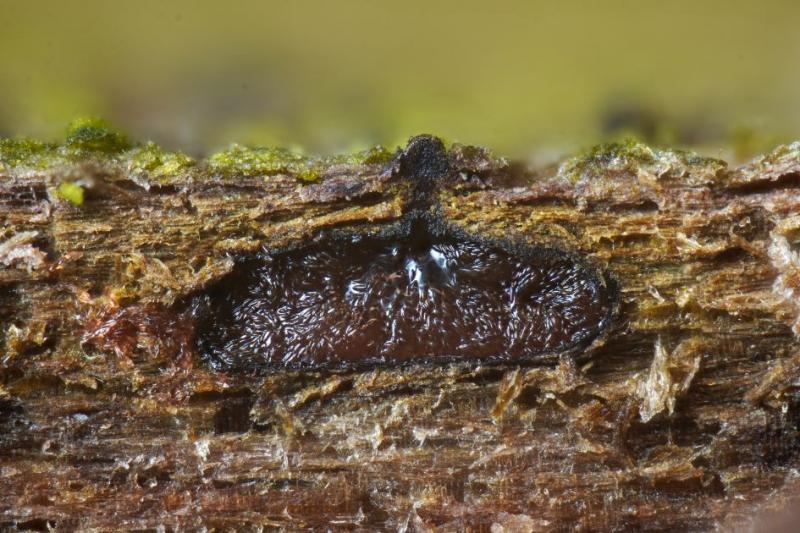
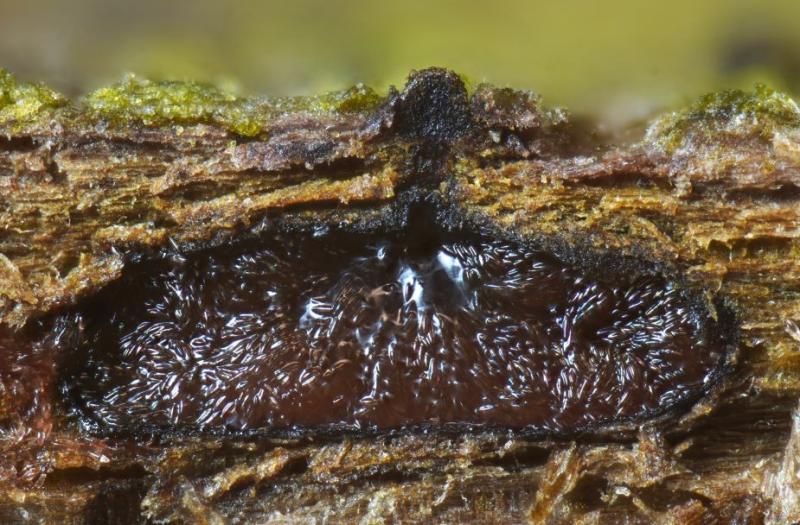
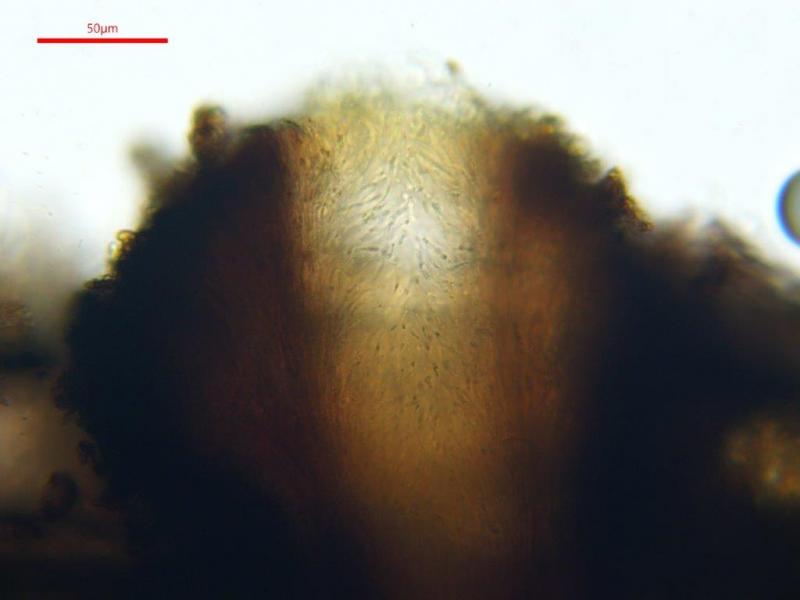
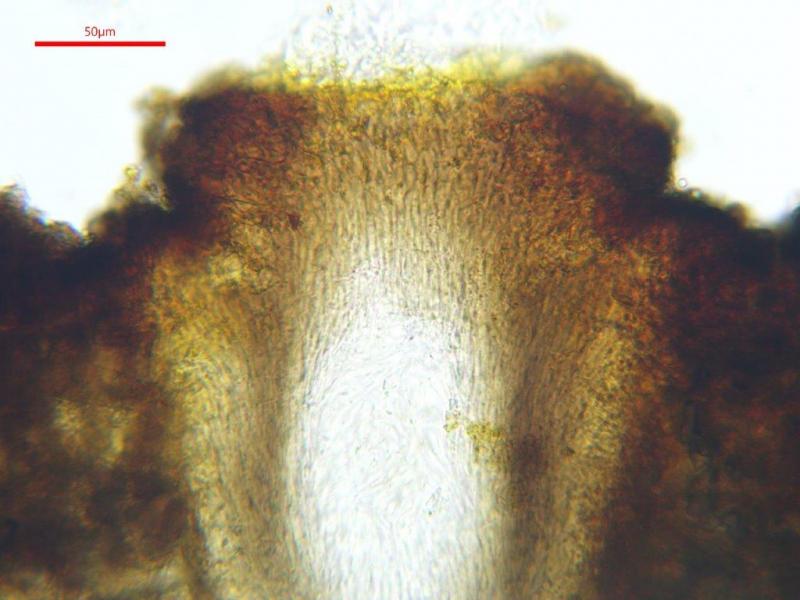
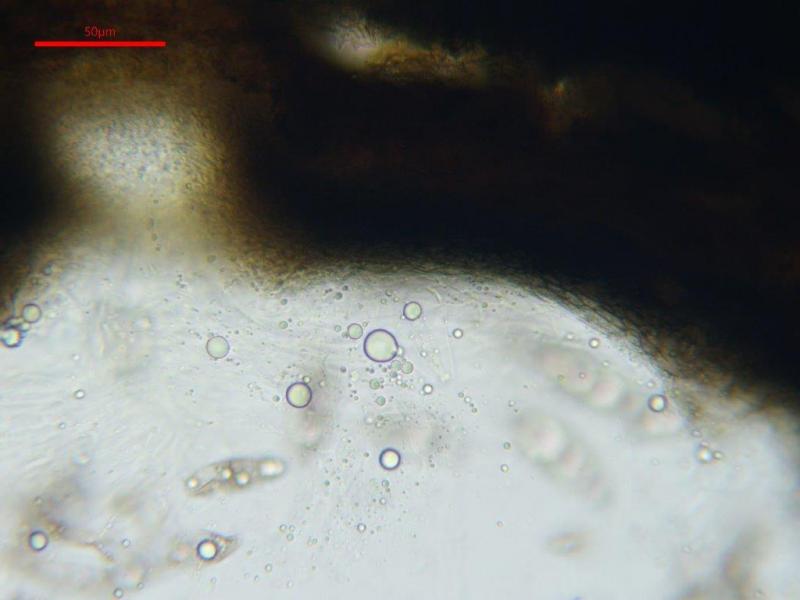
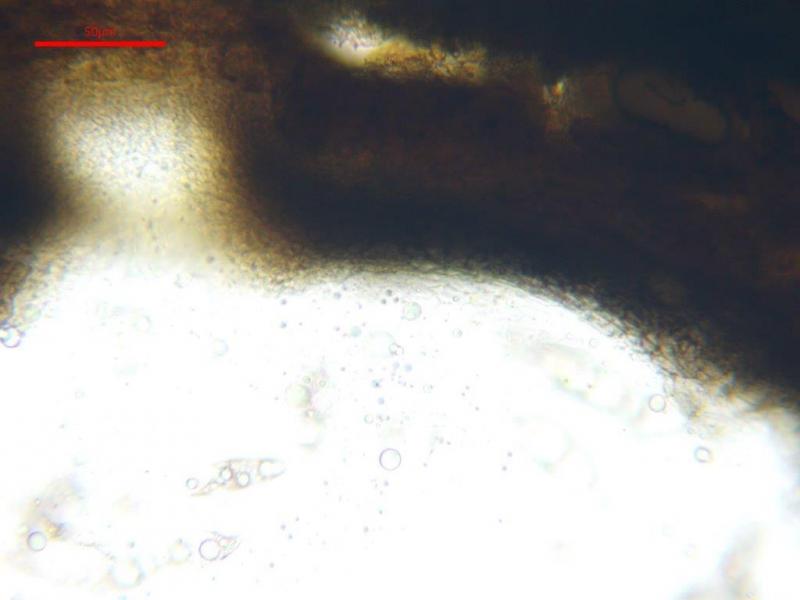
Adding some freshly taken micrographs. Sure looks like it's Pseudohalonectria related. Very interesting that 2 species shared the same stick. No wonder I couldn't tell the two apart just with hand lens. Though ostiolar neck does seem to be shorter as with the other species I found near.
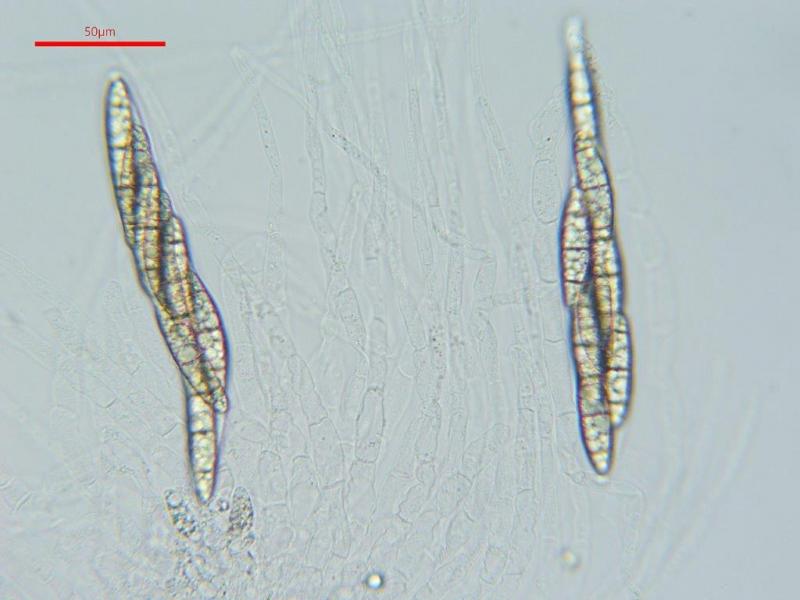
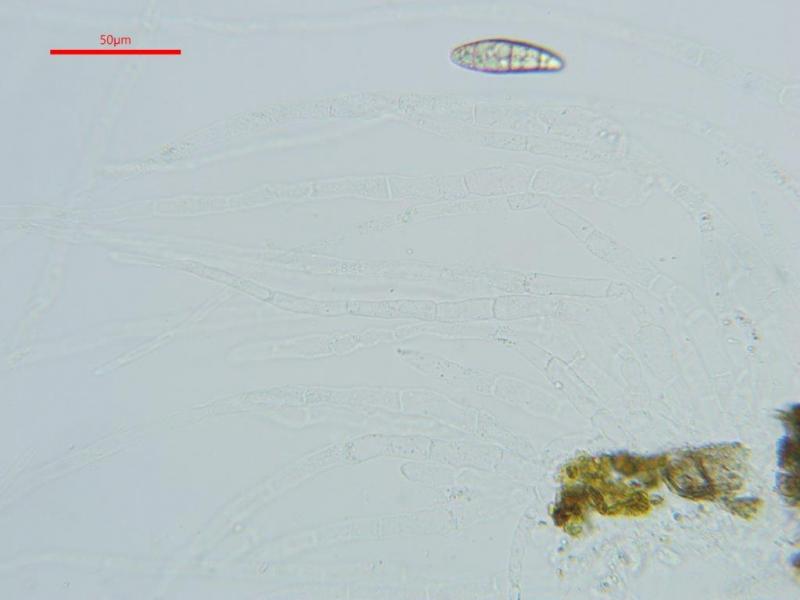
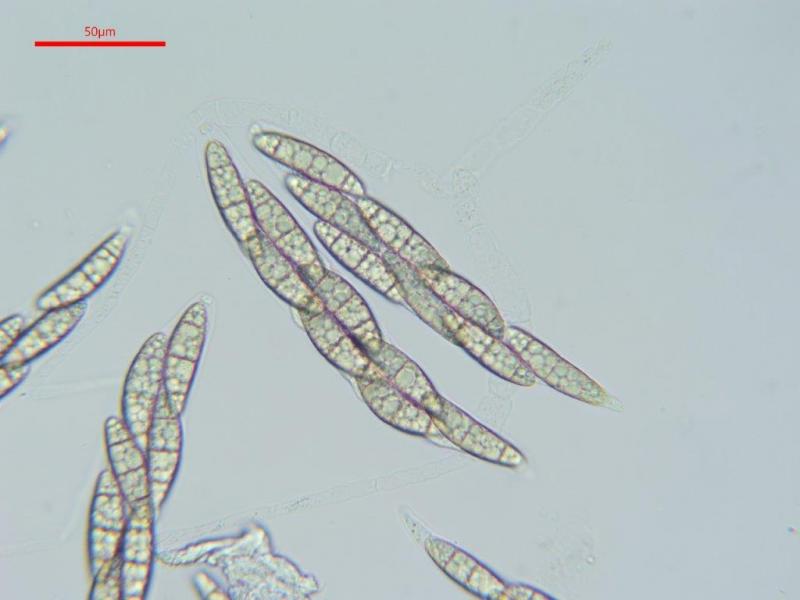
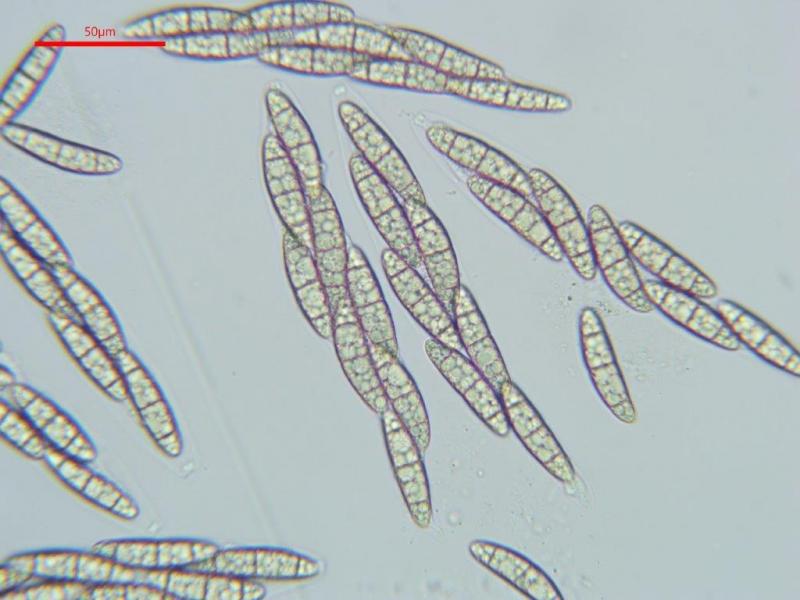
Jacques Fournier,
15-02-2026 12:04

Re : Unknown near Pseudohalonectria
Hi Tomaz,
I agree Pseudohalonectria is the suitable genus and P. hampshirenisi likely a good match.
In this genus, ascomatal morphology is often variable, especially the length of the neck which is not informative. Spore size and septation are more diagnostic but your photos show well how they swell in water on the slide. Width recorded in the first minutes is more reliable.
Cheers,Jacques
I agree Pseudohalonectria is the suitable genus and P. hampshirenisi likely a good match.
In this genus, ascomatal morphology is often variable, especially the length of the neck which is not informative. Spore size and septation are more diagnostic but your photos show well how they swell in water on the slide. Width recorded in the first minutes is more reliable.
Cheers,Jacques
Tomaz Vucko,
16-02-2026 04:59
Re : Unknown near Pseudohalonectria
Thanks for having a look and the tips! Now I just wish I could prove this thesis.