

05-05-2026 22:40
Gernot FriebesHi,I believe this is a Plagiostoma growing on a Sa
06-05-2026 11:25
 Castillo Joseba
Me mandan el material seco de Galicia (España) re
06-05-2026 17:23
Thomas Læssøehttps://svampe.databasen.org/observations/10594257
28-04-2026 20:07
 Lothar Krieglsteiner
... on twig in the air at standing Ceratonia siliq
04-05-2026 18:13
 Stephen Martin Mifsud
ID request for what seems to be a true aquatic fun
04-05-2026 16:39
Stephen Martin Mifsud
ID request: This specimen was collected in Malta o
28-07-2011 18:31
 Alex Akulov
Dear FriendsToday I made the pdf file of Velenovsk
04-05-2026 09:50
Castillo Joseba
Me mandan el material seco de Galicia,(España) re
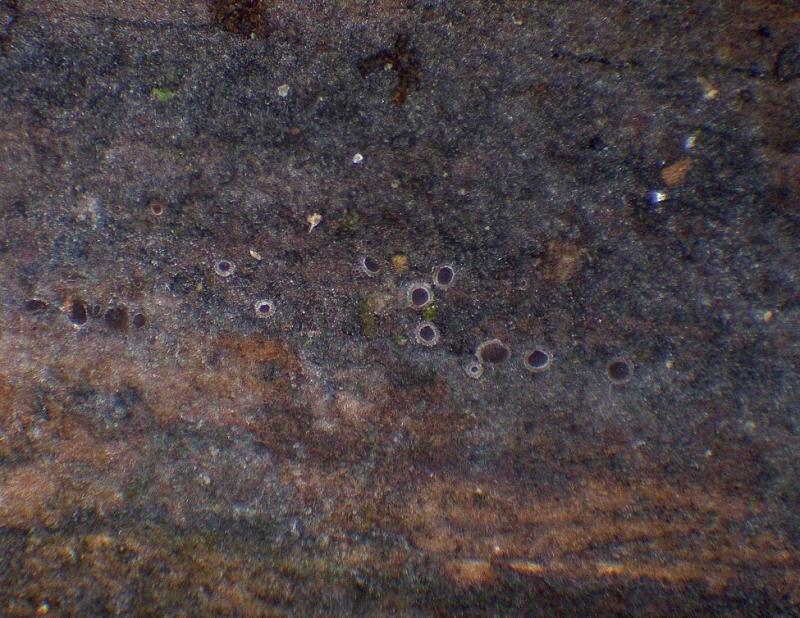
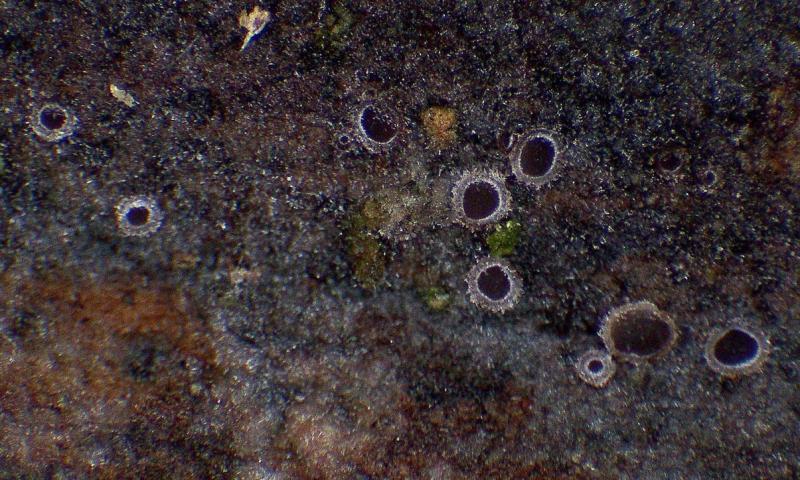
We suspected Mollisia, but in KOH, we saw no green reaction of the excipulum and a faint yellow KOH reaction of the paraphyses.
Disc:
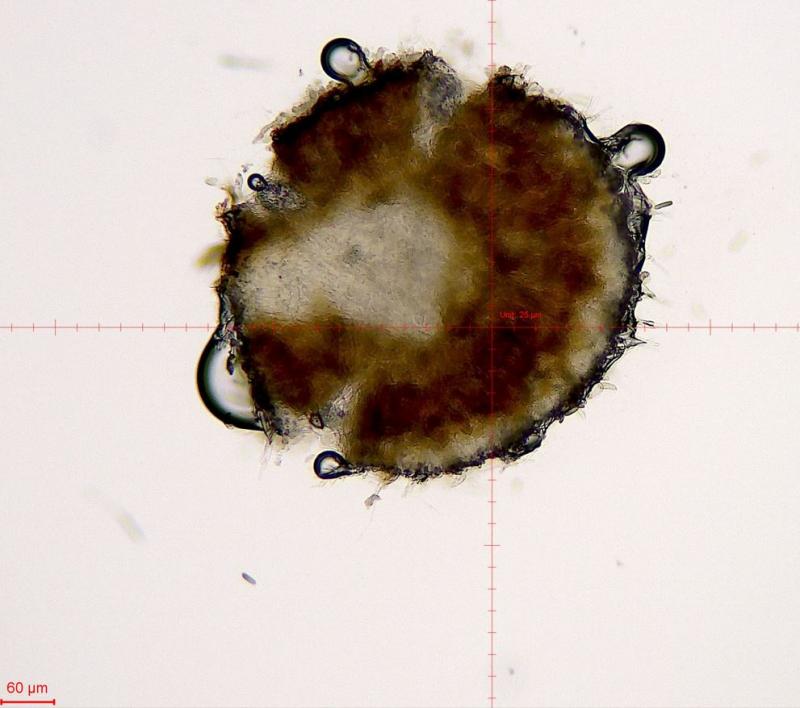
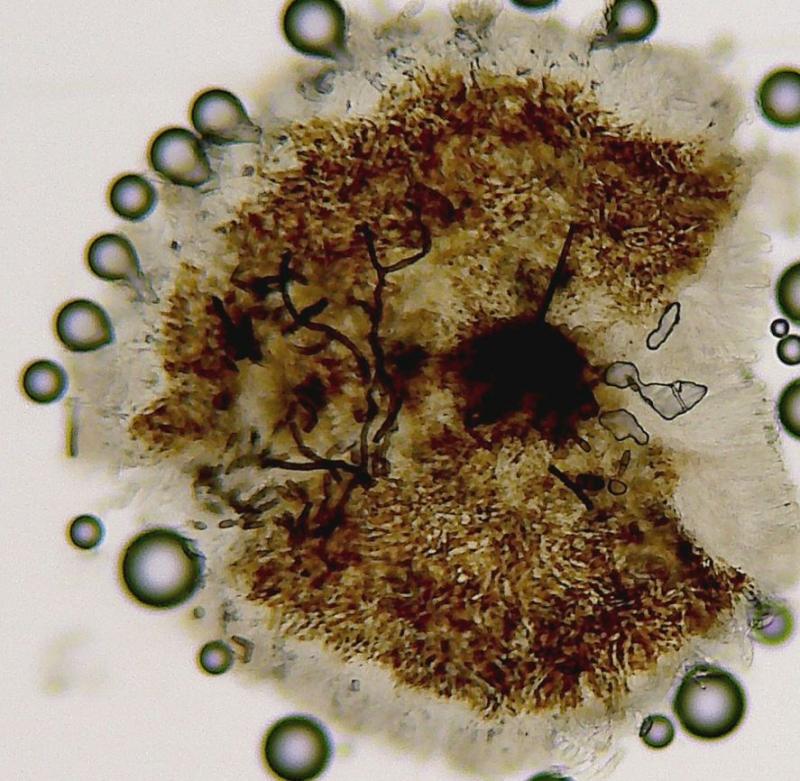
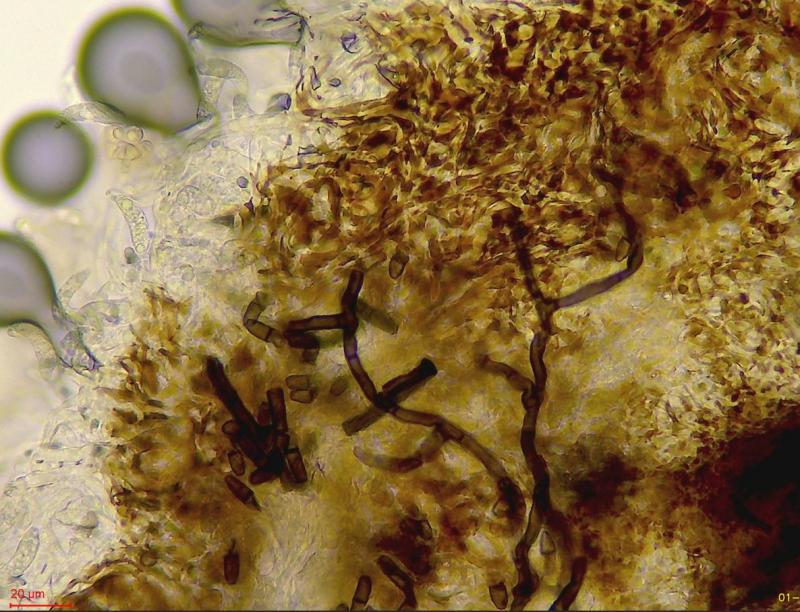
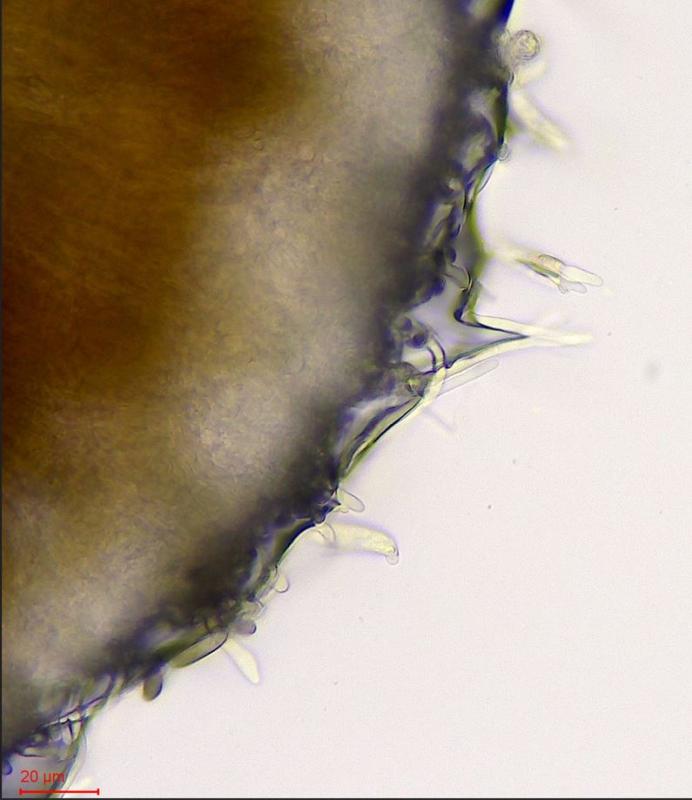
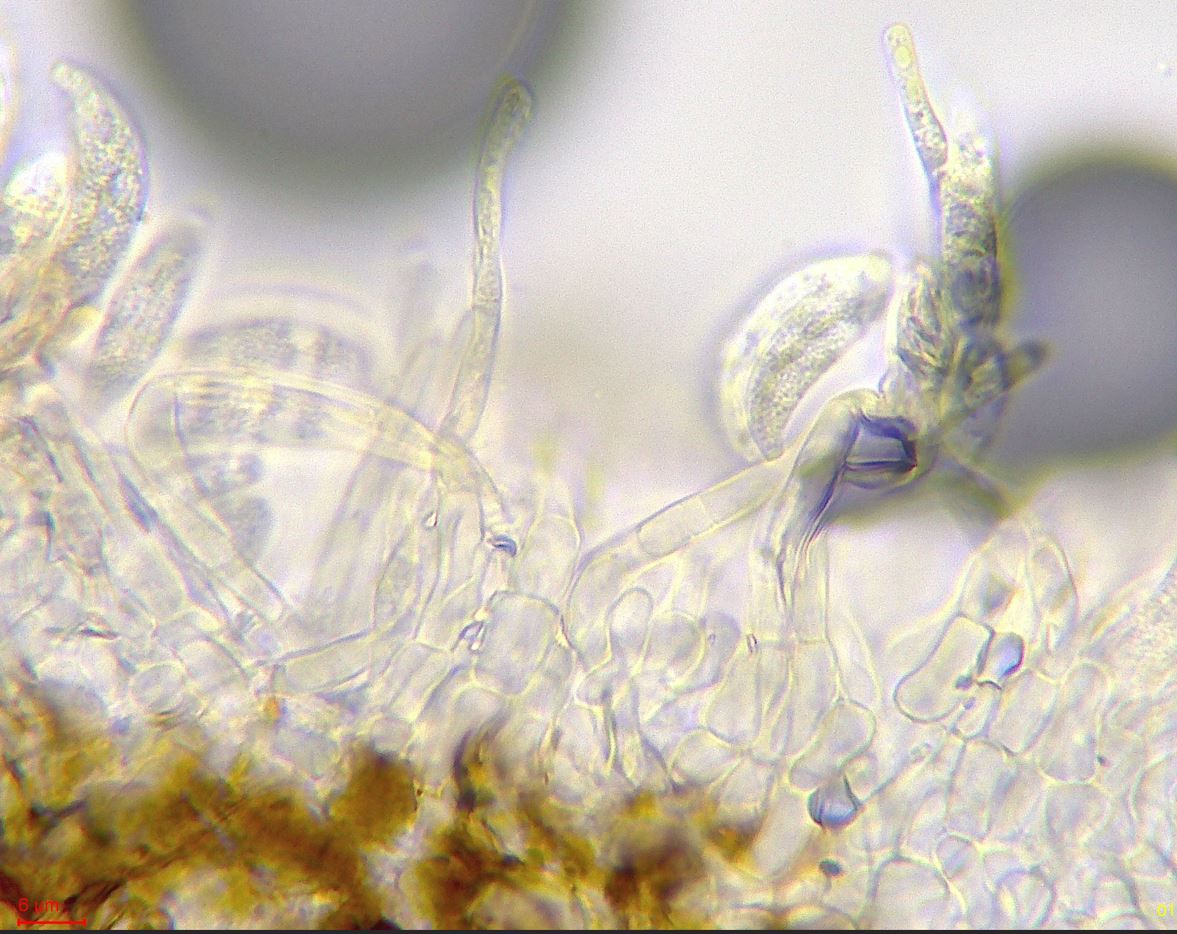
The inside is very dark gray, the underside is brown in the center and a bit towards the edge, the last bit towards the edge has white hairs. The transition is clearly visible in photos 29-042 and 29-048.
The dark brown hyphae of the subiculum are also visible in photo 29-042.
Does the brown structure appear to be broken or old?
There are strange, large spores lying between the hairs of this disc.
Structure:
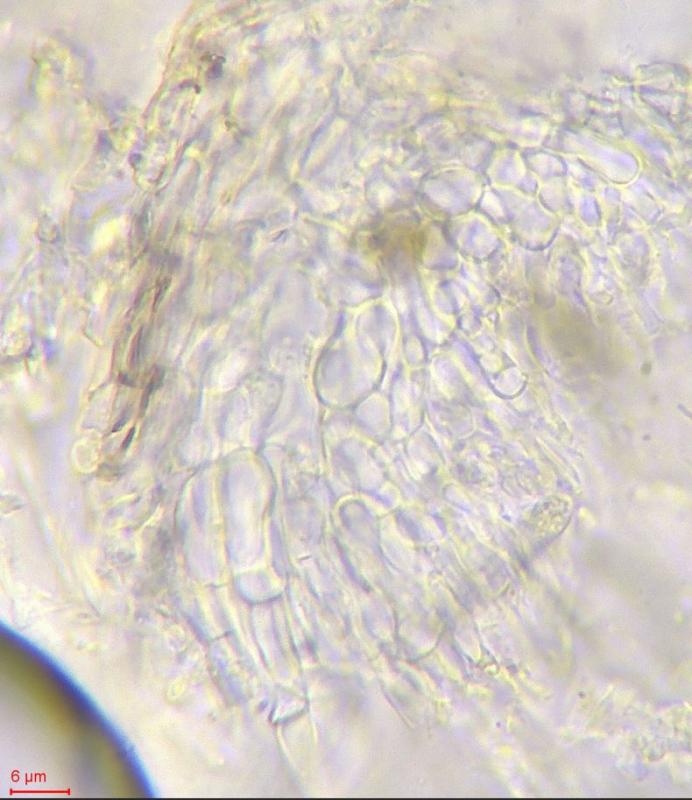
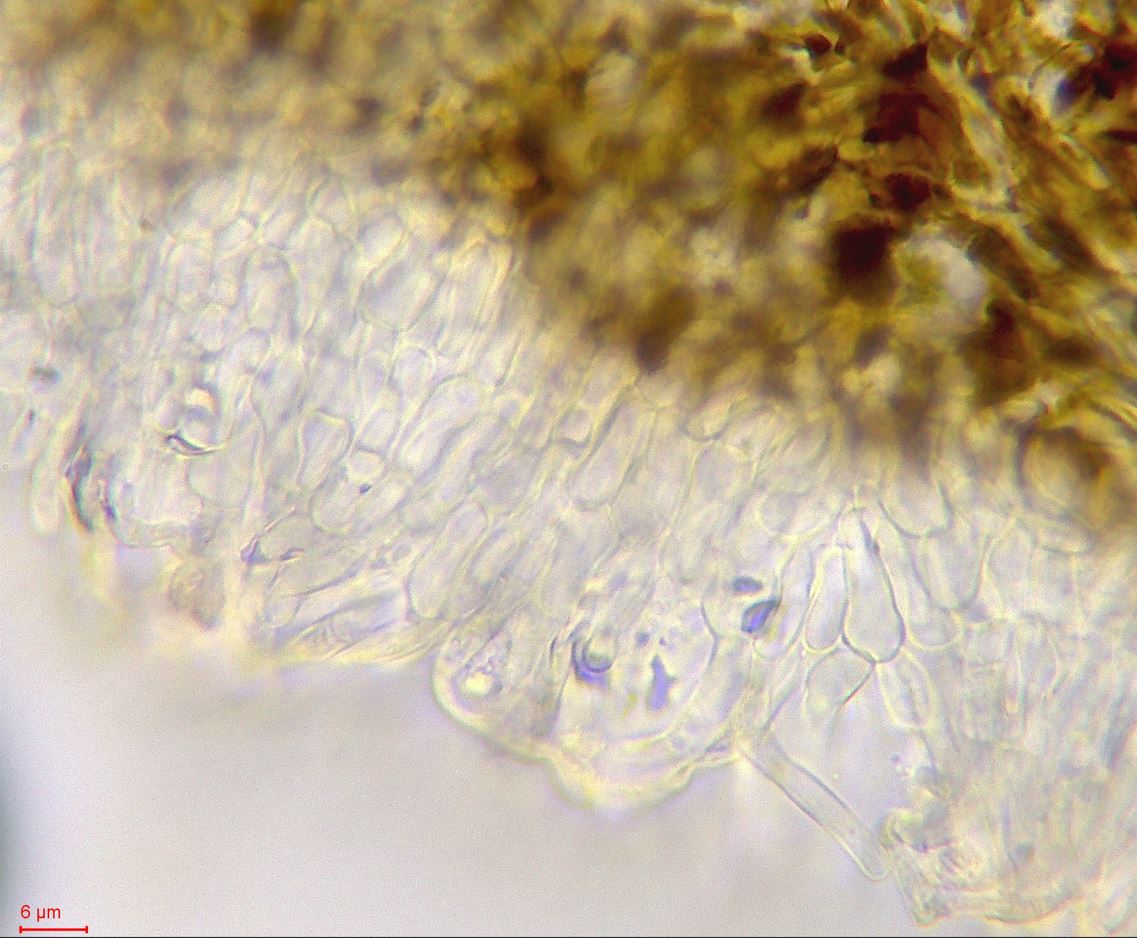
Textura globosa angularis -> prismatica.
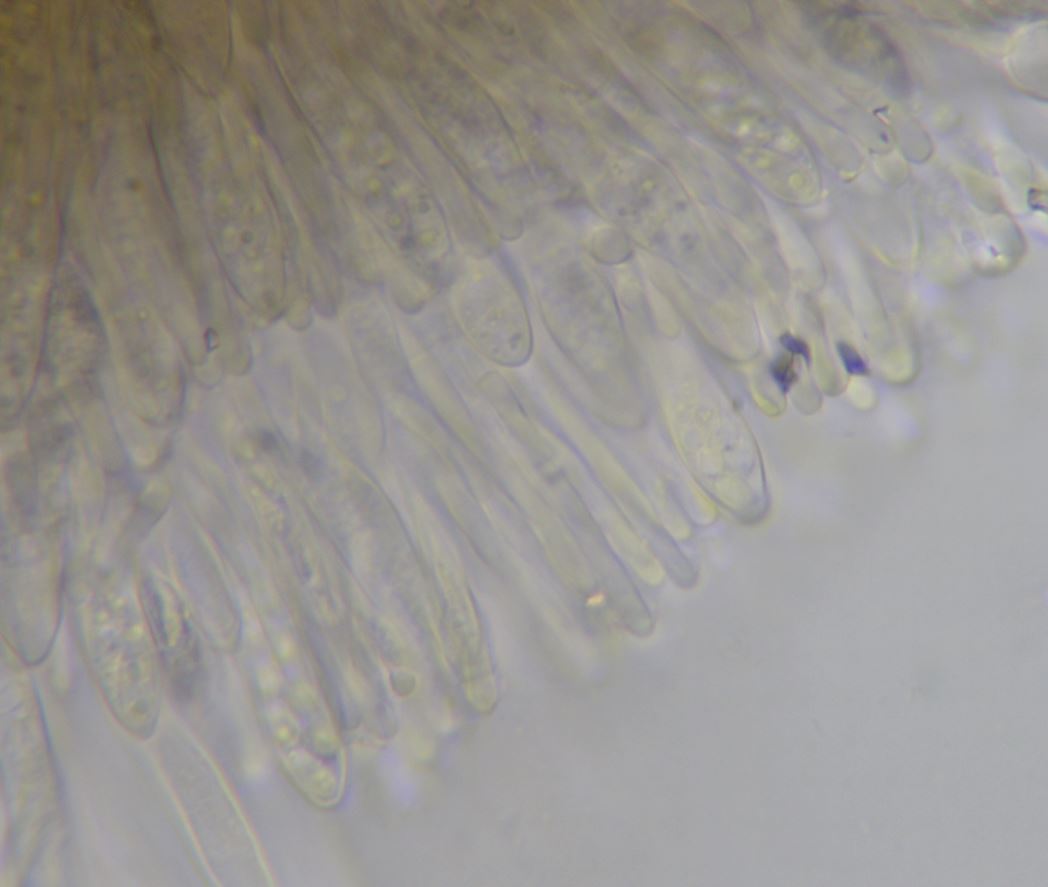
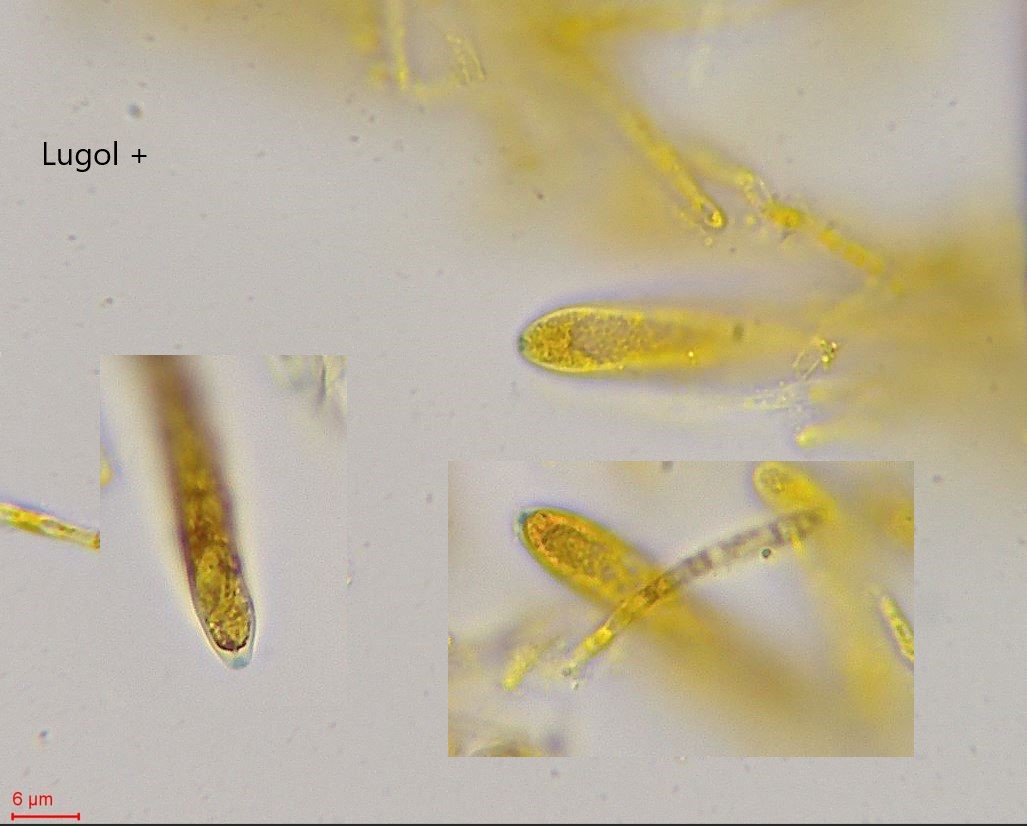
Asci:
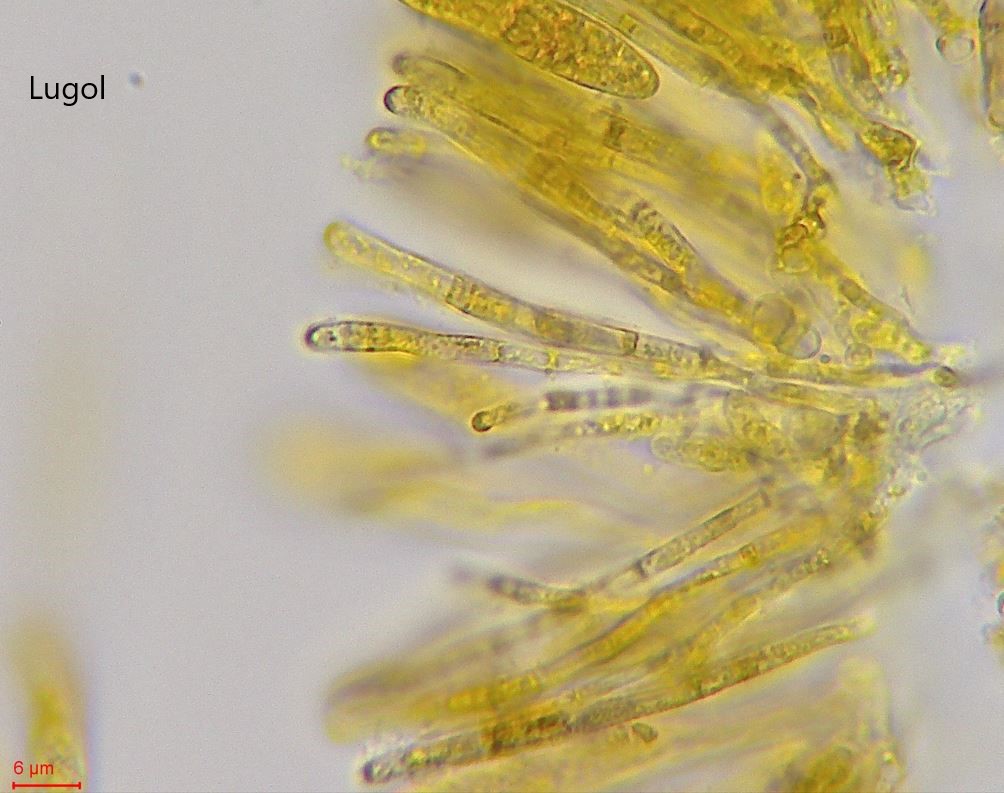
Measured in water: 38.3 - 58.67 (58.7) × (5.7) 5.71 - 6.7 µm, Q = 5.7 - 10.1 Croziers + and Lugol +
Paraphyses:
Cylindrical, branched at the base, with a sept, filled with a large guttule.
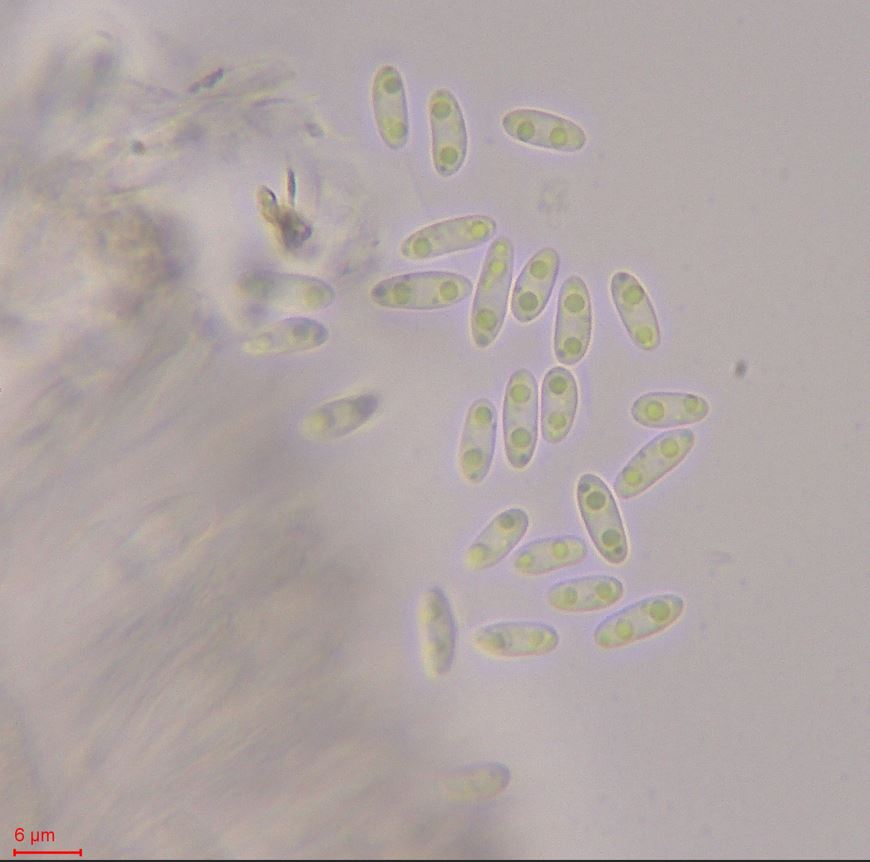
Spores:
Hyaline, with two larger and smaller guttules.
Measured in water: (7) 7.1 - 9.1 (10.1) × (2.7) 2.72 - 3.25 (3.3) µm, Q = (2.2) 2.4 - 3.3 (3.5)
In Melzers and KOH + Congo Red, we see no amiloÏd or dextrinoÏd reaction in the hairs or excipulum. We see no solid tips in the hairs.
Thanks in advance for your help, Geert&Margot
 9-Knipsel-29-048-0001.JPG
 10-Knipsel-29-053-0001.JPG
 11-Knipsel-P09721-0001.JPG
 12-Knipsel-29-064-0001.JPG
 13-Knipsel-29-035-0001.JPG
 14-Knipsel-29-032-0001.JPG
