Accès membres

Mot de passe perdu? S'inscrire

01-02-2026 19:29

Nicolas Suberbielle Nicolas Suberbielle

Bonjour, Marie-Rose D'Angelo (Société Mycologiq

31-01-2026 10:22

Michel Hairaud Michel Hairaud

Bonjour, Cette hypocreale parasite en nombre les

02-02-2026 09:29

Bernard CLESSE Bernard CLESSE

Bonjour à toutes et tous,Pour cette récolte de 2

30-01-2026 22:49

éric ROMERO éric ROMERO

Bonjour tous, Récolté dans les Vosges le 22/10/

31-01-2026 09:17

Marc Detollenaere Marc Detollenaere

Dear Forum,On decorticated wood of Castanea,I foun

29-08-2025 05:16

Francois Guay Francois Guay

I think I may have found the teleomorph of Dendros

30-01-2026 21:20

Arnold Büschlen

Bryocentria brongniartii und B. metzgeriae mit ihr

21-01-2026 16:32

Gernot Friebes

Hi,I need your help with some black dots on a lich

07-12-2015 14:17

Zugna Marino Zugna Marino

Buon giorno a tutti, ad un primo momento, non ess

29-01-2026 10:04

Jean-Paul Priou Jean-Paul Priou

Bonjour à tous, Marcel LECOMTE président de L'A

« < 1 2 3 4 5 > »
Coryneum (?) acervuli on oak (?) branch
Ethan Crenson, 12-01-2026 22:02
Hello all,

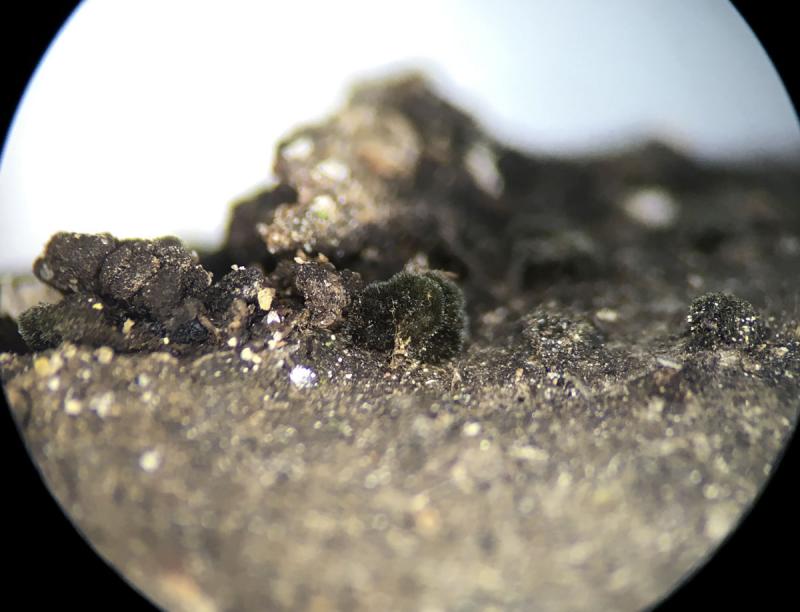
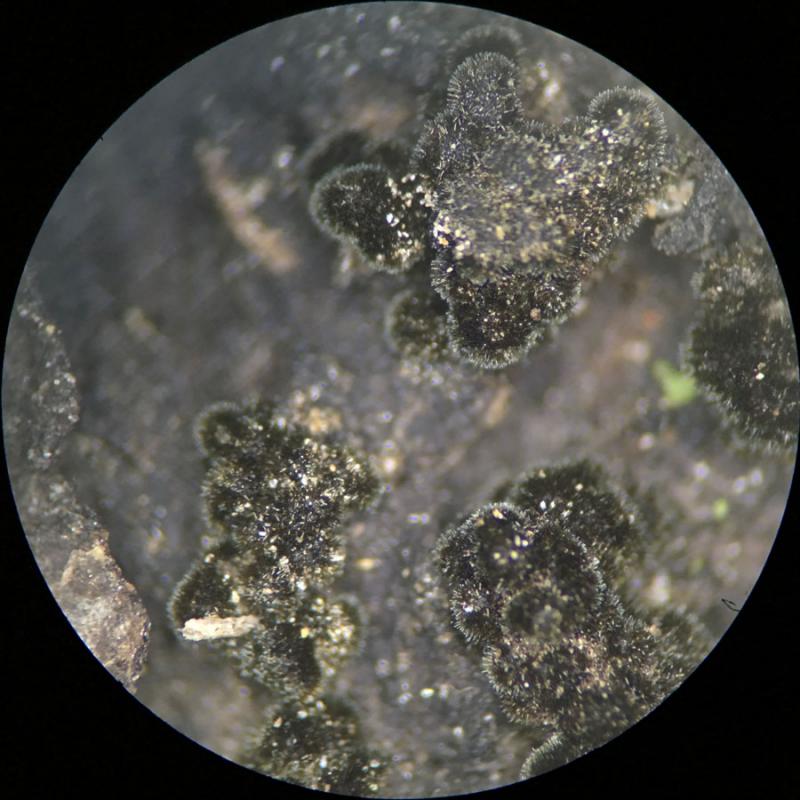
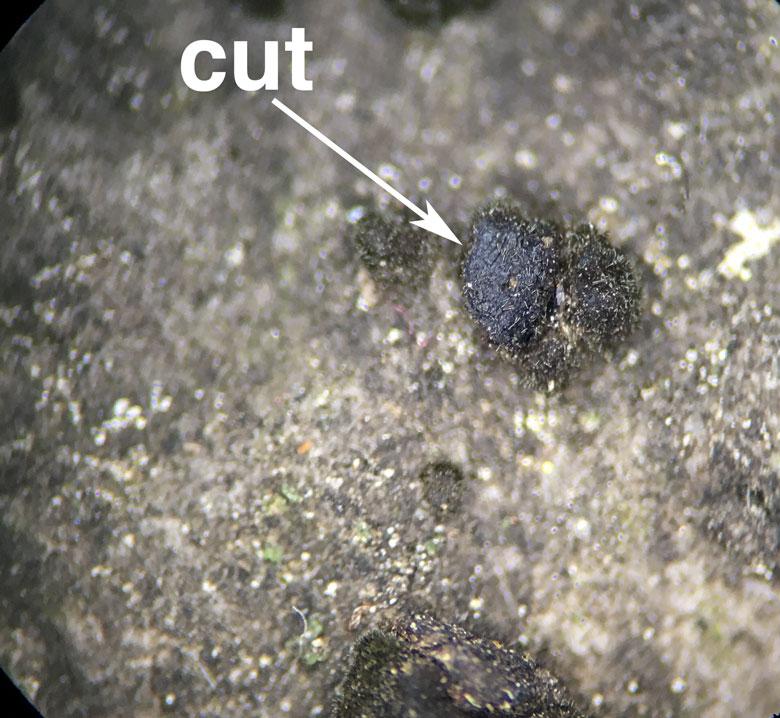
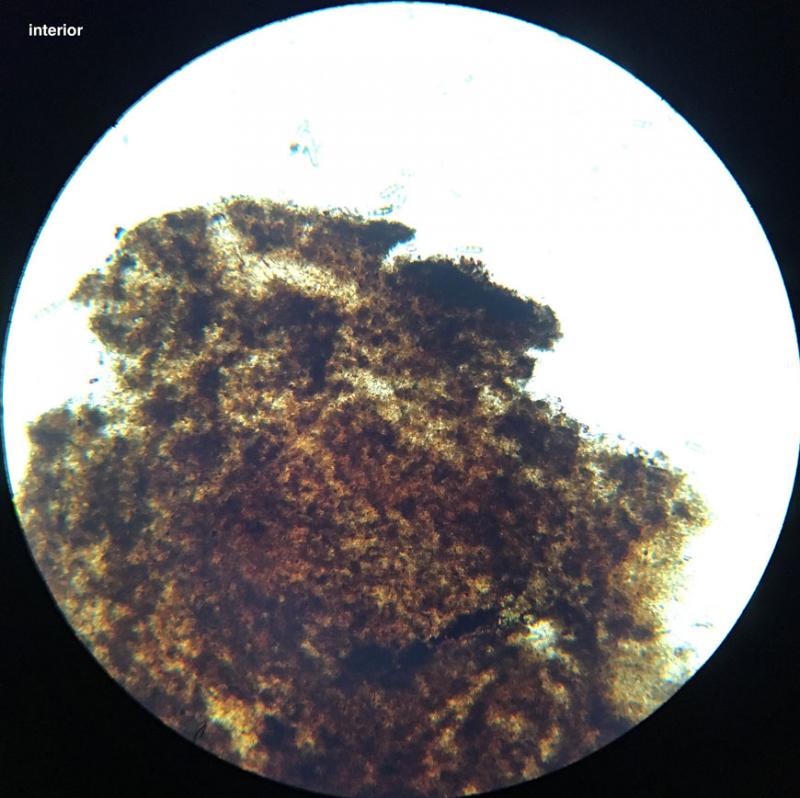
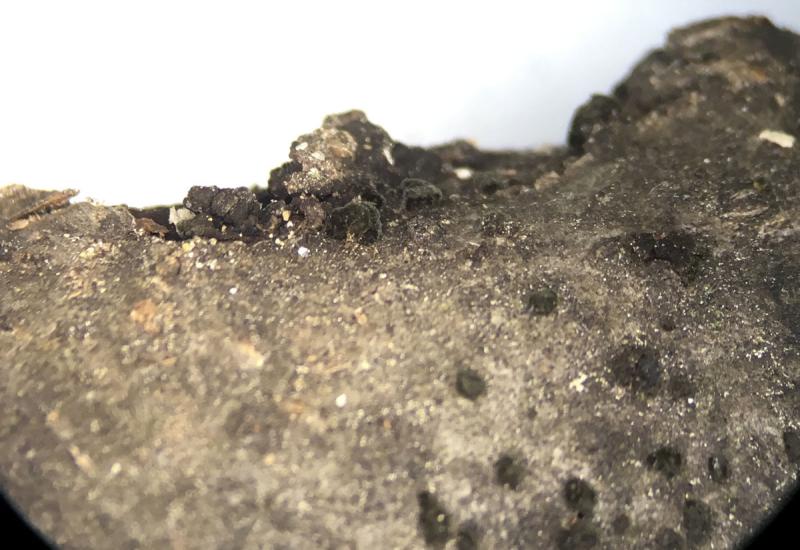
I am hoping someone will have some insight into this interesting asexual fungus I found on hardwood (probably oak) in a New York City park yesterday. It appears to be erumpent, gelatinous acervuli which bristle with conidia on the surface. When cut the solid interior of the acervuli are black (when fresh) and gelatinous. As they age and hollow out they become tan.


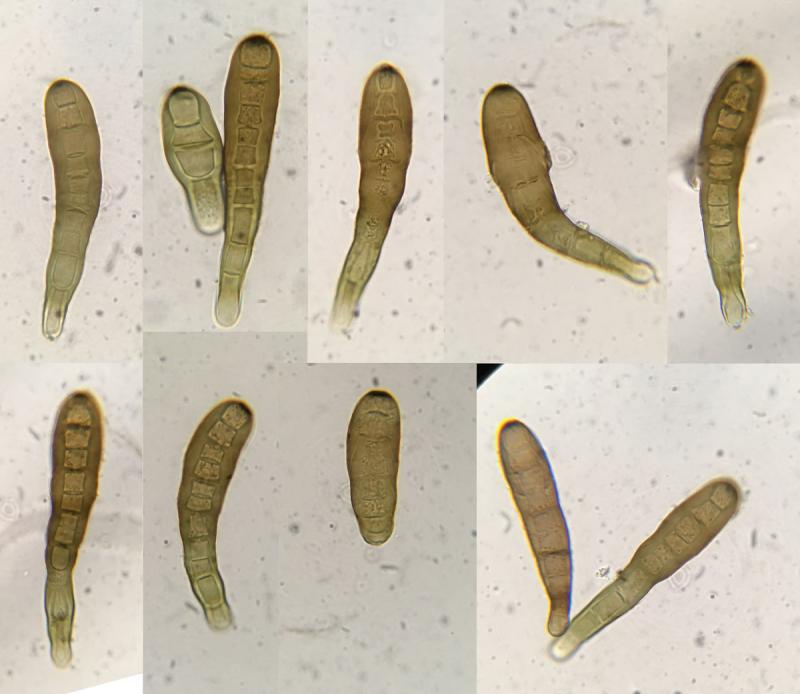
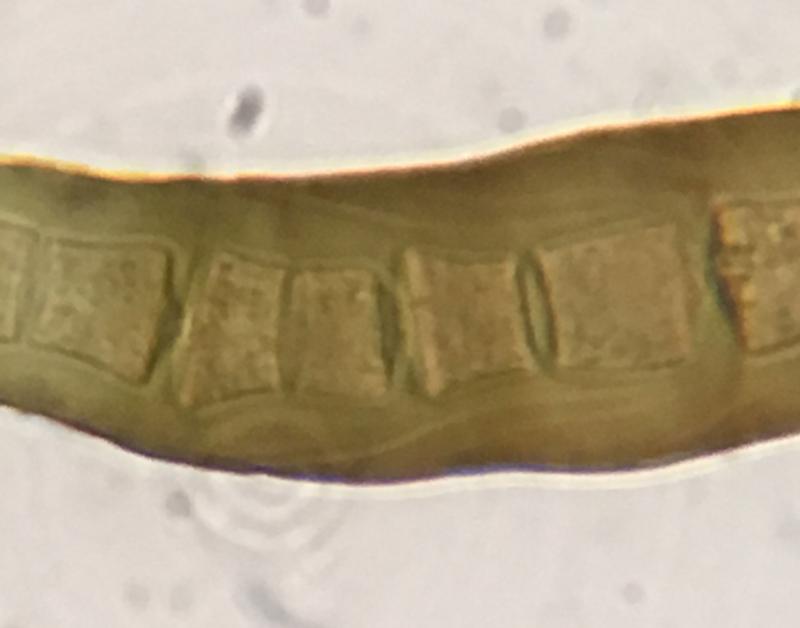
The conidia are brown, very thick walled, multi-septate, and shaped like bowling pins. Sometimes they are curved. There are wavy striations in the flanks of the conidiospores. I am reminded of the conidiospores of Helminthosporium velutinum, but of course that does not produce acervuli like this.


I have seen some discussion/images of the genus Coryneum which seems similar. Can anyone point me in the right direction?


Thanks!
Ethan
  • message #84306
  • message #84306
  • message #84306
  • message #84306
  • message #84306
  • message #84306
  • message #84306
Mathias Hass, 13-01-2026 08:01
Mathias Hass
Re : Coryneum (?) acervuli on oak (?) branch
Hi Ethan

I agree with Coryneum (or teleomorph name Pseudovalsa). There are several species on oak. The dimensions of the conidia might be helpful.

Cheers Mathias
Ethan Crenson, 13-01-2026 21:06
Re : Coryneum (?) acervuli on oak (?) branch
Mathias, 

Thanks for the confirmation on genus.  I guess I did forget to include conidia measurements.  

The larger spores (I excluded the "stunted" looking ones) measure:

76.7-101.9 x 15.3-21.1µm

Me: 91.4 x 18.2µm

Q: 4.4-5.4

Qe: 5

N=9

I have counted from 7 to 11 distosepta in the conidia that I have illustrated here.

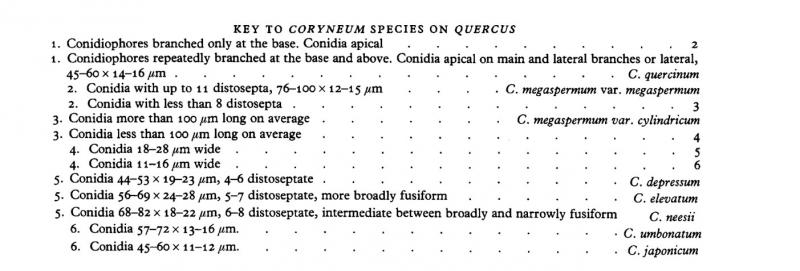
I found a key in J. Muthumary; B.C. Sutton. (1986). Coryneum quercinum sp.nov. on Quercus alba from India. , 86(3), 0–515. The key treats Coryneum on Quercus only, so I hope that my ID of the substrate is correct.  

I am unable to see the conidiophores (I am assuming I would need a microtome to section the gelatinous material properly).  But I feel I can exclude C. quercinum based on dimensions of the conidia.  Which leaves the next option at C. megaspermum var. megaspermum "Conidia with up to 11 distosepta, 76-100 x 12-15." The conidia in my collection are somewhat wider. Continuing in the key I get to C. neesii, but the length and number of distosepta doesn't match. 

So I'm left with perhaps C. megaspermum var. megaspermum with conidia somewhat too wide. 

Or maybe I have the wrong substrate.

Ethan
  • message #84332