10-06-2026 12:54
Steve ClementsBonjour encore, Pouvez-vous m'aider, s'il vous pl
09-06-2026 18:32
Camille MertensSur morceau de roseau immergé 0,5 - 0,7 mm de dia
10-06-2026 21:16
 François Freléchoux
Bonsoir,Le dernier du jour, en attendant votre avi
10-06-2026 21:07
François Freléchoux
Toutes les tiges de gentianes jaunes de l'an passÃ
10-06-2026 13:41
François Freléchoux
Bonjour à nouveau, Voici une trouvaille d'hier.
10-06-2026 11:53
Steve ClementsBonjour, This disco is abundant on dead stems of
10-06-2026 10:45
François Freléchoux
Bonjour à nouveau, Encore une détermination qui
08-06-2026 10:16
 Spooren Marco
I don`t have a clou about this fungus,it is not in
10-06-2026 09:24
François Freléchoux
Bonjour, J'imagine que cette détermination ne do
Unknown purple-black asco, long spores, brown epithecium
Ethan Crenson,
21-09-2025 14:49
Hi all,
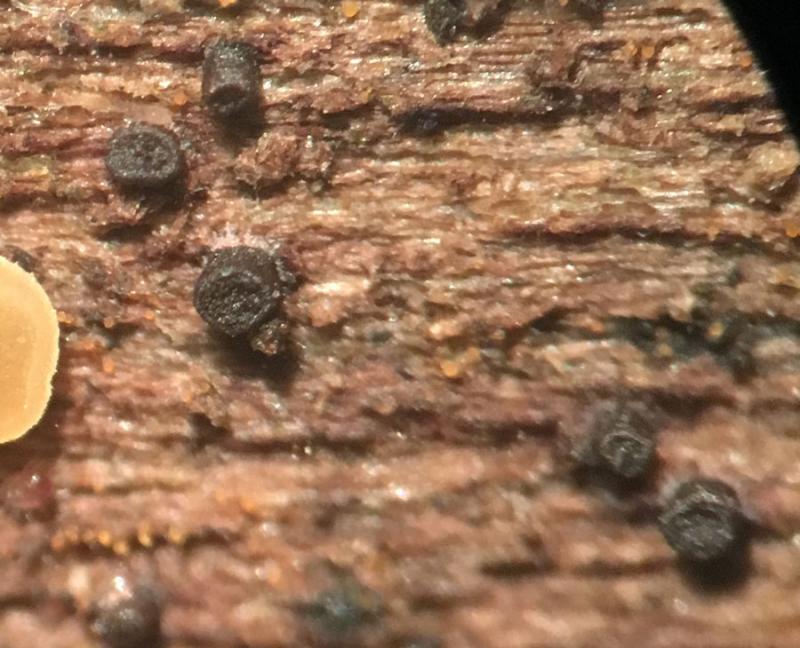
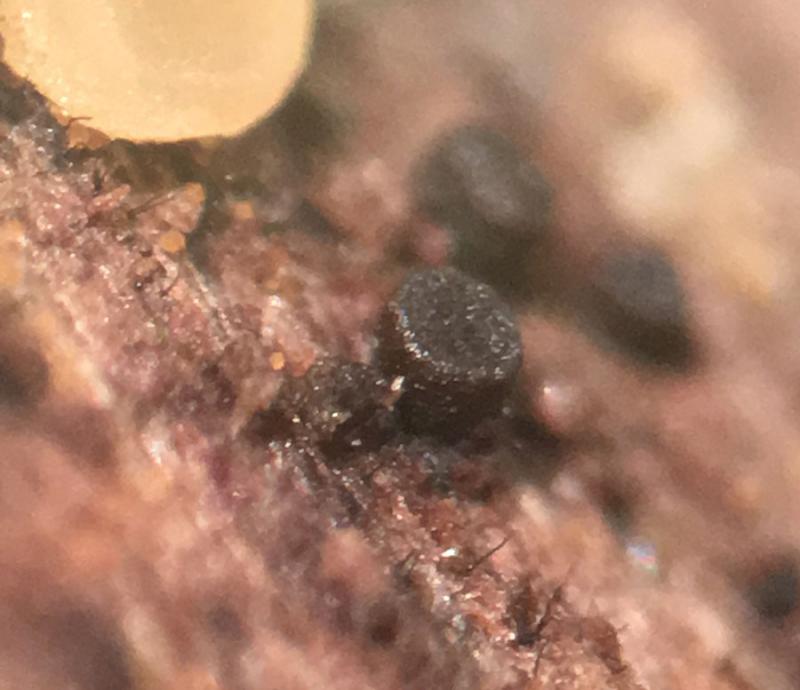
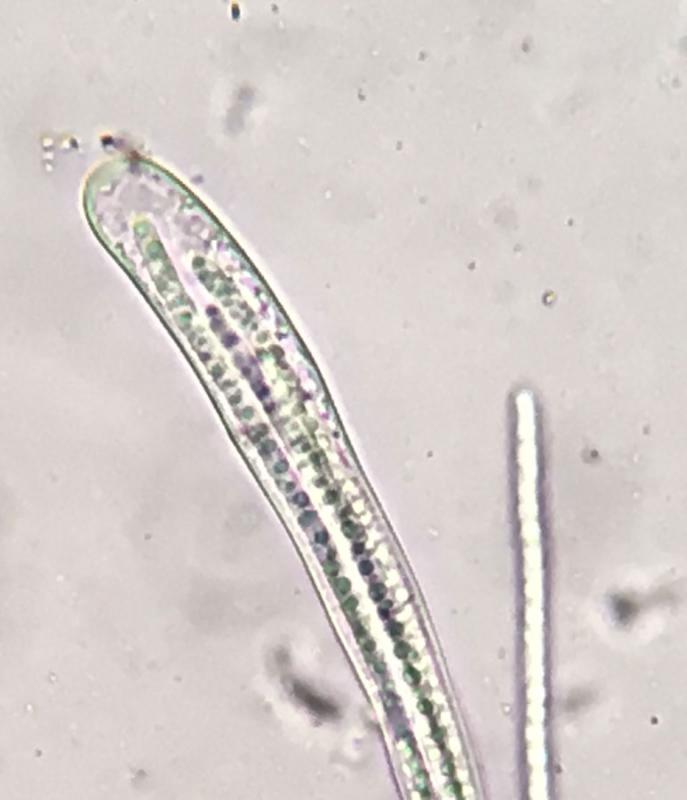
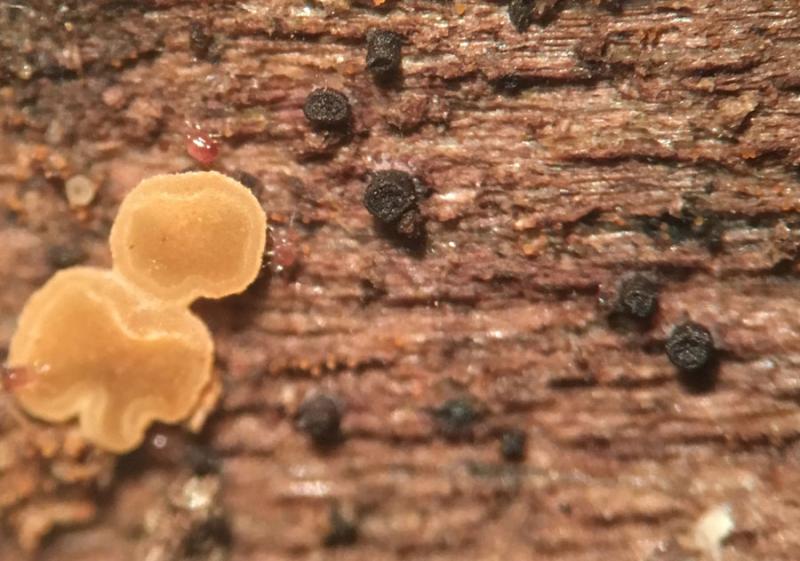
I am at a foray in central New York state. Yesterday afternoon I found an intersting asco on hardwood in a dry stream bed growing amidst a group of orange ascos (probably Helotiales). They are purple black, smaller than 1/2 mm in diameter, barrel shaped.
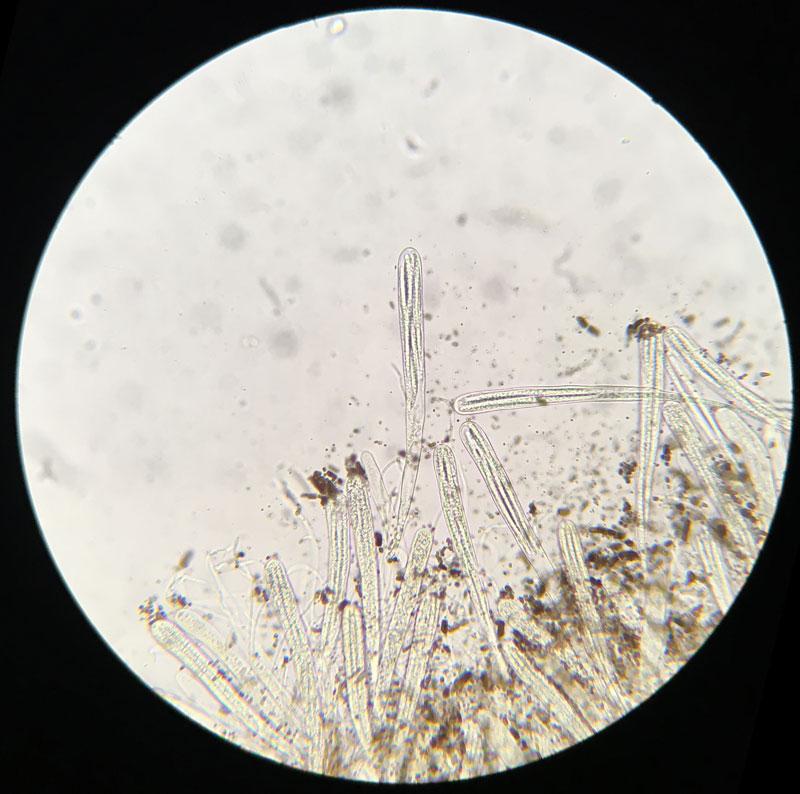
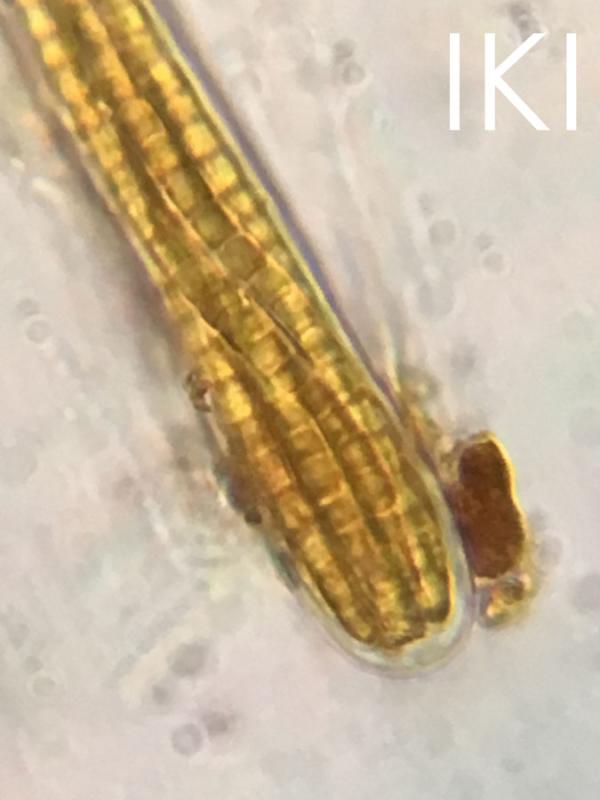
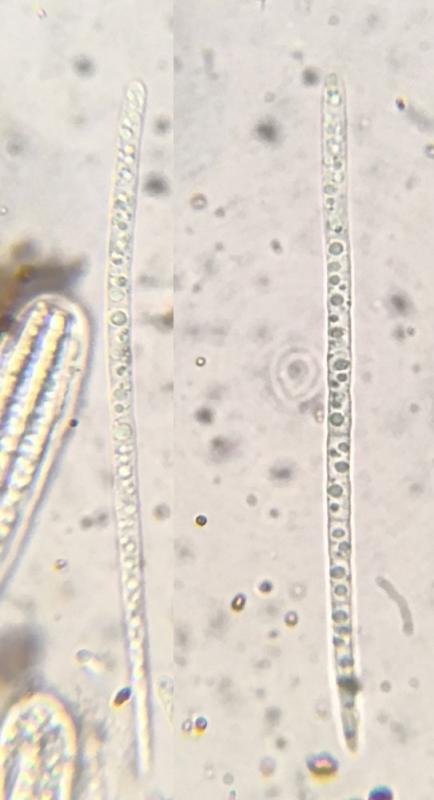
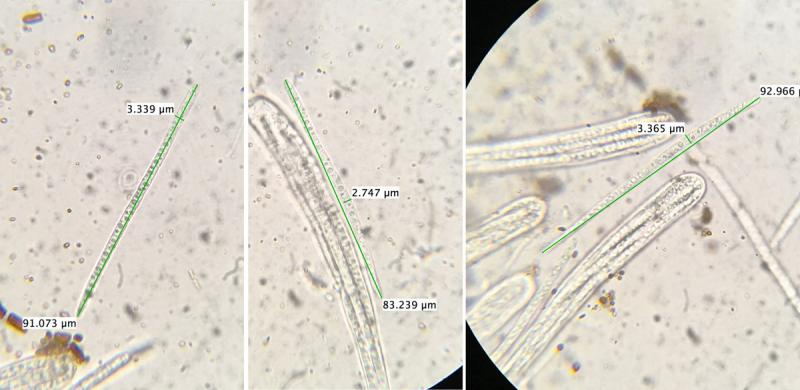
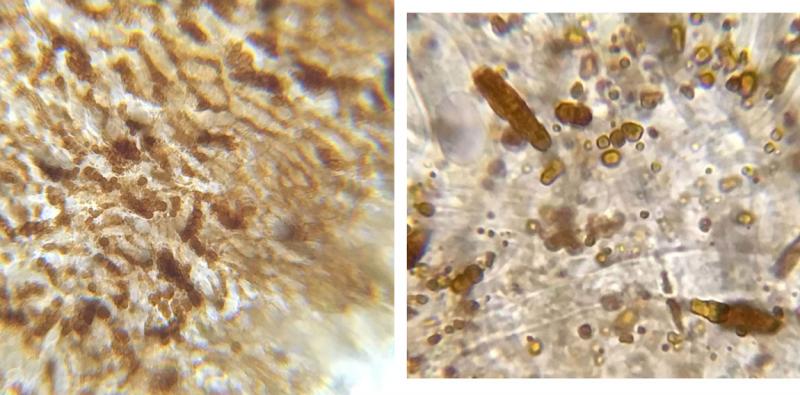
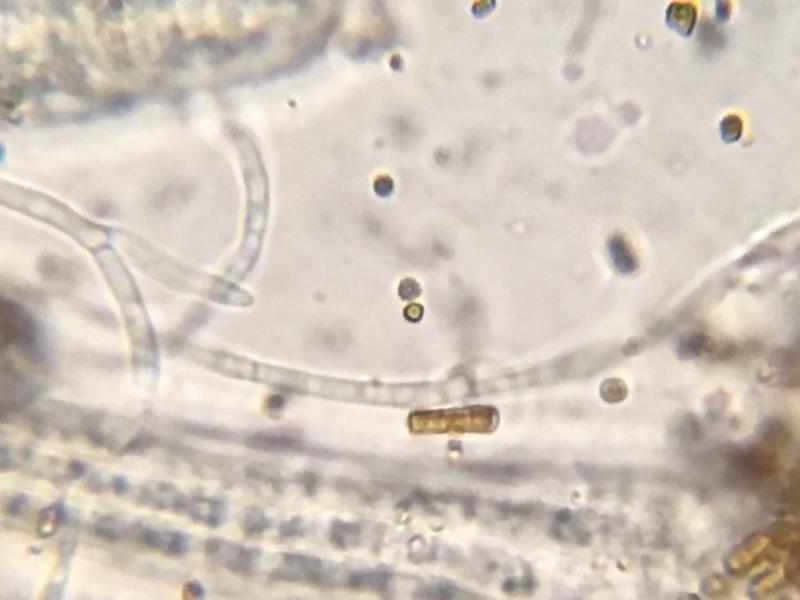
The spores are long and multiseptate. They measure about 83-93 x 2.8-3.3µm. Asci are thick walled, IKI-. Paraphyses are filiform, septate, branching.
There is a epithecium which, in water, appears to consist of a brown irregular debris in the mount.
Can anyone place this in a genus? I am uncertain.
Ethan
Hans-Otto Baral,
21-09-2025 16:55

Re : Unknown purple-black asco, long spores, brown epithecium
Hi Ethan,
Uff, this is very interesting. I guess it could be Claussenomyces tympanoides. That species releases a purplish-red pigment when KOH is added to a water mount.
We urgently need a sequence of this species since we have a similar European taxon which seems to be a new species.
How abundant is the sample? If you want to try the KOH reaction (inonomidotic) please use a small apo in order to safe material for DNA.
Zotto
Ethan Crenson,
22-09-2025 03:17
Re : Unknown purple-black asco, long spores, brown epithecium
Hello Zotto, Thank you for your reply. I don't have very much of the material. I just returned home and am drying one apothecia for my own attempt at sequencing. I will try the KOH reaction tomorrow. If you would like the rest of the specimen I can send it.
Ethan
Hans-Otto Baral,
22-09-2025 09:13
Re : Unknown purple-black asco, long spores, brown epithecium
Let's wait for Adam and Luis, Maybe Adam wants it. If you think you can generate an ITS sequence, this would give us a great hint. Adam's presumed new species is in GenBank with ITS and LSU. It falls very apart from any other described species. I assume your lab uses ITS1F as primer for ITS, because Adam's species possesses the intron in the SSU.
Adam Polhorský,
23-09-2025 08:29
Re : Unknown purple-black asco, long spores, brown epithecium
Wow incredible, first you have found sister species to I. uncinata, now possibly the type of the genus. From yours aff. uncinata we have a nice culture. I can attempt the same here. I will welcome any material. Luis examined the type of C. tympanoides, and it was too old to sequence, your sample would be a great help.
Thank you,
Adam.
Ethan Crenson,
23-09-2025 17:18
Re : Unknown purple-black asco, long spores, brown epithecium
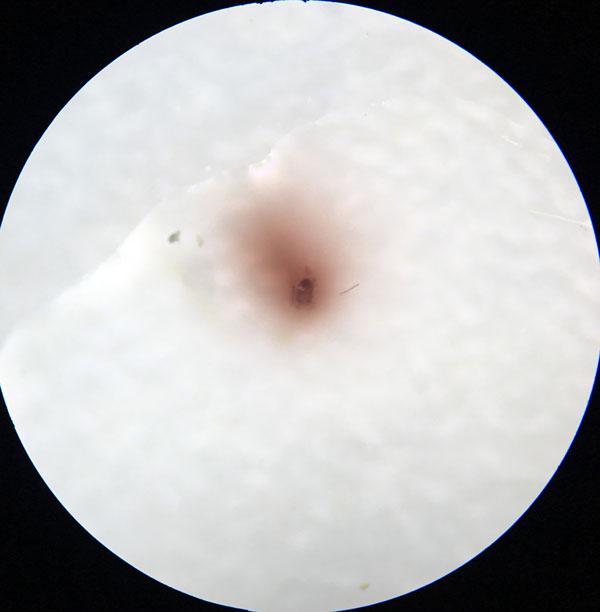
Here is a photo of the ionomidotic reaction. It was quite strong initially, but it took me a moment to get my camera (it was still packed).