
19-04-2026 21:23
Steve ClementsBonjour, I found this anamorphic fungus on old pl
19-04-2026 20:46
Steve Clements1 mm diameter approx spherical conidiophores on pl
12-04-2026 17:56
 Hardware Tony
Found on dead stems in February earlier this year
17-04-2026 19:16
 Enrique Rubio
Hi to everybodyI would appreciate any assistance r
14-04-2026 05:32
Ethan CrensonHi all, A few weeks back a friend pointed out som
17-04-2026 15:14
 Bruno Coué
Bonjour.Récoltes du 16/04/2026, sur feuilles mort
12-04-2026 15:52
Gernot FriebesHi,I'm looking for help with this anamorph collect
14-04-2026 21:52
Gernot FriebesHi,found on dead leaves of Carex elata. Conidia: 4
16-04-2026 22:09
Buckwheat PeteHello, I'd like to ask about this older specimen:
15-04-2026 19:33
Fátima Durán ManzanequeHi!! I need help, I found this Ascomycete but I d
Cup fungus - Request for help
Thomas Flammer,
25-06-2025 16:25
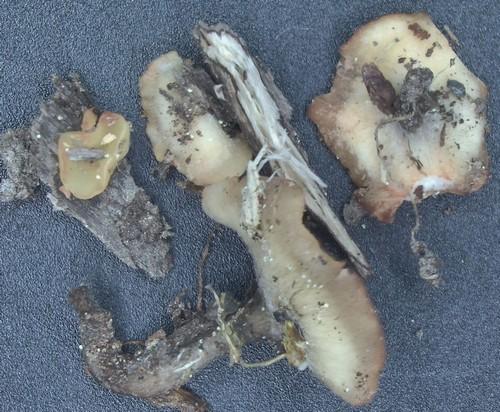
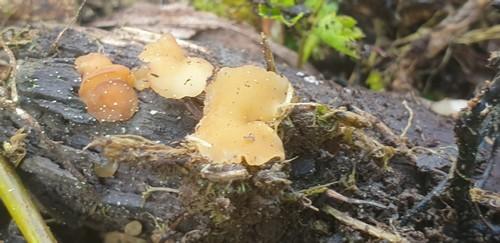
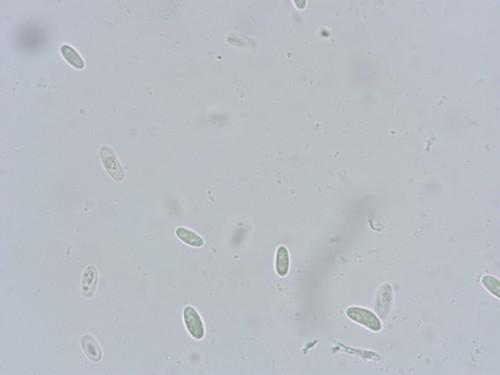
Spores (size): 6.8 - 9.4 x 2.6 - 4.4 µm - Q: 1.55 - 3.34 (Ø LxB: 8.2 x 3.3 ØQ:2.6 N: 8)
Spores irregularly ellipsoid
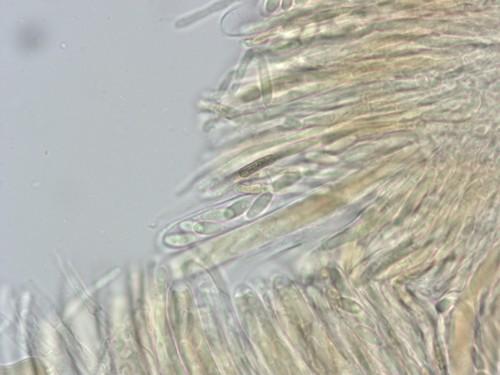
Ascus: IKI-, biserriat
Growth on wooden detrius and wood
size max. 10mm
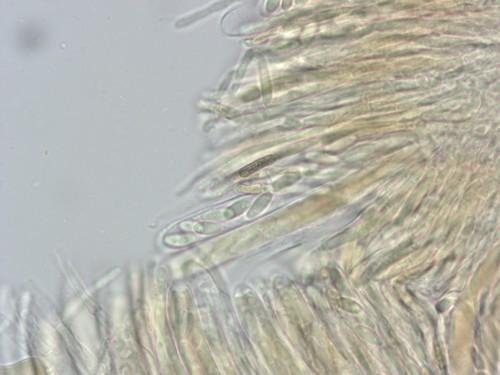
Hans-Otto Baral,
25-06-2025 20:01

Re : Cup fungus - Request for help
This would require living paraphyses. Were they multiguttulate (refractive VBs)? It could be Hymenoscyphus pani, which has inamyloid asci and inconspicuous contents of the paraphyses.
H. pani and H. peruni are related to H. repandus (in my menthae clade).