
17-04-2026 19:16
 Enrique Rubio
Hi to everybodyI would appreciate any assistance r
14-04-2026 05:32
Ethan CrensonHi all, A few weeks back a friend pointed out som
17-04-2026 15:14
 Bruno Coué
Bonjour.Récoltes du 16/04/2026, sur feuilles mort
12-04-2026 15:52
Gernot FriebesHi,I'm looking for help with this anamorph collect
14-04-2026 21:52
Gernot FriebesHi,found on dead leaves of Carex elata. Conidia: 4
16-04-2026 22:09
Buckwheat PeteHello, I'd like to ask about this older specimen:
15-04-2026 19:33
Fátima Durán ManzanequeHi!! I need help, I found this Ascomycete but I d
14-04-2026 20:31
Gernot FriebesHi,can this be Psilachnum lateritioalbum on Phragm
12-04-2026 17:56
 Hardware Tony
Found on dead stems in February earlier this year
12-04-2026 12:22
 William Slosse
In a dune grassland in Oostduinkerke (Belgium), on
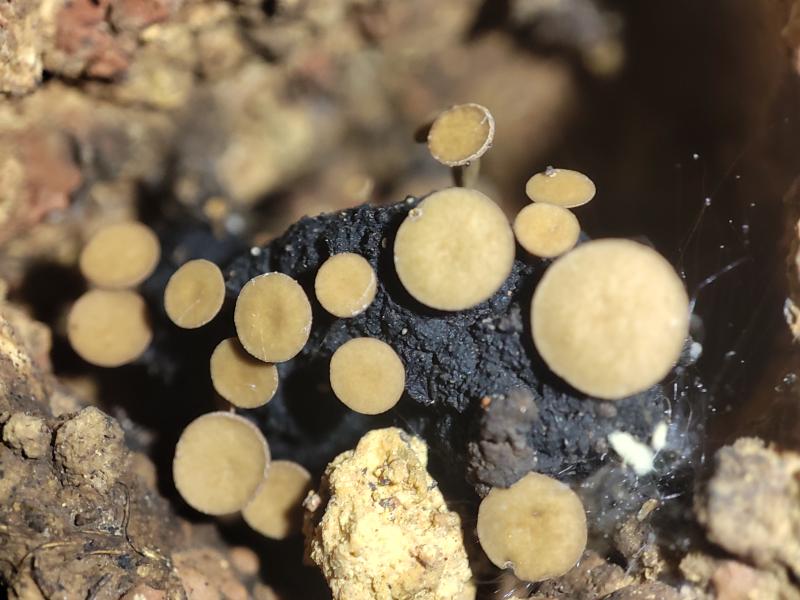
Ascomycete on bat poop in cave
Warre Van Caenegem,
24-06-2025 14:00
I have a very simple microscope available, without a 100x lens and I cannot make measurements currently, and no literature.
I'm just very curious what these fungi are, so I hope that the data I can provide might help to get to a genus or species.
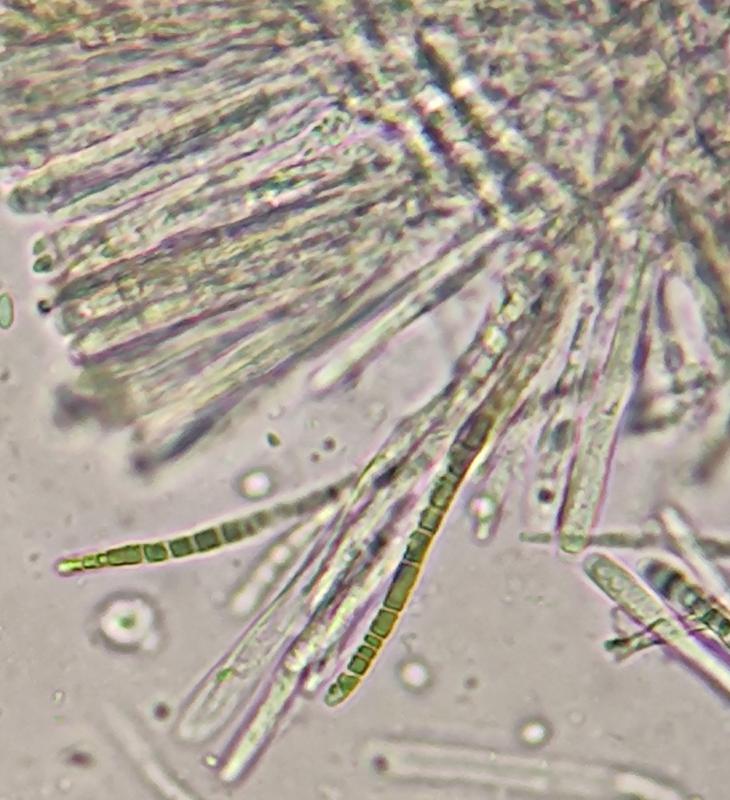
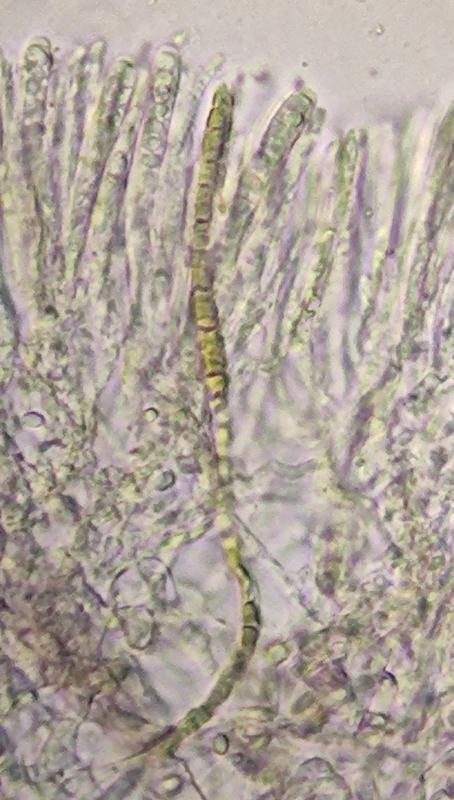
Asci 8-spored, with simple septa (no clamp at base). Excipulum with round cells, some of these cells have brown content. Paraphyses are not very obvious, but there are several long, thicker-walled strands in here, which are multiseptated and seem to be filled with greenish/brown content (it kind of looks like a filamentous algae).
I tried to search for Literature and observations of ascomycetes on bat droppings, but I could not find something that looks like this.
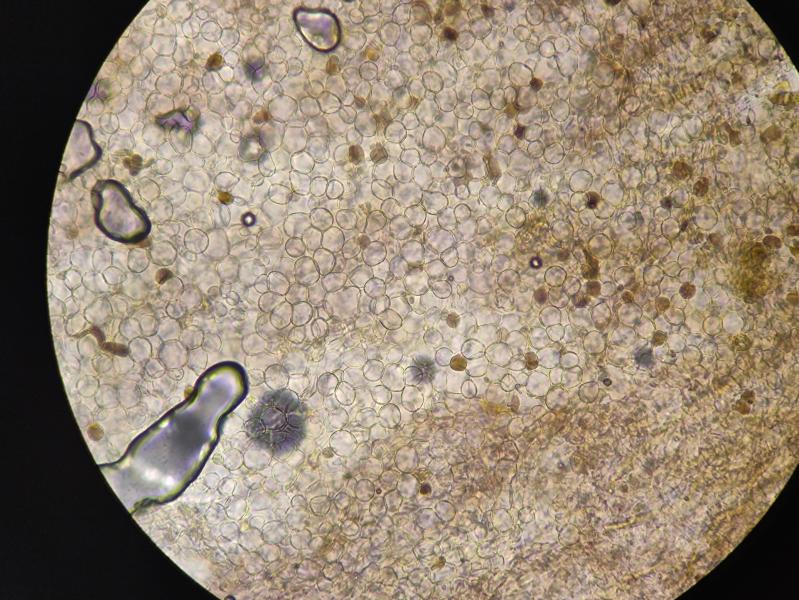
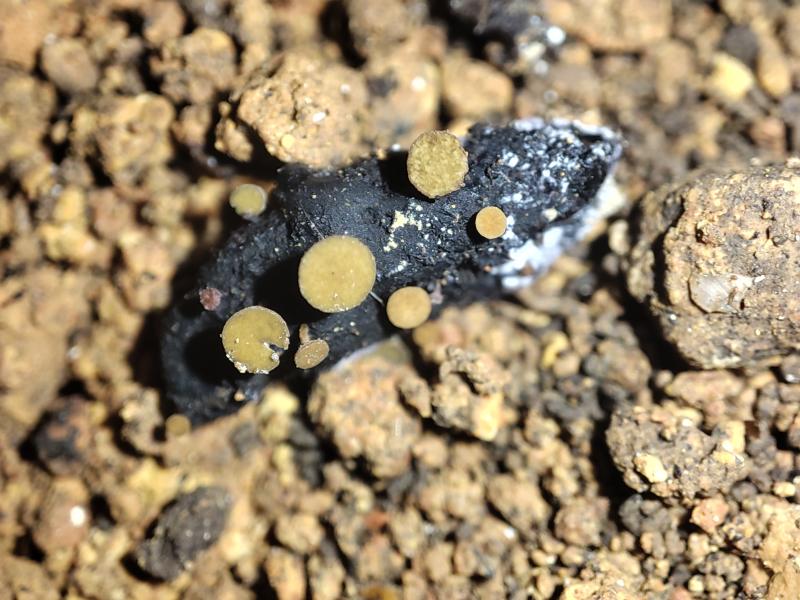
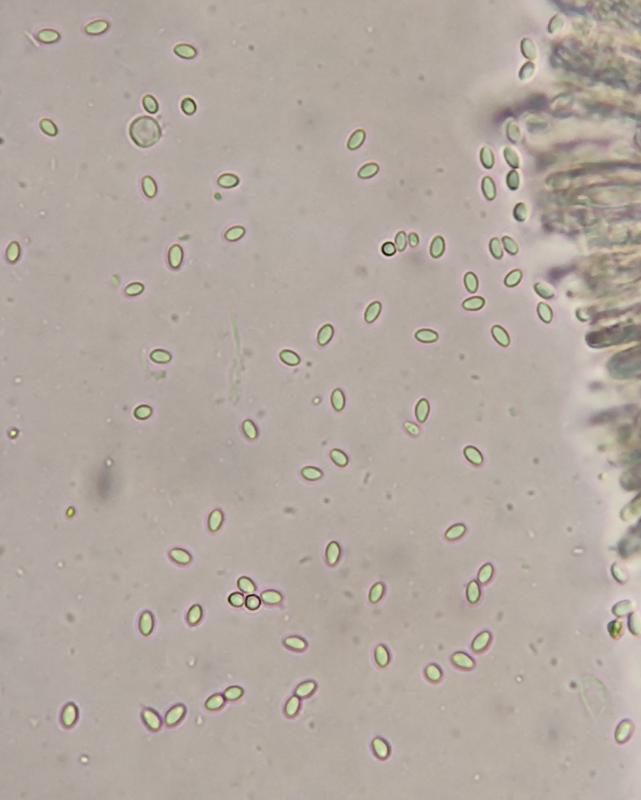
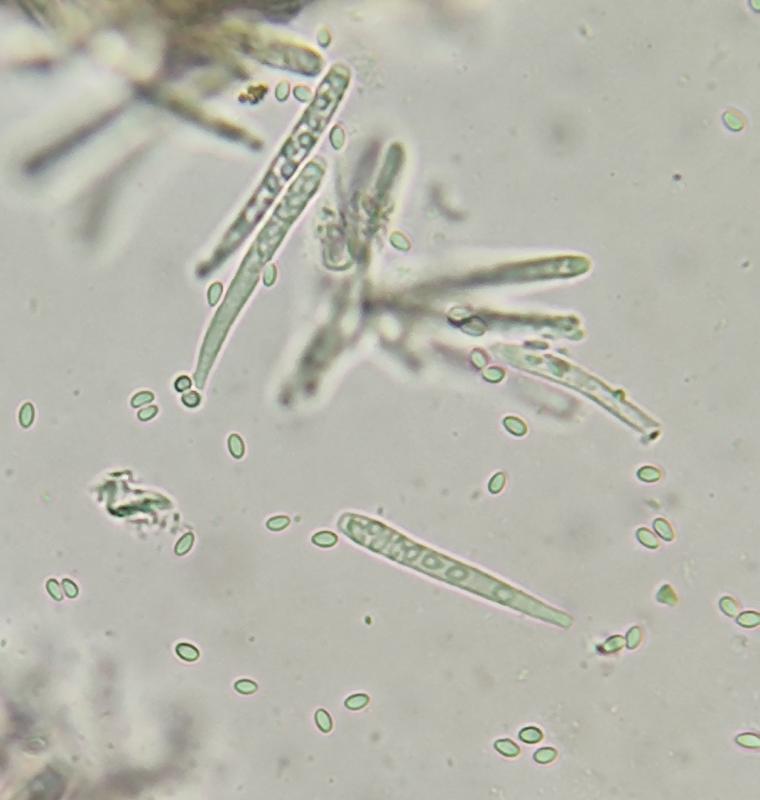
Neven Matocec,
24-06-2025 14:28

Re : Ascomycete on bat poop in cave
Dear Warre,
I am writing you officially as an member of the State project that is currently concerned on a cave fungi. Together with my colleagues we are working on a group to which member you have came accross. If you collected anything, please send us your whole collection to legalise your activity and thus making you a collaborator of our project. ANY collecting of biological material in Croatian caves IS STRICTLY PROHIBITED.
ME and my colleagues would like to continue our further conversation through the e-mail. My official address is nmatocec@irb.hr. I will write you today to establish our further communication.
Best regards,
Neven Mato?ec
I am writing you officially as an member of the State project that is currently concerned on a cave fungi. Together with my colleagues we are working on a group to which member you have came accross. If you collected anything, please send us your whole collection to legalise your activity and thus making you a collaborator of our project. ANY collecting of biological material in Croatian caves IS STRICTLY PROHIBITED.
ME and my colleagues would like to continue our further conversation through the e-mail. My official address is nmatocec@irb.hr. I will write you today to establish our further communication.
Best regards,
Neven Mato?ec
Warre Van Caenegem,
24-06-2025 15:50
Re : Ascomycete on bat poop in cave
Dear Neven Matocec,
Thank you for your response. Awaiting your personal email communication, I would like to specify that I currently volunteer for Operation Wallacea, a UK-based conservation organization. Here, we are working together with BIOTA, a Croatian based conservation organization, in and around Krka National Park.
I would like to contribute to your project, and I will wait for any further instructions.
Best regards,
Warre
Thank you for your response. Awaiting your personal email communication, I would like to specify that I currently volunteer for Operation Wallacea, a UK-based conservation organization. Here, we are working together with BIOTA, a Croatian based conservation organization, in and around Krka National Park.
I would like to contribute to your project, and I will wait for any further instructions.
Best regards,
Warre
Neven Matocec,
24-06-2025 16:17
Re : Ascomycete on bat poop in cave
Dear Ware,
thanks for your prompt reply! Oh good! Yes, I know everthying about Operation Wallacea in Croatia, I even participated in one several years ago. Please send my regards to Dušan Jeli? if he is there :-)
We'll discuss on everything and looking forward to our future cooperation. Will write you a bit later today,
Cheers,
Neven
thanks for your prompt reply! Oh good! Yes, I know everthying about Operation Wallacea in Croatia, I even participated in one several years ago. Please send my regards to Dušan Jeli? if he is there :-)
We'll discuss on everything and looking forward to our future cooperation. Will write you a bit later today,
Cheers,
Neven
Hans-Otto Baral,
24-06-2025 16:36

Re : Ascomycete on bat poop in cave
Difficult to tell without measurements, iodine reaction, and living features. The paraphyses surely contained VBs which now in dead state appear distorted.
The absence of croziers I would doubt a bit, it is not evident on your photos.
The excipulum could point to a Sclerotiniaceae (?), which depends on the type of amyloid apical ring of the asci.