
05-05-2026 22:40
Gernot FriebesHi,I believe this is a Plagiostoma growing on a Sa
04-05-2026 18:13
 Stephen Martin Mifsud
ID request for what seems to be a true aquatic fun
04-05-2026 16:39
Stephen Martin Mifsud
ID request: This specimen was collected in Malta o
28-07-2011 18:31
 Alex Akulov
Dear FriendsToday I made the pdf file of Velenovsk
28-04-2026 20:07
 Lothar Krieglsteiner
... on twig in the air at standing Ceratonia siliq
04-05-2026 09:50
 Castillo Joseba
Me mandan el material seco de Galicia,(España) re
02-05-2026 12:42
Alain BRISSARDBonjour à tousJeuidi 30 avril dernier on m'a remi
02-05-2026 13:06
Pauline. PennaBonjour Please can someone help me with this id
01-05-2026 22:45
 Thierry Blondelle
Bonjour à tous, Une récolte sur bouse séchée d
Help with some synnemata.
Josep Torres,
12-06-2025 08:58
 Hello.
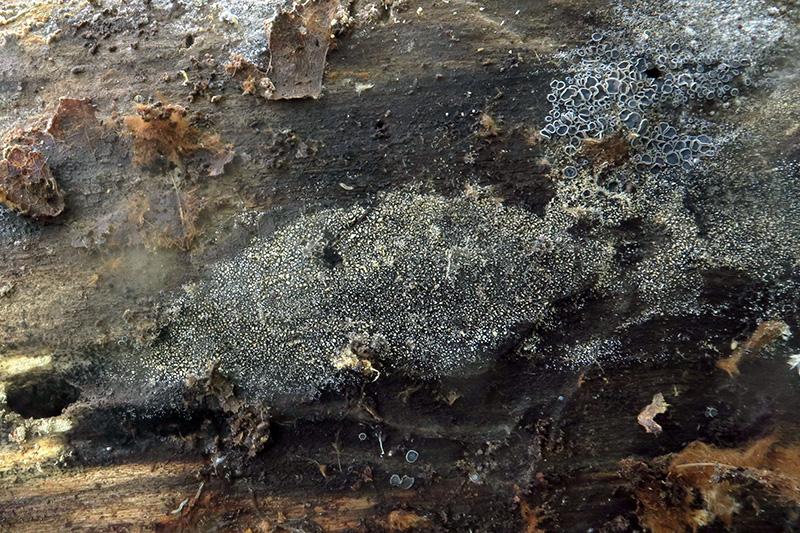
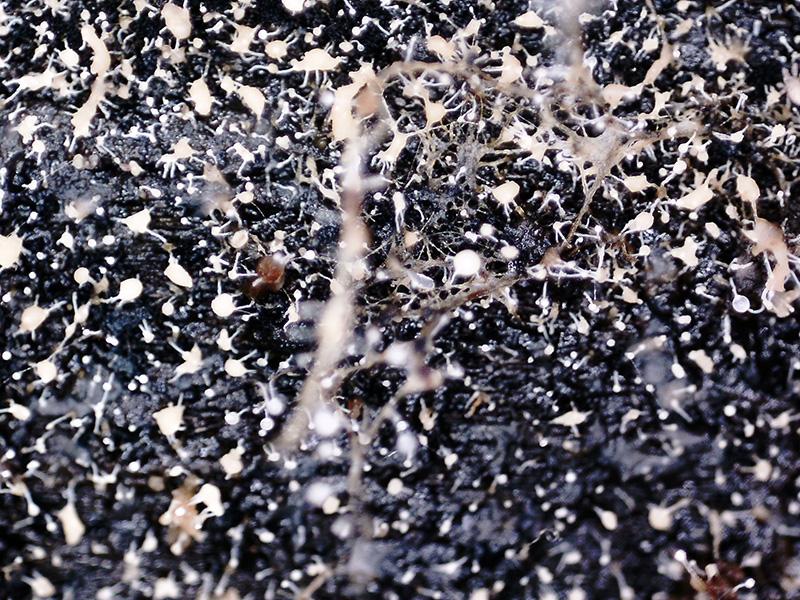
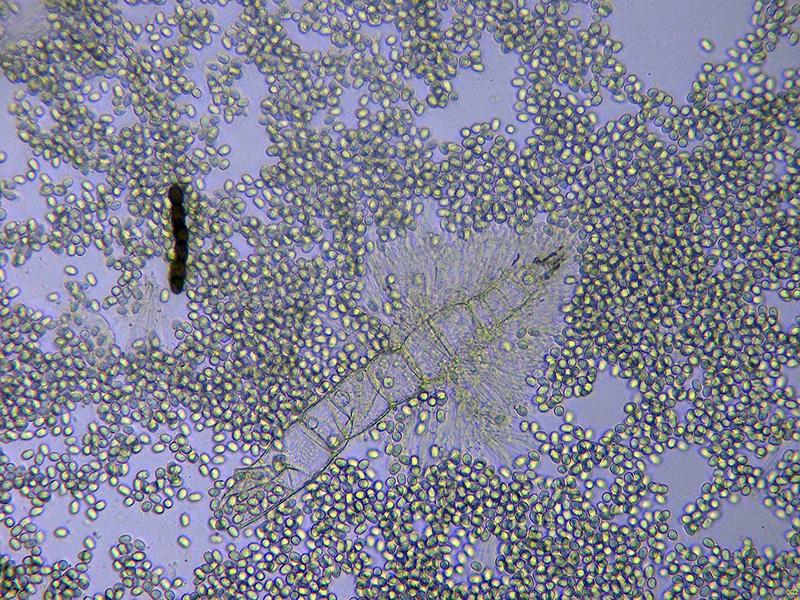
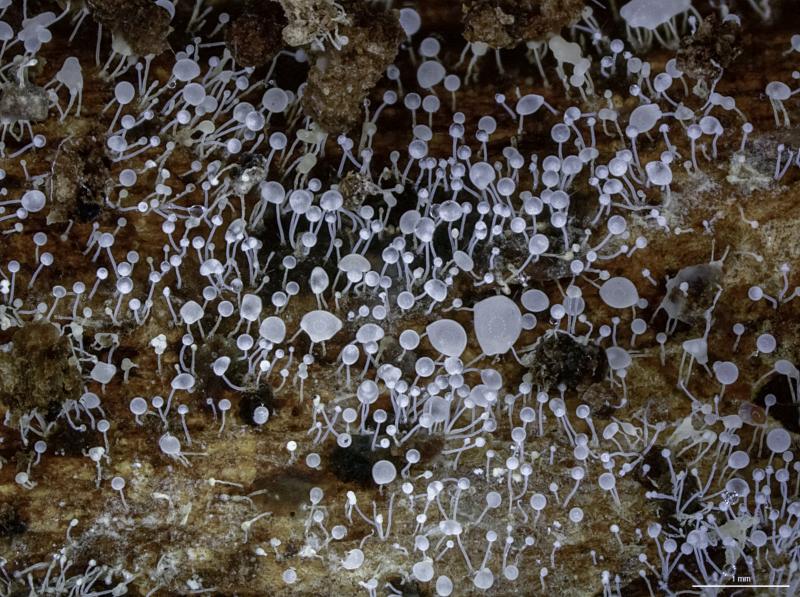
Some synnemata sprouting in a scattered but abundant manner on the surface of a trunk lying on the ground, an indeterminate broadleaf tree. The area was predominantly home to hazel (Corylus) and oak (Quercus), sharing the space with abundant specimens of Mollisia, probably lividofusca.
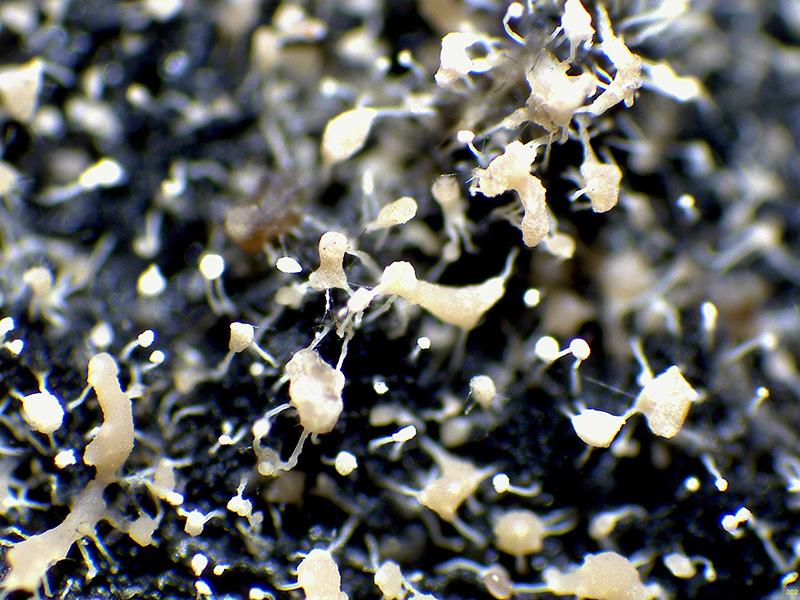
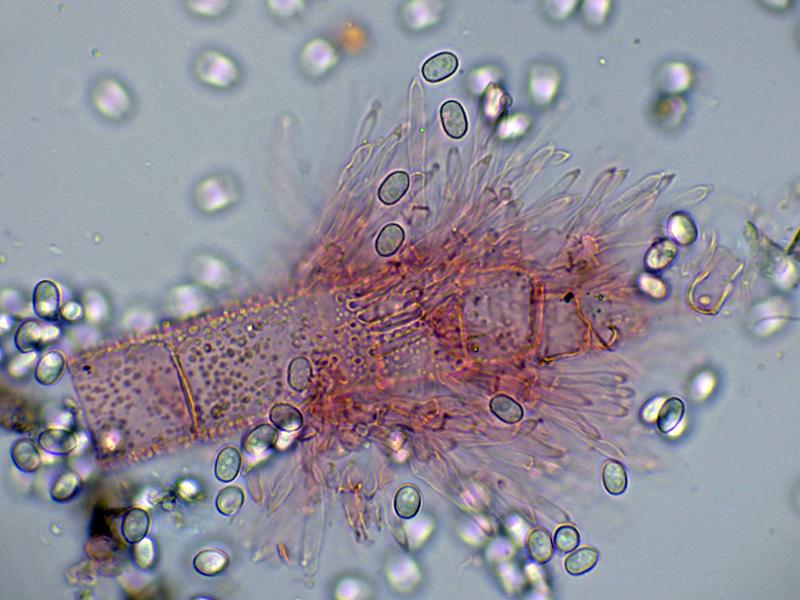
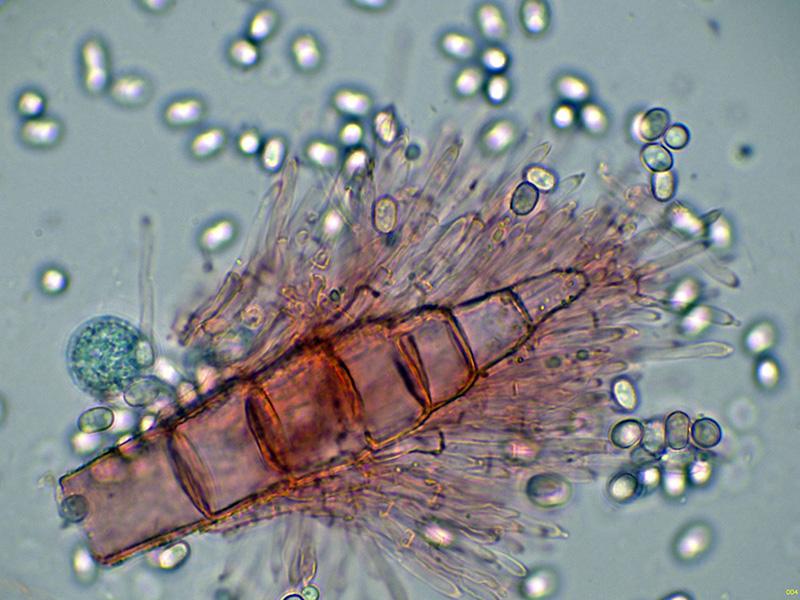
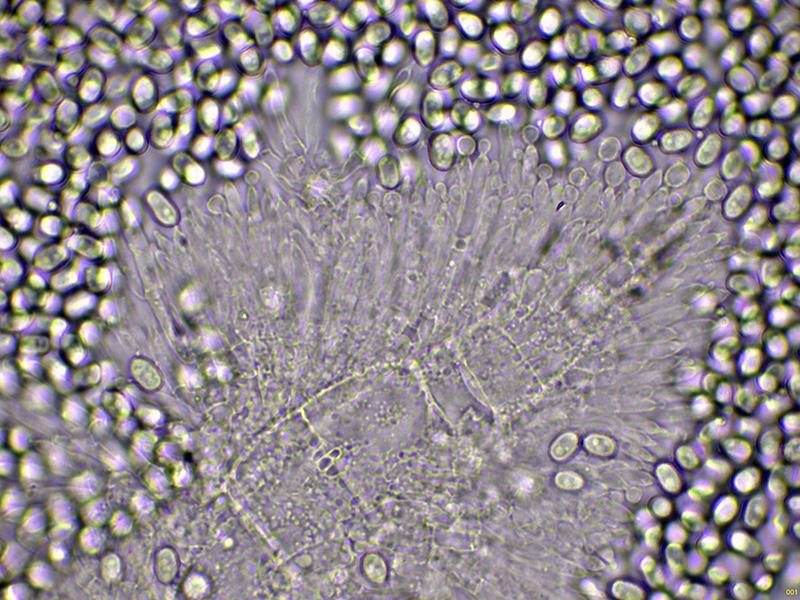
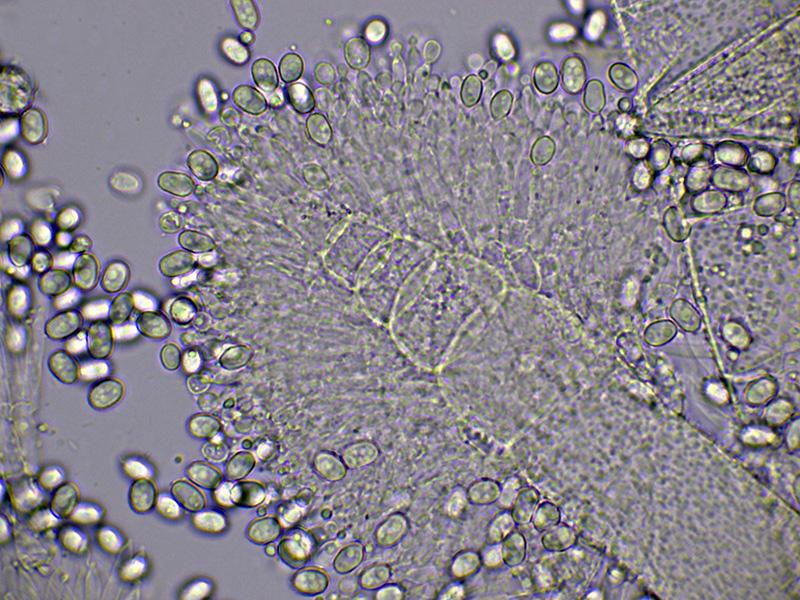
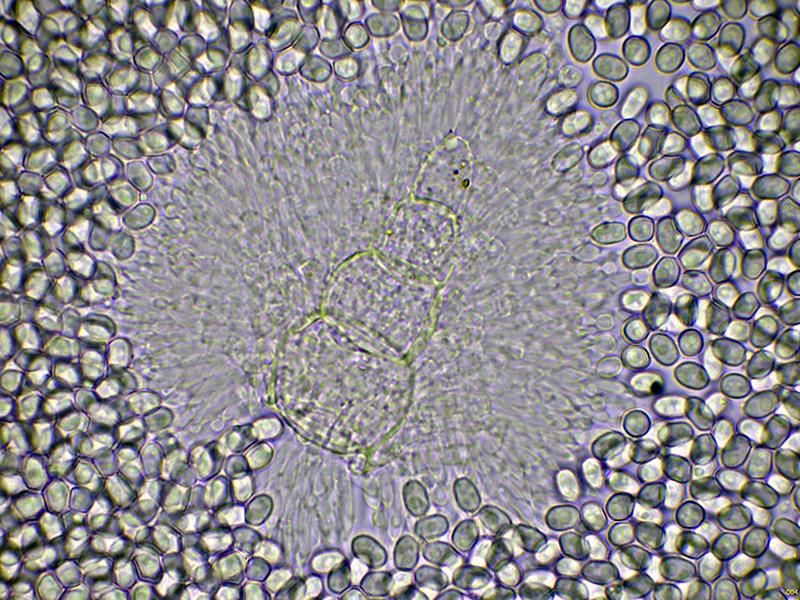
Synnemas were 0.4 to 0.5 mm tall and 0.15 to 0.30 mm wide at the fertile part, although this width is due to several synnemas joining together to form a common gelatinous mass of conidia.
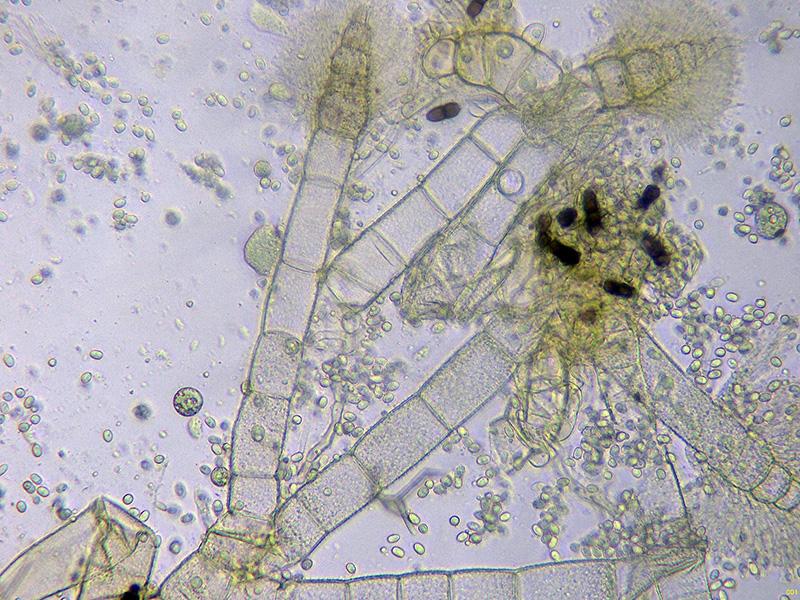
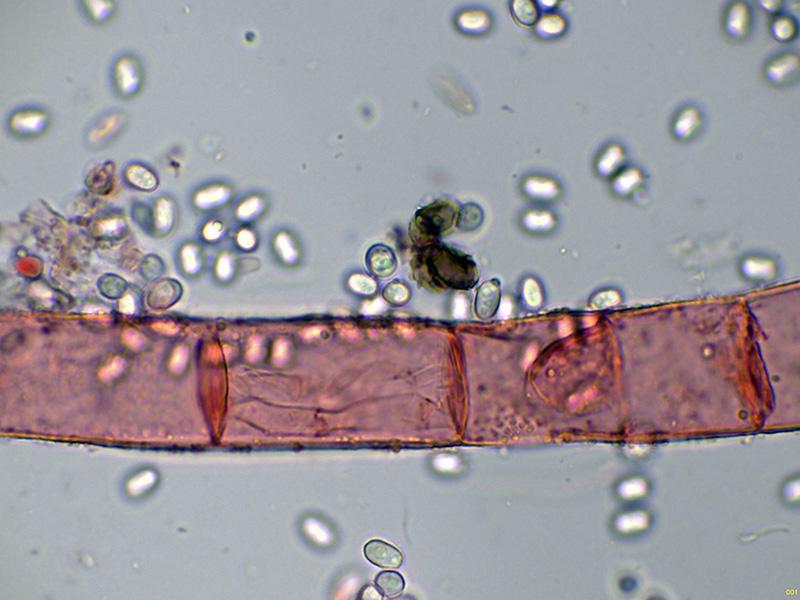
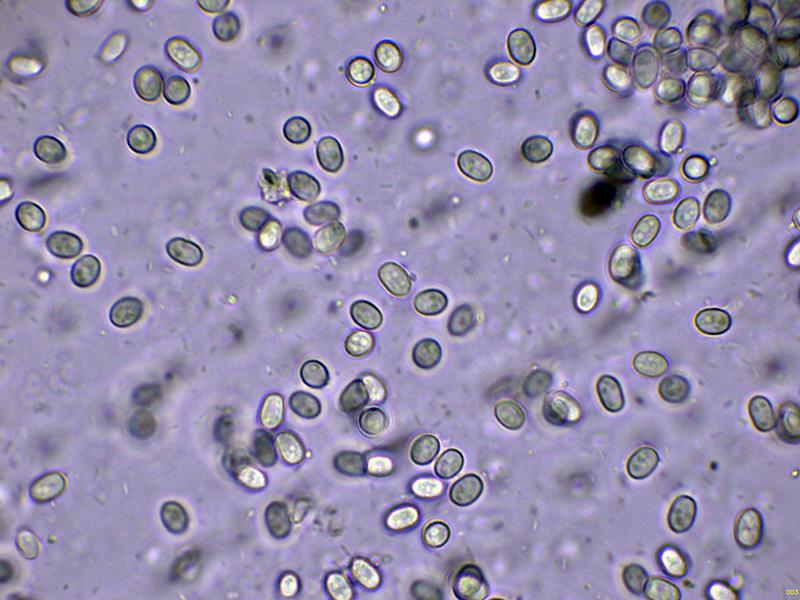
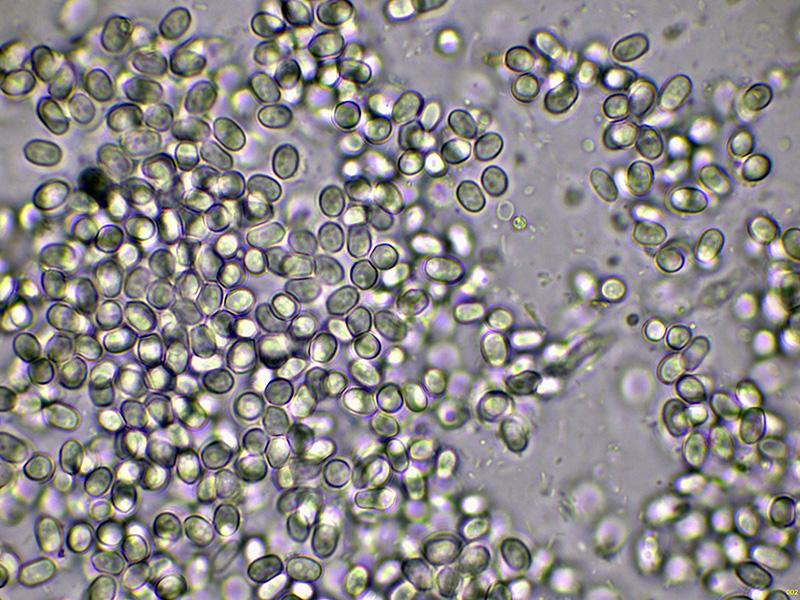
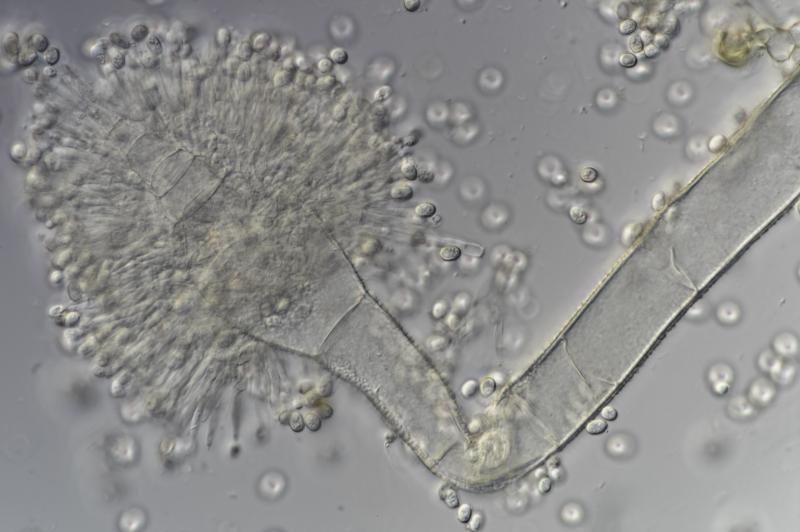
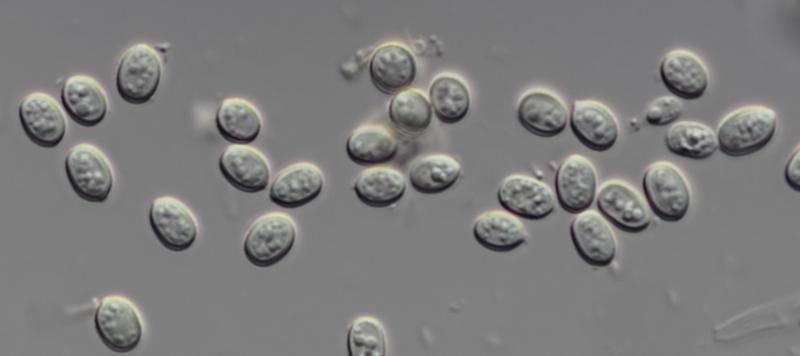
Branched conidiogeneous hyphae, covered with warts over their entire surface, with a fairly uniform width of 22.5 to 24 microns. These hyphae terminate in the conidiophore, highly septate and with a pointed end. Conidia are short, cylindrical, and ellipsoidal, thick-walled, hyaline, and measure in water:
(5.4) 5.8 - 6.6 (6.9) × (3.9) 4 - 4.6 (4.8) µm
Q = (1.2) 1.4 - 1.6 ; N = 40
Me = 6.3 × 4.3 µm ; Qe = 1.5
Given their characteristics, I'm thinking of Stilbella or related genera, but I haven't been able to find any reasonably convincing proposals in the Keys.
Any feedback from you would be welcome.
Thank you in advance.
Best regards.

Adam Polhorský,
12-06-2025 14:58
Re : Help with some synnemata.
Hi Josep,
this is Gloiosphaera clerciana. I too had it recently.
Adam
Josep Torres,
12-06-2025 21:30
Re : Help with some synnemata.
Thanks, Adam, for your help.
It fits perfectly, so it looks like Gloiosphaera clerciana.
Best regards,
Josep.
It fits perfectly, so it looks like Gloiosphaera clerciana.
Best regards,
Josep.