Accès membres

Mot de passe perdu? S'inscrire

03-02-2026 20:44

Zetti Mario

When I first saw this white mould on an Agaricus s

18-08-2025 15:07

Lothar Krieglsteiner Lothar Krieglsteiner

.. 20.7.25, in subarctic habital. The liverwort i

02-02-2026 21:46

Margot en Geert Vullings

On a barkless poplar branch, we found hairy discs

02-02-2026 14:55

Andgelo Mombert Andgelo Mombert

Bonjour,Sur thalle de Lobaria pulmonaria.Conidiome

02-02-2026 14:33

Andgelo Mombert Andgelo Mombert

Bonjour,Sur le thalle de Peltigera praetextata, ne

31-01-2026 10:22

Michel Hairaud Michel Hairaud

Bonjour, Cette hypocreale parasite en nombre les

02-02-2026 09:29

Bernard CLESSE Bernard CLESSE

Bonjour à toutes et tous,Pour cette récolte de 2

01-02-2026 19:29

Nicolas Suberbielle Nicolas Suberbielle

Bonjour, Marie-Rose D'Angelo (Société Mycologiq

30-01-2026 22:49

éric ROMERO éric ROMERO

Bonjour tous, Récolté dans les Vosges le 22/10/

31-01-2026 09:17

Marc Detollenaere Marc Detollenaere

Dear Forum,On decorticated wood of Castanea,I foun

« < 1 2 3 4 5 > »
Black Mollisia 240325 on Tamarix
Miguel Ángel Ribes, 26-03-2025 20:51
Miguel Ãngel RibesGood afternoon

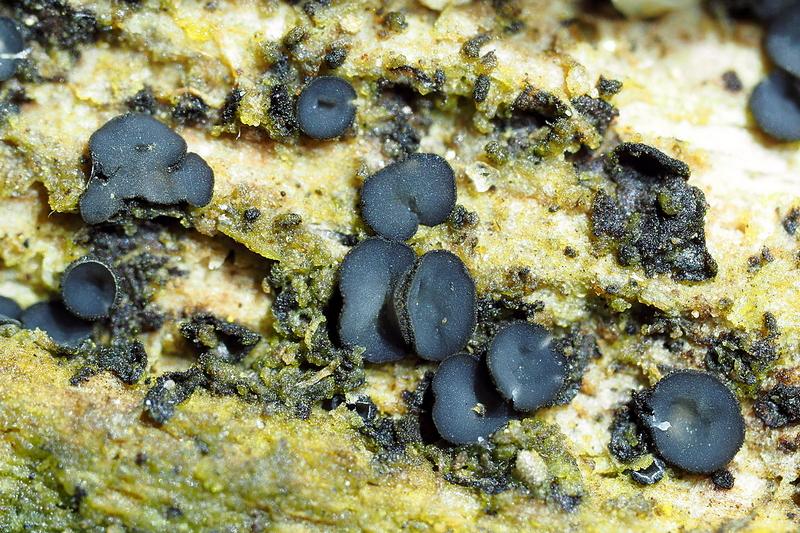
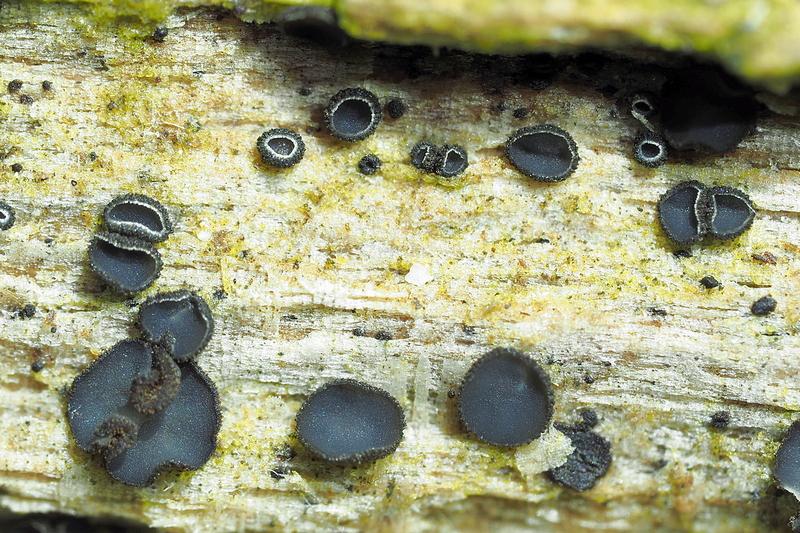
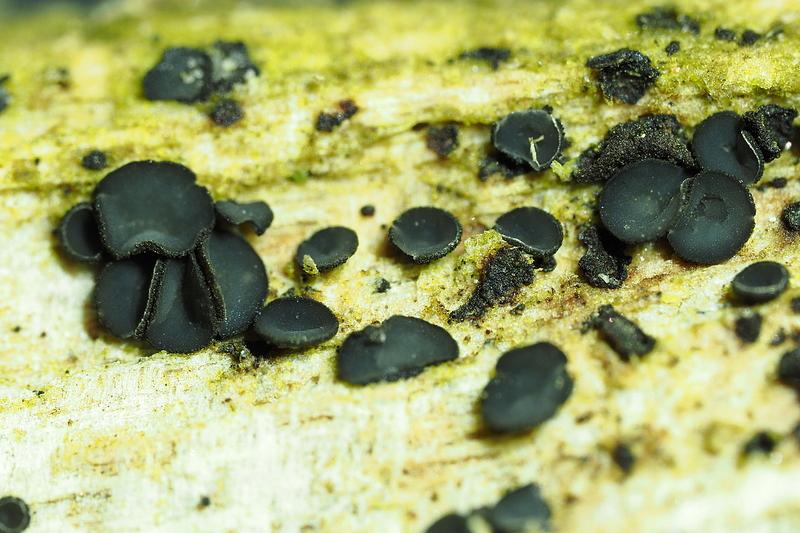
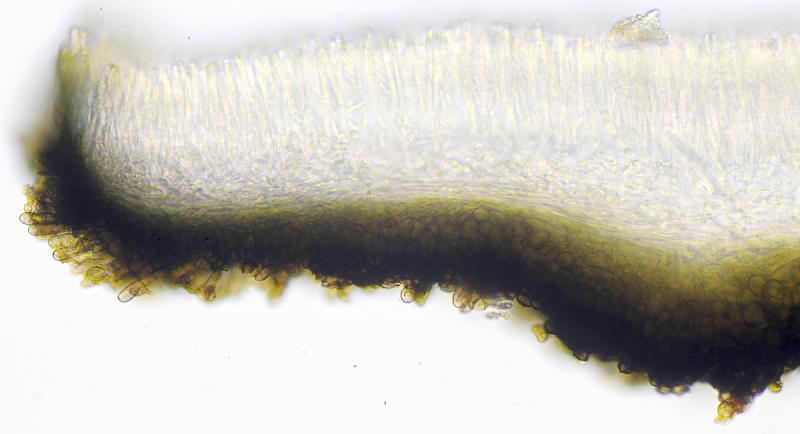
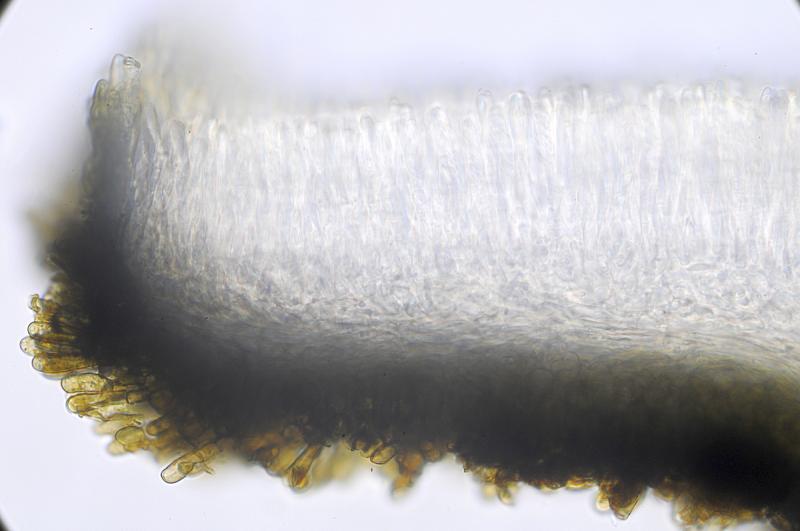
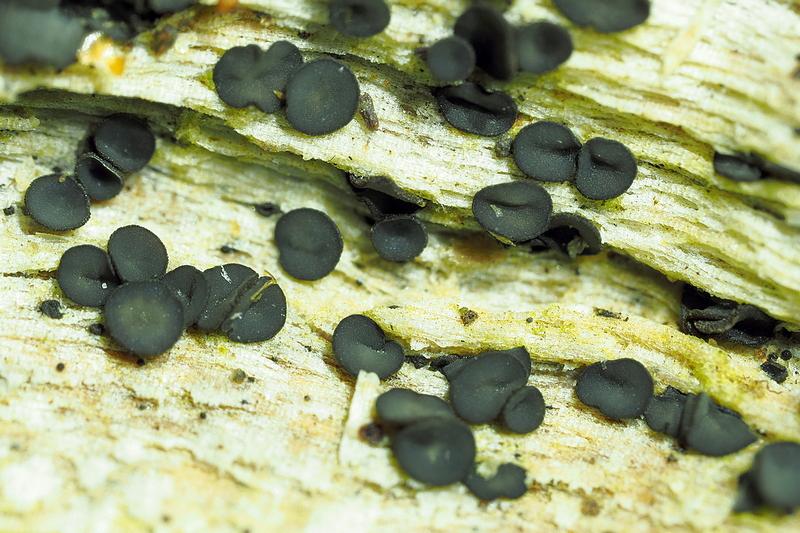
This pretty black Mollisia was growing on wet Tamarix wood, in fact at the magnifying glass I did not think at any time that it was a Mollisia. They are small cups of 1.5 2 mm in diameter.


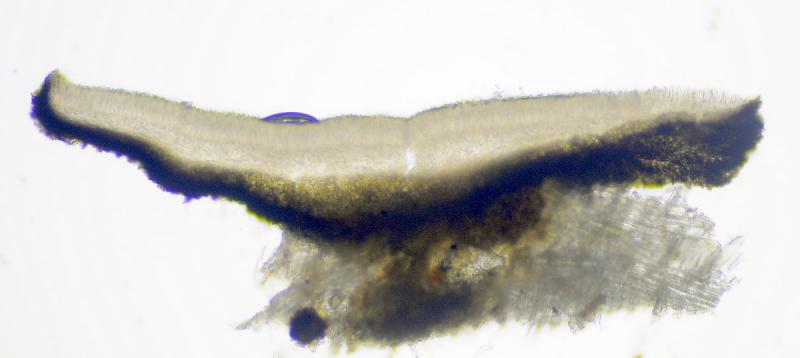
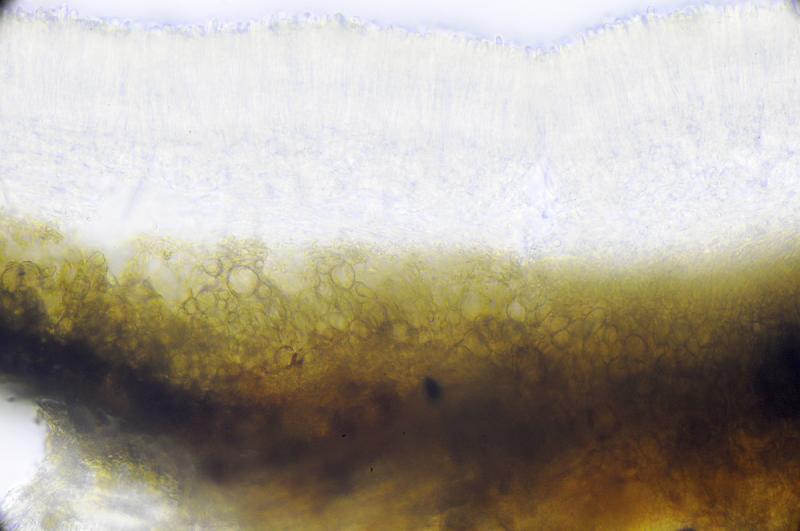
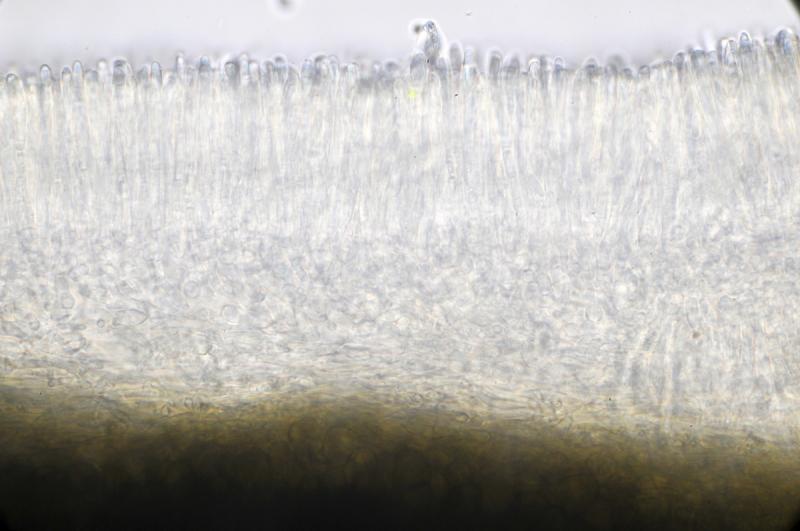
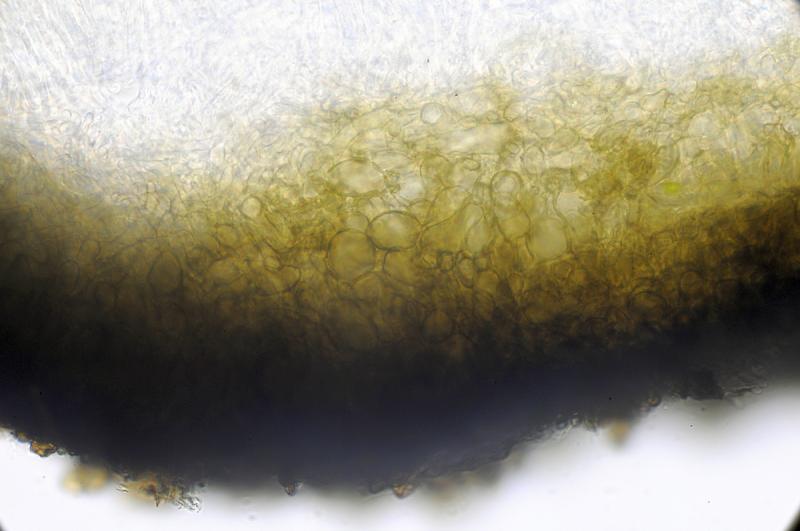
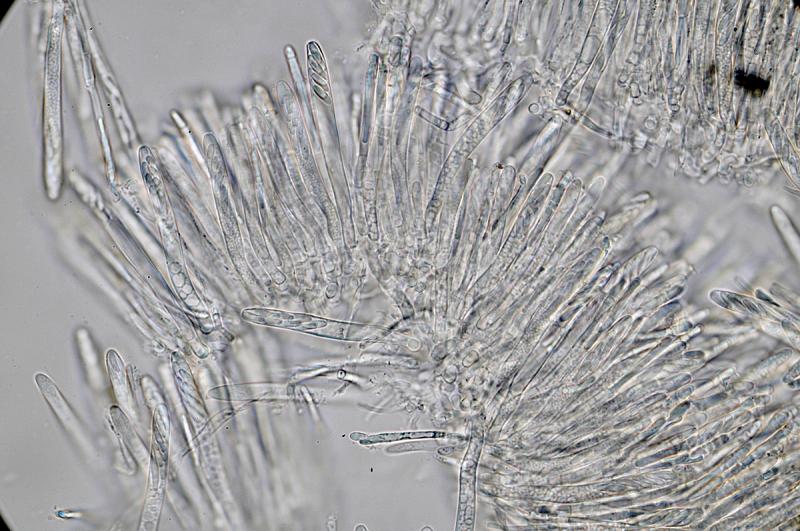
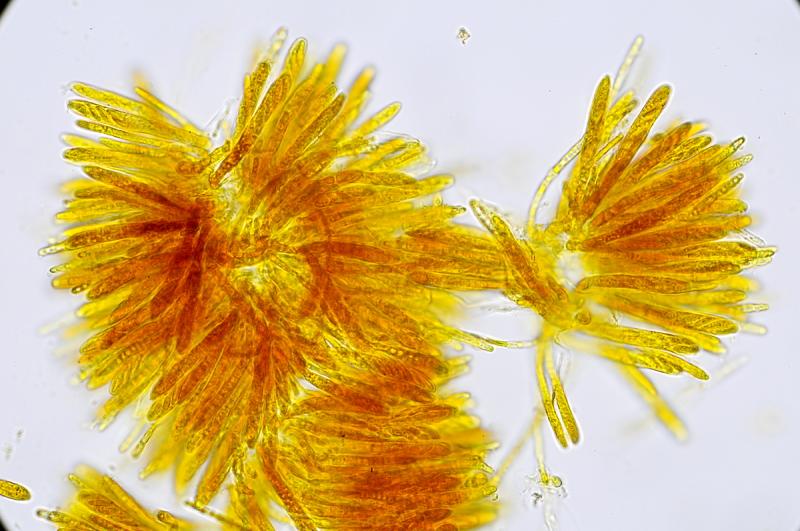
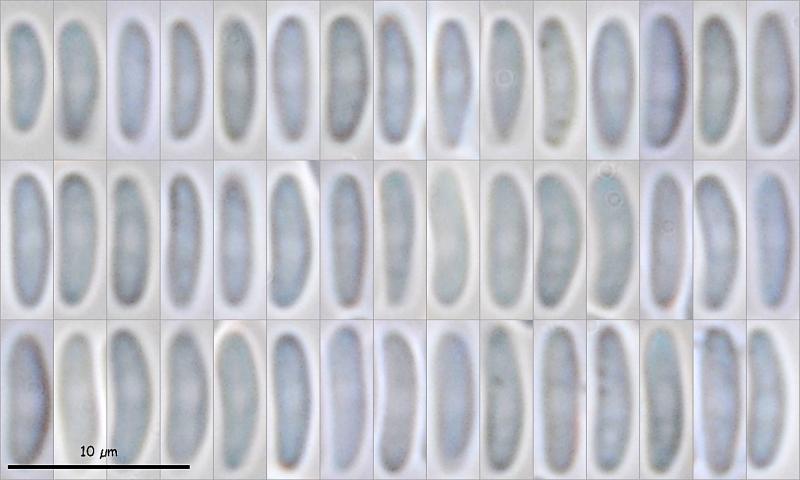
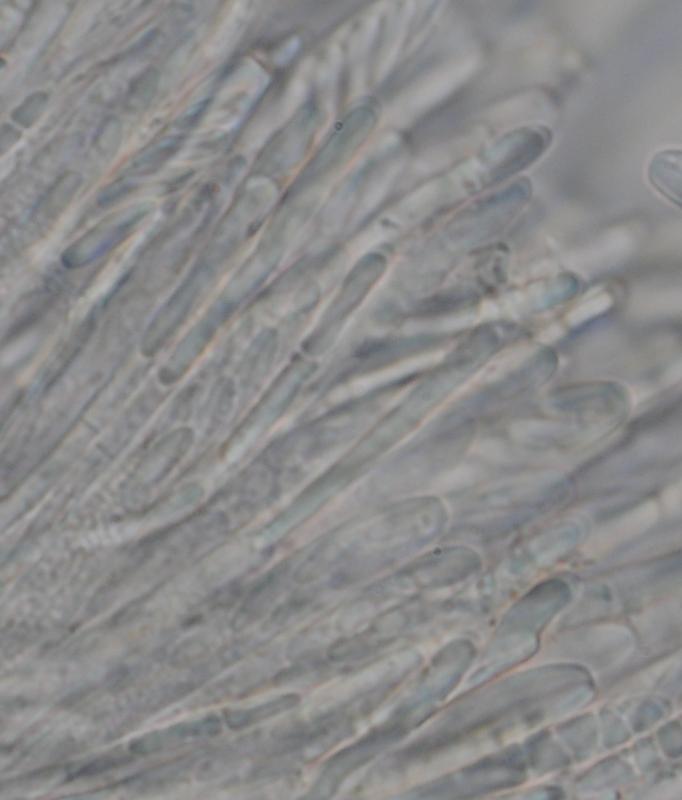
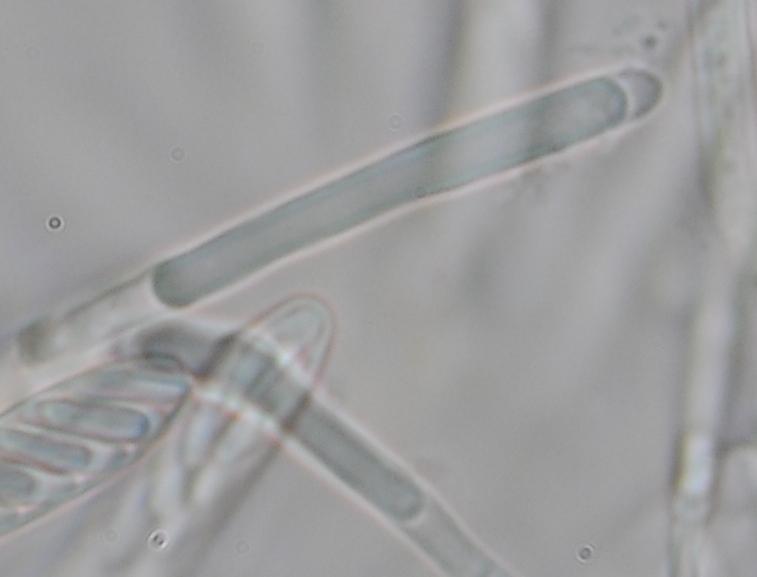
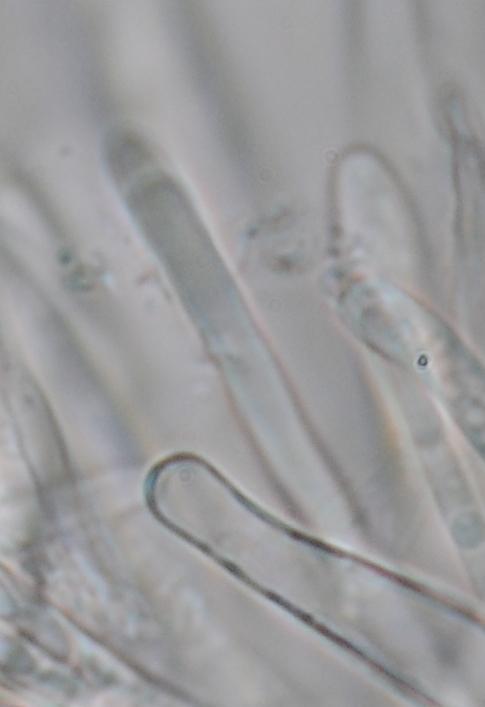
The ectal excipulum has textura subglobulosa, becoming more prismatic towards the margin, where the terminal cells are cylindrical-claviform and very dark brown. The medullary excipulum has textura intricata. The asci are cylindrical, octosporic, biseriate, with croziers and IKI-. Paraphyses are cylindrical with a large VB occupying the entire terminal cell, with negative reaction to KOH. Ascospores are cylindrical-allantoid, without LBs, (6) 7 - 8 (8.3) × (1.6) 1.9 - 2.2 (2.4) µm; Q = (2.8) 3.3 - 4.1 (5); N = 56; Me = 7.4 × 2.1 µm ; Qe = 3.7,


With the keys I can't come up with anything coherent.

Thanks for your help.
  • message #82018
  • message #82018
  • message #82018
  • message #82018
  • message #82018
  • message #82018
  • message #82018
  • message #82018
  • message #82018
  • message #82018
  • message #82018
  • message #82018
  • message #82018
Viktorie Halasu, 26-03-2025 20:57
Viktorie Halasu
Re : Black Mollisia 240325 on Tamarix
Why not M. ligni? It's frequent on Tamarix (and so far the only one I've found on this substrate).
Hans-Otto Baral, 26-03-2025 21:23
Hans-Otto Baral
Re : Black Mollisia 240325 on Tamarix
Yes, definitely
Miguel Ángel Ribes, 26-03-2025 22:09
Miguel Ãngel Ribes
Re : Black Mollisia 240325 on Tamarix
Yes, I'm sure you're absolutely right, I hadn't got to this species because I was misled by the presence of the large BVs in the paraphyses.
  • message #82021
  • message #82021
  • message #82021
Hans-Otto Baral, 27-03-2025 07:21
Hans-Otto Baral
Re : Black Mollisia 240325 on Tamarix
These VBs are typical, it is a Mollisia, though drought-tolerant.

Since you made such a detailed docu I could include your data in my paper on Haglundia (H. penyardensis is a synonym). For this I would need the collection data.
Miguel Ángel Ribes, 27-03-2025 22:04
Miguel Ãngel Ribes
Re : Black Mollisia 240325 on Tamarix
España, Madrid, Vicalvaro, Parque Forestal de Valdebernardo, 40.395022 -3.627373, 676 m, sobre ramas caídas de Tamarix sp., 23-03-2025, leg. J.C. Campos.
Hans-Otto Baral, 27-03-2025 22:38
Hans-Otto Baral
Re : Black Mollisia 240325 on Tamarix
Thanks! You don't have scales for your first two section photos?