
27-04-2026 20:52
 Lothar Krieglsteiner
Found on hanging tiwg of Olea europaea in dried-ou
27-04-2026 18:48
Tony MoverleyCollected 23rd April 2026, Norfolk, EnglandSwarms
27-04-2026 17:41
Lothar Krieglsteiner
.. Algarve, same leaf than the last post. The con
27-04-2026 18:05
Lothar Krieglsteiner
... still attached at standing tree. The green con
27-04-2026 17:16
Lothar Krieglsteiner
.. Algarve, moist lying.The conidiomata look like
27-04-2026 12:54
Steve ClementsBonjour. Ce petit champignon blanc résupiné et
27-04-2026 09:59
Pauline. PennaBonjour Can anyone advise me on these pycnidia fo

22-04-2026 20:54
 Enrique Rubio
Hi to everybody.This Pyrenopeziza grew in moist le
Pyreno on Pinus
Juuso Äikäs,
23-03-2025 01:00
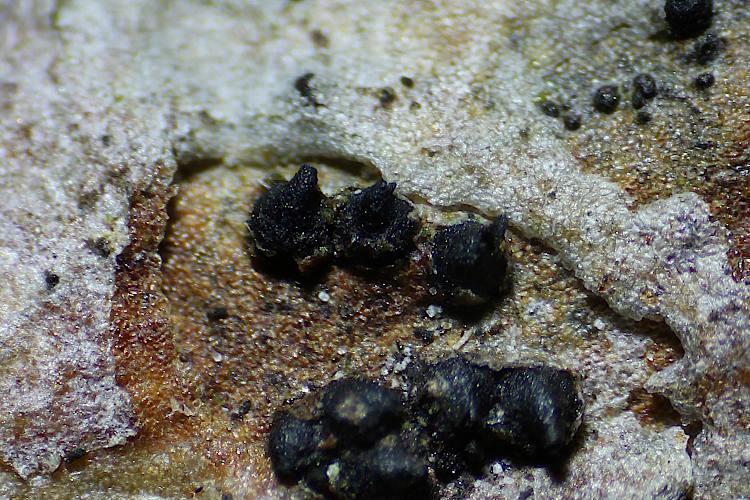
These little black pyrenos were growing on bark of a fallen Pinus sylvestris branch. Some of the perithecia were more or less round, and some had a little neck.
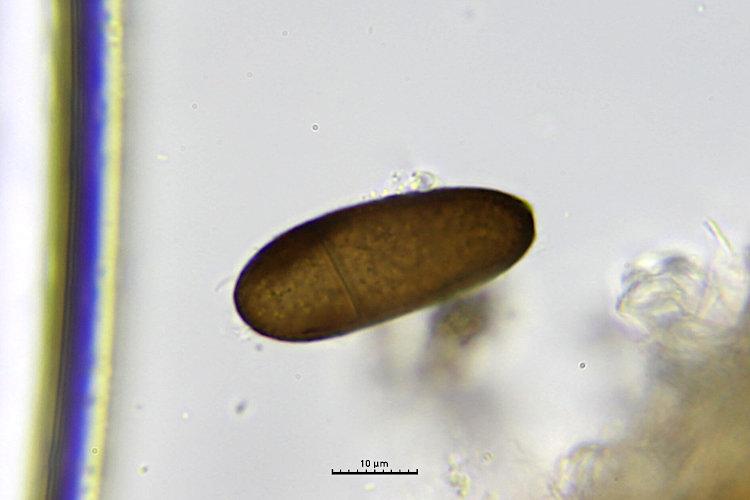
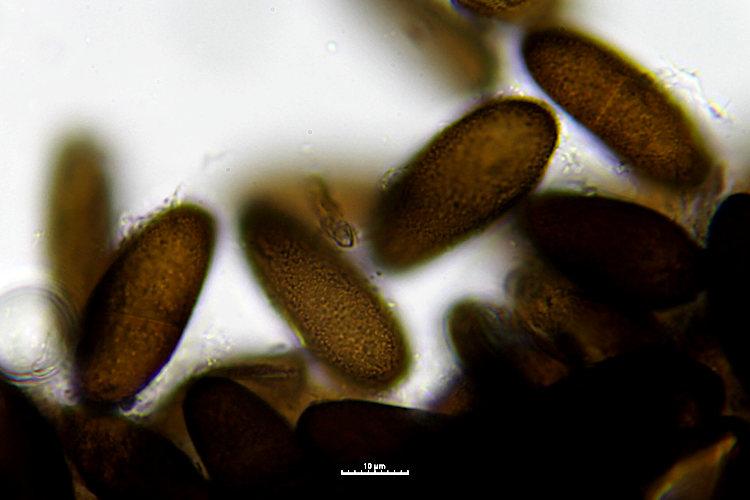
These appeared to be rather old fruitbodies, but there were spores inside. Some had a septum, which was located either centrally or inequilaterally. The spore surface has some minute ornamentation, and the size of the spores is quite large: 34.5 - 38.5 × 12.9 - 15.6 µm, Q = 2.2 - 2.7; avg = 35.8 × 14.4 µm, Qav = 2.5; n = 5.
Any thoughts about the species/genus/family?
Mathias Hass,
23-03-2025 06:37

Re : Pyreno on Pinus
Hi Juuso
Looks very much like Diplodia sapinea, pycnidia with conidia. This fungus is very common on Pinus cones, needles, twigs and bark. May occasionally also be found on other coniferous trees, at least as D. sapinea s.l.
Kind regards
Mathias
Juuso Äikäs,
23-03-2025 06:57
Re : Pyreno on Pinus
Thank you Mathias. Yes, that does seem to fit. Apparently this species has just recently begun spreading here.