
11-05-2026 12:32
 Bernard CLESSE
Pourriez-vous m'aider à identifier cette héloti
13-05-2026 15:26
 François Freléchoux
Bonjour,Voici une récolte faite il y a quelques j
12-05-2026 15:41
 Nicolas VAN VOOREN
Dear Ascolovers, especially interested in Pezizale
13-05-2026 12:05
 Thierry Blondelle
Bonjour à tous,J'aimerais avoir confirmation de c
10-05-2026 23:17
 Andreas Gminder
Hello,today we found in a moist steep decidous for
28-04-2026 20:07
 Lothar Krieglsteiner
... on twig in the air at standing Ceratonia siliq
27-04-2026 20:52
Lothar Krieglsteiner
Found on hanging tiwg of Olea europaea in dried-ou
11-05-2026 20:22
Lothar Krieglsteiner
on attached twig of standing Ficus caricaquite uns
29-04-2026 10:44
Lothar Krieglsteiner
growing at moist, drying-out soil at the side of a
Bactridium flavum look-alike with Cephalozia - Denmark
Karen Poulsen,
17-03-2025 19:44
Hi all
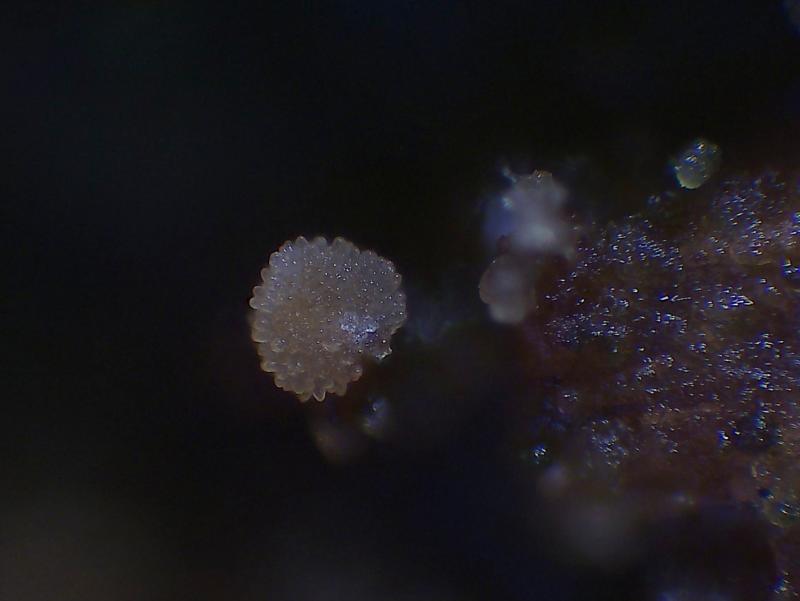
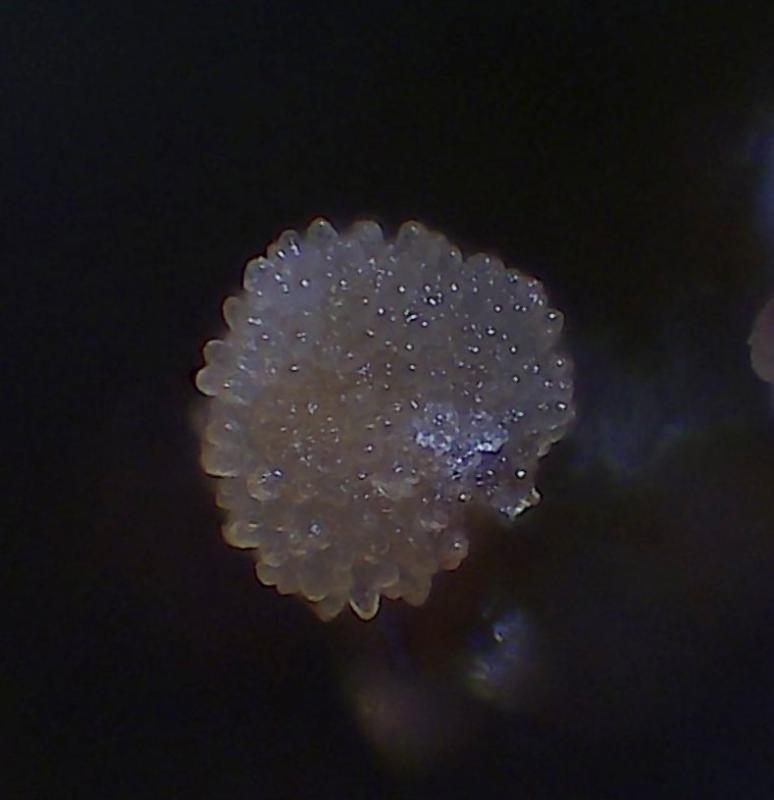
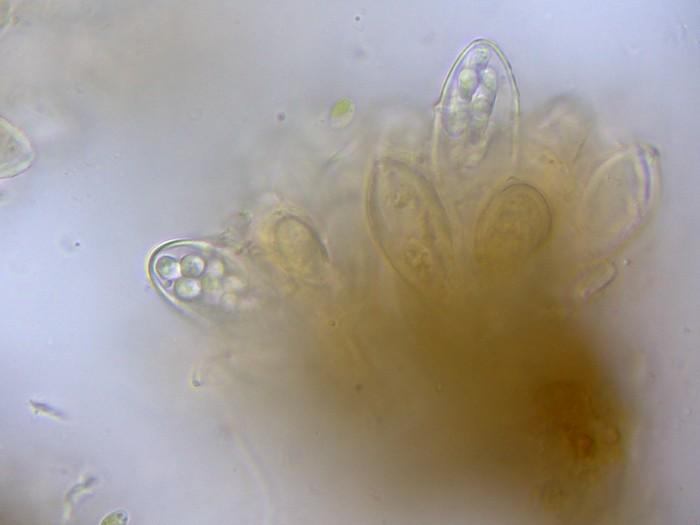
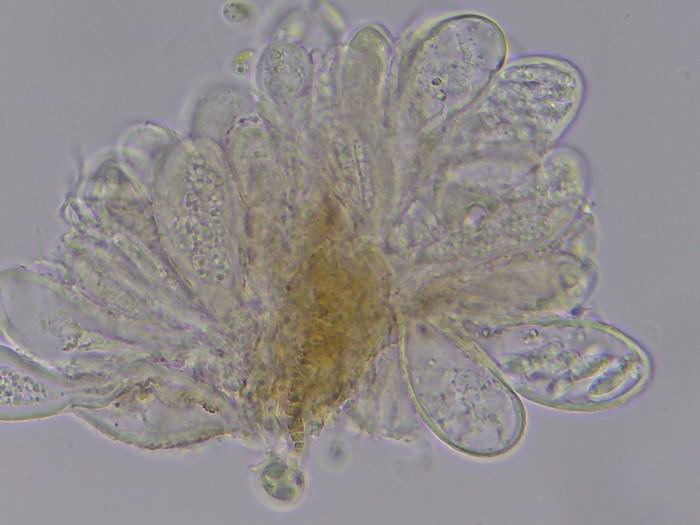
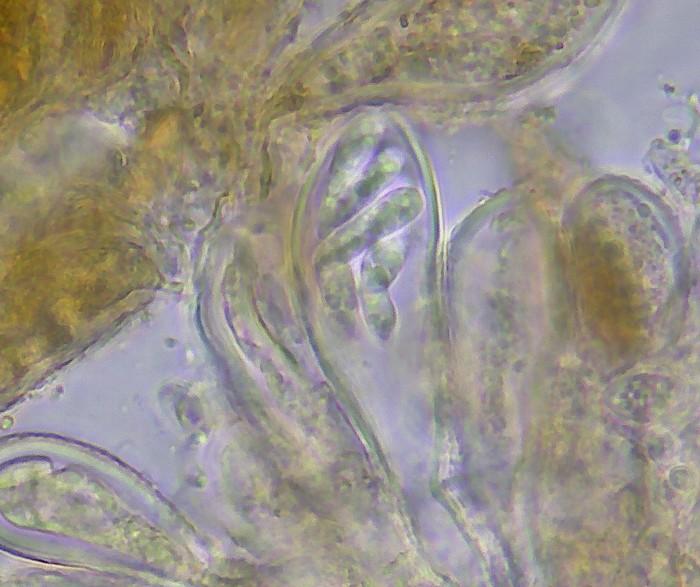
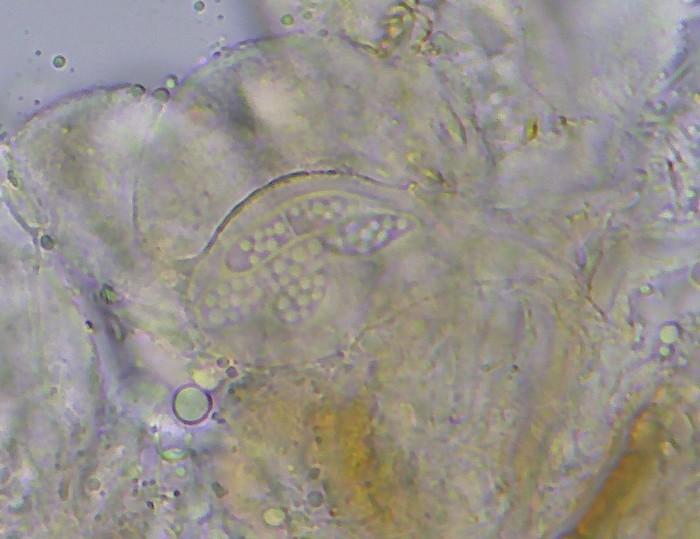
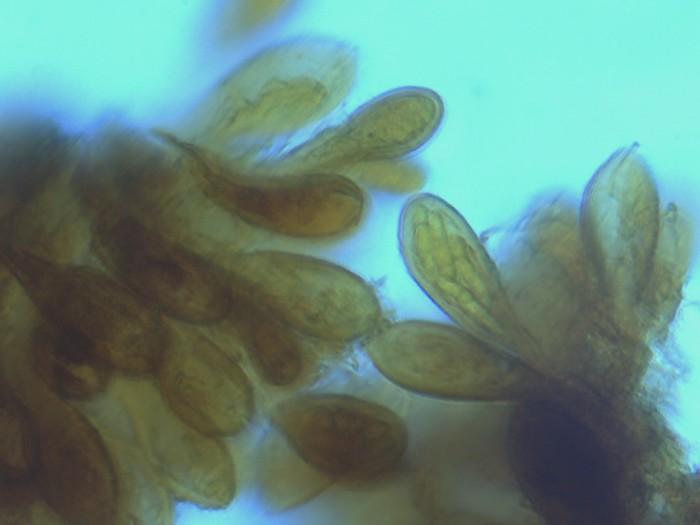
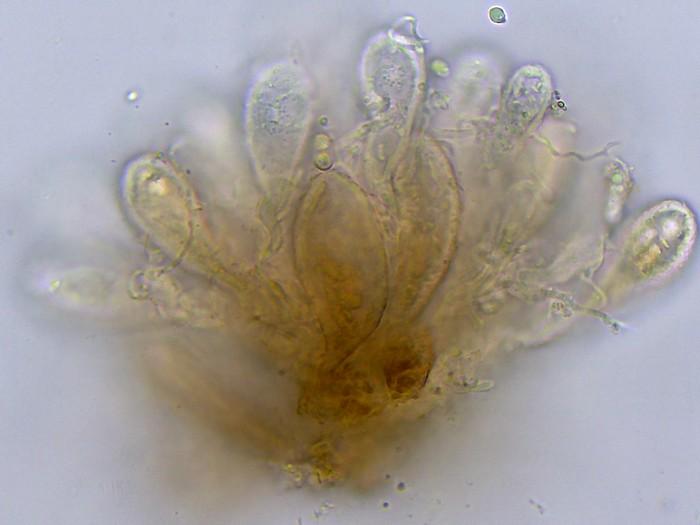
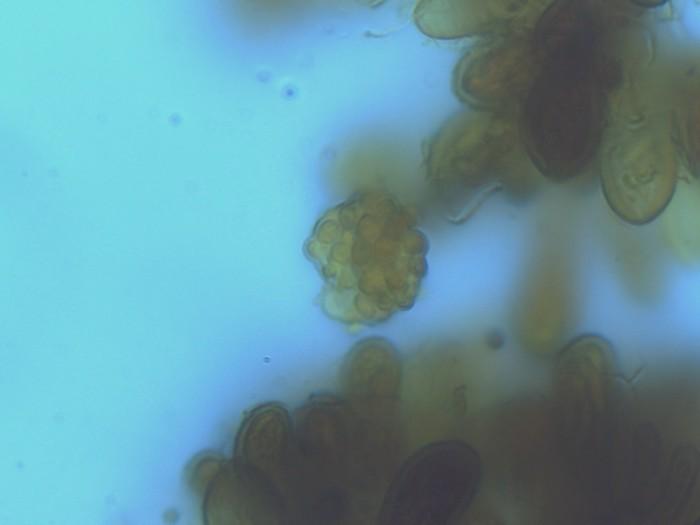
I found this very tiny, roundish to cushion-like, pale flesh-colored ascomata with Cephalozia sp. on wood. It consists almost entirely of asci that are thick-walled, 8-spored, reddish brown in Meltzer's. Paraphyses very sparse, filamentous. Spores 1-2-celled, with what must be droplets, approx. 10.5-11.5 x 3 µm. When I saw them, I was sure they were a small version of Bactridium flavum, but the micro showed asci! Does anyone know, what species it could be?
Thank you so much
Karen P.
Zdenek Palice,
17-03-2025 19:58

Re : Bactridium flavum look-alike with Cephalozia - Denmark
It looks like a species of Vezdaea, the asci should be amyloid. But I can see now the asci are not thickened apically, the wall should be even more thicker and the spores are too small for any of described species. So sorry no other idea. Zdenek
Karen Poulsen,
17-03-2025 20:27
Re : Bactridium flavum look-alike with Cephalozia - Denmark
Thank you very much :-)
Karen P.
Karen Poulsen,
17-03-2025 23:16
Re : Bactridium flavum look-alike with Cephalozia - Denmark
I found a key to Vezdaea https://britishlichensociety.org.uk/sites/default/files/Vezdaeaceae.pdf
The spores of leprosa measure 10–15.5 × 2.5–4 µm and together with my new observations of goniocysters and the paraphysers not surrounding the asci, I think, it might be leprosa. I should have used Lugol in stead of Meltzer's. That could perhaps have shown a blue reaction.
Would leprosa be an option, do you think?
New photos added.
Zdenek Palice,
17-03-2025 23:24
Re : Bactridium flavum look-alike with Cephalozia - Denmark
I think not, leprosa should have distinctly stipitate (synnemata-like) apothecia. It would be nice to find whether goniocysts - algae-like granules (often with spines) occur in surrounding of apothecia on wood or liverworts/bryophytes around. But as I wrote, I am not sure at all, although is is somewhat similar to a Vezdaea it may well be something completely else, all the best. Zdenek
Karen Poulsen,
17-03-2025 23:47
Re : Bactridium flavum look-alike with Cephalozia - Denmark
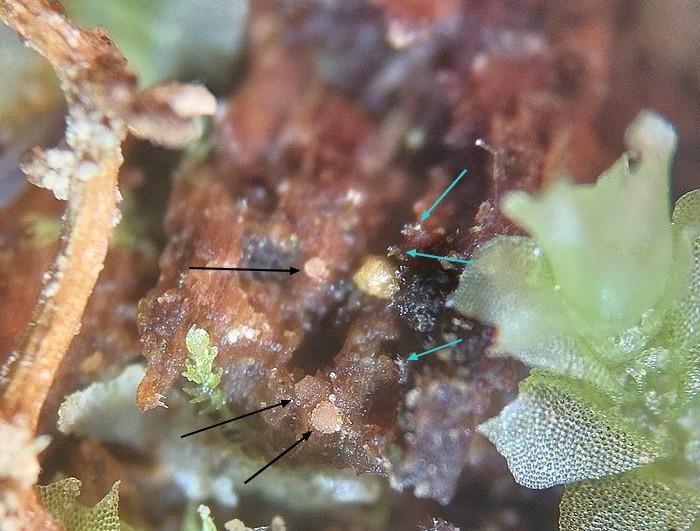
New photo shows ascomata (black arrows) - and goniocysts with spines (blue arrows).
Thanks for all your help.
Best wishes
Karen
Zdenek Palice,
18-03-2025 00:33
Re : Bactridium flavum look-alike with Cephalozia - Denmark
well, i would not say the blue arrows indicate goniocysts, hard to say, possibly no goniocysts are present in your sample or they are just not focused in your photo. the goniocysts as I know are usually (yellowish) green, 15-20-30-50 um in diam. containing algae tightly ensheathed by hyphae and the projecting pointed hyphae ("spines") are very short (one-two-three micrones , maximum 10(-15) um or so) or they are not developed. they are visible under higher magnificaion in microscope and the spines are not developed in all species. Possibly it is not Vezdaea, who knows ? :) I am sorry if I misled you. Zdenek