
11-05-2026 12:32
 Bernard CLESSE
Pourriez-vous m'aider à identifier cette héloti
13-05-2026 15:26
 François Freléchoux
Bonjour,Voici une récolte faite il y a quelques j
12-05-2026 15:41
 Nicolas VAN VOOREN
Dear Ascolovers, especially interested in Pezizale
13-05-2026 12:05
 Thierry Blondelle
Bonjour à tous,J'aimerais avoir confirmation de c
10-05-2026 23:17
 Andreas Gminder
Hello,today we found in a moist steep decidous for
28-04-2026 20:07
 Lothar Krieglsteiner
... on twig in the air at standing Ceratonia siliq
27-04-2026 20:52
Lothar Krieglsteiner
Found on hanging tiwg of Olea europaea in dried-ou
11-05-2026 20:22
Lothar Krieglsteiner
on attached twig of standing Ficus caricaquite uns
29-04-2026 10:44
Lothar Krieglsteiner
growing at moist, drying-out soil at the side of a
Olla transiens
Thomas Flammer,
01-03-2025 11:31
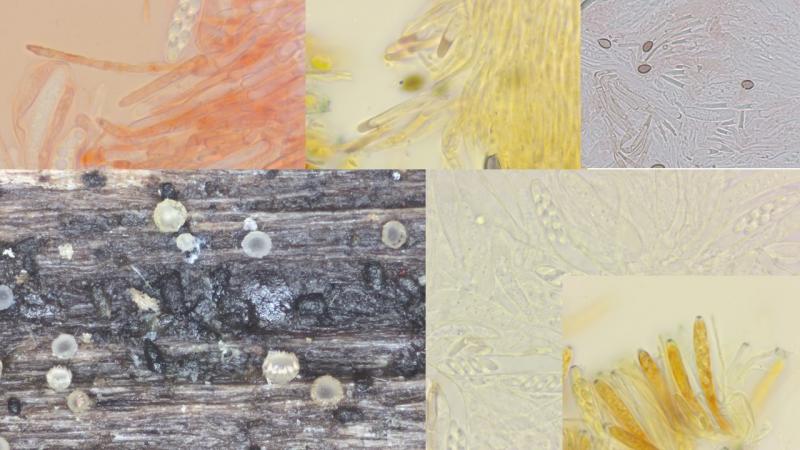
diameter 500 µm
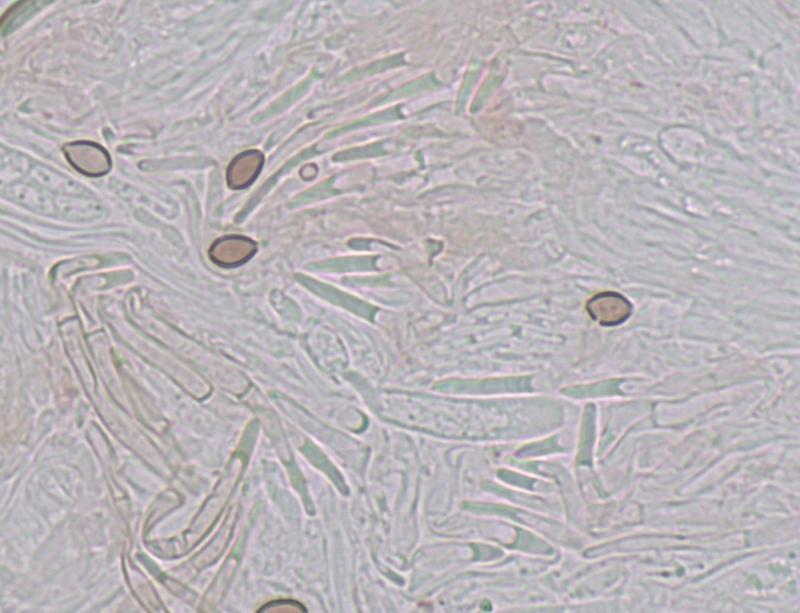
Spore mass: 5.5 - 7.6 x 2.3 - 2.8 µm - Q: 2.16 - 3.04 (Ø LxB: 6.7 x 2.5 ØQ:2.7 N: 8)
IKI+
The hair bundles are darker, fusiform and some with kind of resinous incrustations. The hairs have to septations
Hans-Otto Baral,
01-03-2025 12:00

Re : Hyaloscypha?
I imagine this is Olla transiens. The ascus base should be without croziers.
Thomas Flammer,
01-03-2025 12:06
Olla transiens
yes :-) fits perfectly!
Kosonen Timo,
01-03-2025 12:07

Re : Hyaloscypha?
That would be Olla transiens. The longer the hair the shorter the "glassy" part at the apex. Shorter/developing hairs have more glassiness. It's also dextrinoid. Sometimes the glassiness is barely visible in H2O mount, then MLZ/IKI helps. The spore shape looks like a foot print. There are two somewhat different sequences in Genbank. Both are Olla, but maybe not the same species. I've been trying to figure it out, but I havent got very clever yet. There's some older discussion on this matter, (this Forum), try searching for Olla.
cheers
Timo
cheers
Timo
Thomas Flammer,
01-03-2025 12:19
Re : Olla transiens
tx for the info.