
11-05-2026 12:32
 Bernard CLESSE
Pourriez-vous m'aider à identifier cette héloti
13-05-2026 15:26
 François Freléchoux
Bonjour,Voici une récolte faite il y a quelques j
12-05-2026 15:41
 Nicolas VAN VOOREN
Dear Ascolovers, especially interested in Pezizale
13-05-2026 12:05
 Thierry Blondelle
Bonjour à tous,J'aimerais avoir confirmation de c
10-05-2026 23:17
 Andreas Gminder
Hello,today we found in a moist steep decidous for
28-04-2026 20:07
 Lothar Krieglsteiner
... on twig in the air at standing Ceratonia siliq
27-04-2026 20:52
Lothar Krieglsteiner
Found on hanging tiwg of Olea europaea in dried-ou
11-05-2026 20:22
Lothar Krieglsteiner
on attached twig of standing Ficus caricaquite uns
29-04-2026 10:44
Lothar Krieglsteiner
growing at moist, drying-out soil at the side of a
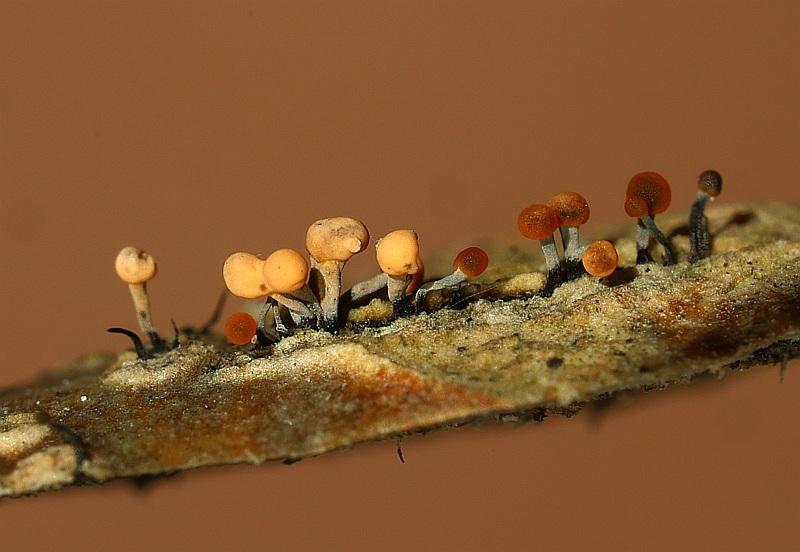
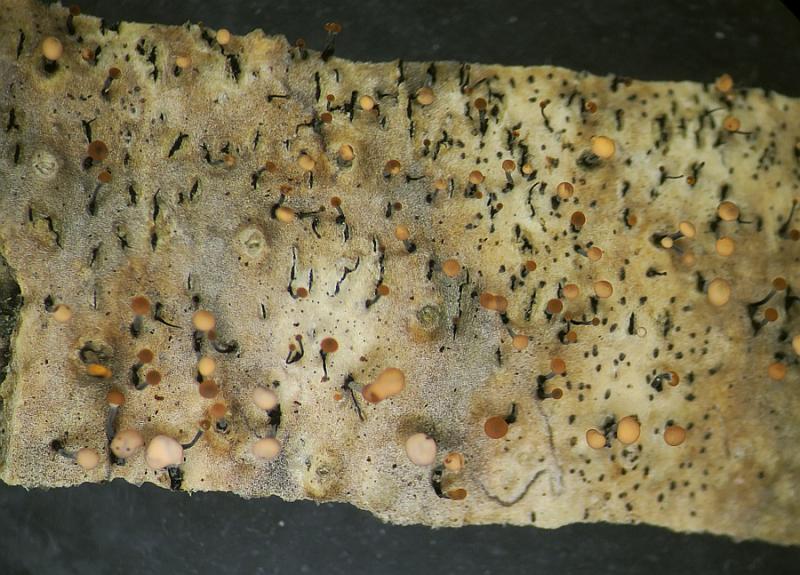
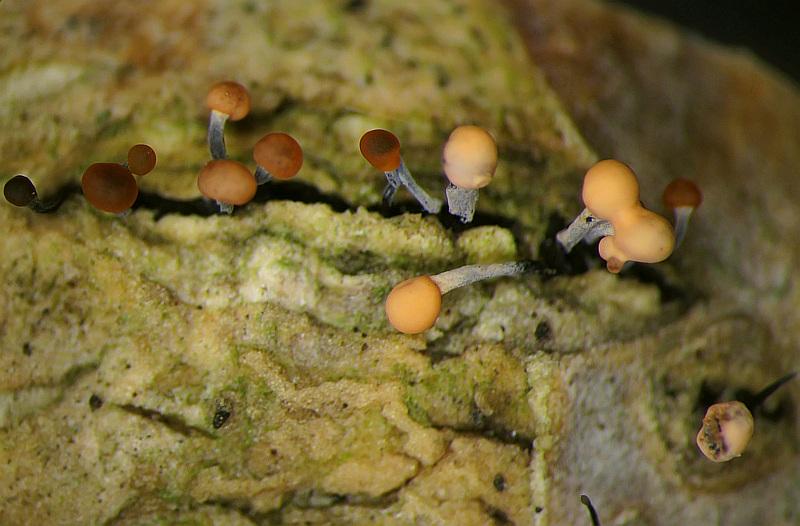
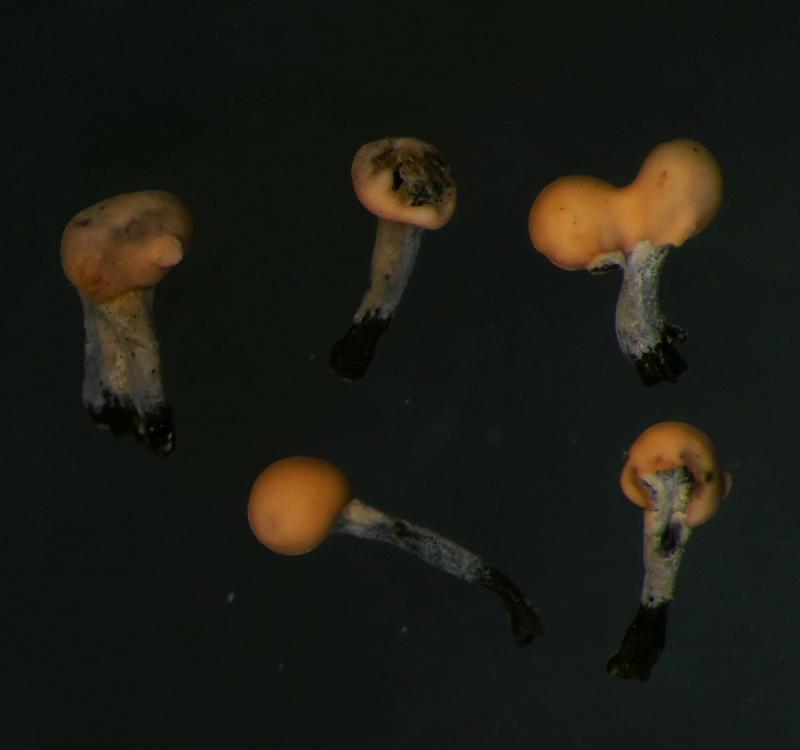
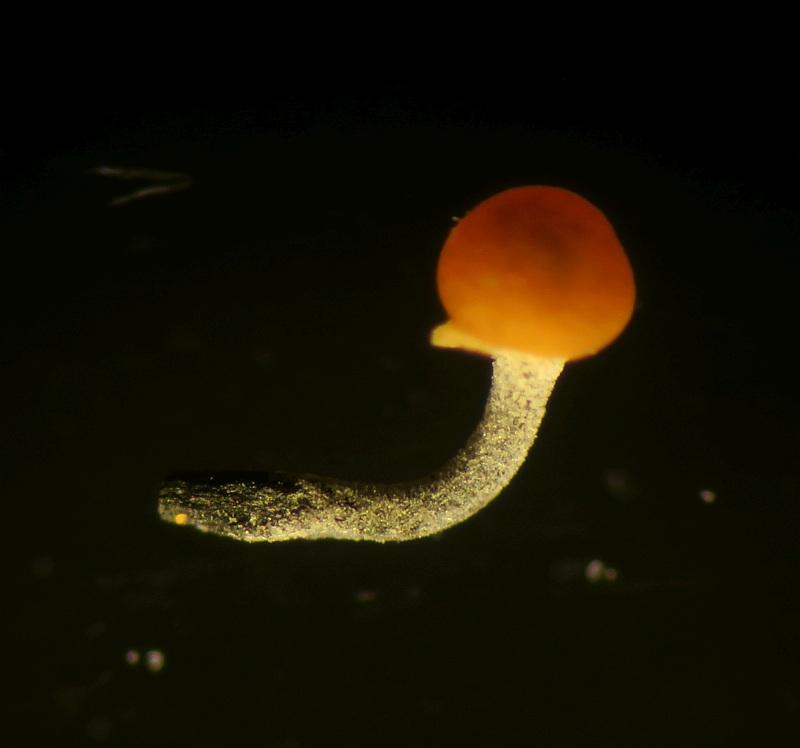
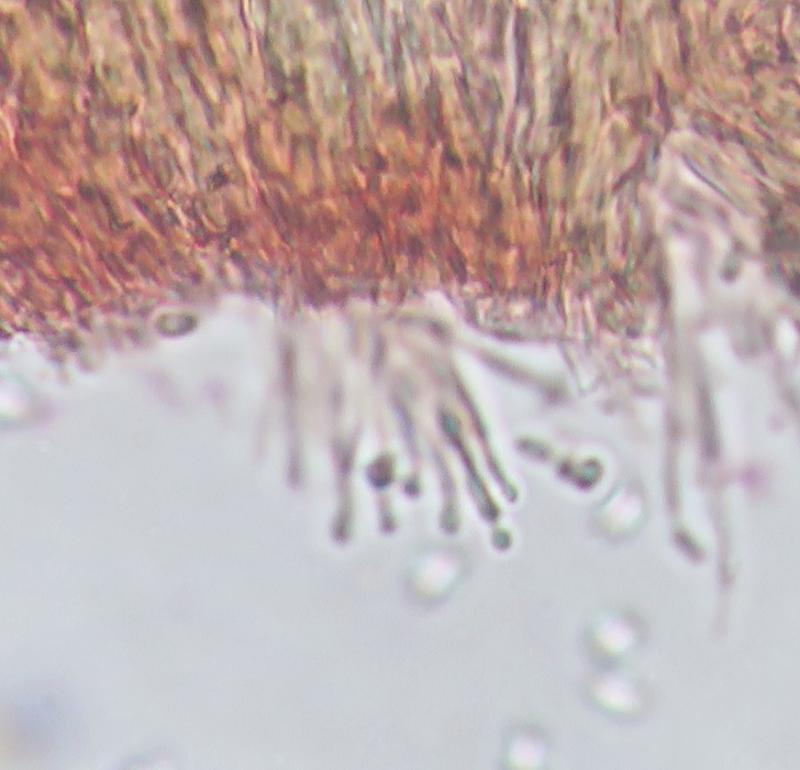
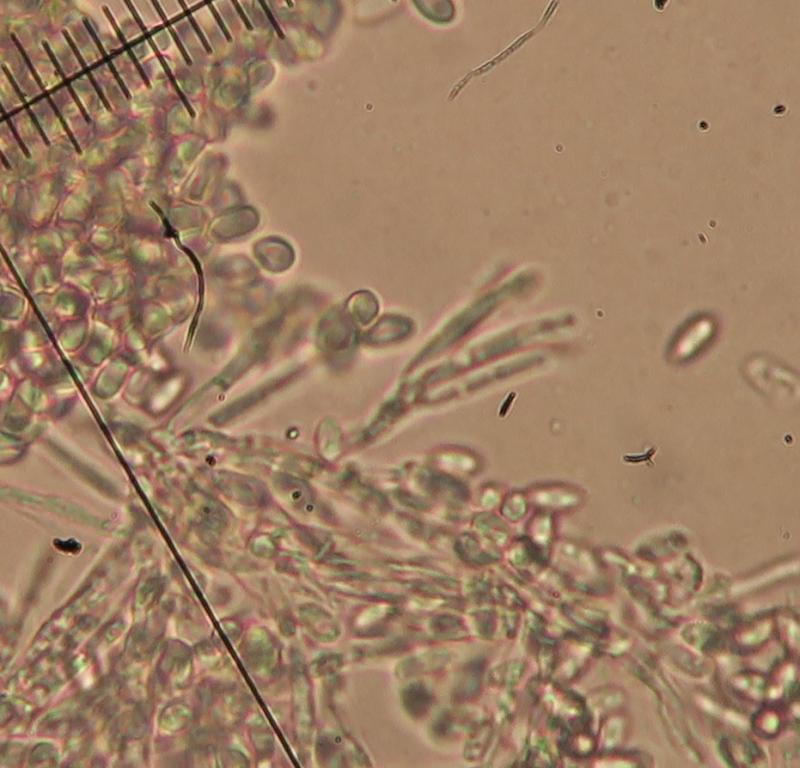
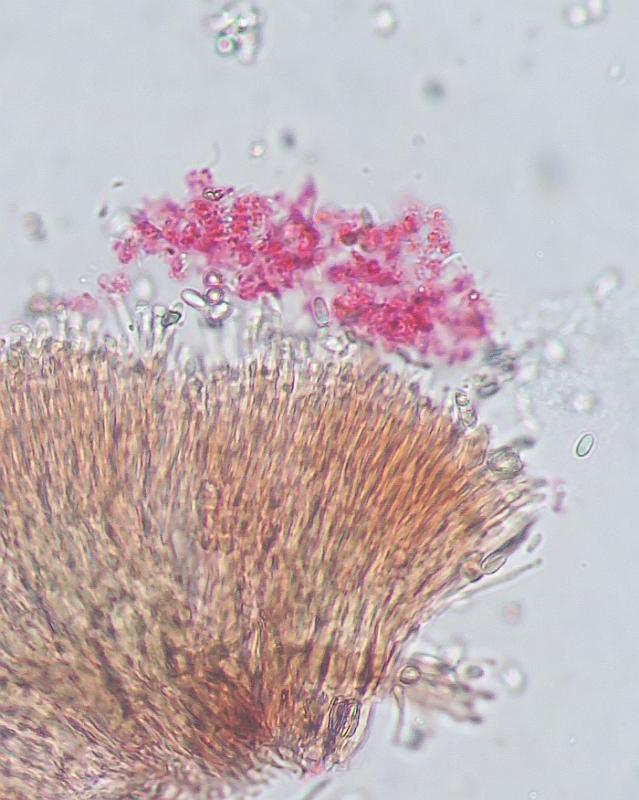
 I have found this intriguing fungus which looked like a slime mold (fruiting bodies 1-2mm) but they consist of an ascomycete with a head of tightly packed penicillium-like branched conidiophores forming copious conidiospores that remain glued forming a pink layer over the conidiophores. These are not disturbed by wind but easily break free with water (like they repel each other). The stipe is charcoal black and the upper 3/4 is like covered with lime (or pruinosity). Fruiting body tough, rubbery, stipe hard.
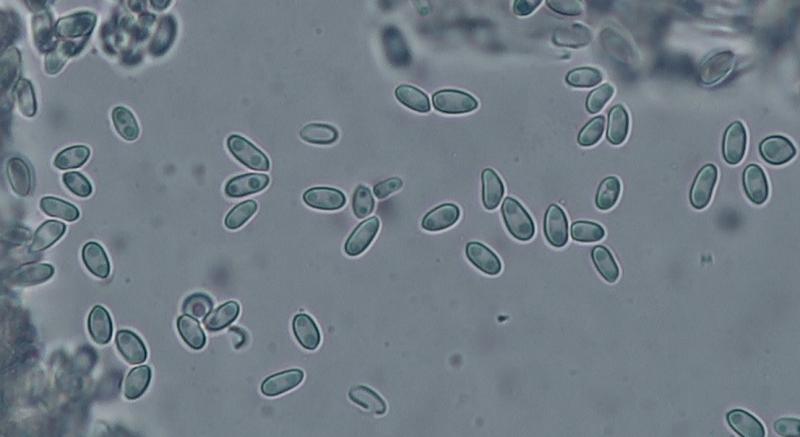
The spores are aseptate, narrowly elliptic/subcylindrical with obtuse ends and two oil bodies at each end. They do not stain in Congo red, and moderatly or faintly so in cotton blue, a bit better in Methylene blue. No colour change with KOH. There is also some kind of mass that stains fuchsia in congo red. Not sure if an artefact, but cant be an artefact in all of them.
Spores
(4.8) 5.4 - 6.4 (7) × (2.6) 2.7 - 3.2 (3.4) µm
Q = (1.6) 1.8 - 2.3 (2.7) ; N = 37
V = (21) 22 - 31 (39) µm3
Me = 5.9 × 2.9 µm ; Qe = 2 ; Ve = 26 µm3
No asci or ascospores present so this is some Anamorph.
It was growing through cracks of thin bark of branches of Ailanthus altissimus (Tree of heaven) in a burnt area. The substrate looks black but the bark is not burnt.
Your help is appreciated!

https://inaturalist.nz/taxa/384449-Stilbocrea-gracilipes/browse_photos
https://ascomycete.org/Portals/0/Archives/AscomyceteOrg%2011-06%20183-190.pdf