12-06-2026 14:50
 François Freléchoux
Bonjour, Voici la brève description d'une Mollis
10-06-2026 21:16
François Freléchoux
Bonsoir,Le dernier du jour, en attendant votre avi
11-06-2026 19:01
 William Slosse
Hello all,In an attempt to make a culture of a sus
11-06-2026 19:03
 Nicolas VAN VOOREN
Chers membres d'Ascofrance,Le site sera placé en

09-06-2026 18:32
Camille MertensSur morceau de roseau immergé 0,5 - 0,7 mm de dia
10-06-2026 12:54
Steve ClementsBonjour encore, Pouvez-vous m'aider, s'il vous pl
10-06-2026 21:07
François Freléchoux
Toutes les tiges de gentianes jaunes de l'an passÃ
10-06-2026 13:41
François Freléchoux
Bonjour à nouveau, Voici une trouvaille d'hier.
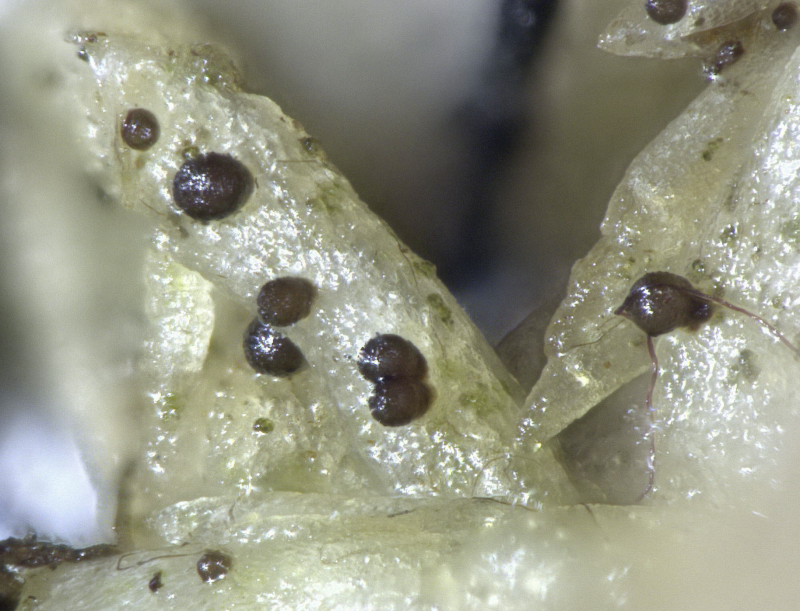
Reddish ascomata on Sphagnum
Georges Greiff,
27-09-2023 17:21
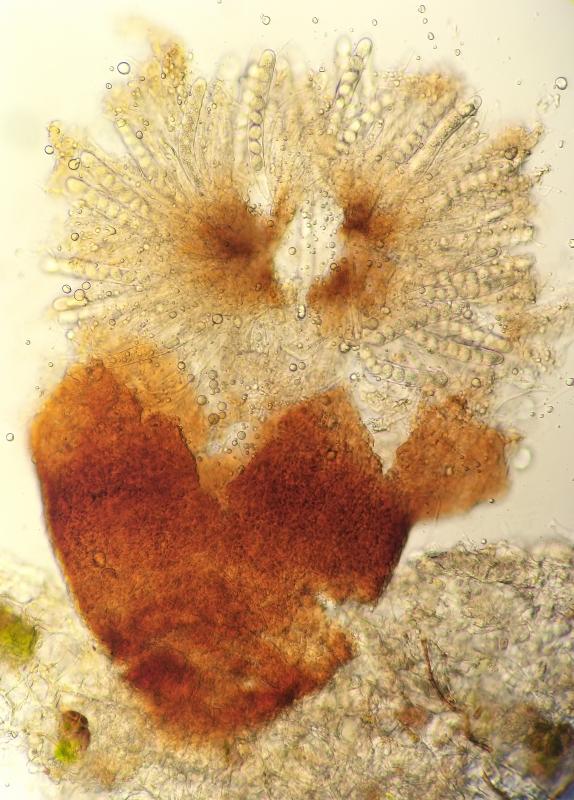
I recently noticed tiny, reddish perithecioid ascomata on dying Sphagnum cf. capillifolium in Scotland.
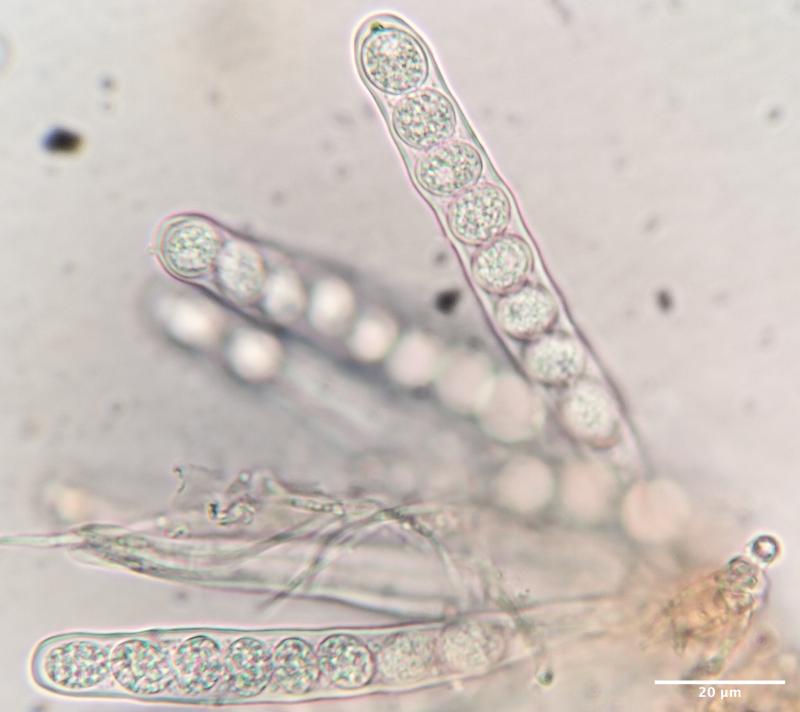
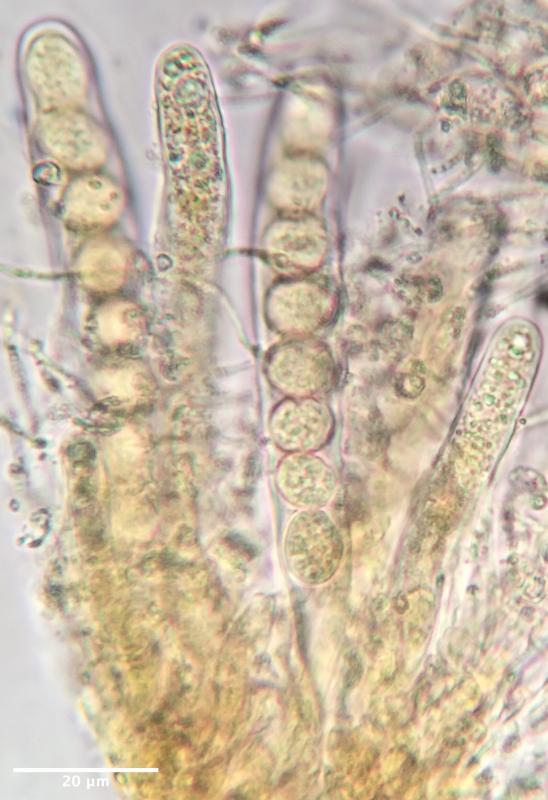
Ascomata perithecioid, dark red when moist, blackening when dry, ostiole depressed, up to 200um diam., peridium made of a rather thin layer of interwoven hyphae (not textura cellularis). Asci 8-spored, seemingly inamyloid, 95–115 x 10.5–12um in water. Paraphyses filiform, multicellular, branched sparsely with lipid or other inlusion bodies in the lower cells. Spores aseptate, hyaline, multiguttulate at maturity, subglobose, 9.9–10.6 x 9–9.7um. Hyphae hyaline, profuse at the base of the ascomata and running over and into host cells. Probably not lichenised but unsure as some clumps of green algae were present.
At this point, I have no idea even of the class of this collection, though I suspect some kind of Sordariomycete member. Any suggestions on what it might be would be greatly appreciated.
Thanks,
George