
12-06-2026 14:50
 François Freléchoux
Bonjour, Voici la brève description d'une Mollis
10-06-2026 21:16
François Freléchoux
Bonsoir,Le dernier du jour, en attendant votre avi
11-06-2026 19:01
 William Slosse
Hello all,In an attempt to make a culture of a sus
11-06-2026 19:03
 Nicolas VAN VOOREN
Chers membres d'Ascofrance,Le site sera placé en

09-06-2026 18:32
Camille MertensSur morceau de roseau immergé 0,5 - 0,7 mm de dia
10-06-2026 12:54
Steve ClementsBonjour encore, Pouvez-vous m'aider, s'il vous pl
10-06-2026 21:07
François Freléchoux
Toutes les tiges de gentianes jaunes de l'an passÃ
10-06-2026 13:41
François Freléchoux
Bonjour à nouveau, Voici une trouvaille d'hier.
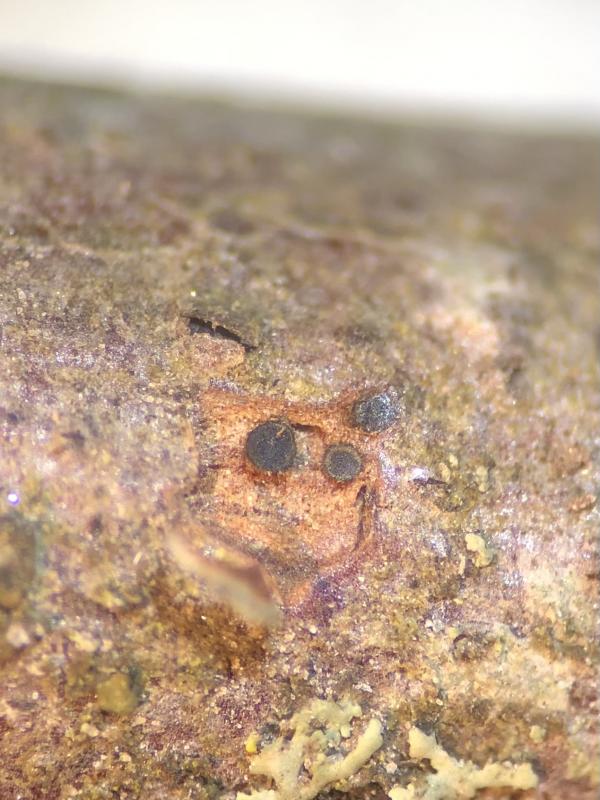
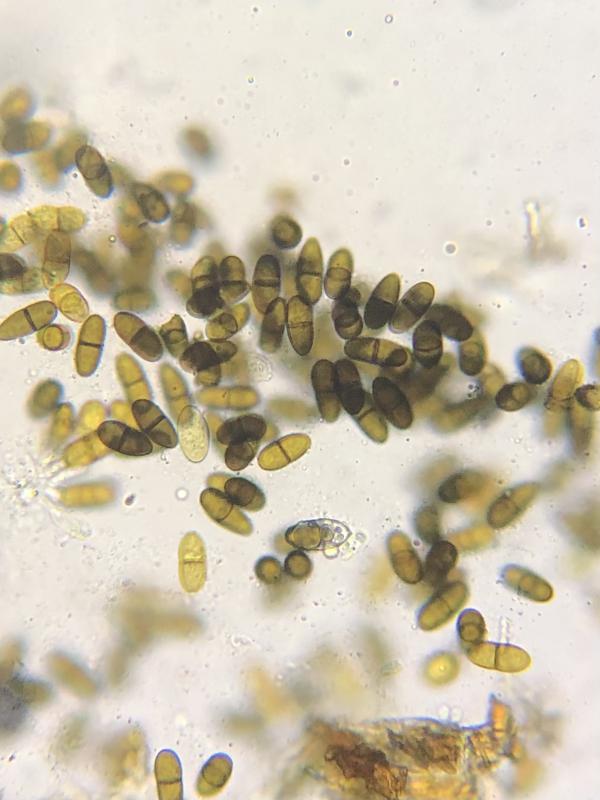
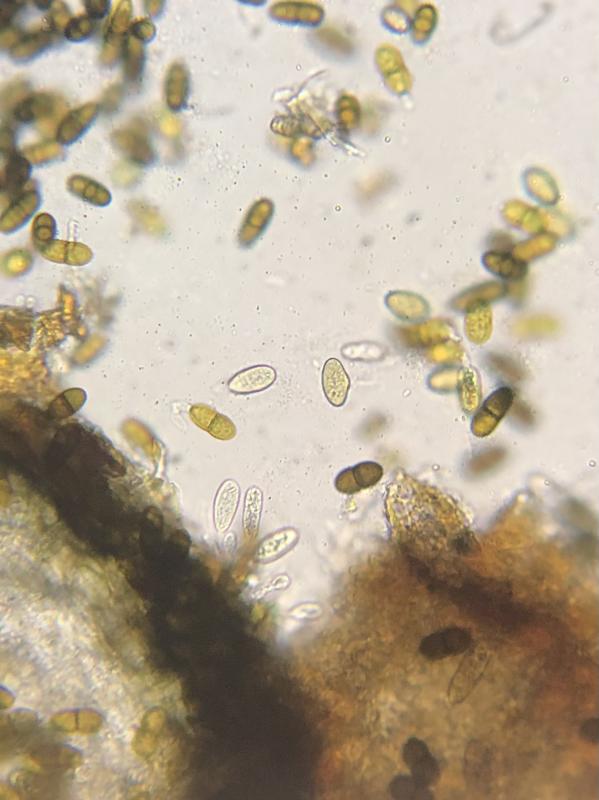
Diplodia on malus
Robin Isaksson,
19-03-2022 19:51
 Anyone know this one?
Found on fallen twig.
Spores 22-25x10-11.5
Best Regards
Angel Pintos,
20-03-2022 18:01

Re : Diplodia on malus
Hello Robin,
I suggest you look at Dothiorella spp.
Best wishes
Dothiorella was reduced to synonymy under Diplodia by Crous
& Palm (1999), who used a broad morphological concept for
Diplodia. Phillips et al. (2005) re-examined the type of Dothiorella
pyrenophora Sacc. (K 54912) and found that it differed from
Diplodia by having conidia that are brown and 1-septate early in
their development, while they are still attached to the conidiogenous
cells. . In Diplodia conidial darkening and septation takes place after
discharge from the conidiomata. Crous et al. (2006) re-examined
the types of both Diplodia and Dothiorella and confirmed these
morphological differences.
A.J.L. Phillips et al.
The Botryosphaeriaceae: genera and species known from culture
Studies in Mycology 76: 51–167
I suggest you look at Dothiorella spp.
Best wishes
Dothiorella was reduced to synonymy under Diplodia by Crous
& Palm (1999), who used a broad morphological concept for
Diplodia. Phillips et al. (2005) re-examined the type of Dothiorella
pyrenophora Sacc. (K 54912) and found that it differed from
Diplodia by having conidia that are brown and 1-septate early in
their development, while they are still attached to the conidiogenous
cells. . In Diplodia conidial darkening and septation takes place after
discharge from the conidiomata. Crous et al. (2006) re-examined
the types of both Diplodia and Dothiorella and confirmed these
morphological differences.
A.J.L. Phillips et al.
The Botryosphaeriaceae: genera and species known from culture
Studies in Mycology 76: 51–167
Robin Isaksson,
22-03-2022 20:04
Re : Diplodia on malus
Dear Angel,
Thank you for the information.
I Will have a look.
Best Regards
Robin
Thank you for the information.
I Will have a look.
Best Regards
Robin