22-04-2026 20:17
 Marian Jagers
Is anyone familiar with the Hyphomycetes genus Pse

22-04-2026 20:54
 Enrique Rubio
Hi to everybody.This Pyrenopeziza grew in moist le
22-04-2026 01:06
 Richard VALERI
Bonjour à tous.Je vous présente cette Nectria s.
21-04-2026 13:36
Gernot FriebesHi,I am out of ideas for this one. I collected Sal
21-04-2026 13:19
Gernot FriebesHi,this Lophodermium on Typha has ascospores measu
21-04-2026 13:05
Gernot FriebesHi,this hyphomycete feels familiar but I was not a
I need some Input on this one:
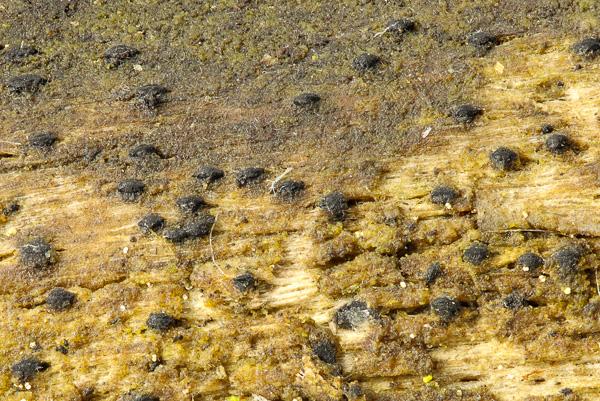
Ecology: On decorticated, hanging branch of Ilex aquifolium.
Macro: Fruitbodies immersed or partly erumpent, globose, 0.4-0.6 mm in diameter. Necks erumpent, laterally compressed.
Micro:
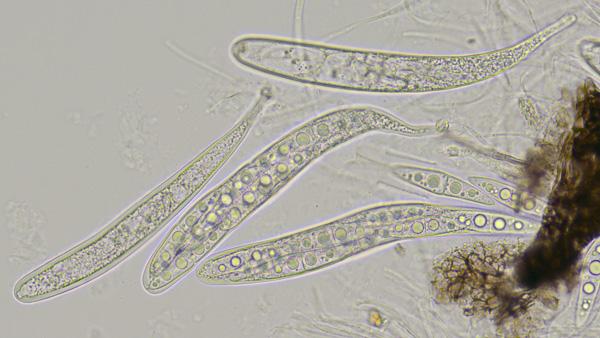
Asci 195-215 x 21-26 µm, cylindrical, bitunicate. Paraphyses hyaline, septate, 3-4 µm in diameter.
Spores from freshly cut fruitbodies:
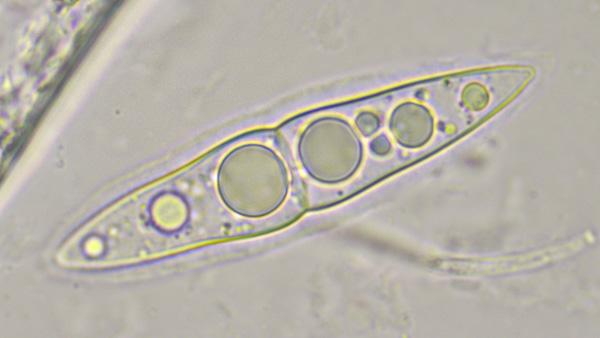
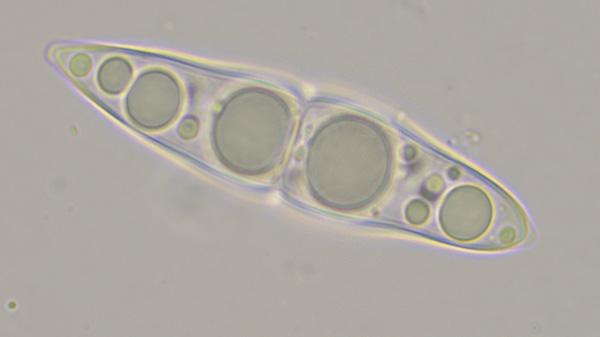
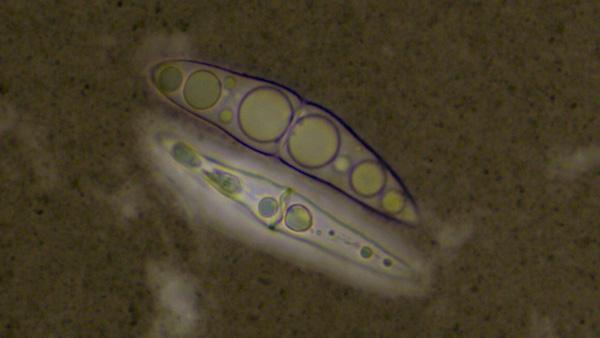
Hyaline, 1-septate, with 2-3 larger and additionally smaller oildrops in each cell, in some (young?) spores with a slime sheath but mostly without sheath, always with very small hyaline appendages at each end, 57-65 x 11-13 µm.
Spores after 24 hours exposed to air/humidity:
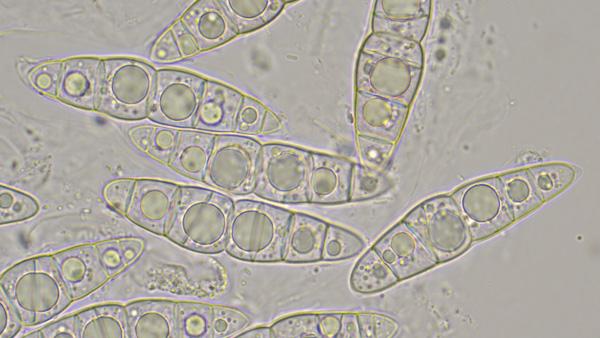
Hyaline, with several very delicate additional septa, in some cases even with partly longisepta, size as before.
Spores around fruitbodies on substrate:
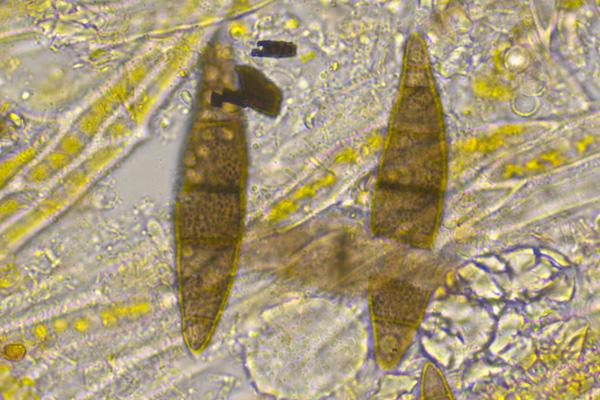
Brown, wall with warts, 5-7 septate, size similar as before.
I am very intrigued by the spores which had never more than one septum and never any hue of coloration when taken from freshly cut fruitbodies. However additional septa formed after some exposure to humid conditions in opened fruitbodies. Finally, I found (old, dead) Spores around fruiting bodies on mosses and wood that were brown and warted. Are the fruitbodies just very immature?
Last, but not least, the slime sheath seemed absent in most spores, but then I have seen some Spores with a distinct sheath...
Any Ideas are welcome. Many thanks in advance and best wishes,
Stefan