
22-04-2026 20:54
 Enrique Rubio
Hi to everybody.This Pyrenopeziza grew in moist le
24-04-2026 03:16
 David Chapados
Found while looking at something else from wood in
22-04-2026 01:06
 Richard VALERI
Bonjour à tous.Je vous présente cette Nectria s.
22-04-2026 20:17
 Marian Jagers
Is anyone familiar with the Hyphomycetes genus Pse

21-04-2026 13:36
Gernot FriebesHi,I am out of ideas for this one. I collected Sal
Yellow asco.
Mirek Gryc,
17-08-2020 19:15
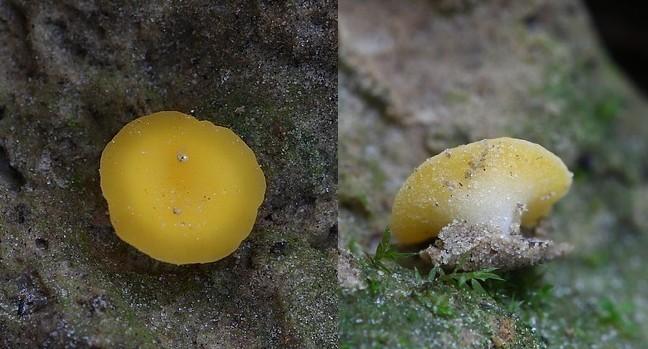
A friend sent me this one dried fruit. After moisturizing about 2.5 mm. According to a friend's account, it grew on the ground, but there are also mosses nearby.
Almost all the traits fit Hymenoscyphus epigaeus (= Phaeohelotium epigeum), now rather Bryoscyphus?
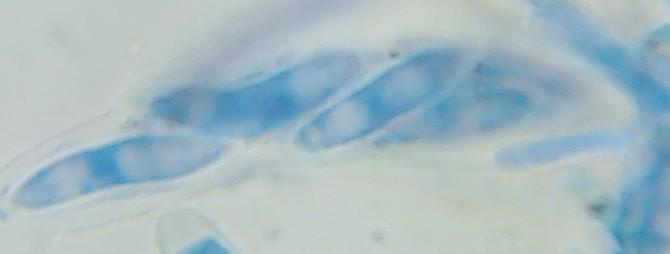
However, I am puzzled by quite large spores, I measured a few:
Me = 16.9 × 3.8 µm; Qe = 4.5
18.19 3.50
20.35 4.46
14.33 3.58
16.31 3.57
16.86 3.71
15.16 3.78
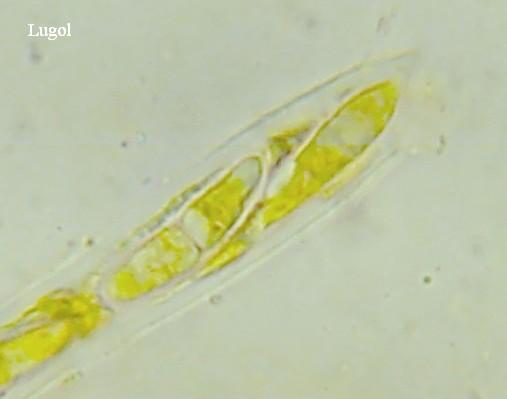
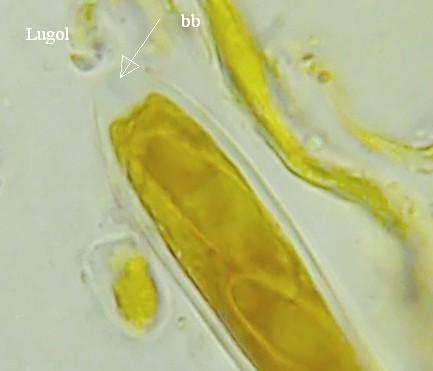
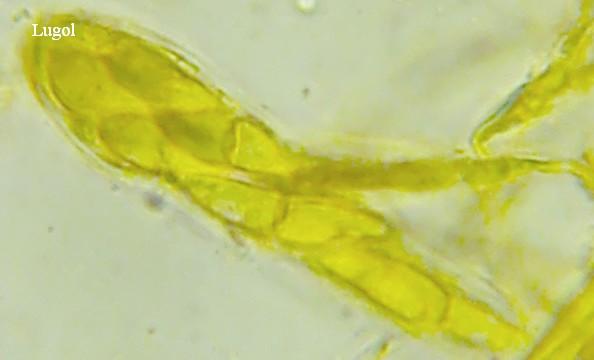
As you can see from the photos, the spores are already septate in ascus.
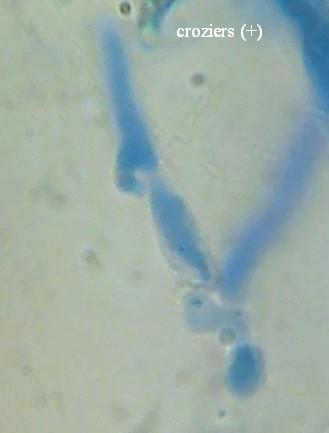
Croziers (+)
Reaction to iodine fairly gentle but regular (BB)
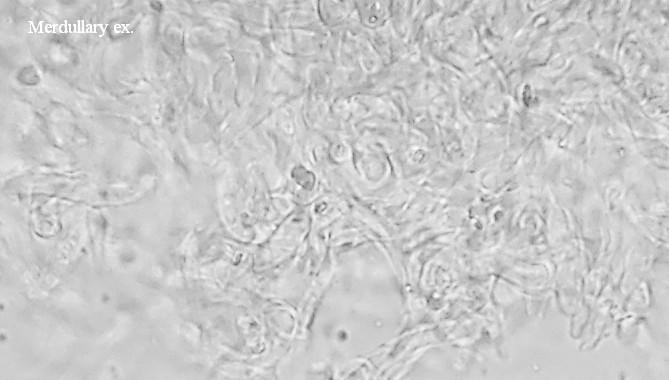
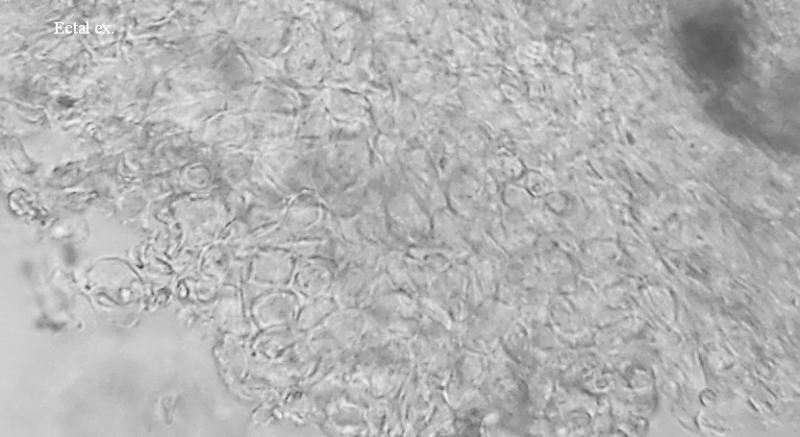
Sorry for the bad quality of the photos, but it is difficult to get a clear image from hydrated material.
best regards
Mirek
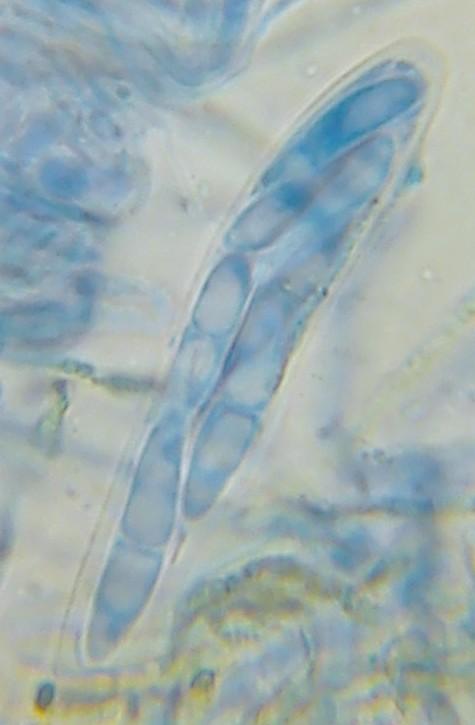
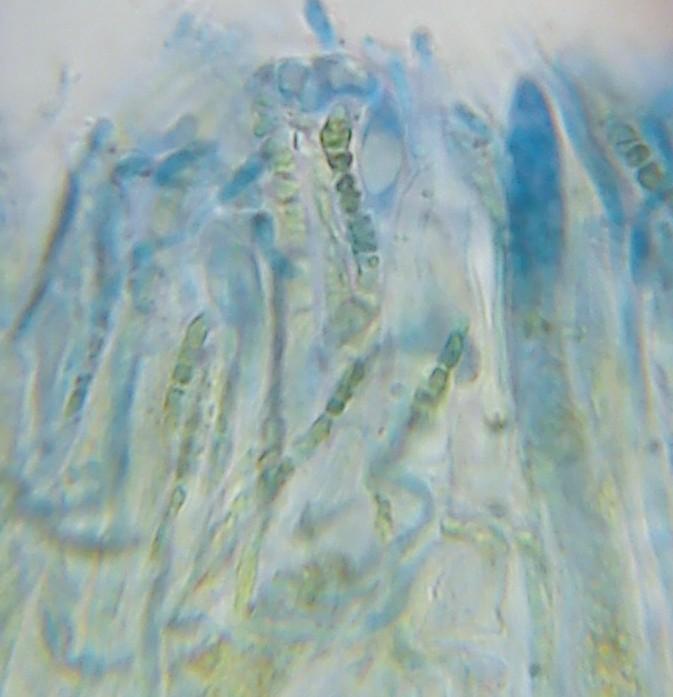
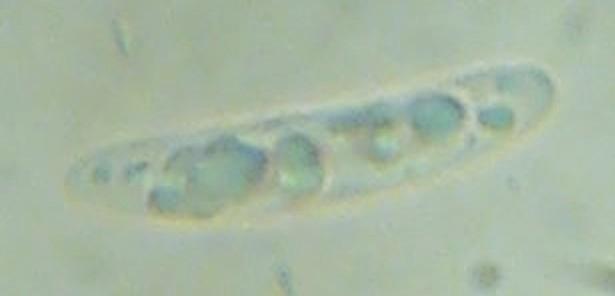
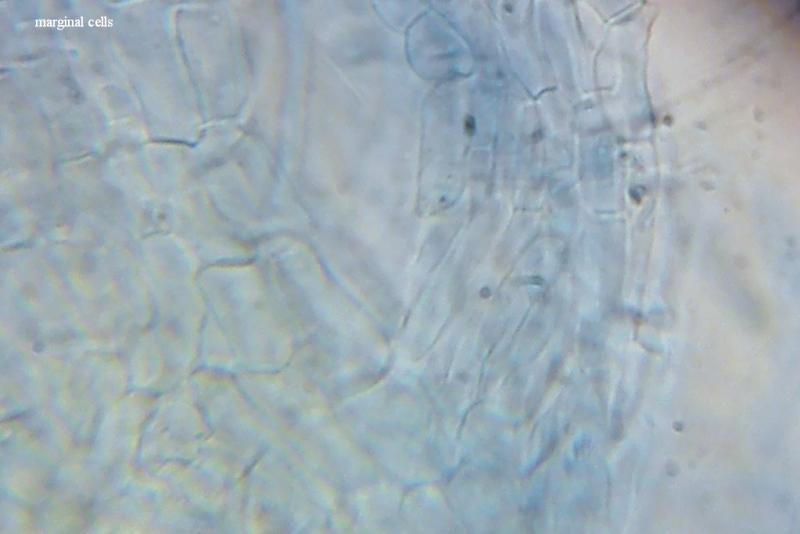
Hans-Otto Baral,
17-08-2020 20:16

Re : Yellow asco.
Oh, that will hardly be solved without vital characters. Spore septation has little to say as it usually occurs in overmature spores (only inside asci which are in dead state).
Phaeohelotium epigaeum I would exclude, more probable is P. monticola (or perhaps P. epiphyllum).
Zotto
Mirek Gryc,
17-08-2020 20:40
Re : Yellow asco.
Thank you Zotto!
In my case, H. epiphyllus, due to the constant lack of moisture, usually grows on decaying stumps or thicker pieces of wood. In wet weather, also on finer wood remnants and on bedding.
best regards
Mirek
Due to the substrate, I did not think about these species.
Probably you are right:)
In my case, H. epiphyllus, due to the constant lack of moisture, usually grows on decaying stumps or thicker pieces of wood. In wet weather, also on finer wood remnants and on bedding.
best regards
Mirek