
27-04-2026 20:52
 Lothar Krieglsteiner
Found on hanging tiwg of Olea europaea in dried-ou
27-04-2026 18:48
Tony MoverleyCollected 23rd April 2026, Norfolk, EnglandSwarms
27-04-2026 17:41
Lothar Krieglsteiner
.. Algarve, same leaf than the last post. The con
27-04-2026 18:05
Lothar Krieglsteiner
... still attached at standing tree. The green con
27-04-2026 17:16
Lothar Krieglsteiner
.. Algarve, moist lying.The conidiomata look like
27-04-2026 12:54
Steve ClementsBonjour. Ce petit champignon blanc résupiné et
27-04-2026 09:59
Pauline. PennaBonjour Can anyone advise me on these pycnidia fo

22-04-2026 20:54
 Enrique Rubio
Hi to everybody.This Pyrenopeziza grew in moist le

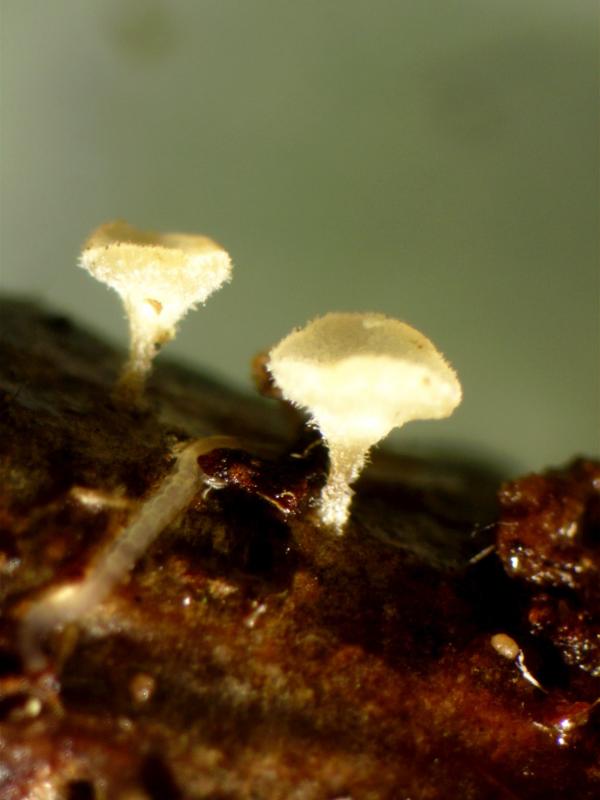
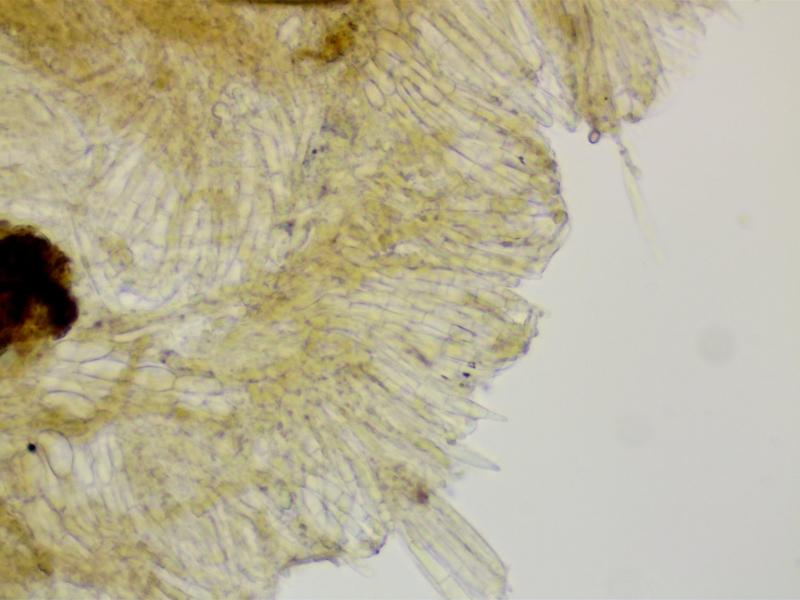
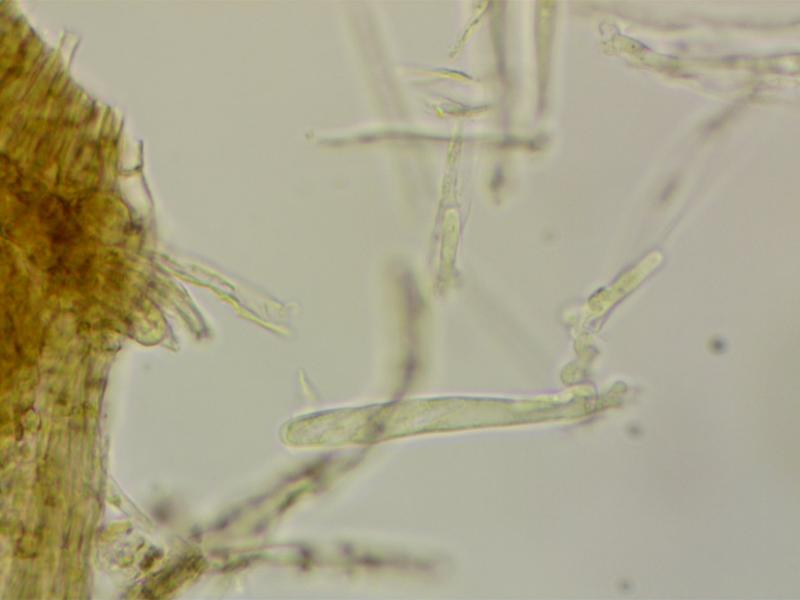
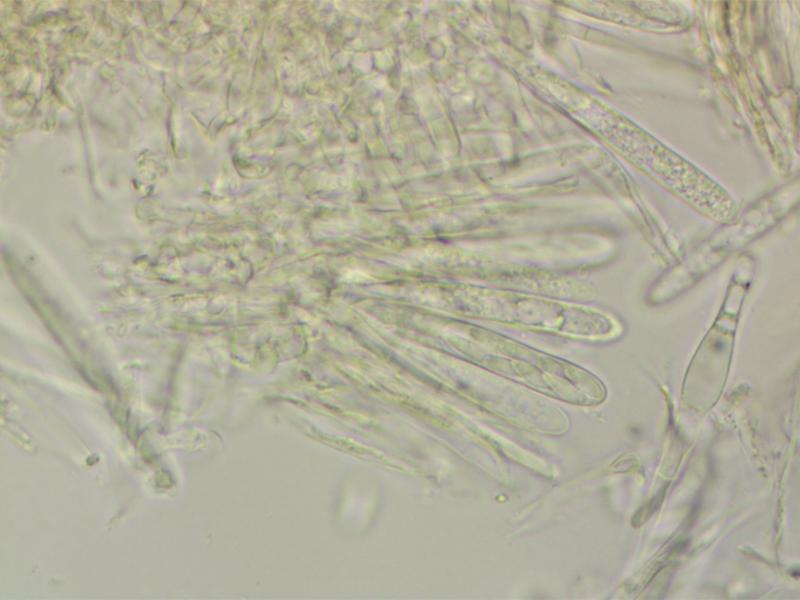
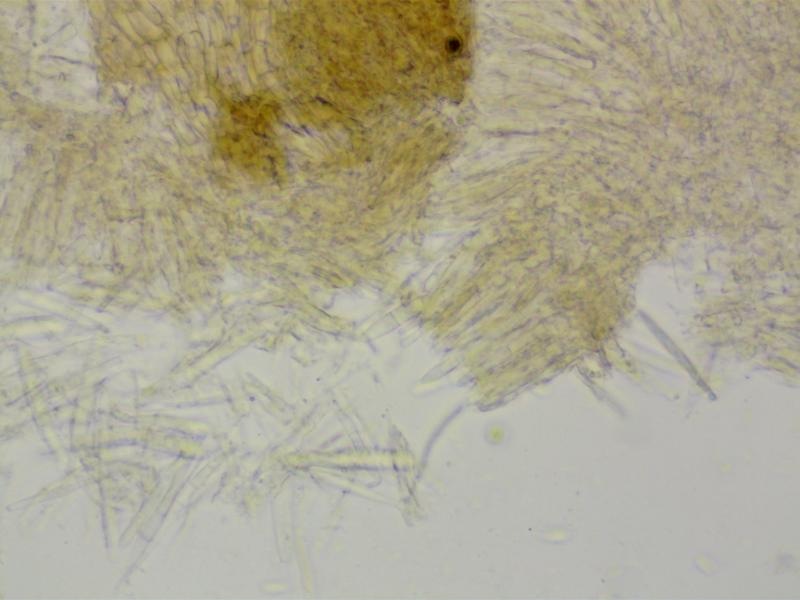
I have what I believe to be a Colopila species on account of the prominent, septate paraphyses.
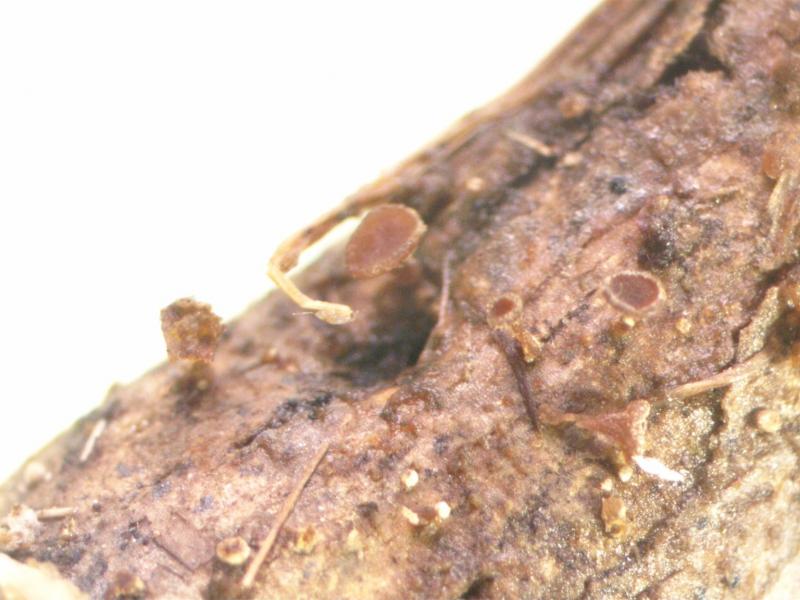
Fbs: c0.5mm. Stipitate, hairy, whitish, strongly strongly discolouring dark red-brown.
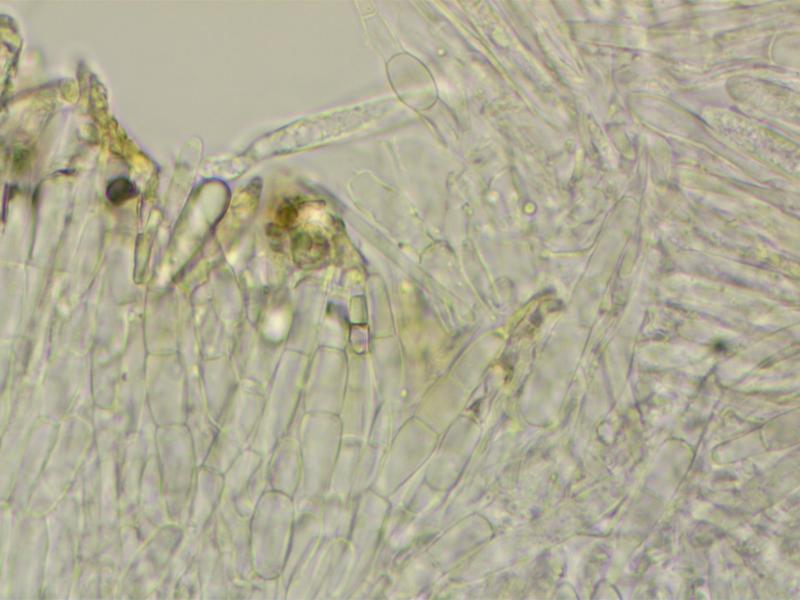
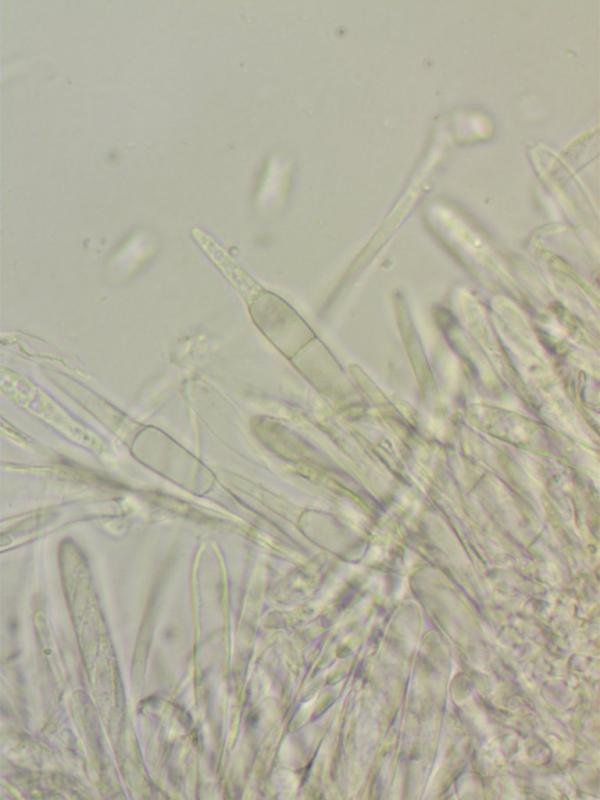
Paraphyses: lanceolate, broad, septate.
Asci: 45-55x5-6.
Spores: 9-13x2-3
Hairs: septate, congealed with yellow-brown matter.
On small fallen twigs of Myrica gale.

Oui Charles,
The paraphyses are typical of the genus Colipila . The only one species I have met is C. masduguana with such spores. The substrate Myrica gale is not usual.
Amitiés
Michel
Hi Michel,
Posted this twice by mistake, just getting used to using AscoFrance!
I thought it was worth posting owing to the unusual paraphyses. The specimens discoloured very strongly red-brown-perhaps they are somewhat different from the usual race. What is the usual substrate and how frequent is the fungus? My finds were both from wet heathland. When I went on the Fungal Records Database I couldn't find Colopila although I'm aware of one other British record.
Regards,
Charles.