
12-06-2026 14:50
 François Freléchoux
Bonjour, Voici la brève description d'une Mollis
10-06-2026 21:16
François Freléchoux
Bonsoir,Le dernier du jour, en attendant votre avi
11-06-2026 19:01
 William Slosse
Hello all,In an attempt to make a culture of a sus
11-06-2026 19:03
 Nicolas VAN VOOREN
Chers membres d'Ascofrance,Le site sera placé en

09-06-2026 18:32
Camille MertensSur morceau de roseau immergé 0,5 - 0,7 mm de dia
10-06-2026 12:54
Steve ClementsBonjour encore, Pouvez-vous m'aider, s'il vous pl
10-06-2026 21:07
François Freléchoux
Toutes les tiges de gentianes jaunes de l'an passÃ
10-06-2026 13:41
François Freléchoux
Bonjour à nouveau, Voici une trouvaille d'hier.
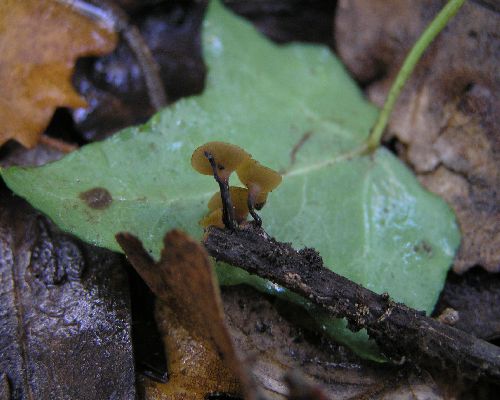
Rustroemia firma?
VASILEIOS KAOUNAS,
09-12-2008 07:15
Ascospores 19,3-23,0*4,4-4,9 ìm, Q=4,4-5,0
VASILEIOS KAOUNAS,
09-12-2008 07:16
Re:Rustroemia firma?
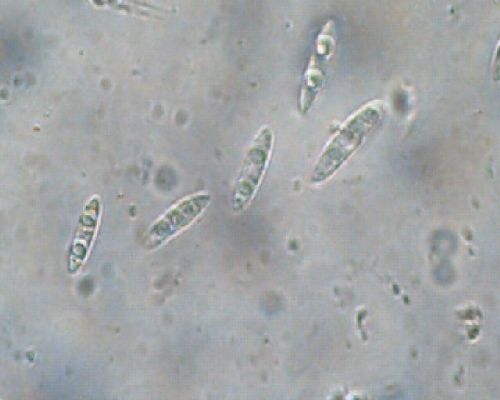
spores foto
Hans-Otto Baral,
09-12-2008 13:44

Re:Rustroemia firma?
Dear Vasileios
that is a good question. R. firma has wider spores (*15-20 x 5-6.5 µm). Yours look too narrow (though alive), so I don't think it is R. firma. Could you search for overmature spores, do they get 3 septa? Probably they procude small conidia like typical R. firma. You could also look for the excipulum, is it of thin-walled prismatic cells or gelatinised?
Asci are probably strongly blue in IKI and with croziers, but this should also be checked.
Zotto
that is a good question. R. firma has wider spores (*15-20 x 5-6.5 µm). Yours look too narrow (though alive), so I don't think it is R. firma. Could you search for overmature spores, do they get 3 septa? Probably they procude small conidia like typical R. firma. You could also look for the excipulum, is it of thin-walled prismatic cells or gelatinised?
Asci are probably strongly blue in IKI and with croziers, but this should also be checked.
Zotto