
14-04-2026 05:32
Ethan CrensonHi all, A few weeks back a friend pointed out som
27-04-2026 18:48
Tony MoverleyCollected 23rd April 2026, Norfolk, EnglandSwarms
27-04-2026 20:52
 Lothar Krieglsteiner
Found on hanging tiwg of Olea europaea in dried-ou
28-04-2026 22:51
 Bernard CLESSE
Bonsoir à toutes et tous,Pourriez-vous m'aider à
29-04-2026 08:01
Lothar Krieglsteiner
... on twig attached to small tree of Citrus auran
29-04-2026 10:44
Lothar Krieglsteiner
growing at moist, drying-out soil at the side of a
28-04-2026 20:33
Vitus SchäfftleinHello, I found Trochila ilicina on Ilex aquifoliu

28-04-2026 21:50
 Pablo Sandoval
Hola a todos,Espero se encuentren bien. Hace mucho
27-04-2026 18:05
Lothar Krieglsteiner
... still attached at standing tree. The green con
Scutellinia
Malcolm Greaves,
29-05-2019 21:08
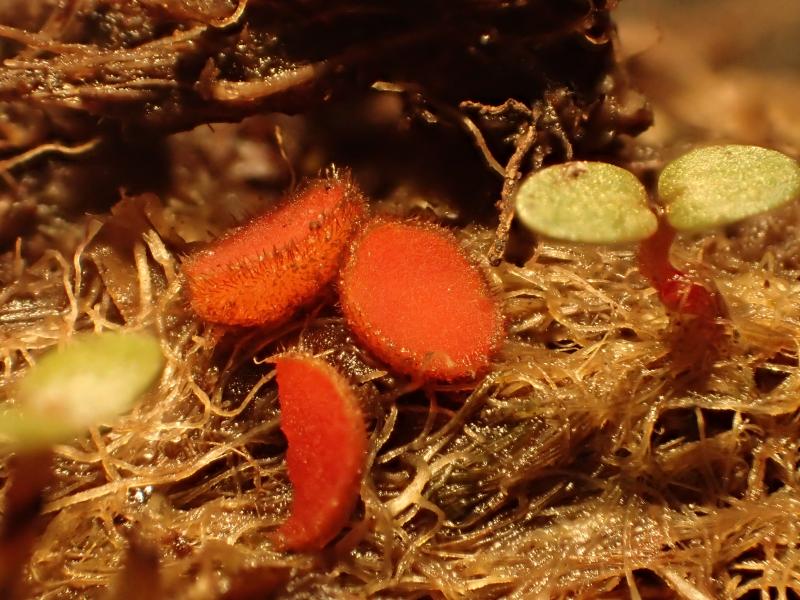
 This group of small 1-1.5mm Scutellinia were found in a very wet area on local wet heathland.
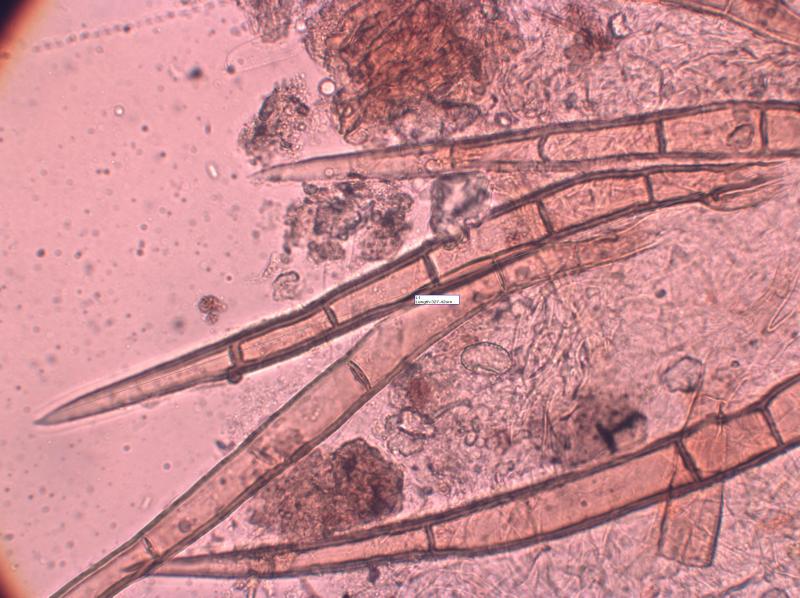
The hairs were very pale but did become darker after collection. They were less than 350µ
long and had 3-6 septa and had a simple or bi-furcate base.
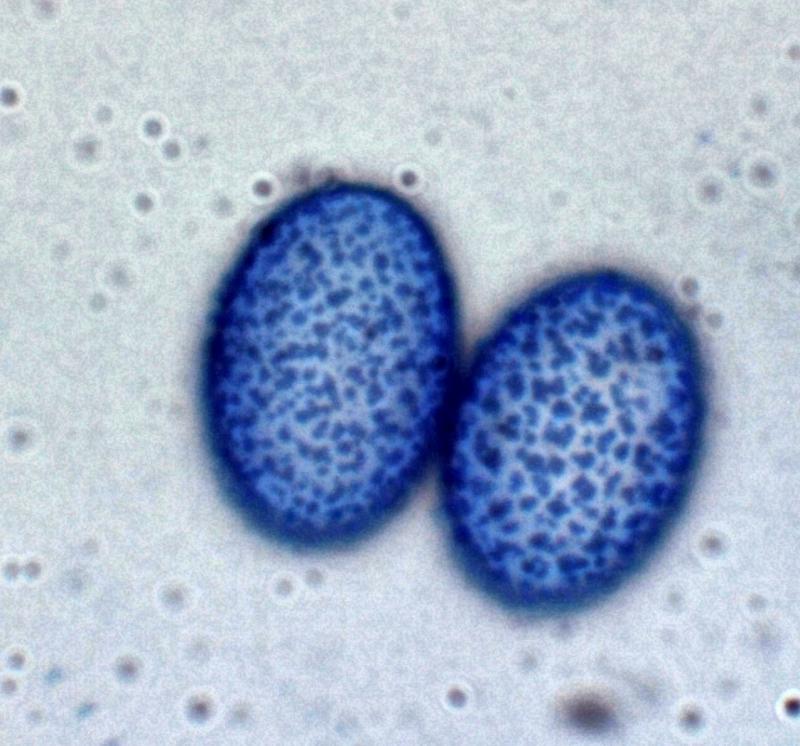
The spores were on av 20-15 with mostly individual warts but with some coalescing. The outer surface did not loosen when heated in LCB.
This doesn't fit perfectly with any species so any suggestions would be welcome.
Thanks
Mal
Viktorie Halasu,
29-05-2019 21:49

Re : Scutellinia
Hello Mal,
the irregular ornamentation reminds me on patagonica (although it's much less pronounced), with such short hairs I'd arrive to peloponnesiaca (if you accept it as good species). I think the warts have slight tendency to coalesce into circles, S. Glejdura considers that as typical for peloponnesiaca (see a coll. determined so by him: https://drive.google.com/drive/u/0/folders/1gR0mCXNnJxpHCPRV83QaYmlzL_3vFuXZ). But spore shape is definitely not as ovoid as is should be... interesting collection. Once again, certain voice is missing here...
Best wishes,
Viktorie
the irregular ornamentation reminds me on patagonica (although it's much less pronounced), with such short hairs I'd arrive to peloponnesiaca (if you accept it as good species). I think the warts have slight tendency to coalesce into circles, S. Glejdura considers that as typical for peloponnesiaca (see a coll. determined so by him: https://drive.google.com/drive/u/0/folders/1gR0mCXNnJxpHCPRV83QaYmlzL_3vFuXZ). But spore shape is definitely not as ovoid as is should be... interesting collection. Once again, certain voice is missing here...
Best wishes,
Viktorie
Malcolm Greaves,
30-05-2019 10:54
Re : Scutellinia
Thanks for your input Viktorie,I agree about the voice. As to species it is certainly seem to be a mixture. I will just collect as much information as possible and file it until I can get access to DNA testing.
Mal