
14-04-2026 05:32
Ethan CrensonHi all, A few weeks back a friend pointed out som
27-04-2026 18:48
Tony MoverleyCollected 23rd April 2026, Norfolk, EnglandSwarms
27-04-2026 20:52
 Lothar Krieglsteiner
Found on hanging tiwg of Olea europaea in dried-ou
28-04-2026 22:51
 Bernard CLESSE
Bonsoir à toutes et tous,Pourriez-vous m'aider à
29-04-2026 08:01
Lothar Krieglsteiner
... on twig attached to small tree of Citrus auran
29-04-2026 10:44
Lothar Krieglsteiner
growing at moist, drying-out soil at the side of a
28-04-2026 20:33
Vitus SchäfftleinHello, I found Trochila ilicina on Ilex aquifoliu

28-04-2026 21:50
 Pablo Sandoval
Hola a todos,Espero se encuentren bien. Hace mucho
27-04-2026 18:05
Lothar Krieglsteiner
... still attached at standing tree. The green con
Lachnaceae?
Guy Buddy,
08-05-2019 15:44
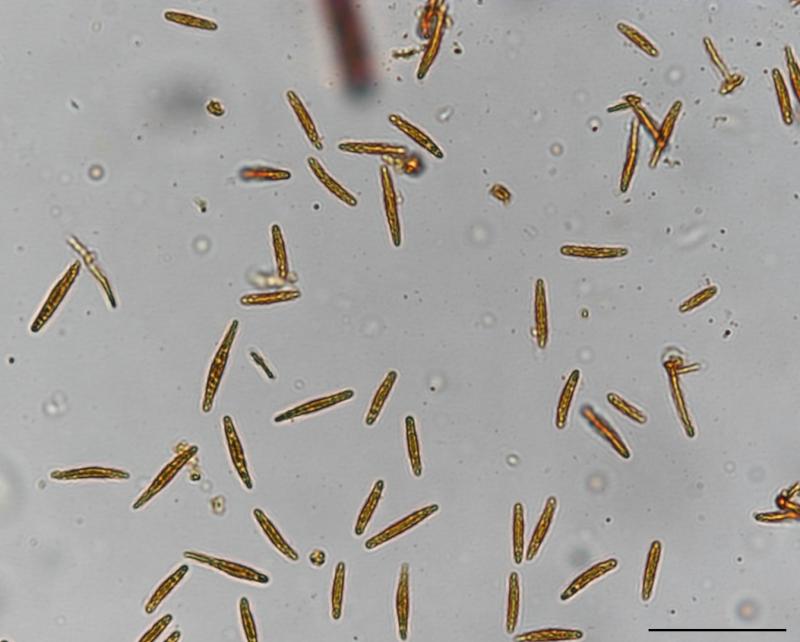
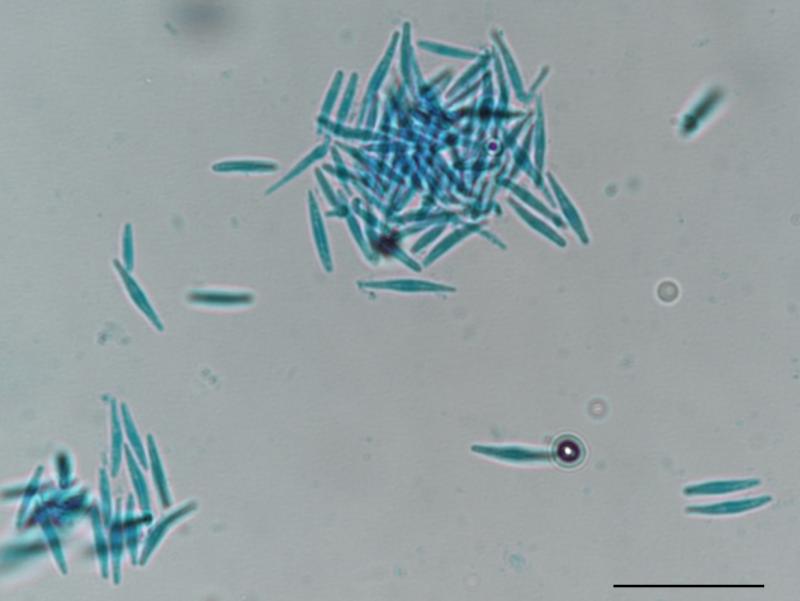
(8.4) 8.9 - 12.5 (14.1) × (1.5) 1.6 - 2.1 (2.2) µm
Q = (4.6) 4.9 - 6.3 (7.2) ; N = 20; Me = 10.5 × 1.9 µm ; Qe = 5.6
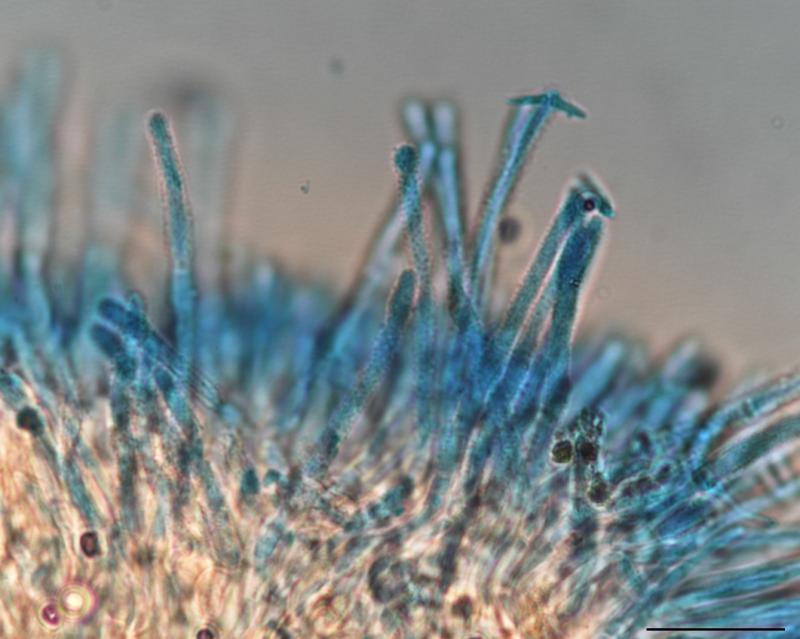
Hair measure:(56.6) 60 - 66.5 (68.7) × 3.5 - 4.8 (5.4) µm
Q = (11.8) 12.4 - 18 (18.3) ; N = 8; Me = 63.7 × 4.2 µm ; Qe = 15.7
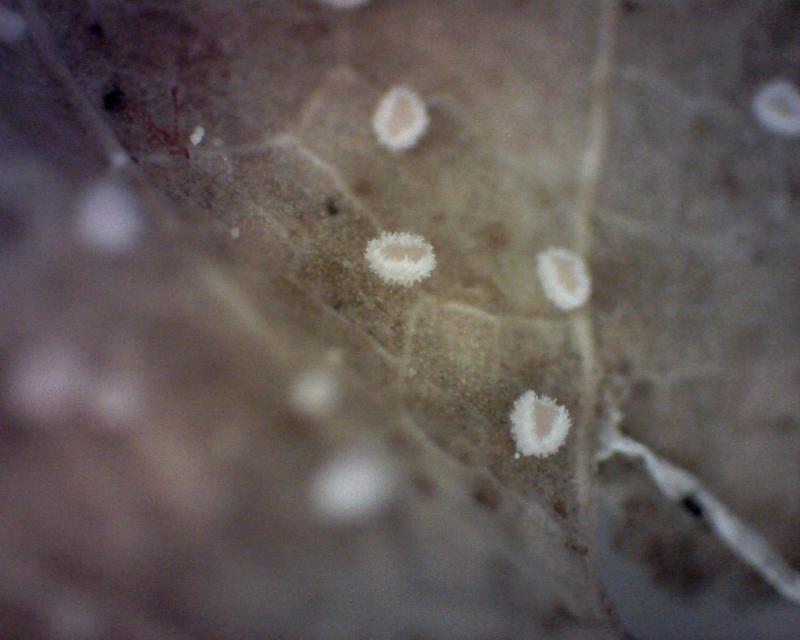
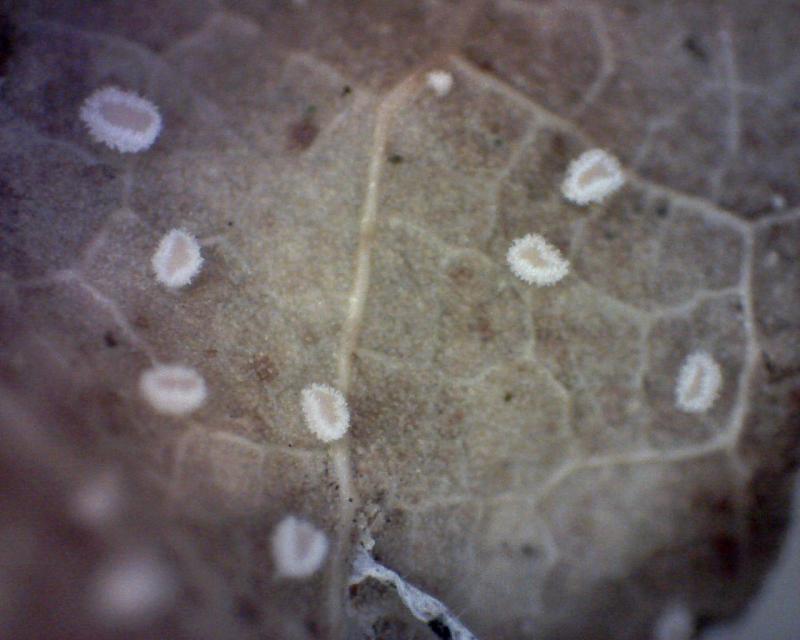
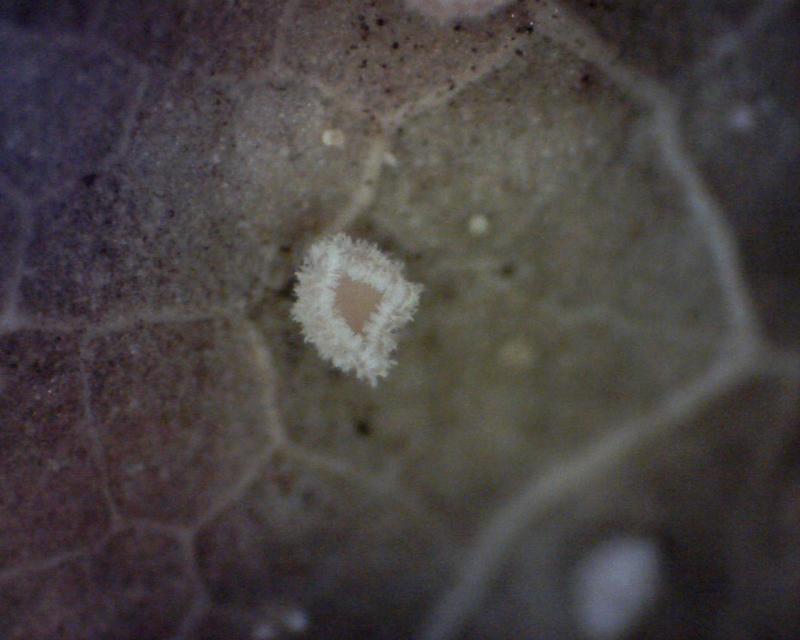
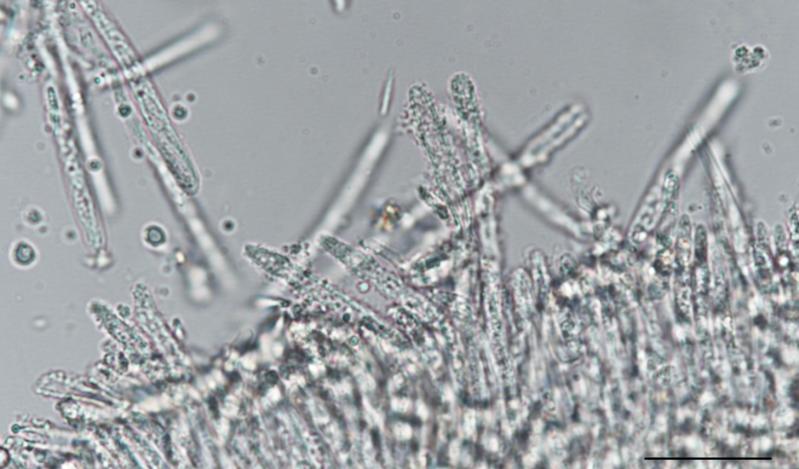
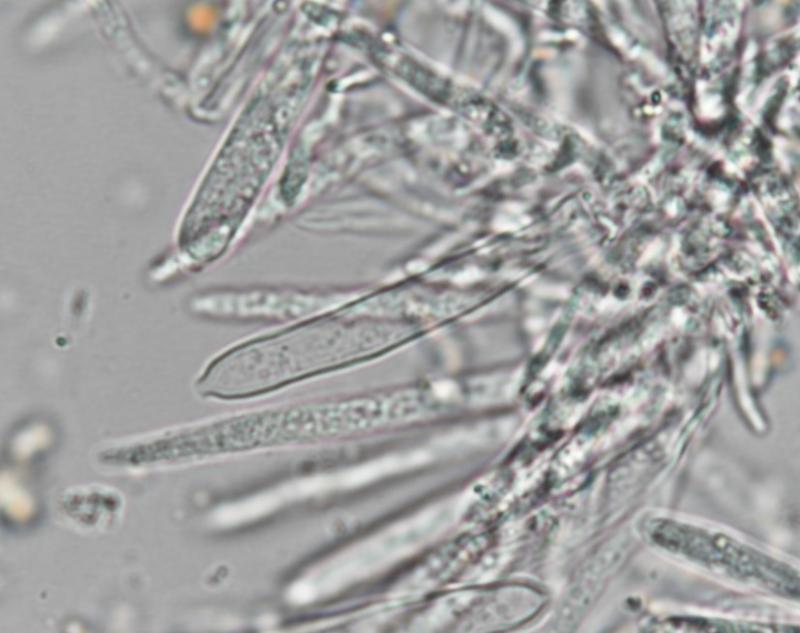
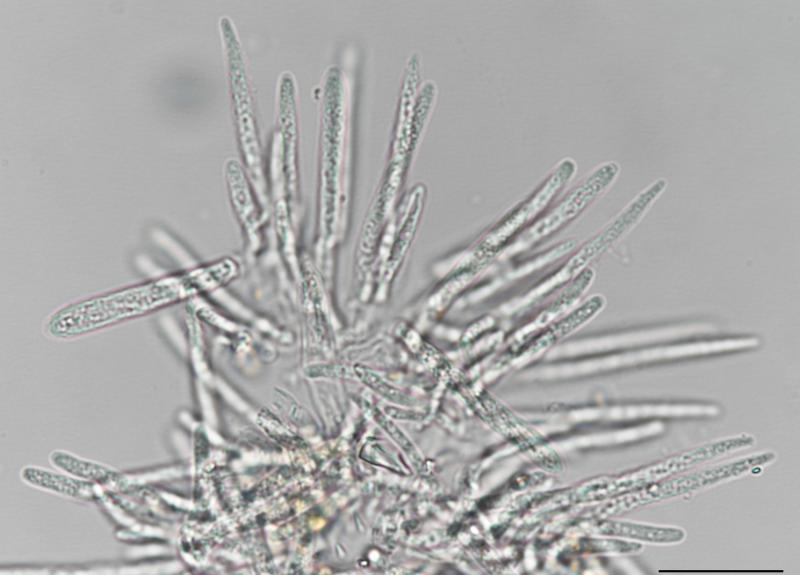
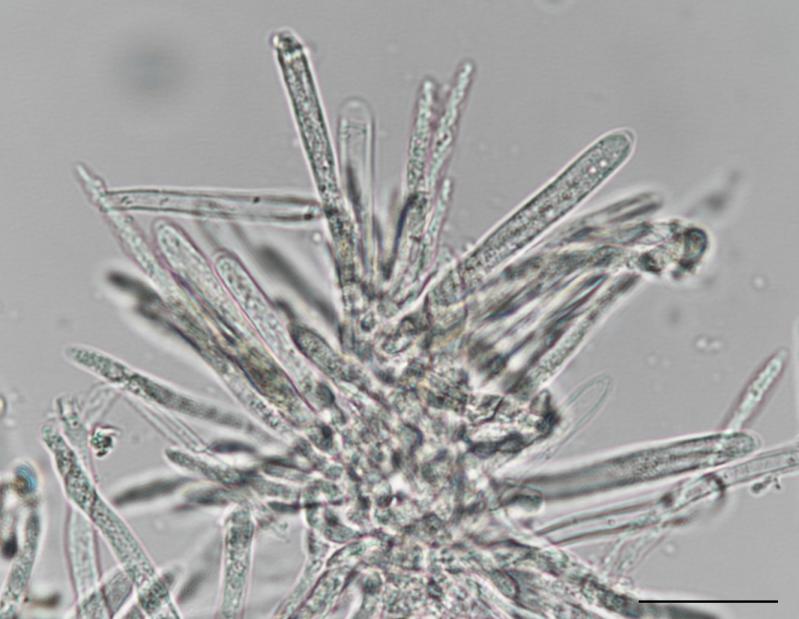

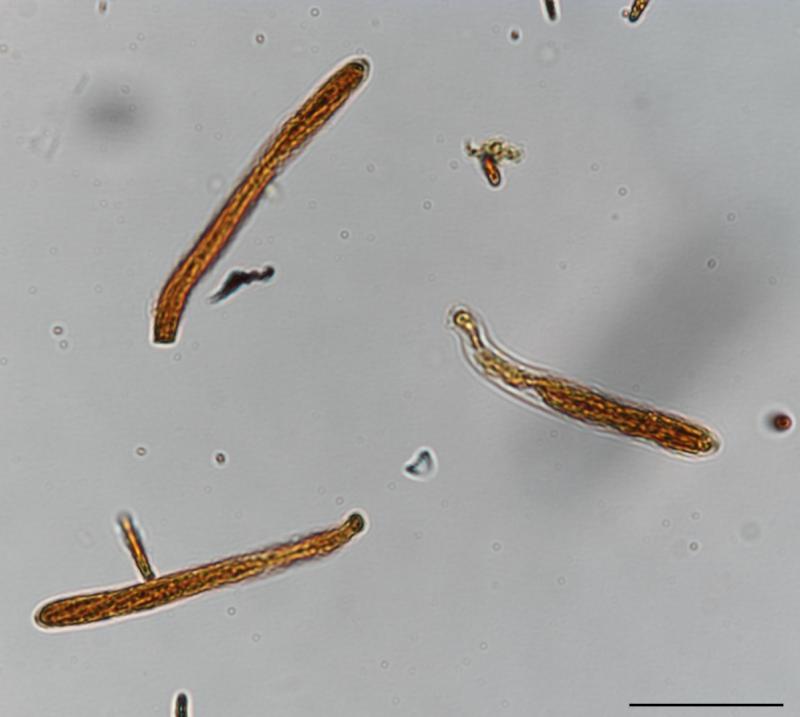

Hans-Otto Baral,
08-05-2019 15:57

Re : Lachnaceae?
I am not sure if you mixed something here.
There are almost cylnidrocal spores (living in water) and strongly fusiform ones (in ?CB).
Together with the large spore size I suspect the latter to be Incrucipulum ciliare. But there the hairs are thick-walled and bear crystals, and the living spores would be multiguttulate.
Please, if you have it still fresh, look again in water for the large fusiform spores.
There are almost cylnidrocal spores (living in water) and strongly fusiform ones (in ?CB).
Together with the large spore size I suspect the latter to be Incrucipulum ciliare. But there the hairs are thick-walled and bear crystals, and the living spores would be multiguttulate.
Please, if you have it still fresh, look again in water for the large fusiform spores.
Guy Buddy,
08-05-2019 16:17
Re : Lachnaceae?
Hans
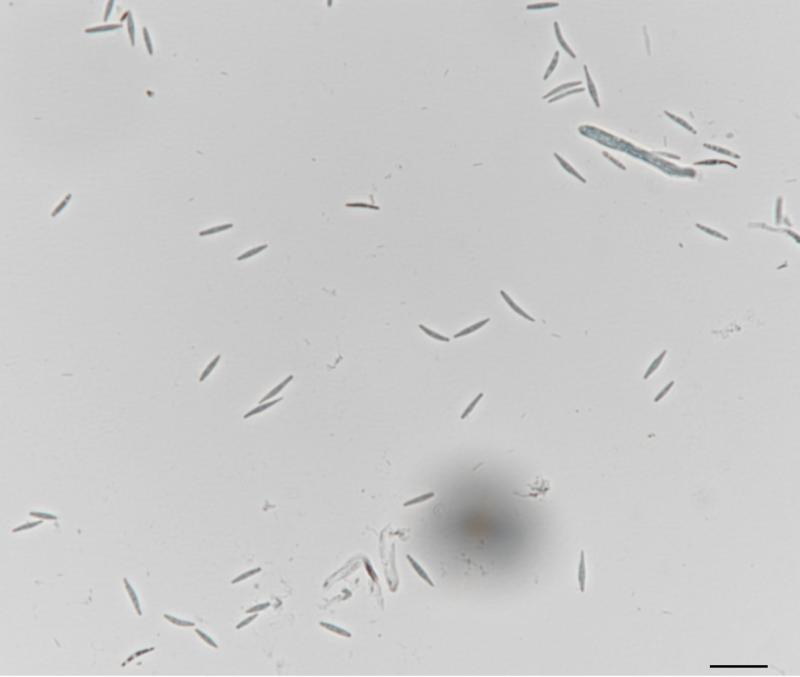
Thanks for the quick response. Attached are some more photos of the spores in H20.
Thanks for the quick response. Attached are some more photos of the spores in H20.
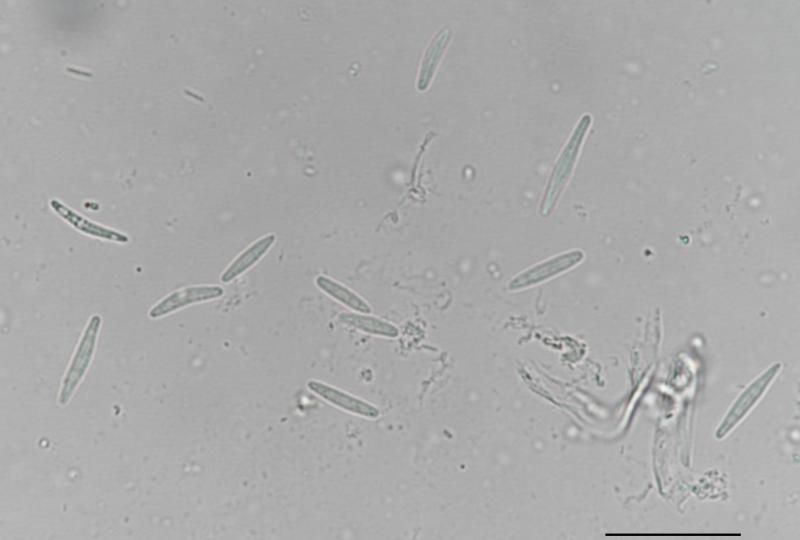
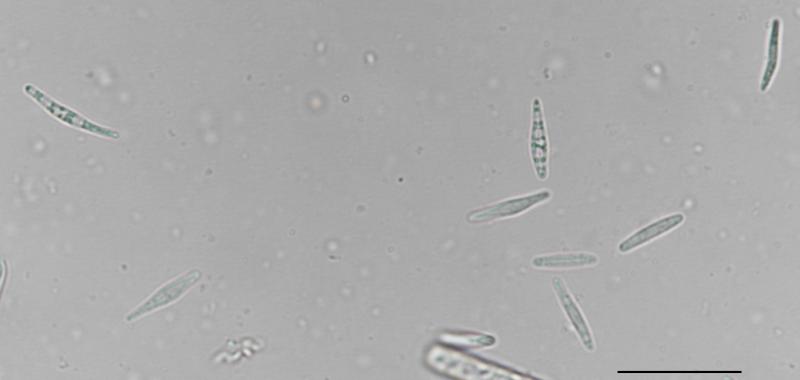
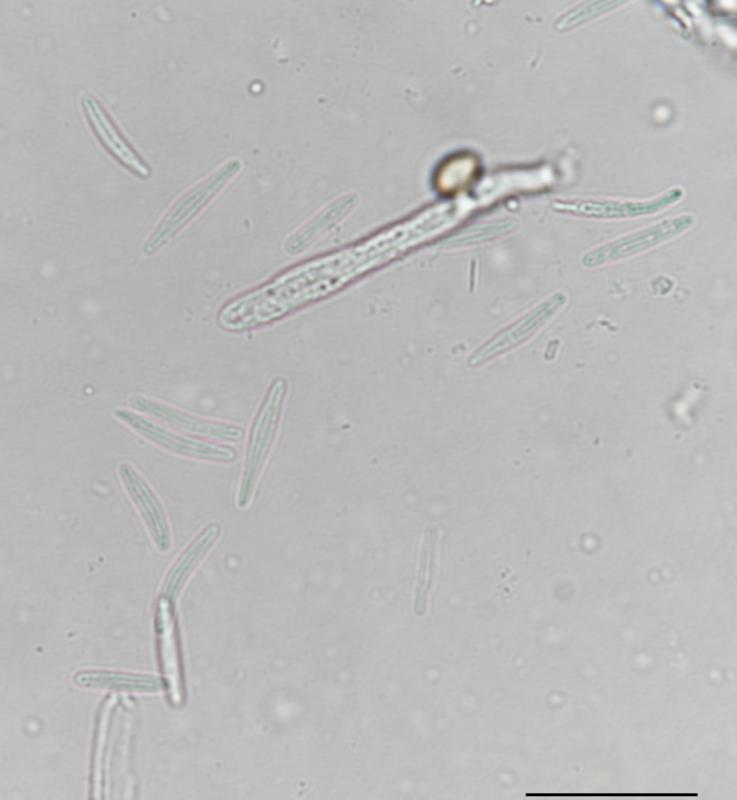
Hans-Otto Baral,
08-05-2019 16:27
Re : Lachnaceae?
So they are all eguttulate. What is the length of the scale in the spore photos?
Guy Buddy,
08-05-2019 16:41
Re : Lachnaceae?
Sorry, the bar is 20um
Hans-Otto Baral,
08-05-2019 17:36
Re : Lachnaceae?
Then you must divide your measurements /2. I measure 11-16 x1.8-2.2.
But I cannot recall s species like this, perhaps American.
But I cannot recall s species like this, perhaps American.
Guy Buddy,
08-05-2019 20:18
Re : Lachnaceae?
Hans, you are right. I measured from a 1000x photo while I was thinking it was 400x.
The correct spore measurement is:(8.4) 8.9 - 12.5 (14.1) × (1.5) 1.6 - 2.1 (2.2) µm
Q = (4.6) 4.9 - 6.3 (7.2) ; N = 20; Me = 10.5 × 1.9 µm ; Qe = 5.6
Thank you for acute observation and sharing your expertise!
The correct spore measurement is:(8.4) 8.9 - 12.5 (14.1) × (1.5) 1.6 - 2.1 (2.2) µm
Q = (4.6) 4.9 - 6.3 (7.2) ; N = 20; Me = 10.5 × 1.9 µm ; Qe = 5.6
Thank you for acute observation and sharing your expertise!