

30-04-2026 10:28
Rot BojanHello, by appearance I would say that I am dealing
27-04-2026 18:48
Tony MoverleyCollected 23rd April 2026, Norfolk, EnglandSwarms
14-04-2026 05:32
Ethan CrensonHi all, A few weeks back a friend pointed out som
27-04-2026 20:52
 Lothar Krieglsteiner
Found on hanging tiwg of Olea europaea in dried-ou
28-04-2026 22:51
 Bernard CLESSE
Bonsoir à toutes et tous,Pourriez-vous m'aider à
29-04-2026 08:01
Lothar Krieglsteiner
... on twig attached to small tree of Citrus auran
29-04-2026 10:44
Lothar Krieglsteiner
growing at moist, drying-out soil at the side of a
28-04-2026 20:33
Vitus SchäfftleinHello, I found Trochila ilicina on Ilex aquifoliu

Echinosphaeria strigosa ou Echinosphaeria canescens ? sur Crataegus
Bernard CLESSE,
04-03-2019 15:33
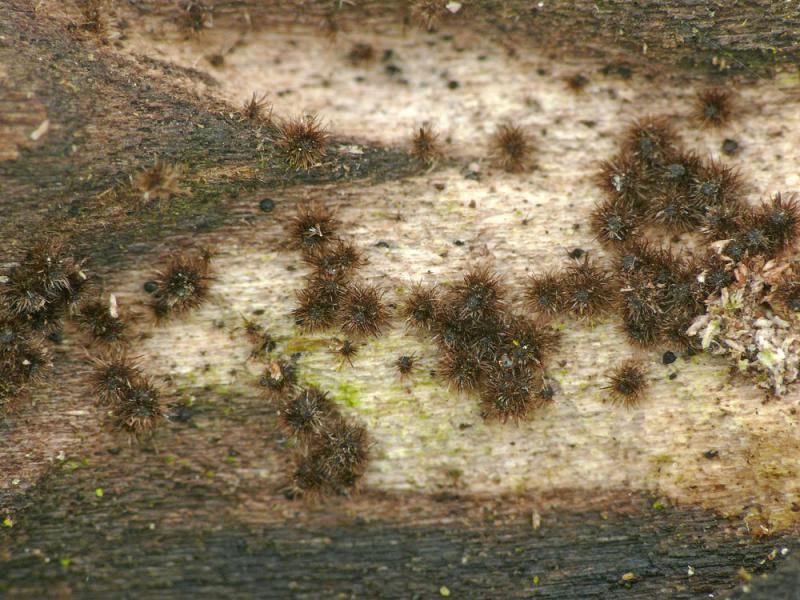
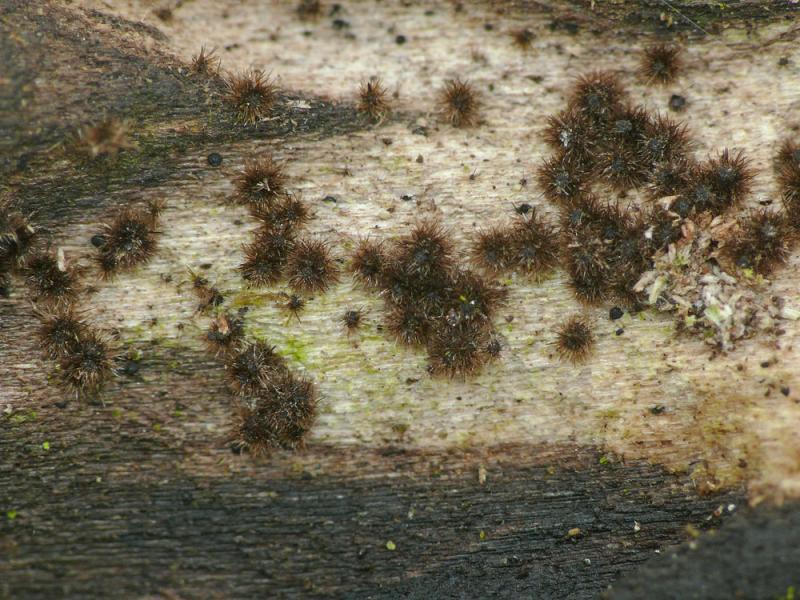
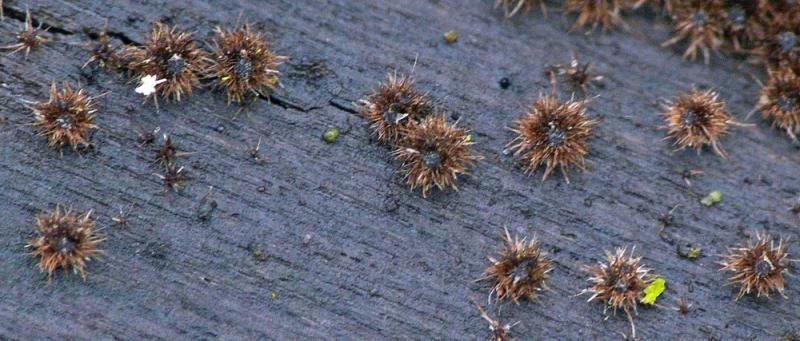
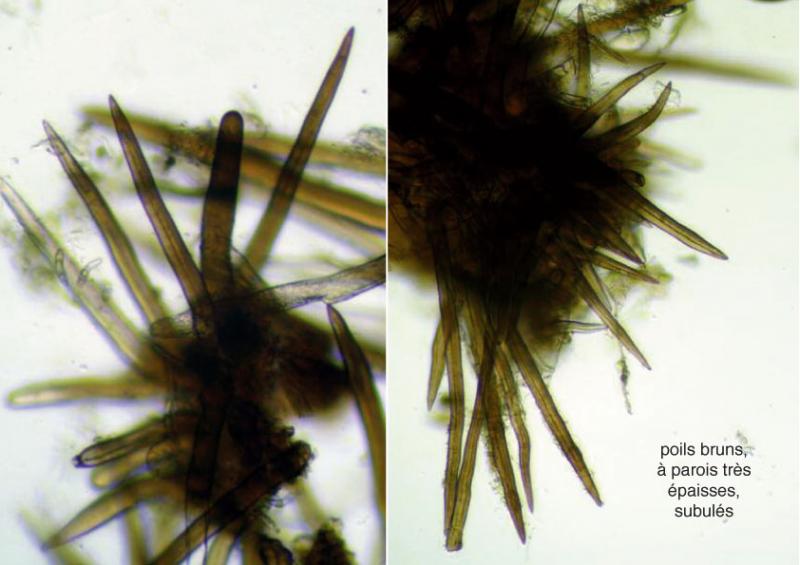
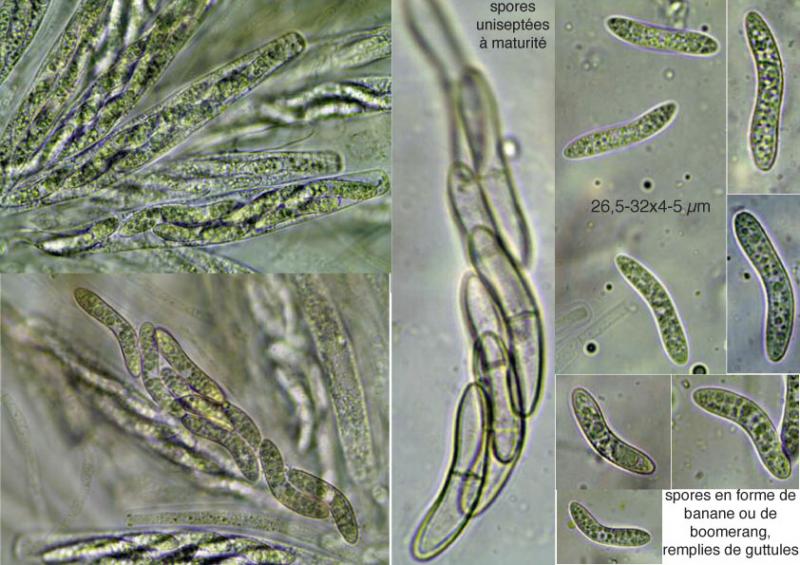
Bonjour à toutes et tous,J'ai trouvé récemment cet Echinosphaeria sur tronc mort et au sol d'aubépine.
Je n'arrive pas à choisir entre Echinosphaeria strigosa ou Echinosphaeria canescens tant les informations (clés, littérature, données d'Ascofrance…) divergent. Il est vrai que les tailles de mes spores mesurées sont un peu entre les deux…
Qu'en pensez-vous ?
Bernard

Andrew N. Miller,
04-03-2019 16:00

Re : Echinosphaeria strigosa ou Echinosphaeria canescens ? sur Crataegus
I think you should send the specimen to me for sequencing... ;o)
Cheers,
Andy
Cheers,
Andy
Bernard CLESSE,
04-03-2019 16:26
Re : Echinosphaeria strigosa ou Echinosphaeria canescens ? sur Crataegus
OK Andy,
Could you give me your postal address ?
Best regards,
Bernard
Could you give me your postal address ?
Best regards,
Bernard
Hans-Otto Baral,
04-03-2019 16:29

Re : Echinosphaeria strigosa ou Echinosphaeria canescens ? sur Crataegus
Could it be that Persoon and Albertini & Schweinitz described the same fungus?
What perfectly matches Bernard's fungus I consider as very common in Europe, and I always identifided it as E. strigosa (earlier Lasiosphaeria). See my folder in www.in-vivo-veritas.de.
E. canescens in Miller et al. (2014 Fig. 2) I consider conspecific.
In GenBank I find only 4 sequences of E. canescens. Is it possible to know in which country they were collected?
Zotto
What perfectly matches Bernard's fungus I consider as very common in Europe, and I always identifided it as E. strigosa (earlier Lasiosphaeria). See my folder in www.in-vivo-veritas.de.
E. canescens in Miller et al. (2014 Fig. 2) I consider conspecific.
In GenBank I find only 4 sequences of E. canescens. Is it possible to know in which country they were collected?
Zotto
Andrew N. Miller,
04-03-2019 17:24
Re : Echinosphaeria strigosa ou Echinosphaeria canescens ? sur Crataegus
Dr. Andrew Miller
University of Illinois
Illinois Natural History Survey
1816 South Oak Street
Champaign, IL 61820-6970 USA
phone: (217) 244-0439
Send as: DRIED HERBARIUM SPECIMENS, NO COMMERCIAL VALUE
University of Illinois
Illinois Natural History Survey
1816 South Oak Street
Champaign, IL 61820-6970 USA
phone: (217) 244-0439
Send as: DRIED HERBARIUM SPECIMENS, NO COMMERCIAL VALUE
Andrew N. Miller,
04-03-2019 17:25
Re : Echinosphaeria strigosa ou Echinosphaeria canescens ? sur Crataegus
E. canescens has shorter ascospores and is quite rare, while E. strigosa has longer ascospores and is very common. Molecular data support the recognition of these two species as disctinct and separate species.
Cheers,
Andy
Cheers,
Andy
Bernard Declercq,
04-03-2019 18:41

Re : Echinosphaeria strigosa ou Echinosphaeria canescens ? sur Crataegus
Hi to all,
I am glad that Andy accepts that E. canescens and E. strigosa are not conspecific and hope that he will succeed this time (trials were not successful in the past) to demonstrate such on a phylogenetic base.
While spore length may overlap, spore width of E. canescens and E. strigosa is resp. 3-5(5.5) µm and 5.5-7 µm.
Good luck, Andy.
Bernard
Hans-Otto Baral,
04-03-2019 18:57
Re : Echinosphaeria strigosa ou Echinosphaeria canescens ? sur Crataegus
Hi Bernard
could you please send me a pdf of your paper in Sterbeeckia 2009?
Thanks
Zotto
could you please send me a pdf of your paper in Sterbeeckia 2009?
Thanks
Zotto
Andrew N. Miller,
04-03-2019 19:12
Re : Echinosphaeria strigosa ou Echinosphaeria canescens ? sur Crataegus
Thanks Bernard. I already have genetic data to prove this.
Your 2016 paper states this:
21-28(32)µm in E. canescens vs. 30-38µm in E. strigosa
Until recently, the literature has confused E. canescens as the longer spored species and forgot about E. strigosa.
Best,
Andy
Your 2016 paper states this:
21-28(32)µm in E. canescens vs. 30-38µm in E. strigosa
Until recently, the literature has confused E. canescens as the longer spored species and forgot about E. strigosa.
Best,
Andy
Bernard Declercq,
04-03-2019 19:22
Re : Echinosphaeria strigosa ou Echinosphaeria canescens ? sur Crataegus
Hi Zotto,
I guess you are interested in one (or both) of these papers.
Bernard
 Declercq-B.-2008-Omtrent-Lasiosphaeria-s.l.-Sterbeeckia-28-35-41-0001.pdf
Lothar Krieglsteiner,
04-03-2019 22:11
Re : Echinosphaeria strigosa ou Echinosphaeria canescens ? sur Crataegus
thanks, Bernard!
It is always super if the papers are shared with everybody :-)
Best regards, Lothar
Hans-Otto Baral,
04-03-2019 22:26
Re : Echinosphaeria strigosa ou Echinosphaeria canescens ? sur Crataegus
Thanks! So your E. canescens in 2008 is now E. curvatispora. A pity that the guttule pattern of the living spores is not known in that species.
Your papers do not include the spore size of the two similar species? - Oh sorry, now I see!
Your papers do not include the spore size of the two similar species? - Oh sorry, now I see!
Hans-Otto Baral,
05-03-2019 09:30
Re : Echinosphaeria strigosa ou Echinosphaeria canescens ? sur Crataegus
I remember to have earlier tried to separate the two species but did not succeed. Here is a list of measurements of 7 samples . When following Bernard's key , 6036 is clearly canescens, but otherwise I am not sure. 1540 and 2749 could as well be separated from the remaining by extraordinarily long spores, but always some collections overlap with others.
It may well be that there exist sharp genetical differences, but my impression is that it would then be hardly possible to identify these cryptoc taxa merely by morphology.
H.B. 1540 (1976): *39-45/6-7.5 µm +H2O 35-46 x 6.5-8.3 µm (Reynoutria stems)
H.B. 1568 (1975): *30-36/5,5-6 µm (Fraxinus wood)
H.B. 2748 (1975): †36-43/5,5-6 µm (Fagus wood)
H.B. 4648 (1992): *33-39/5,6-6,2 µm (Prunus bark)
H.B. 6036 (1998): *25-30/5,5-5,8 µm (Salix wood)
H.B. 8248 (2006): *29-37 x 5.2-5.6 µm, brownish *34-38 x 6-6.5 µm (Salix wood)
15.III.1975: *30-39(42)/5,5-6(6,5) µm (Carpinus ?wood)
It may well be that there exist sharp genetical differences, but my impression is that it would then be hardly possible to identify these cryptoc taxa merely by morphology.
H.B. 1540 (1976): *39-45/6-7.5 µm +H2O 35-46 x 6.5-8.3 µm (Reynoutria stems)
H.B. 1568 (1975): *30-36/5,5-6 µm (Fraxinus wood)
H.B. 2748 (1975): †36-43/5,5-6 µm (Fagus wood)
H.B. 4648 (1992): *33-39/5,6-6,2 µm (Prunus bark)
H.B. 6036 (1998): *25-30/5,5-5,8 µm (Salix wood)
H.B. 8248 (2006): *29-37 x 5.2-5.6 µm, brownish *34-38 x 6-6.5 µm (Salix wood)
15.III.1975: *30-39(42)/5,5-6(6,5) µm (Carpinus ?wood)
Andrew N. Miller,
05-03-2019 16:38
Re : Echinosphaeria strigosa ou Echinosphaeria canescens ? sur Crataegus
Well, Zotto, send me your specimens and I will sequence them and let you know. I believe you have E. strigosa for all except 6063, which may be E. canescens.
Cheers,
Andy
Cheers,
Andy
Hans-Otto Baral,
05-03-2019 17:09
Re : Echinosphaeria strigosa ou Echinosphaeria canescens ? sur Crataegus
The same despite the large differences in spore size?
But these samples are very old, 20-40 years, except for one (12 years). Did you succeed with so old perithecia?
But these samples are very old, 20-40 years, except for one (12 years). Did you succeed with so old perithecia?
Andrew N. Miller,
05-03-2019 18:09
Re : Echinosphaeria strigosa ou Echinosphaeria canescens ? sur Crataegus
Yes, sometimes. It depends more on how the specimen was dried... low heat and slow is best.
Andy
Andy
Hans-Otto Baral,
05-03-2019 18:17
Re : Echinosphaeria strigosa ou Echinosphaeria canescens ? sur Crataegus
Helotiales usually do not work anymore after 10-20 years. I never apply heat for drying.
Andrew N. Miller,
05-03-2019 18:23
Re : Echinosphaeria strigosa ou Echinosphaeria canescens ? sur Crataegus
Echinosphaeria is in the Sordariomycetes. Your specimens should be fine.
Hans-Otto Baral,
05-03-2019 21:08
Re : Echinosphaeria strigosa ou Echinosphaeria canescens ? sur Crataegus
I have preserved all except for 1568 and the last one. Some of them are illustrated here
https://drive.google.com/drive/folders/0B5SeyOEkxxZhOXZNOVluSkNDT2s
Of course I know the class :-) Perhaps you need to apply next generation sequencing? This was successful for Saccardo specimens in Pezizales but not in Helotiales (Forin et al. 2018).
https://drive.google.com/drive/folders/0B5SeyOEkxxZhOXZNOVluSkNDT2s
Of course I know the class :-) Perhaps you need to apply next generation sequencing? This was successful for Saccardo specimens in Pezizales but not in Helotiales (Forin et al. 2018).
Andrew N. Miller,
05-03-2019 21:24
Re : Echinosphaeria strigosa ou Echinosphaeria canescens ? sur Crataegus
No, Sanger sequencing works just fine with a modified DNA extraction. I just got sequences from small fragments from a Gyromitra from 1950. DNA in fungal tissues preserve well up to ~30 years and can be successfully extracted for many taxa up to ~100 years old. Next-gen sequencing is neccessary for specimens ~100-200 years old.
Thomas Læssøe,
08-03-2019 10:04
Re : Echinosphaeria strigosa ou Echinosphaeria canescens ? sur Crataegus
hello foks
curvatispora/canescens
The material of Lasiosphaeria canescens (Echinosphaeria) in Fries Scleromycetes (C copy) has the characters of E. curvatispora: spores boomerang-shaped, 17.7-20.9 x 4-4.8(-5.6) µm. Are the names lectotypified or otherwise typified?
cheers
Thomas
curvatispora/canescens
The material of Lasiosphaeria canescens (Echinosphaeria) in Fries Scleromycetes (C copy) has the characters of E. curvatispora: spores boomerang-shaped, 17.7-20.9 x 4-4.8(-5.6) µm. Are the names lectotypified or otherwise typified?
cheers
Thomas
Bernard CLESSE,
12-04-2019 16:47
Re : Echinosphaeria strigosa ou Echinosphaeria canescens ? sur Crataegus
Hi Andrew,
I just posted samples of Echinosphaeria canescens. I hope that the parcels will not be lost and that you will receive it in good condition.
I just posted samples of Echinosphaeria canescens. I hope that the parcels will not be lost and that you will receive it in good condition.
In advance thank you for following your analysis!
Best regards,
Bernard
Andrew N. Miller,
13-04-2019 18:33
Re : Echinosphaeria strigosa ou Echinosphaeria canescens ? sur Crataegus
Thanks Bernard! I am currently 10 out of 10 in the past 3 years for successfully receiving specimens from Europe.
Cheers,
Andy
Cheers,
Andy