
01-05-2026 22:45
 Thierry Blondelle
Bonjour à tous, Une récolte sur bouse séchée d
28-04-2026 20:07
 Lothar Krieglsteiner
... on twig in the air at standing Ceratonia siliq
14-04-2026 05:32
Ethan CrensonHi all, A few weeks back a friend pointed out som
28-04-2026 20:33
Vitus SchäfftleinHello, I found Trochila ilicina on Ilex aquifoliu

30-04-2026 10:28
Rot BojanHello, by appearance I would say that I am dealing
27-04-2026 18:48
Tony MoverleyCollected 23rd April 2026, Norfolk, EnglandSwarms
27-04-2026 20:52
Lothar Krieglsteiner
Found on hanging tiwg of Olea europaea in dried-ou
28-04-2026 22:51
 Bernard CLESSE
Bonsoir à toutes et tous,Pourriez-vous m'aider à
29-04-2026 08:01
Lothar Krieglsteiner
... on twig attached to small tree of Citrus auran
Asci are about 232-297 by 17-24µm and IKI-.
Spores in asci appear in 3 forms. 1. Smaller, thick walled, hyaline, globose and multi-guttulate. 2. More or less the same as above but wrapped in a gelatinous sheathe, and 3. larger globose, hyaline ascospores with spines. I assumed that the spores ornamented with spines were the mature ascospores and measured those: 20-21 by 20-21µm. The spines are as long as 2.5 µm.
Excipulum appears to be textura angularis. Paraphyses have orange contents and are slightly swollen at the tips to a width of about 7.5µm.
Is this Ramsbottomia crechqueraultii? I have noticed that many online resources (Indexfungorum etc.) retain this species in Lamprospora. Any opinions are welcome!
Thanks in advance.
Ethan
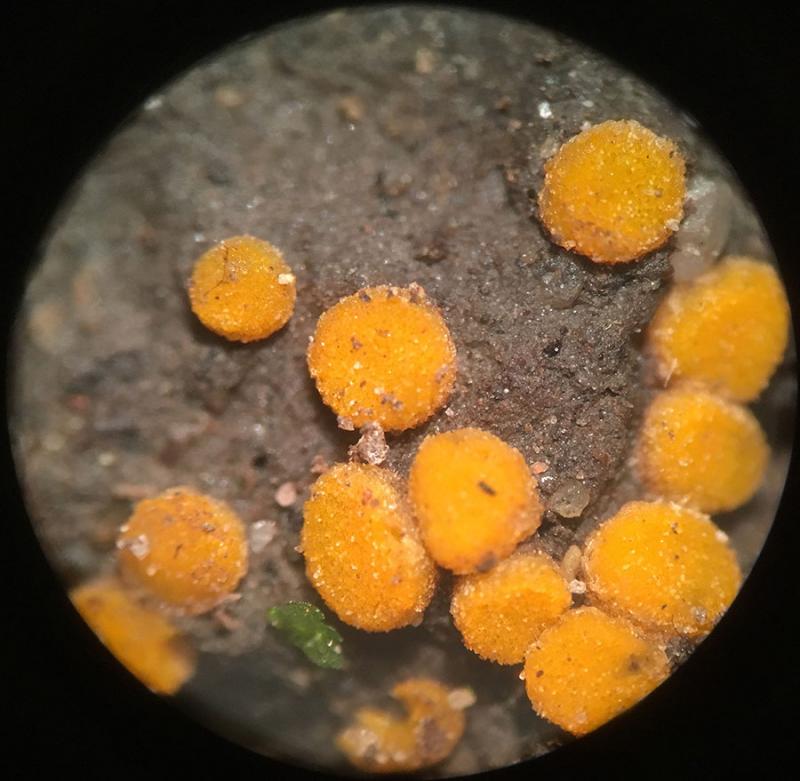
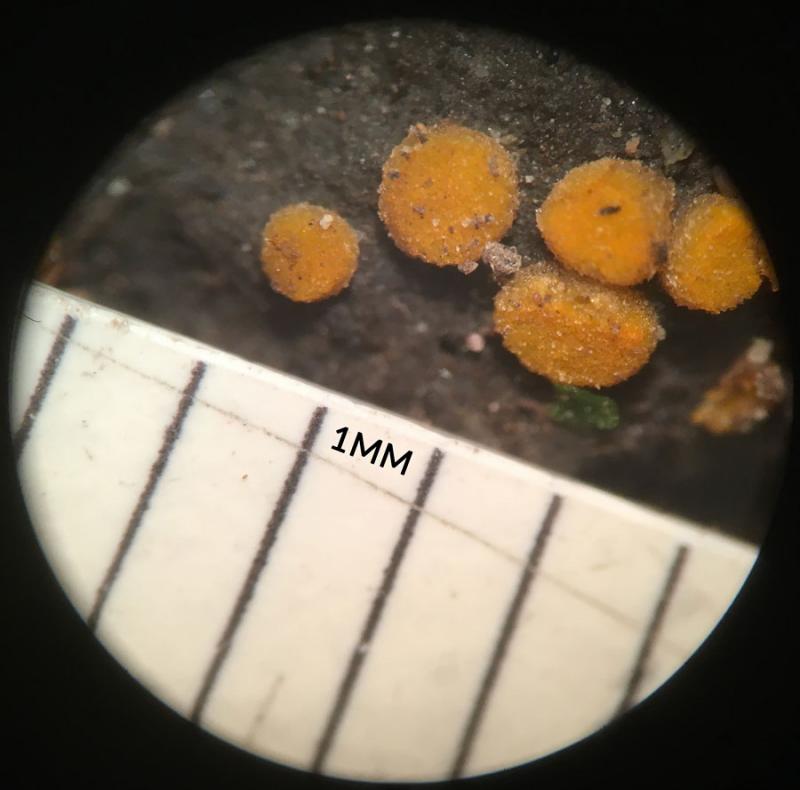
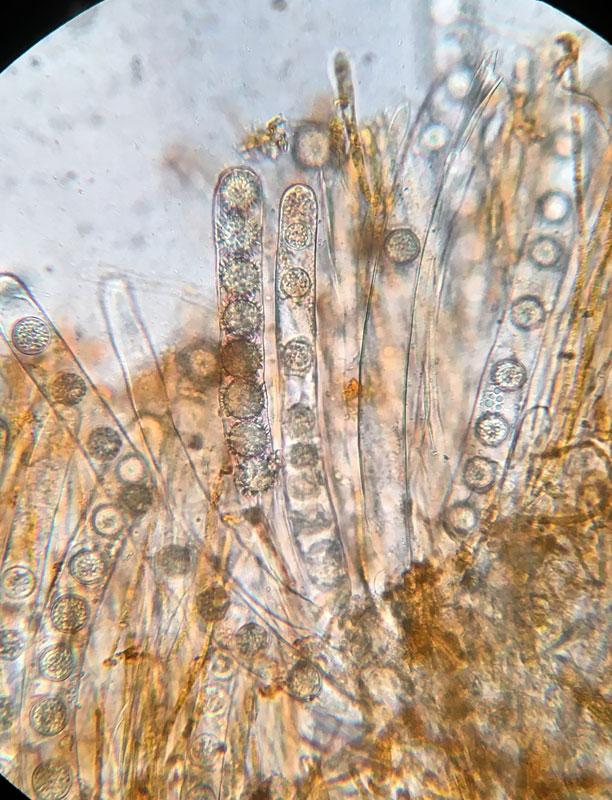
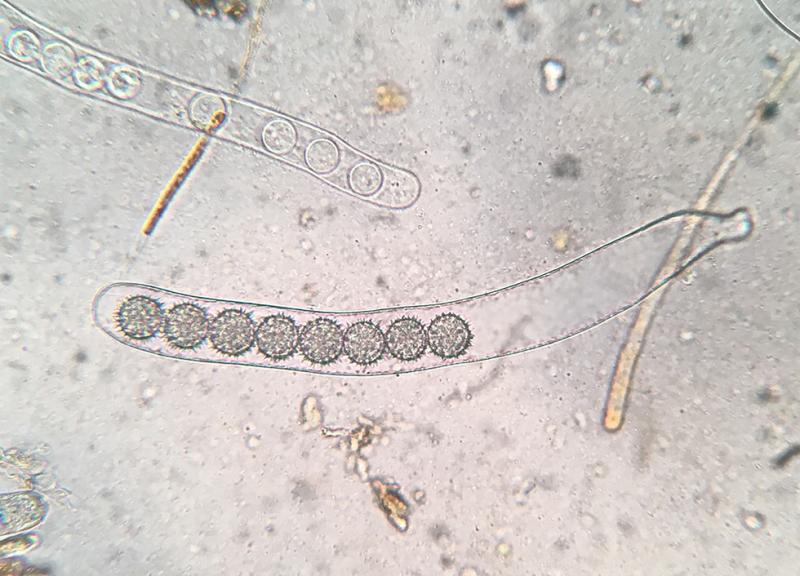
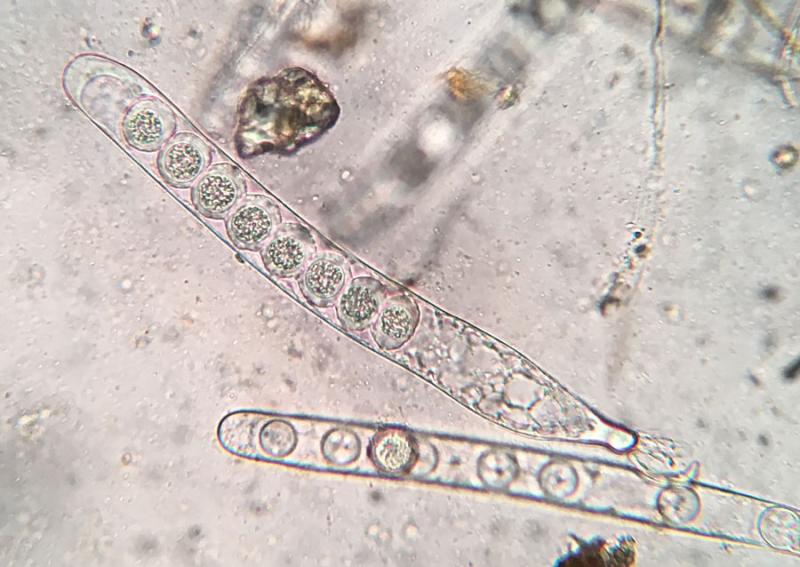
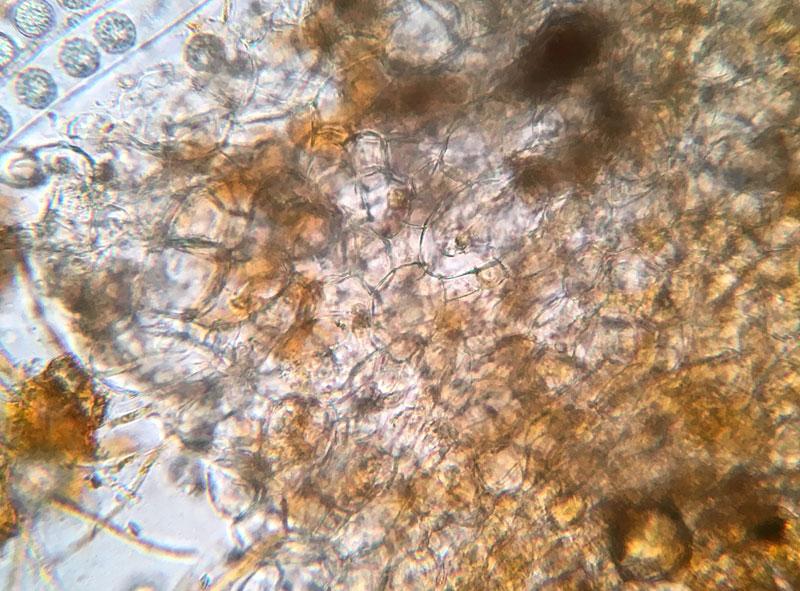
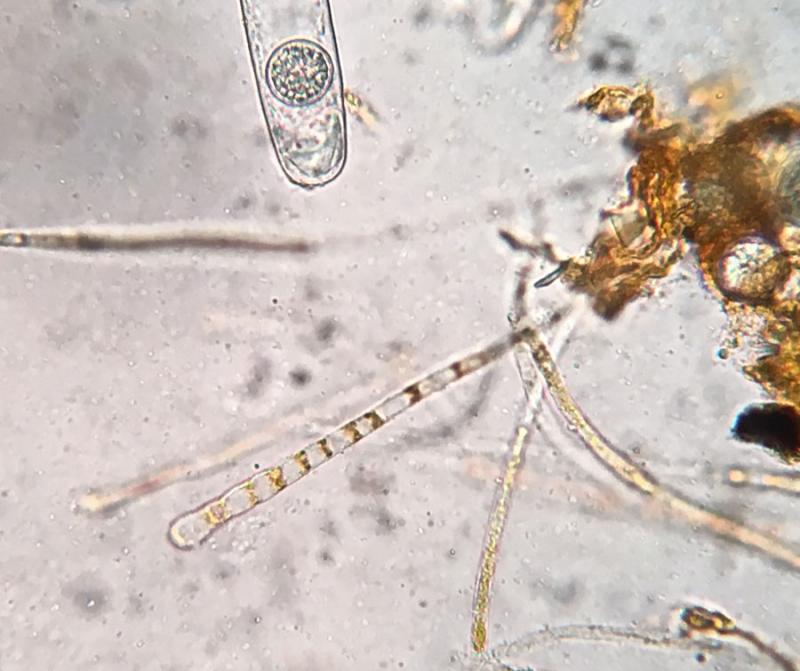

Benkert & Schumacher (1985, Agarica 6(12): 28-46) stated in their emendation that the genus Ramsbottomia differs from Lamprospora in not being bryoparasitic, having ectal excipulum of t. globulosa or globuulosa-angularis, and having smooth margin (not crenulate / frayed like Lamprospora). I don't know if there are any molecular data on the Ramsbottomia-Lamprospora relationship.
There should be short and thick thin-walled hyphoid hairs on the receptacle, either hyaline or light brown. If the latter, you might compare R. lamprosporoidea too (if you acknowledge it as good species and not a synonym of R. asperior). I haven't seen yet the spore sheath to survive to their maturity, usually it disappears sooner. Some Scutellinias have similar one - S. trechispora or legaliae.
It's a very nice genus, I'm always glad when I find it, but I think it needs some molecular work to clarify how many species there actually are (2, 3, or 4, in different authors' concepts) and how to distinguish asperior from crechqueraultii (is the primary character ornamentation height or less globose shape?).
Viktorie
Best wishes,
Gernot