
01-05-2026 22:45
 Thierry Blondelle
Bonjour à tous, Une récolte sur bouse séchée d
28-04-2026 20:07
 Lothar Krieglsteiner
... on twig in the air at standing Ceratonia siliq
14-04-2026 05:32
Ethan CrensonHi all, A few weeks back a friend pointed out som
28-04-2026 20:33
Vitus SchäfftleinHello, I found Trochila ilicina on Ilex aquifoliu

30-04-2026 10:28
Rot BojanHello, by appearance I would say that I am dealing
27-04-2026 18:48
Tony MoverleyCollected 23rd April 2026, Norfolk, EnglandSwarms
27-04-2026 20:52
Lothar Krieglsteiner
Found on hanging tiwg of Olea europaea in dried-ou
28-04-2026 22:51
 Bernard CLESSE
Bonsoir à toutes et tous,Pourriez-vous m'aider à
29-04-2026 08:01
Lothar Krieglsteiner
... on twig attached to small tree of Citrus auran
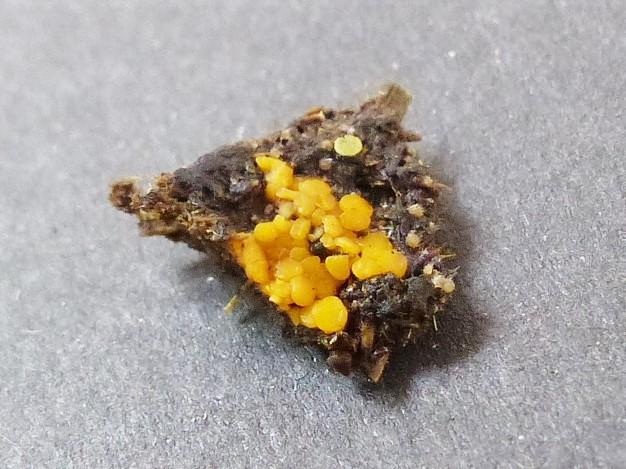
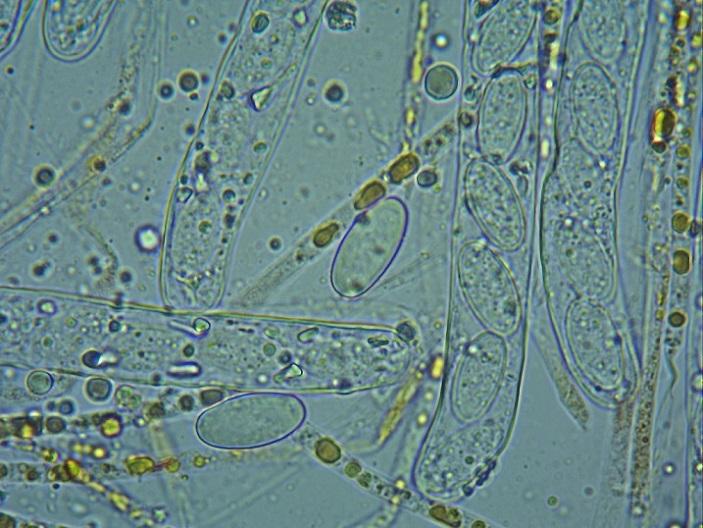
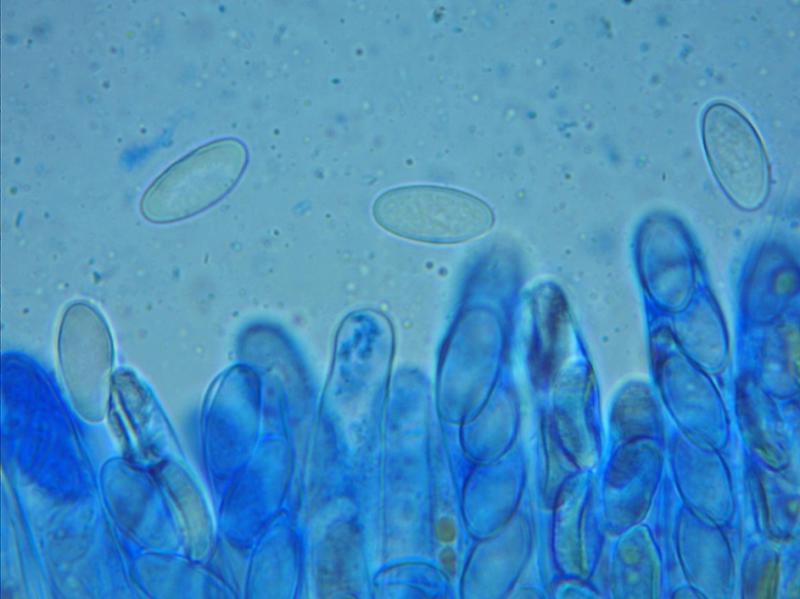
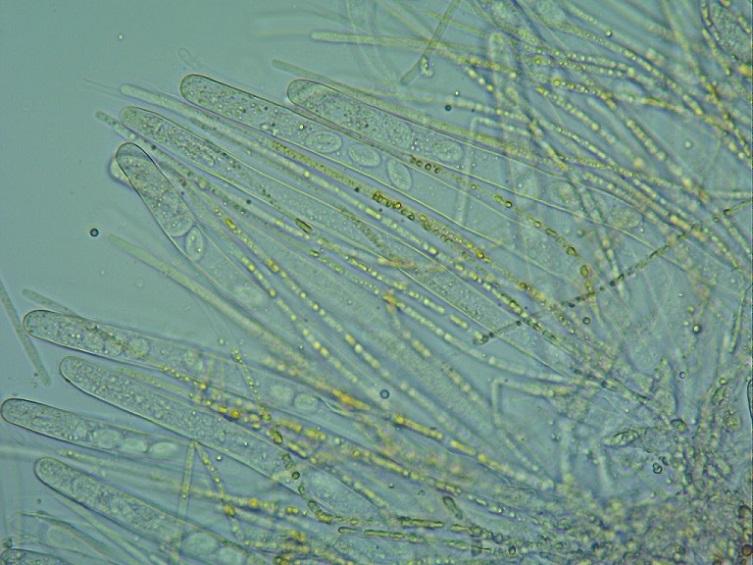
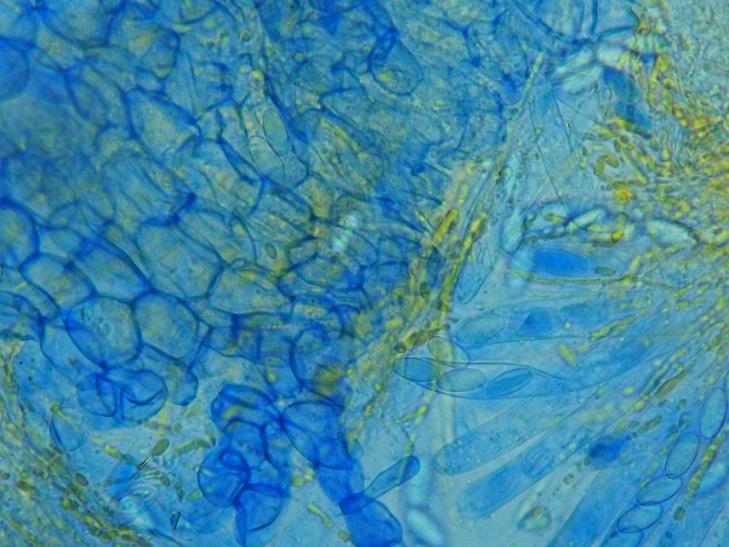
These discs (max.diameter 1 mm) were found on excrements of Galloway cattle. No hairs on margin or flanks. Spores showed no ornamentation in cotton blue / lactic acid. Free spores mounted in tap water measured 15.0-18.0 x 7.4-8.9 µm. Paraphyses with yellow guttuli and maximum width at the top of 5 µm. Textura of the excipulum consisting of large more or less globose to angular cells.
Could this be Cheilymenia granulata var. elaphorum?
Jan

Jan
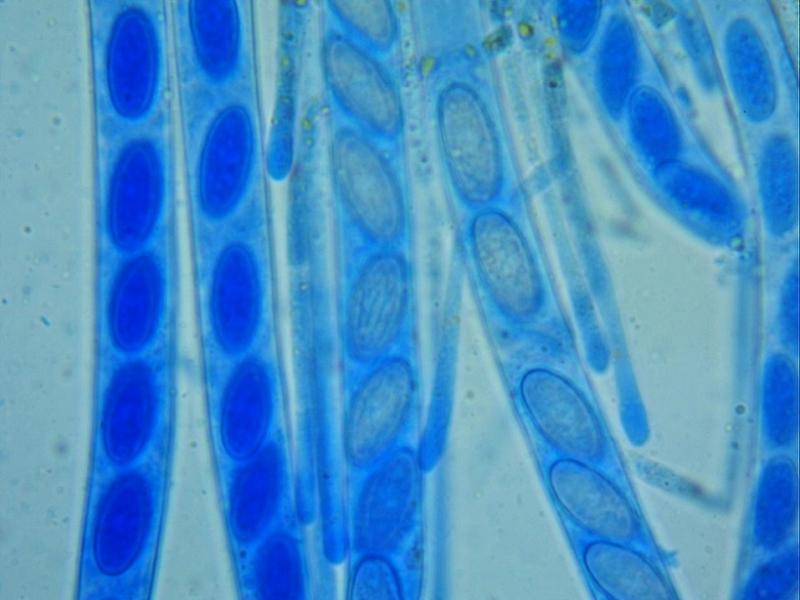

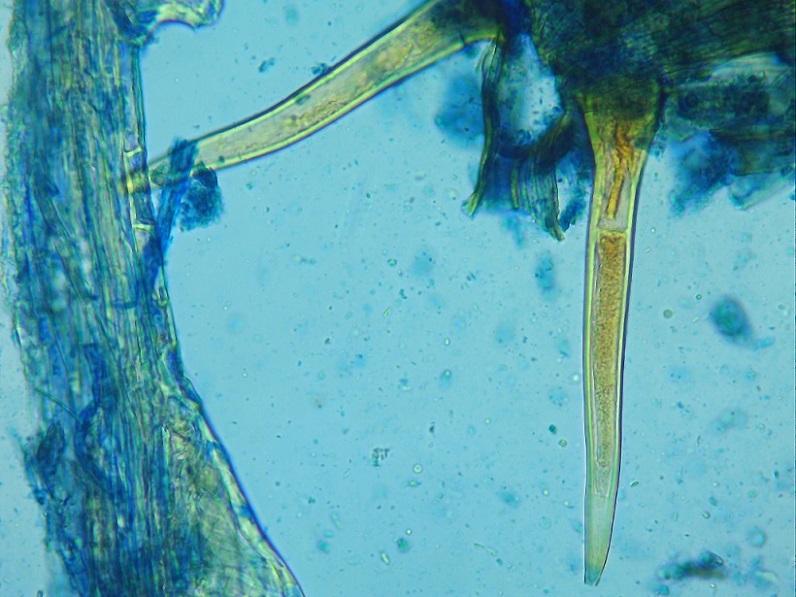
Thanks for your reply! I made five extra preparations and found four hairs in total! Very difficult to find indeed! The hairs varied in length between 65 and 305 µm.
Does this confirm C. theleboloides?
Jan

Unfortunately, I don't have the 2005 monograph, but do have access to the Mycotaxon 38, 1990 paper of Moravec. In that paper Moravec describes the hairs of C. theleboloides as: "although the latter possesses not only hyaline hyphoid hairs with a bulbous base, but also yellowish acuminate hairs with "germs" of roots. The latter consist usually of a bifurcate base of bulbous "primitive germs of roots". However, apothecia of many collections of C. theleboloides possess only hyphoid hairs and lack the acuminate yellowish hairs, or these hairs occur very rarely."
I've have searched the material once more and found two hairs of about 60 µm and similar to the ones already found, and one longer hairlike structure of about 300 µm (see pictures).
I agree with you that the illustrations on p. 463 of Moravec's paper suggest that the hairs should be septate and have a furcate base. These aspects are not visible in the hairs I've found. Could it be that the hairs do not belong to the specimen found? Or are there other options for the combination of characteristics of this specimen?
Kind regards,
Jan

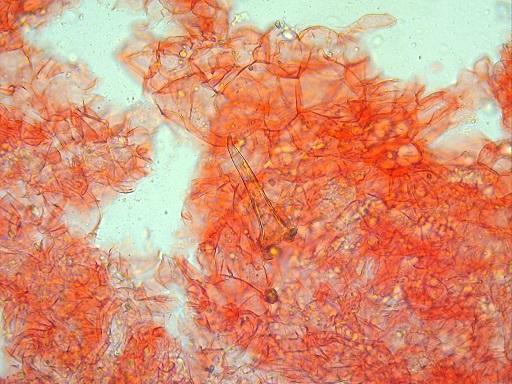
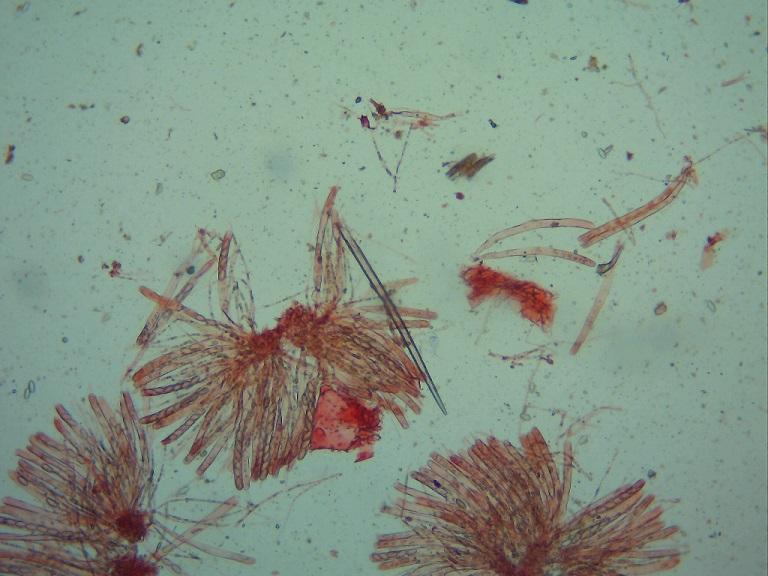
the hair do not belong in my opinion to the mushroom, likely of vegetable origin.
It would be fine, if you could send me the monograph! So, you still think C. theleboloides is the best option for this mushroom?
Kind regards,
Jan