02-05-2026 13:06
Pauline. PennaBonjour Please can someone help me with this id
02-05-2026 12:42
Alain BRISSARDBonjour à tousJeuidi 30 avril dernier on m'a remi
01-05-2026 22:45
 Thierry Blondelle
Bonjour à tous, Une récolte sur bouse séchée d
28-04-2026 20:07
 Lothar Krieglsteiner
... on twig in the air at standing Ceratonia siliq
14-04-2026 05:32
Ethan CrensonHi all, A few weeks back a friend pointed out som
28-04-2026 20:33
Vitus SchäfftleinHello, I found Trochila ilicina on Ilex aquifoliu

30-04-2026 10:28
Rot BojanHello, by appearance I would say that I am dealing
27-04-2026 18:48
Tony MoverleyCollected 23rd April 2026, Norfolk, EnglandSwarms
27-04-2026 20:52
Lothar Krieglsteiner
Found on hanging tiwg of Olea europaea in dried-ou
Hysterium pulicare (?)
Ethan Crenson,
04-04-2018 16:05
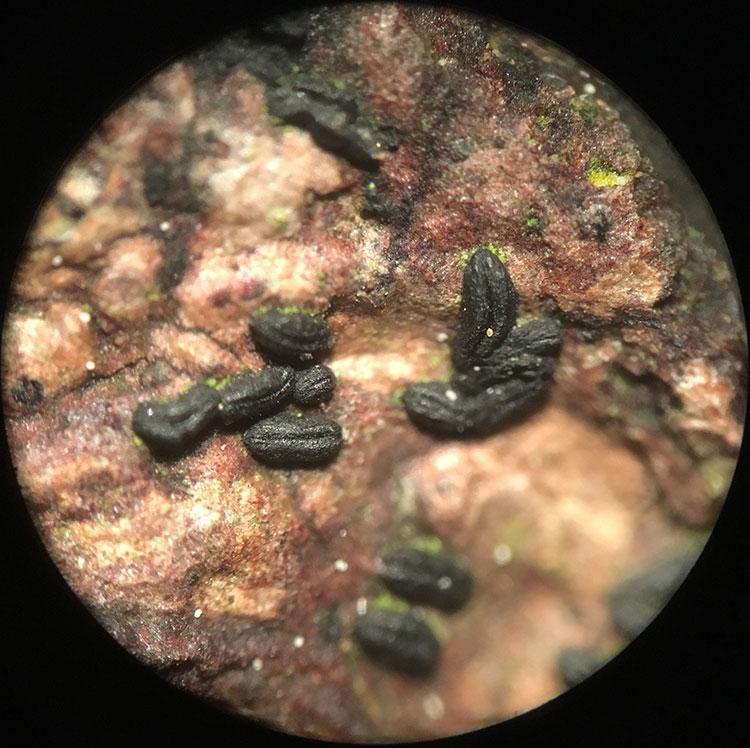
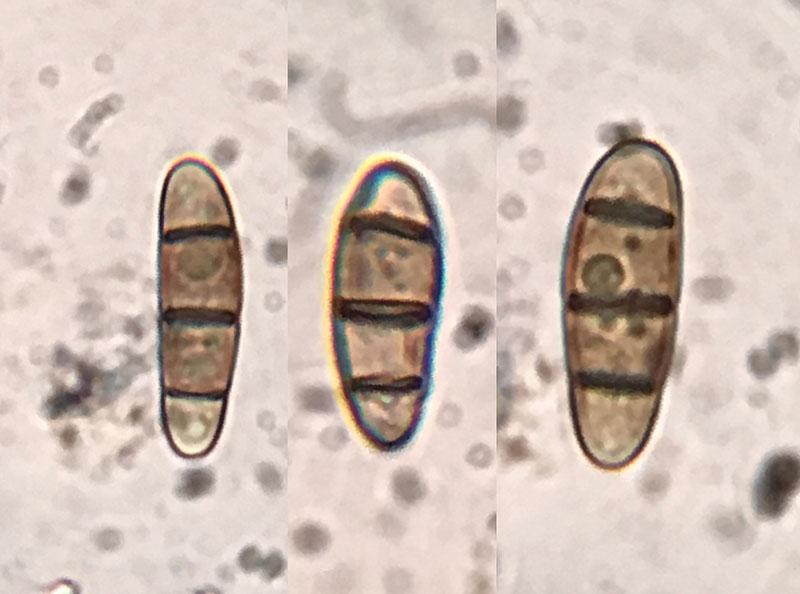
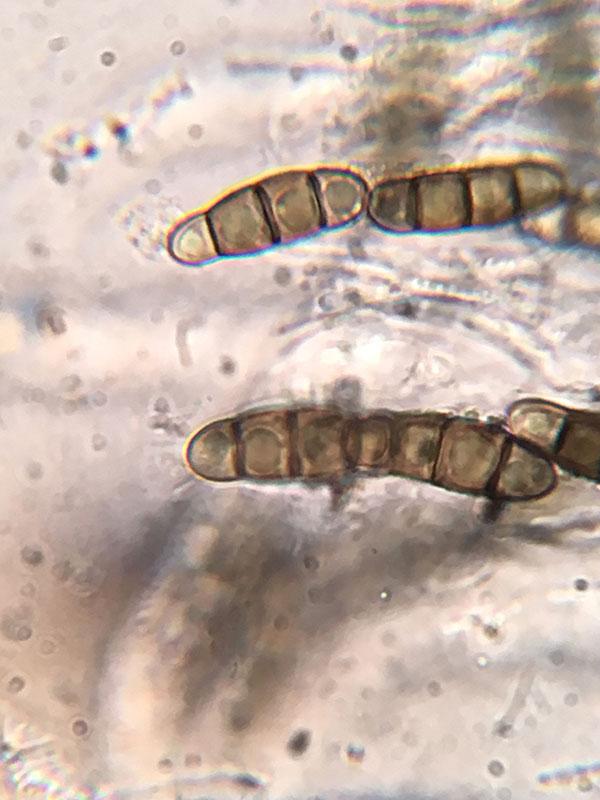
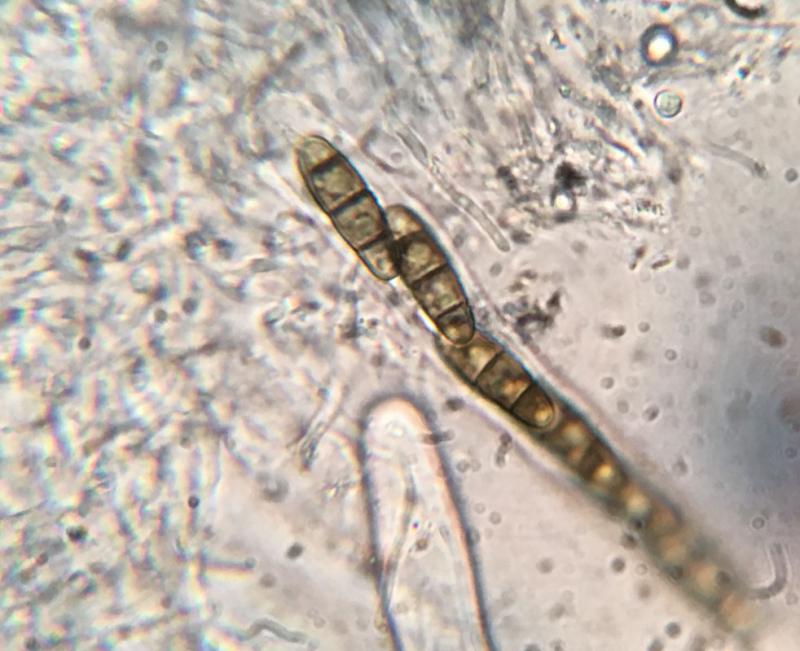
From Bronx NYC, Pelham Bay Park on Picea. Am I correct that this is Hysterium pulicare? Ascospores are brown, 3-septate, (18) 21-24 by 6-8µm. The end cells of most spores are lighter brown (a few almost hyaline) than the median cells.
The difference between H. angustatum and H. pulicare in Boehm's key depends on this feature: "terminal cell mainly remaining hyaline". He also writes that ~10% of ascospores of H. pulicare are typically found to be concolorous; and ~5% of ascospores of H. angustatum are found to be versicolorous.
Ascospore size for H. pulicare is worth mentioning as well. H. pulicare ascospores can reach up to 40µm in length according to Boehm and Zogg. I did not observe anything approaching 40µm.
So my questions regarding my collections boil down to: Are the end cells light enough to place it in H. pulicare? Does the absence of ascospores in the larger range (near 40µm) eliminate H. pulicare as a possibility?
Thanks in advance!