27-04-2026 20:52
 Lothar Krieglsteiner
Found on hanging tiwg of Olea europaea in dried-ou
27-04-2026 18:48
Tony MoverleyCollected 23rd April 2026, Norfolk, EnglandSwarms
27-04-2026 17:41
Lothar Krieglsteiner
.. Algarve, same leaf than the last post. The con
27-04-2026 18:05
Lothar Krieglsteiner
... still attached at standing tree. The green con
27-04-2026 17:16
Lothar Krieglsteiner
.. Algarve, moist lying.The conidiomata look like
27-04-2026 12:54
Steve ClementsBonjour. Ce petit champignon blanc résupiné et
27-04-2026 09:59
Pauline. PennaBonjour Can anyone advise me on these pycnidia fo

22-04-2026 20:54
 Enrique Rubio
Hi to everybody.This Pyrenopeziza grew in moist le
Scopinella?
Per Vetlesen,
07-01-2018 22:47
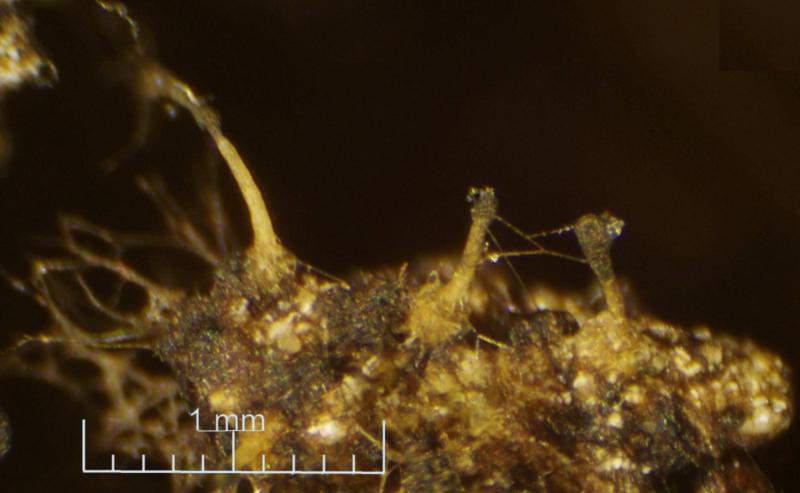
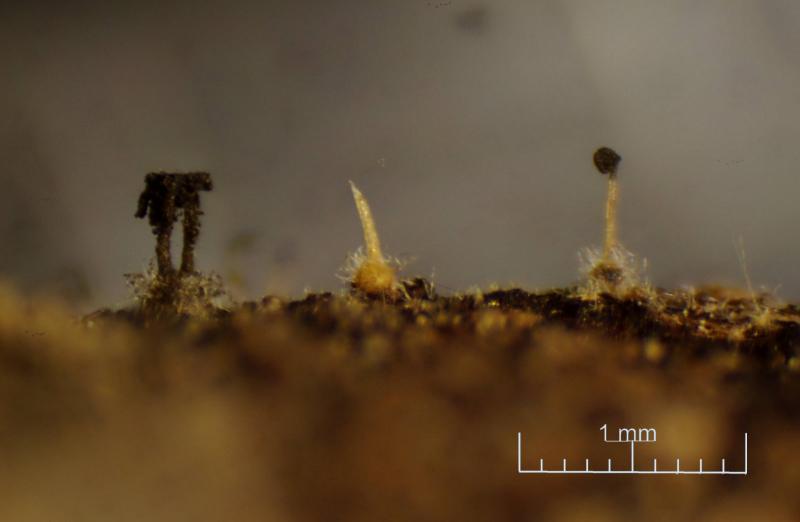
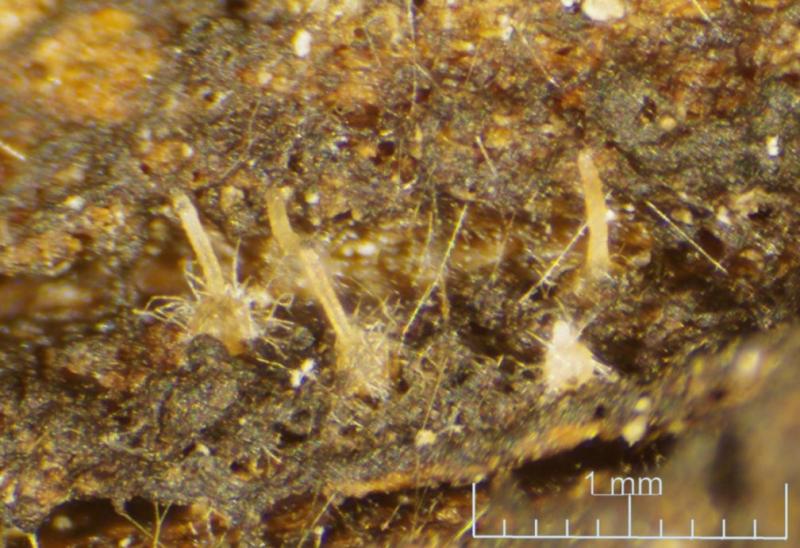
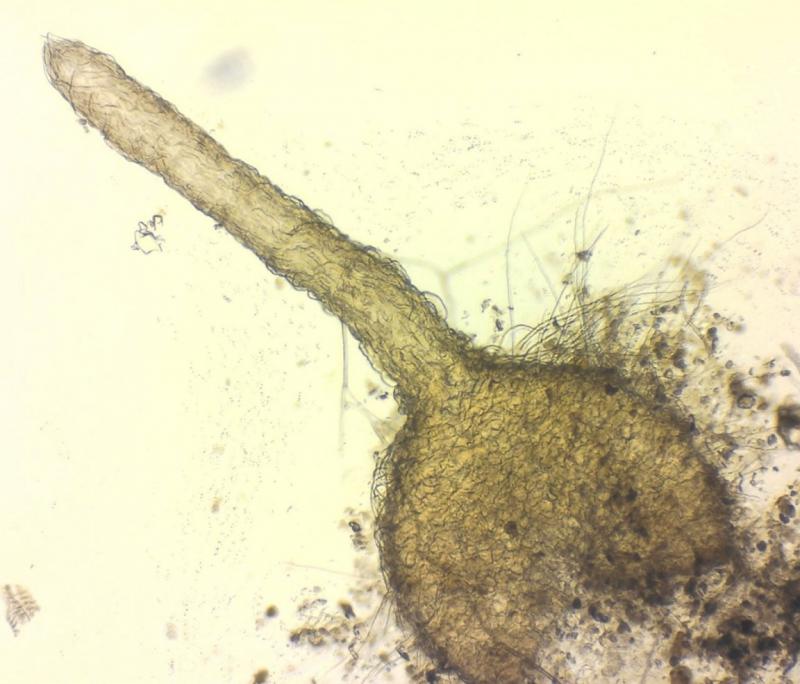
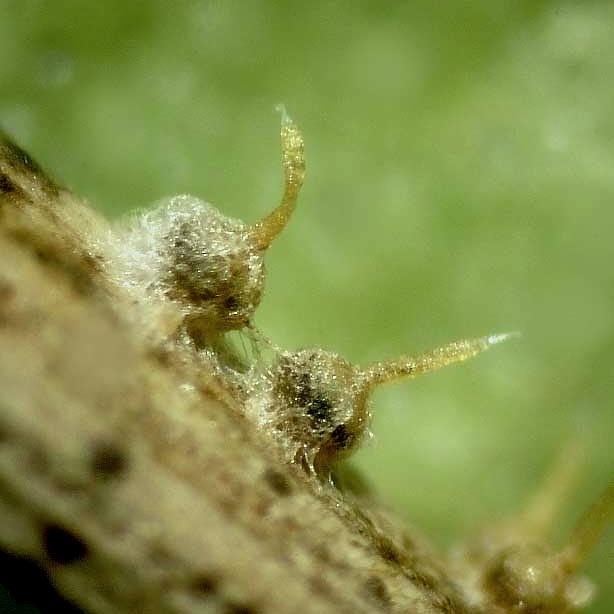
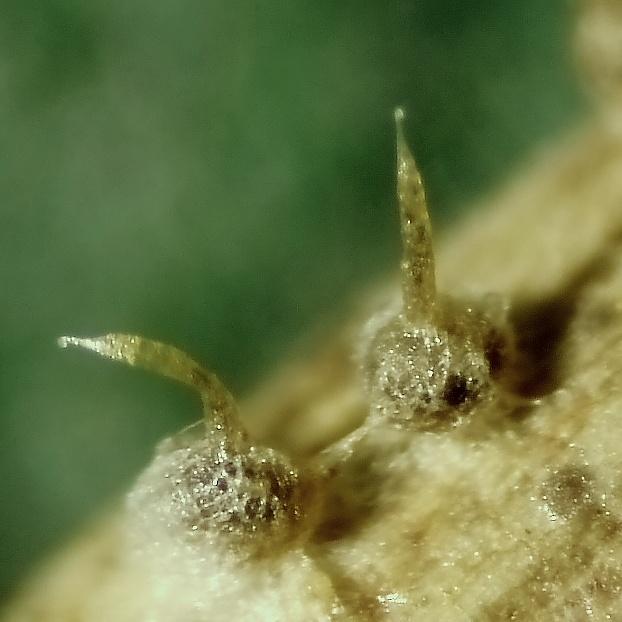
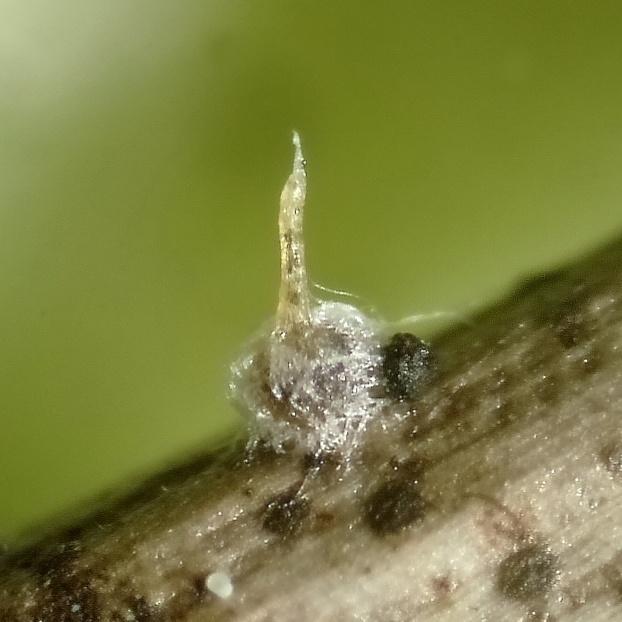
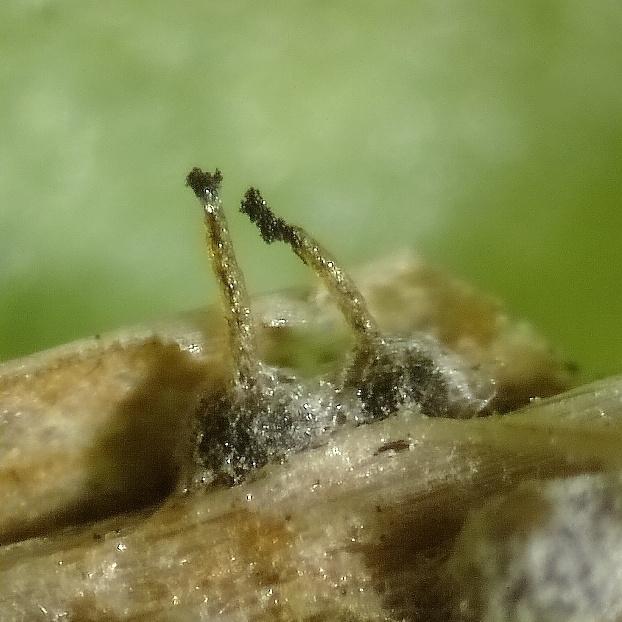
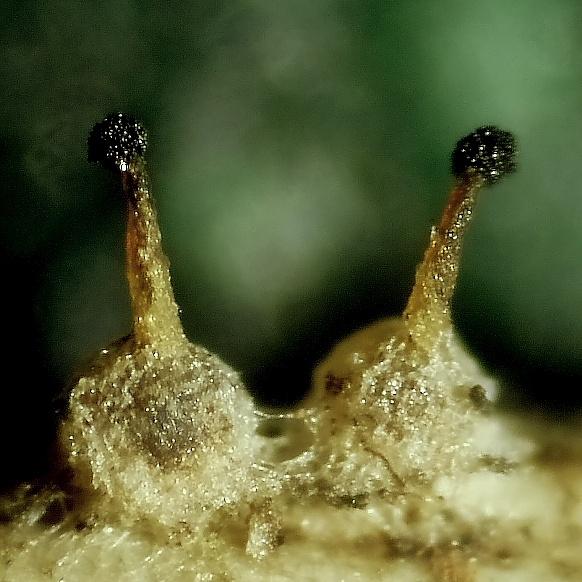
Perithecia globose D ca. 200 µm
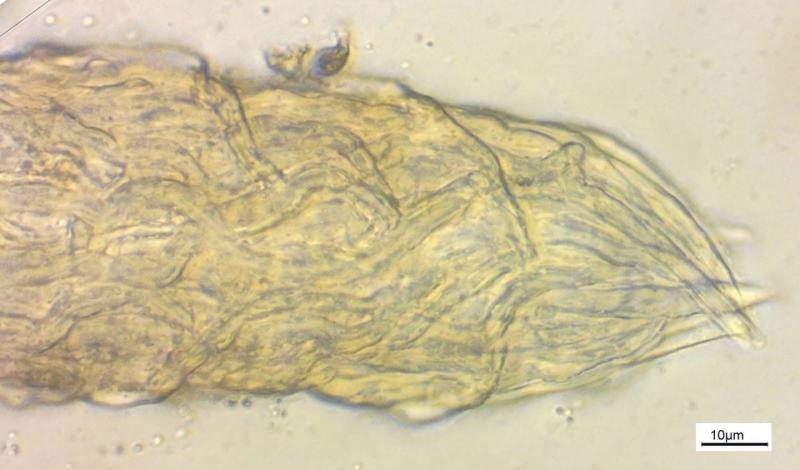
Neck 400 x 50 µm
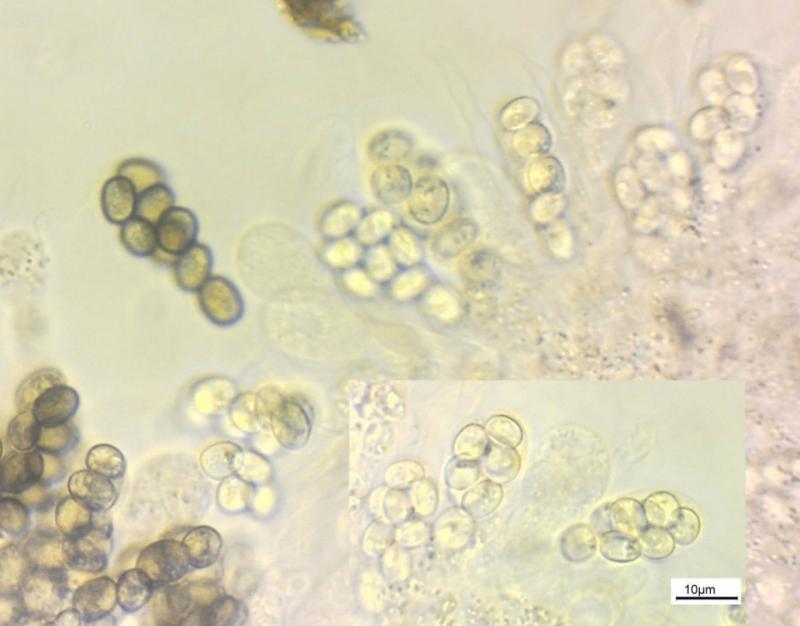
Asci about 14 x 36 µm
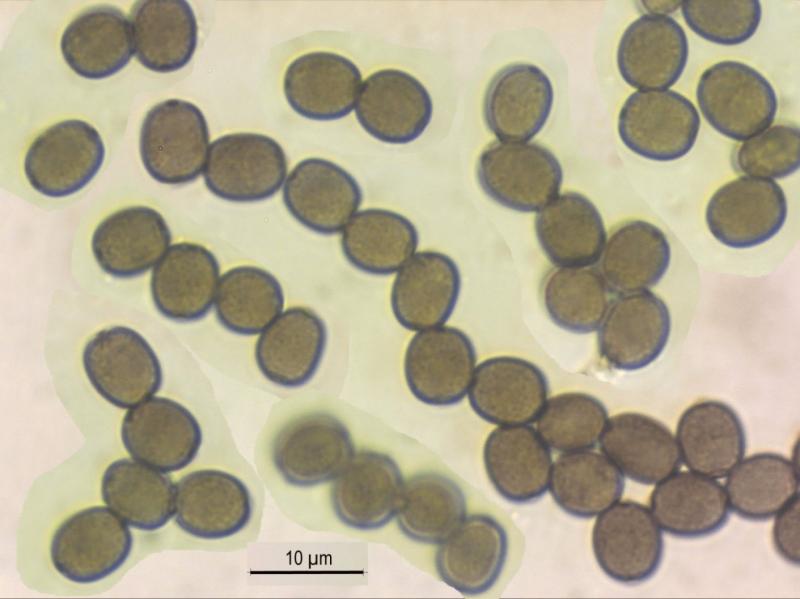
Spores (6.6) 6.8 - 7.6 (7.8) × (4.9) 5.4 - 6.3 (6.5) µm; Q = (1.1) 1.13 - 1.3 (1.5) ; N = 22; Me = 7.2 × 5.8 µm ; Qe = 1.2
Is it a Scopinella or another genus?
Thanks in advance for any suggestions and help.
Regard
Per
David Malloch,
08-01-2018 15:29

Re : Scopinella?
Dear Per,
Check Melanospora chionea. That species is usually on dead pine needles, but I think it may also be found on other pine materials.
Dave
Check Melanospora chionea. That species is usually on dead pine needles, but I think it may also be found on other pine materials.
Dave
Peter Püwert,
08-01-2018 16:53

Re : Scopinella?
Hi,
here is a very good representation of this species.
Greetings Peter.
https://www.pilzforum.eu/board/thema-melanospora-chionea?highlight=Melanospora
here is a very good representation of this species.
Greetings Peter.
https://www.pilzforum.eu/board/thema-melanospora-chionea?highlight=Melanospora
Per Vetlesen,
09-01-2018 12:16
Re : Scopinella?
Hi David and Peter,
Thank you very much for your suggestions!
Yes it must be a Melanospora.
But it differs from the description of M chionea, perithecia and spores are smaller, and I have not seen a flattened side on the spores.
The spores looks much like the one presented here: https://www.bio-forum.pl/messages/33/304016.html , but that one is "4-spored".
But I cannot find any species that fits better and I will call it Melanospora sp or Melanospora cf. chionea for the time being.
All the best
Per
Thank you very much for your suggestions!
Yes it must be a Melanospora.
But it differs from the description of M chionea, perithecia and spores are smaller, and I have not seen a flattened side on the spores.
The spores looks much like the one presented here: https://www.bio-forum.pl/messages/33/304016.html , but that one is "4-spored".
But I cannot find any species that fits better and I will call it Melanospora sp or Melanospora cf. chionea for the time being.
All the best
Per
Peter Püwert,
09-01-2018 13:54
Re : Scopinella?
Hi Per,
have you
Cannon & Hawksworth, 1982, A re-evaluation of MELANOSPORA.....Bot. Journ. ?
Greetings Peter.
have you
Cannon & Hawksworth, 1982, A re-evaluation of MELANOSPORA.....Bot. Journ. ?
Greetings Peter.
Per Vetlesen,
09-01-2018 19:36
Re : Scopinella?
Hi Peter,
Yes I have got that paper........
Hilsen
Per
Yes I have got that paper........
Hilsen
Per
Peter Püwert,
09-01-2018 21:42
Re : Scopinella?
Hi Per,
if I look there at the data with M. chionea, nevertheless, your finding could also belong to it. Or have I overlooked there something or have interpreted not correctly?
Greetings Peter.
if I look there at the data with M. chionea, nevertheless, your finding could also belong to it. Or have I overlooked there something or have interpreted not correctly?
Greetings Peter.
Per Vetlesen,
10-01-2018 10:12
Re : Scopinella?
Hi Peter,
You are right; the sizes of the spores and the perithecia are inside the lowest measurement given in the description. It is M chionea.
Thank you for helping and guiding me!
Hilsen
Per
You are right; the sizes of the spores and the perithecia are inside the lowest measurement given in the description. It is M chionea.
Thank you for helping and guiding me!
Hilsen
Per
Björn Wergen,
06-04-2026 23:43

Re : Scopinella?
Hi Per,
I am currently reading into Scopinella and found this topic.
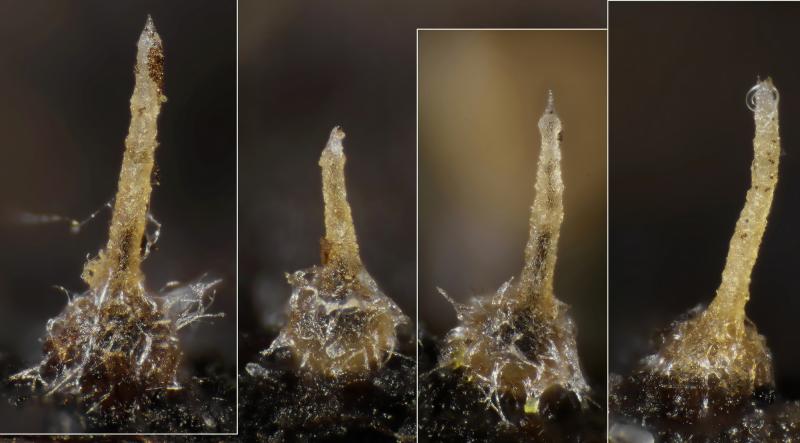
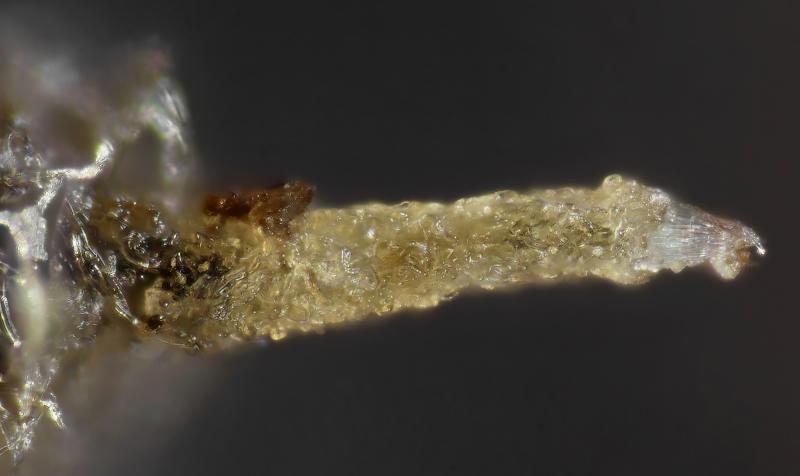
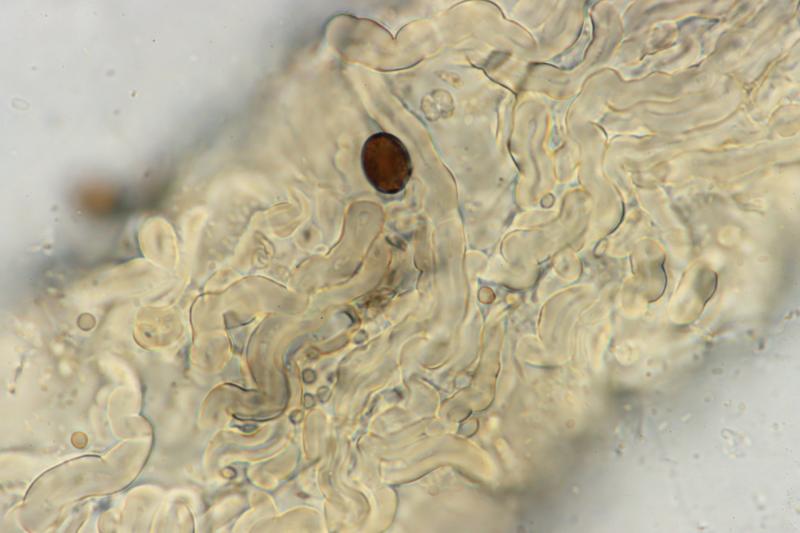
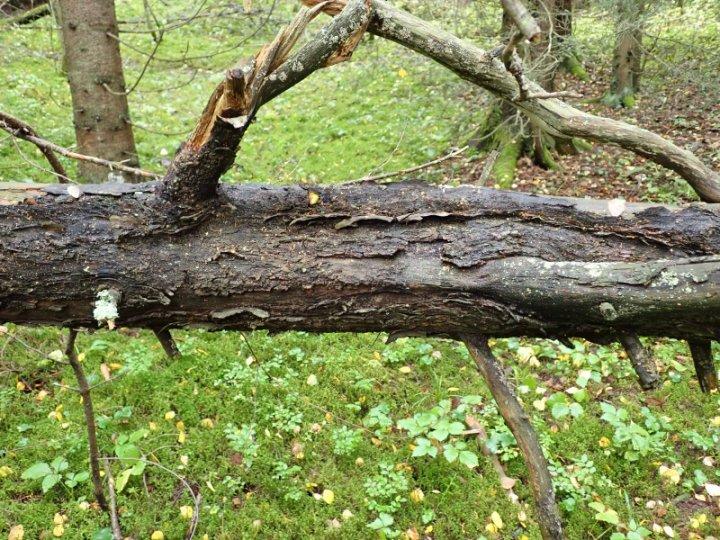
Your species is undescribed, I have found the same on Pinus sylvestris, likely on resin wounds. See attached photos.
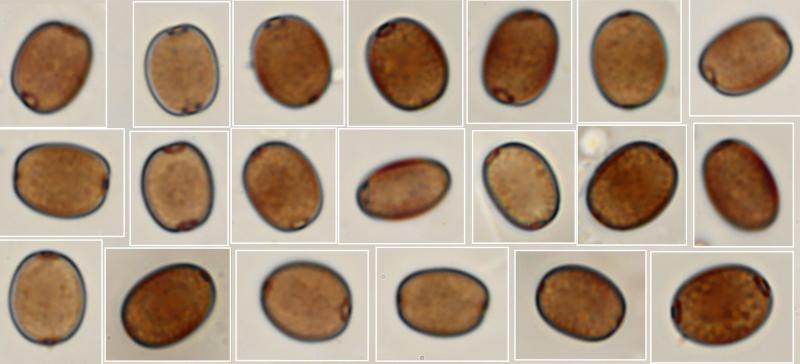
spores: (7.1) 7.4 - 7.9 (8.3) × (5.4) 5.5 - 6.1 (6.3) x 4.4 - 5.2 µm.
It differs from M. chionea by the spore size and especially by the spore shape. Possibly also by the special habitate.
regards
björn
I am currently reading into Scopinella and found this topic.
Your species is undescribed, I have found the same on Pinus sylvestris, likely on resin wounds. See attached photos.
spores: (7.1) 7.4 - 7.9 (8.3) × (5.4) 5.5 - 6.1 (6.3) x 4.4 - 5.2 µm.
It differs from M. chionea by the spore size and especially by the spore shape. Possibly also by the special habitate.
regards
björn