
27-04-2026 20:52
 Lothar Krieglsteiner
Found on hanging tiwg of Olea europaea in dried-ou
27-04-2026 18:48
Tony MoverleyCollected 23rd April 2026, Norfolk, EnglandSwarms
27-04-2026 17:41
Lothar Krieglsteiner
.. Algarve, same leaf than the last post. The con
27-04-2026 18:05
Lothar Krieglsteiner
... still attached at standing tree. The green con
27-04-2026 17:16
Lothar Krieglsteiner
.. Algarve, moist lying.The conidiomata look like
27-04-2026 12:54
Steve ClementsBonjour. Ce petit champignon blanc résupiné et
27-04-2026 09:59
Pauline. PennaBonjour Can anyone advise me on these pycnidia fo

22-04-2026 20:54
 Enrique Rubio
Hi to everybody.This Pyrenopeziza grew in moist le
Scutellinia cejpii ?
Christopher Engelhardt,
26-06-2017 08:19
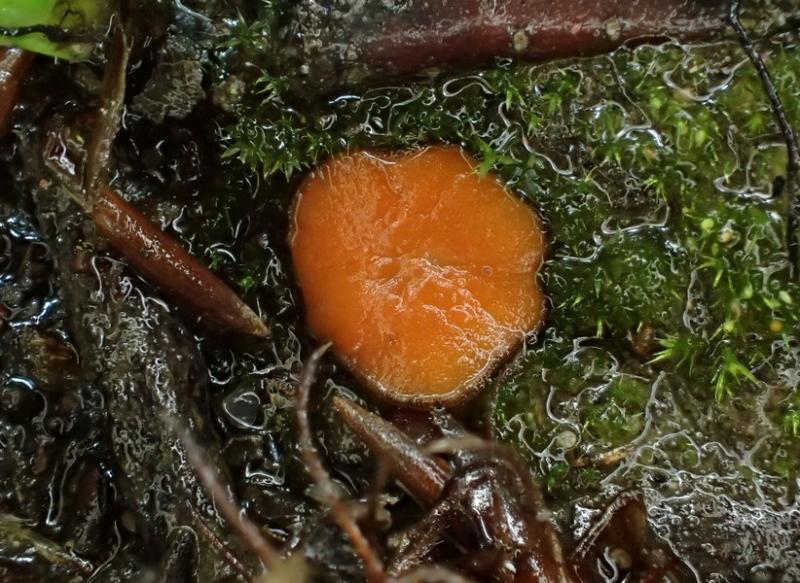
 N Germany, in a forest on bare soil, 25/06/2017.
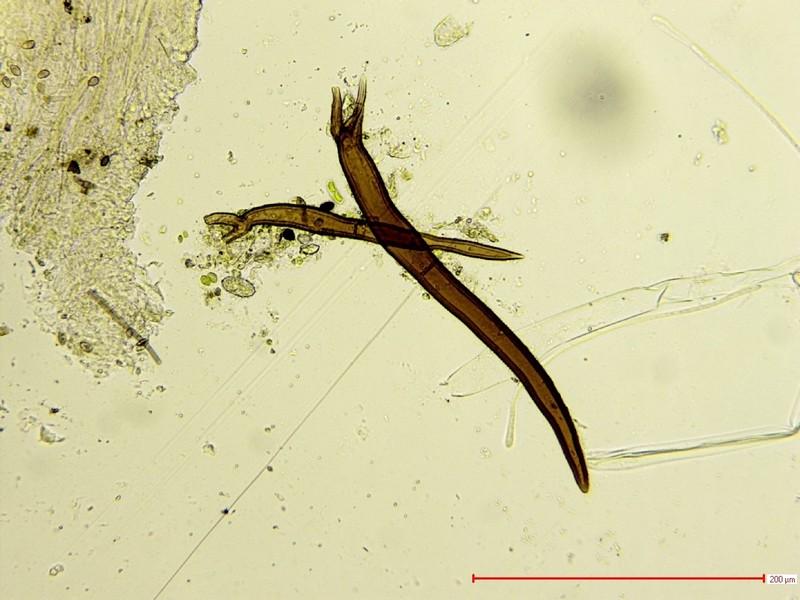
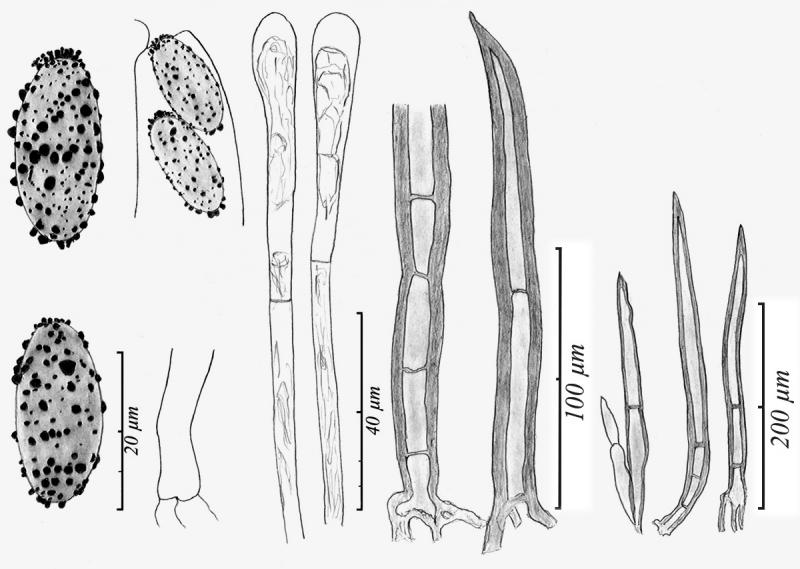
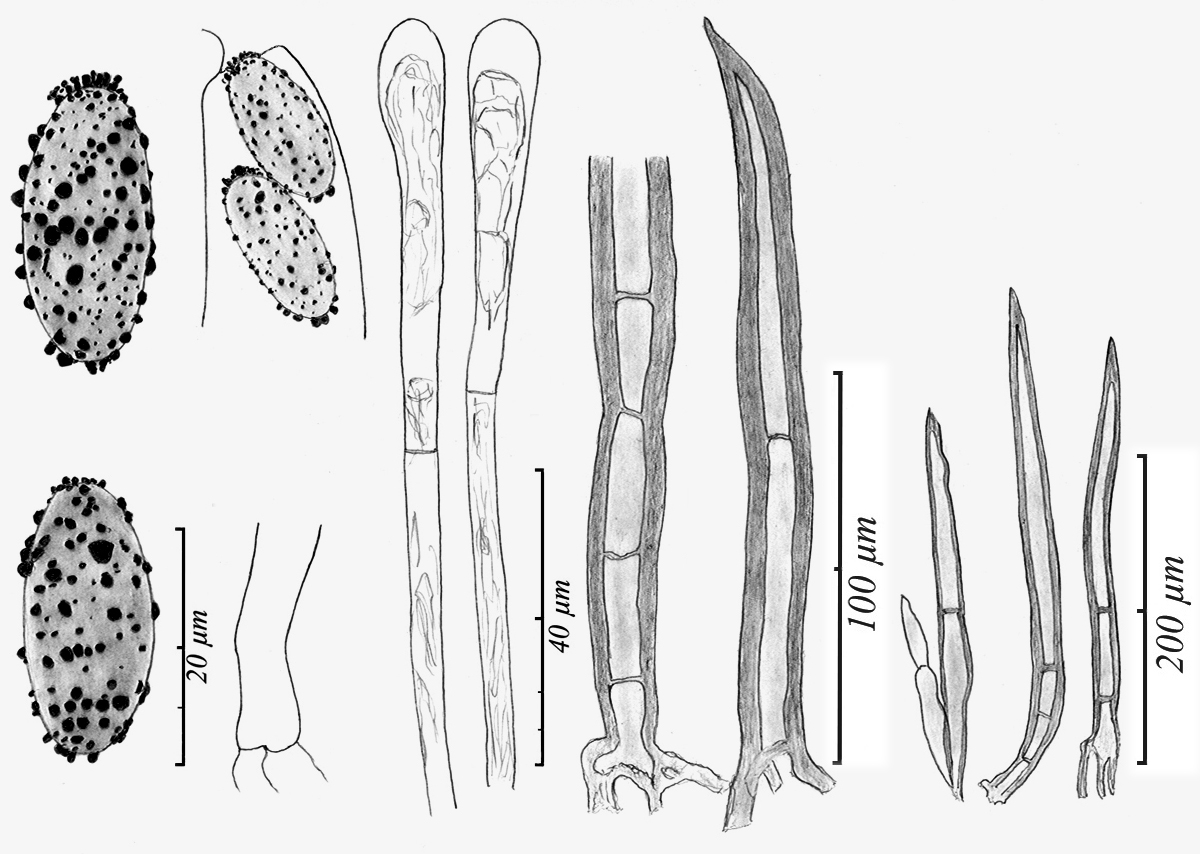
Hairs 175-350 x 14-22 µ, bifurcate, septate.
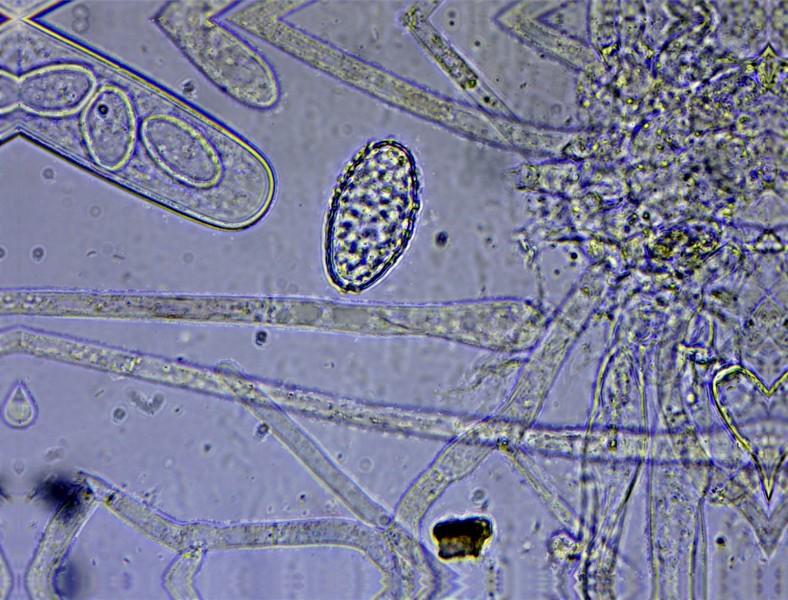
Asci around 250 µ.
Paraphyses unbranched, 3 µdiam., in the head swelling to around 8 µ.
Spores 23x13 µ, warty.
See pics.
Scutellinia cejpii ?
Thanks & regards Chris
Malcolm Greaves,
26-06-2017 10:08

Re : Scutellinia cejpii ?
Hello Chris
There are only three candidates with these narrowly ellipsoid spores. Your spore sizes look a best fit for S cejpii. Were the figures quoted an average or just based on an odd spore and was it from a spore drop or a squash as the spores can vary quite a bit after a natural release from the ascii .
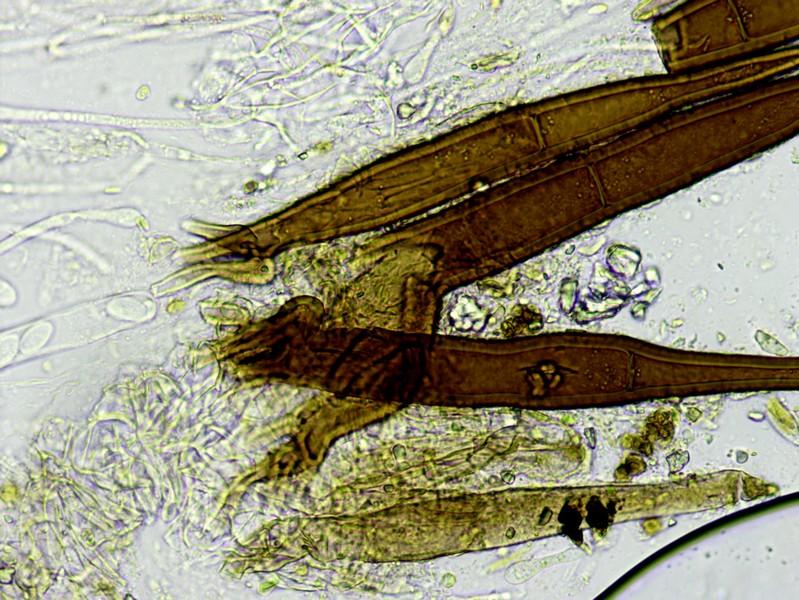
Some of the hairs however are normally broad (up to 50) with a multifurcate root. Can you check and see if there are any fitting this description.
The other thing to check for is if the outer wall of the spore is released in heated LCB.
Mal
There are only three candidates with these narrowly ellipsoid spores. Your spore sizes look a best fit for S cejpii. Were the figures quoted an average or just based on an odd spore and was it from a spore drop or a squash as the spores can vary quite a bit after a natural release from the ascii .
Some of the hairs however are normally broad (up to 50) with a multifurcate root. Can you check and see if there are any fitting this description.
The other thing to check for is if the outer wall of the spore is released in heated LCB.
Mal
René Dougoud,
26-06-2017 12:01
Re : Scutellinia cejpii ?
Cher Collègue,
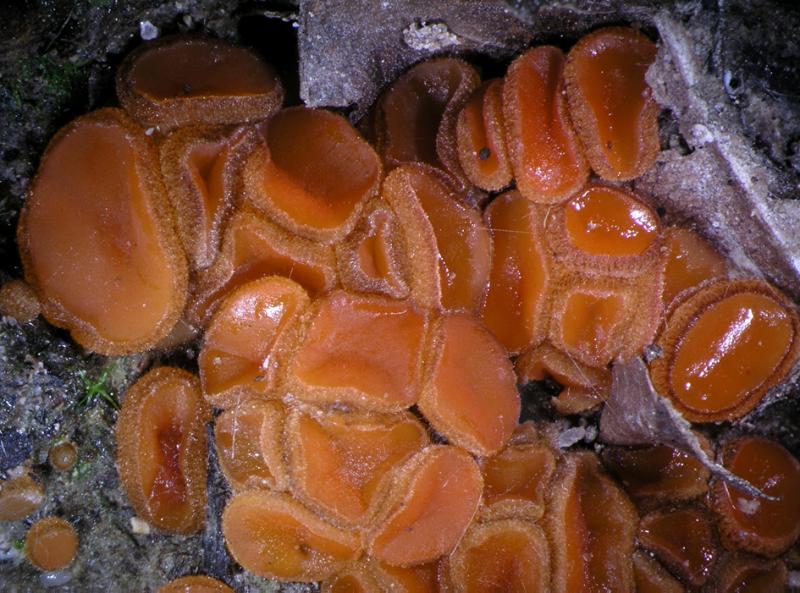
Il y aurait des choses à dire sur la façon dont vous présenter l'espèce. Certaines ont été dites dans le message de Malcolm. Voir aussi le contenu de mon message de ce jour, pour la proposition de S. scutellata.
Ceci dit, les ascospores de S cejpii, ne sont pas toutes régulièrements ellipoïdales, elles sont un peu excentrées. Ceci est un caractère typique de l'espèce. Il faut le contrôler sur sporée, dans le bleu coton. La photo de l'ascospore que vous montrez est excentrée, mais sur une unique ascospore il n'est pas possible de ce prononcer en faveur de S. cejpii.
Cordialement
René
Il y aurait des choses à dire sur la façon dont vous présenter l'espèce. Certaines ont été dites dans le message de Malcolm. Voir aussi le contenu de mon message de ce jour, pour la proposition de S. scutellata.
Ceci dit, les ascospores de S cejpii, ne sont pas toutes régulièrements ellipoïdales, elles sont un peu excentrées. Ceci est un caractère typique de l'espèce. Il faut le contrôler sur sporée, dans le bleu coton. La photo de l'ascospore que vous montrez est excentrée, mais sur une unique ascospore il n'est pas possible de ce prononcer en faveur de S. cejpii.
Cordialement
René
 Scutellinia-cejpii-M-1-0001.jpg
Christopher Engelhardt,
26-06-2017 21:43
Re : Scutellinia cejpii ?
Merci & thank you!
Here I have some hairs with mukltifurcate roots, up to 35 µ wide.
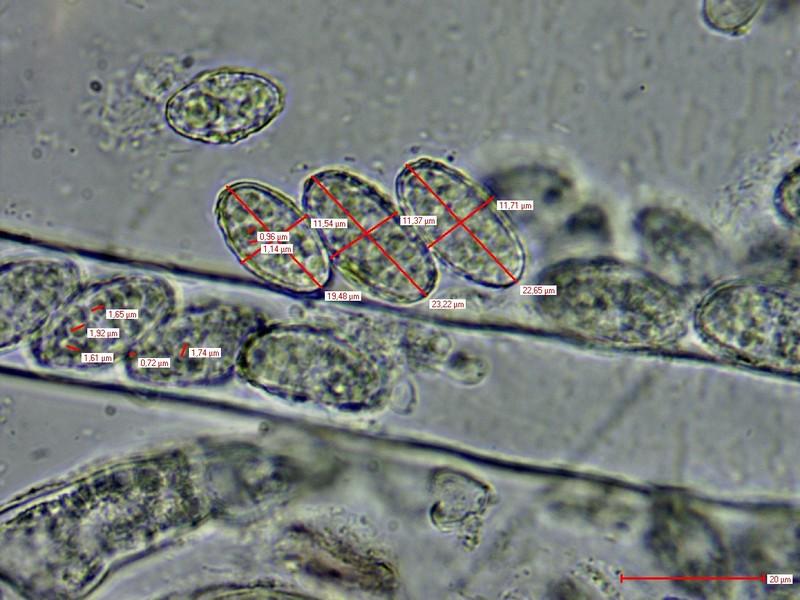
The spores I found were 18,5-23,5 x 10-11,7.
Warts irregular varying in size 0,7 - 1,9 µ.
So I'd go for cejpii.
Thanks for your advice.
Chris
Here I have some hairs with mukltifurcate roots, up to 35 µ wide.
The spores I found were 18,5-23,5 x 10-11,7.
Warts irregular varying in size 0,7 - 1,9 µ.
So I'd go for cejpii.
Thanks for your advice.
Chris
Malcolm Greaves,
27-06-2017 00:26
Re : Scutellinia cejpii ?
With that new information I would happily go with S cejpii.
Mal
Mal