
05-06-2026 12:10
 François Freléchoux
Capitotricha sp. sur Lonicea caerulea Caractères
05-06-2026 11:02
Thomas Læssøehttps://svampe.databasen.org/observations/10596691

04-06-2026 11:36
Gernot FriebesHi,found on Vaccinium myrtillus.Asci: IKI –, 8-s
19-05-2026 10:27
Patrice TANCHAUDBonjour, récolte récente sur terre retournée i
04-06-2026 18:39
Gernot FriebesHi,I collected this species in two different locat
22-05-2026 13:29
Gernot FriebesHi,I am curious to hear your opinion on this mater
04-06-2026 10:50
François Freléchoux
Bonjour, J'ai trouvé hier un petit asco observé

Bonjour,
Nous avons une Morchella dans une sablière. Comme arbres, ill n´y a que des Salix et Betula.
Est-ce que vous connaissez des Morchellas dans ces biotopes?
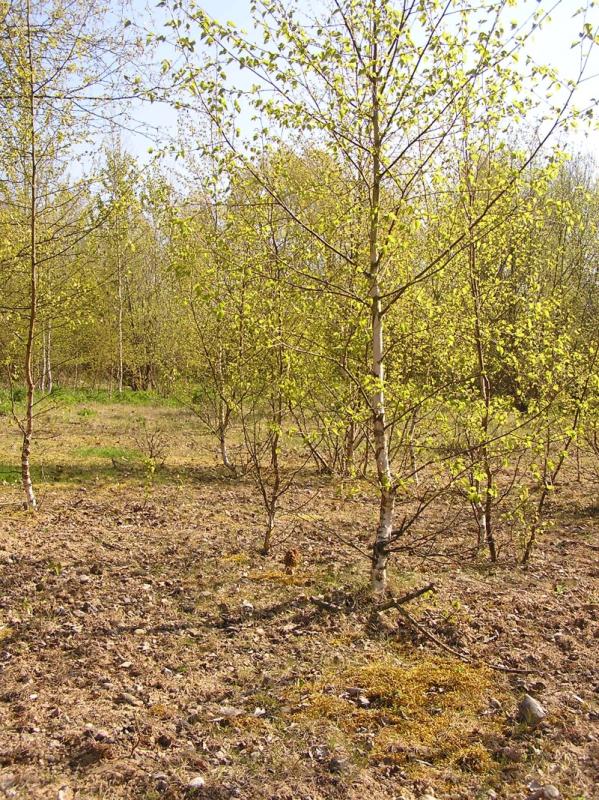
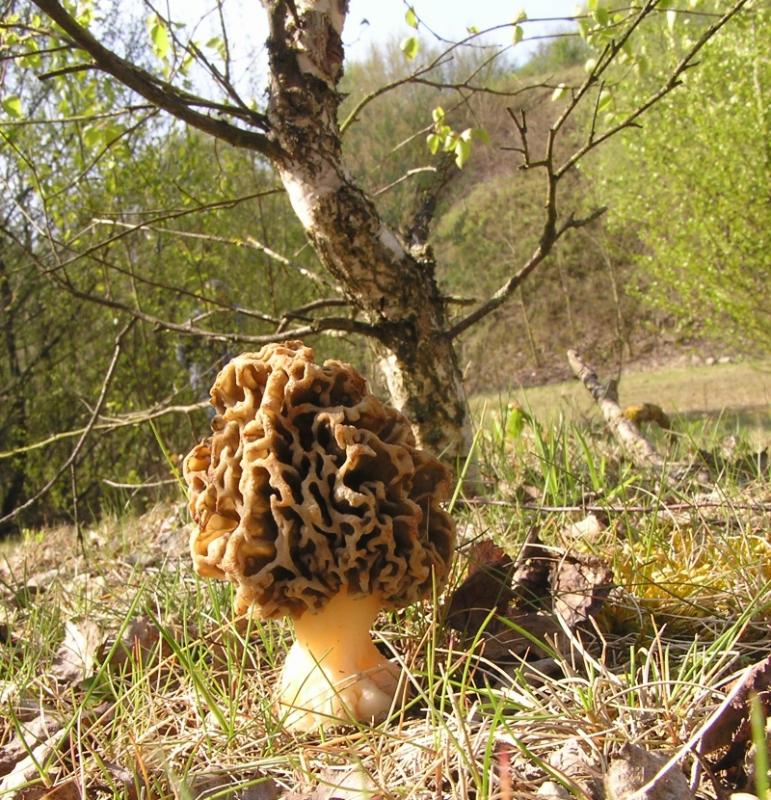
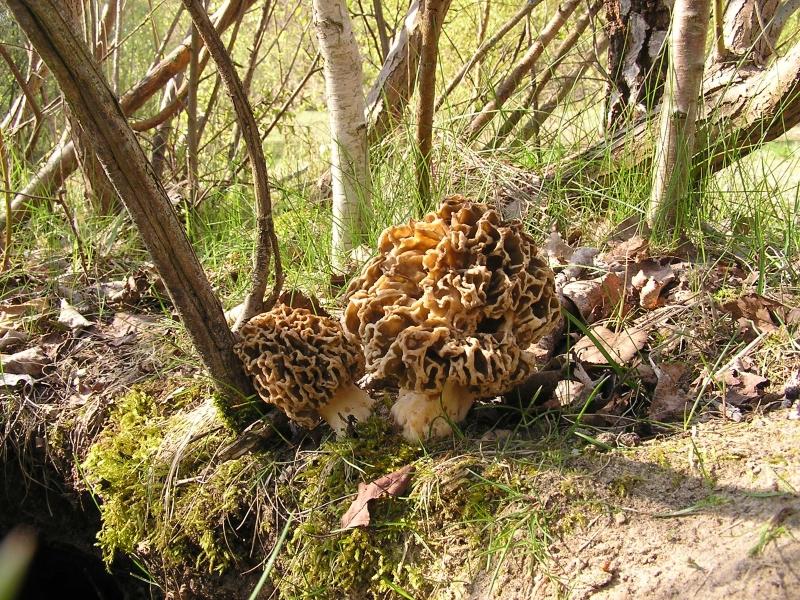

Hello Tanja,
I am not a specialist in Morchella - so please take my answer with caution.
Anyway, I think that your collection should be Morchella vulgaris - this is the form that is dealt with as M. spongiola in the paper of Kellner & al., as one of three species of the Morchella esculenta-complex growing in Central Europe. M. vulgaris is darker and longer staying dark compared with exculenta (crassipes) and americana (esculenta) - and the species with the least tree specifity (esculenta mainly growing with Fraxinus and americana with Populus). Thanks to Pierre-Arthur Moreau who gave me some information.
I am looking forward to other opinions.
Best regards from Lothar