
18-05-2026 12:43
Sylvie Le GoffBonjour à tousPuis je avoir votre aide sur ce que
19-05-2026 12:55
 Hardware Tony
After checking Gminder and Otto's library I cannot
19-05-2026 10:27
Patrice TANCHAUDBonjour, récolte récente sur terre retournée i
18-05-2026 10:13
 Lieve Deceuninck
Dear forum members,I identified this as the teleom

17-05-2026 19:05
Thomas FlammerI have found this tiny 200 ym cup shaped apothecia
17-05-2026 16:41
Margot en Geert VullingsWe found this Lachnum on an old Rubus stem.Fruitbo
05-04-2026 22:46
 Lothar Krieglsteiner
on wood of Ceratonia, Algarve, 3.4.2026.The color
15-05-2026 13:33
Sylvie Le GoffBonjour à tousJe serais très reconnaissante enve
Peziza sp
William Slosse,
07-04-2017 23:46
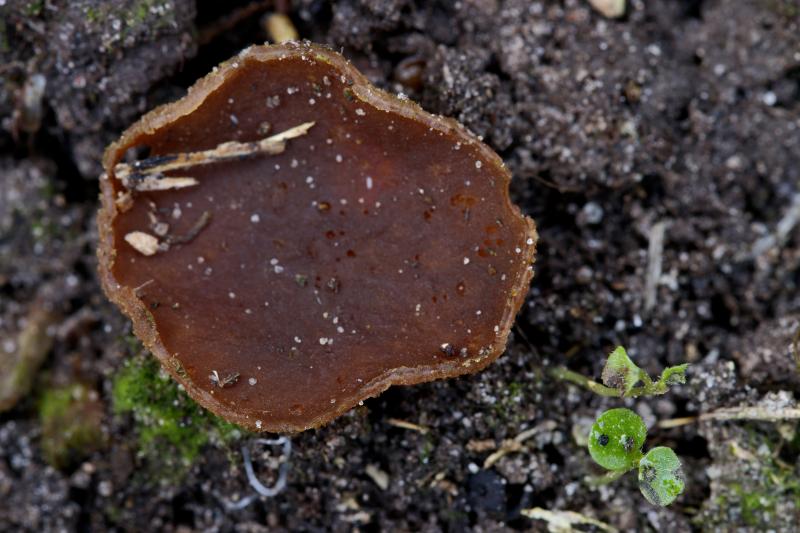
 I found this species on rich claysoil covered by a layer of dead stems of Urtica.
No stalk.
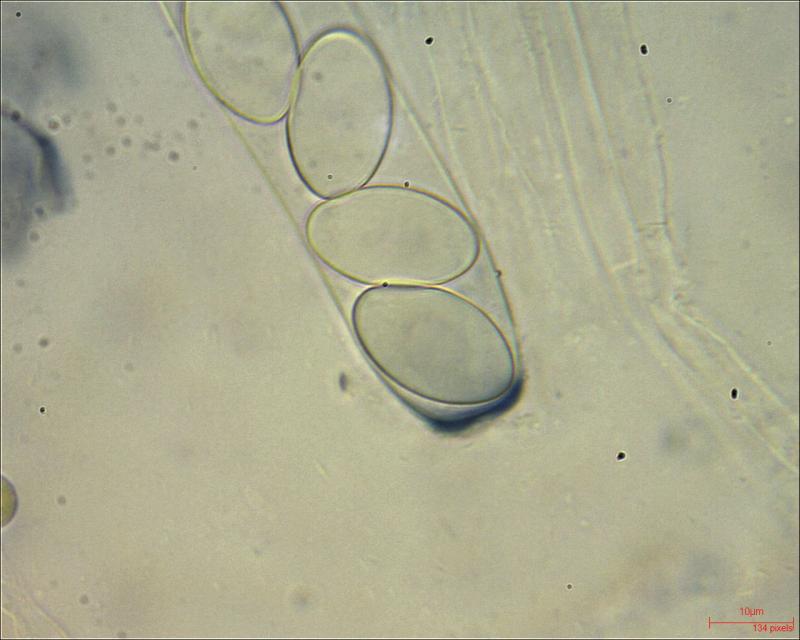
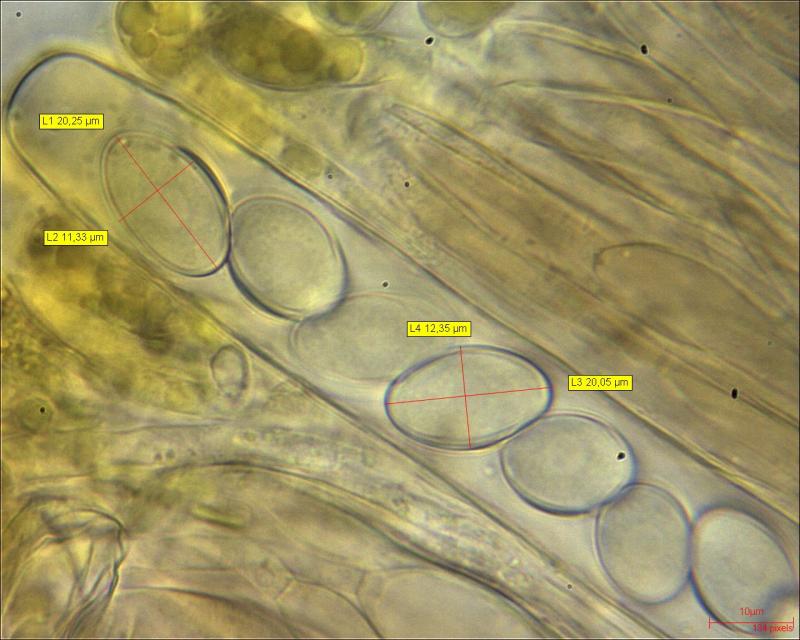
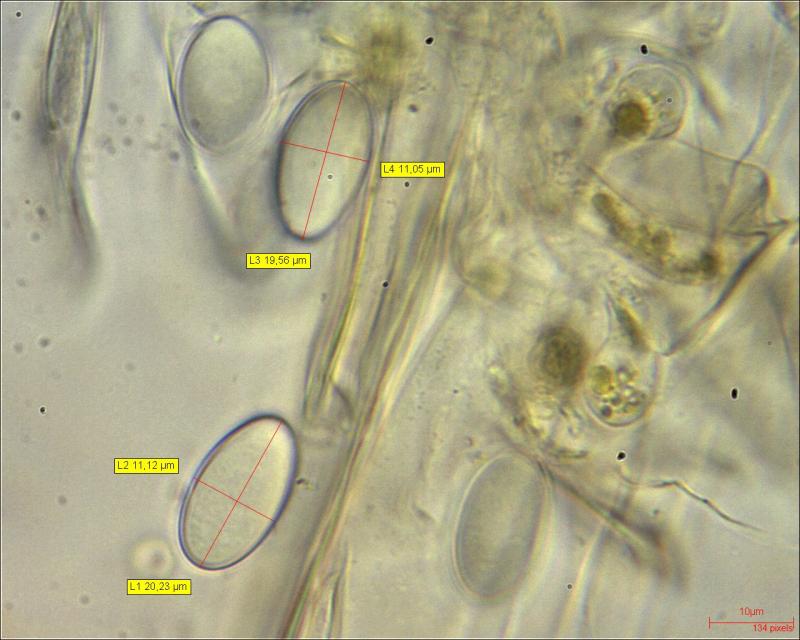
Spores 20.50 x 11.54mu
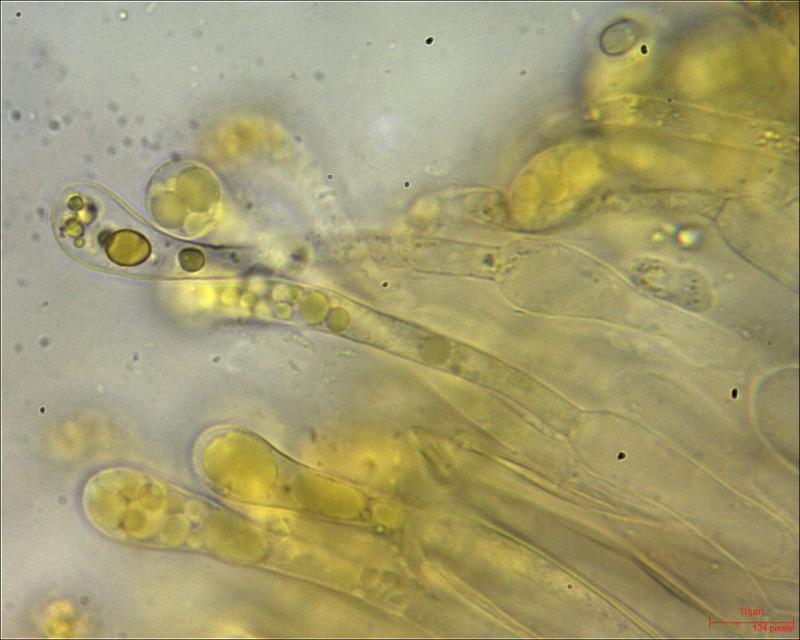
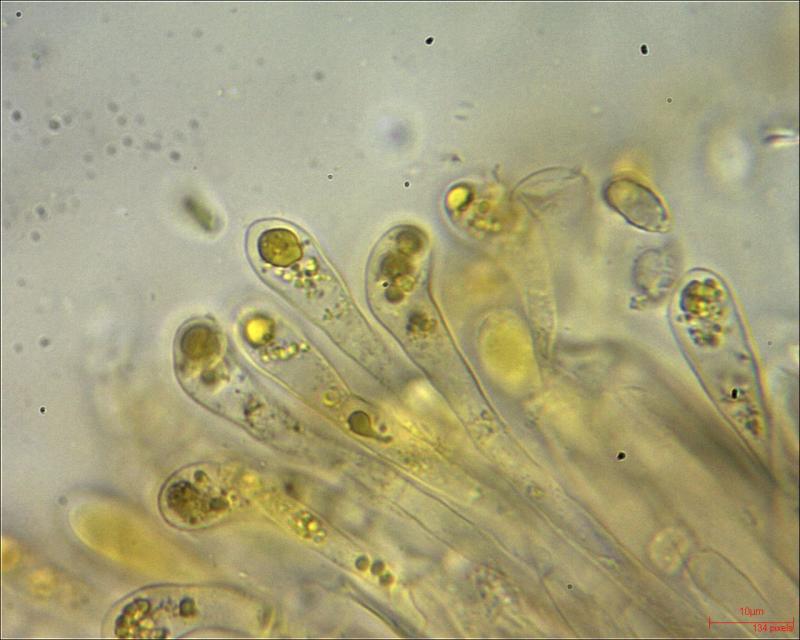
Parafyses clubshaped and filled with yellow drops (examined in water)
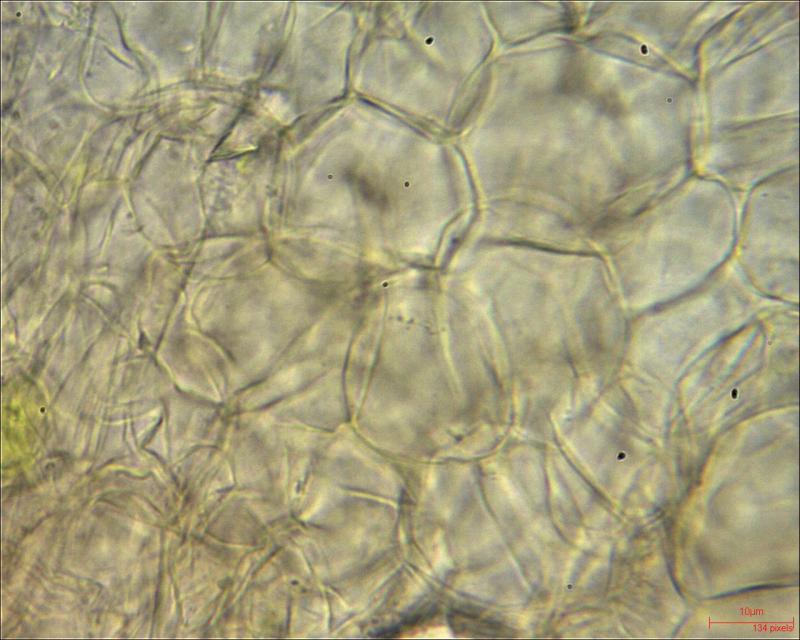
Excipulum of textura globulosa
Anyone an idea?
DirkW,
08-04-2017 00:14

Re : Peziza sp
salut william, i think this is peziza granularis Donadini.
best
dirk
best
dirk
Nicolas VAN VOOREN,
08-04-2017 11:03

Re : Peziza sp
I don't believe in P. granularis because of the yellow content of paraphyses.
Did you check the spore ornamentation in CB?
Did you check the spore ornamentation in CB?
DirkW,
08-04-2017 11:21
Re : Peziza sp
salut nicolas, i always thought the yellow content is a main feature of p. granularis:
http://www.hannoverpilze.de/November2008.htm
in all my collections the same ...
do i have a wrong name?
best
dirk
http://www.hannoverpilze.de/November2008.htm
in all my collections the same ...
do i have a wrong name?
best
dirk
William Slosse,
09-04-2017 21:45
Re : Peziza sp
Thx for your reactions.
I did some research during th past days and I must admit that granularis is a possible option.
But there exist a discussion either it is granularis or fimeti.
Granularis has smooth borders on the apothecia and no drops at the ends of the spores (what fits with my observations) but the parafyses are, in my obesrevations, obviously filled with jellow drops and shows no incrustations which are charasteric features of fimeti.
So I am still in doubt.
I did some research during th past days and I must admit that granularis is a possible option.
But there exist a discussion either it is granularis or fimeti.
Granularis has smooth borders on the apothecia and no drops at the ends of the spores (what fits with my observations) but the parafyses are, in my obesrevations, obviously filled with jellow drops and shows no incrustations which are charasteric features of fimeti.
So I am still in doubt.
Nicolas VAN VOOREN,
10-04-2017 07:49
Re : Peziza sp
William,
To try a correct determination, you must give us more information about the microscopic features:
- structure of the flesh (how many layers? And type of cells)
- range of spore size, measured on a spore-print
- ornamentation (check in CB)
All these elements are very important to evaluate the species of the Peziza-core group.
To try a correct determination, you must give us more information about the microscopic features:
- structure of the flesh (how many layers? And type of cells)
- range of spore size, measured on a spore-print
- ornamentation (check in CB)
All these elements are very important to evaluate the species of the Peziza-core group.
Nicolas VAN VOOREN,
10-04-2017 07:54
Re : Peziza sp
Dirk,
I cannot recognize P. granularis on your picture. But we need more information (see my previous message) to determine it. Macroscopically, it looks like P. acroornata or P. montirivicola.
I cannot recognize P. granularis on your picture. But we need more information (see my previous message) to determine it. Macroscopically, it looks like P. acroornata or P. montirivicola.