
05-05-2026 22:40
Gernot FriebesHi,I believe this is a Plagiostoma growing on a Sa
04-05-2026 18:13
 Stephen Martin Mifsud
ID request for what seems to be a true aquatic fun
04-05-2026 16:39
Stephen Martin Mifsud
ID request: This specimen was collected in Malta o
28-07-2011 18:31
 Alex Akulov
Dear FriendsToday I made the pdf file of Velenovsk
28-04-2026 20:07
 Lothar Krieglsteiner
... on twig in the air at standing Ceratonia siliq
04-05-2026 09:50
 Castillo Joseba
Me mandan el material seco de Galicia,(España) re
02-05-2026 12:42
Alain BRISSARDBonjour à tousJeuidi 30 avril dernier on m'a remi
02-05-2026 13:06
Pauline. PennaBonjour Please can someone help me with this id
01-05-2026 22:45
 Thierry Blondelle
Bonjour à tous, Une récolte sur bouse séchée d
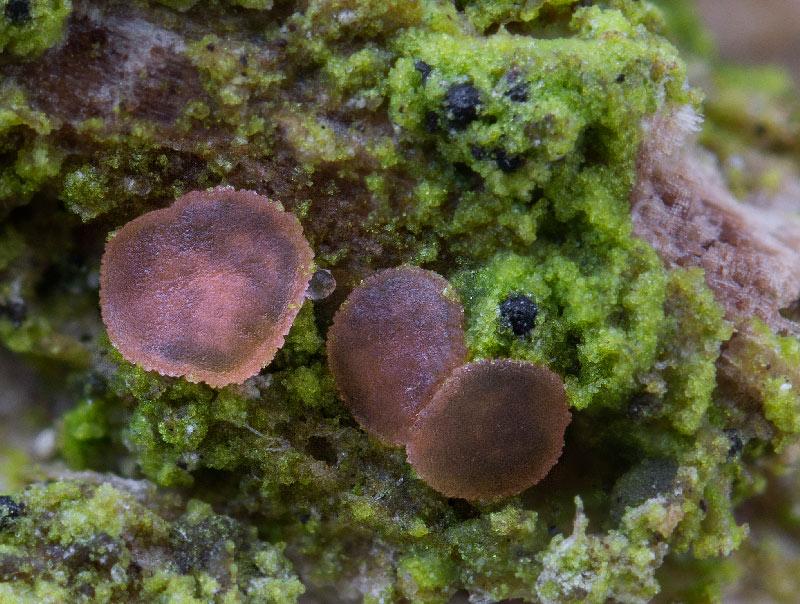
Pink Orbilia
Adam Polhorský,
30-03-2016 17:38
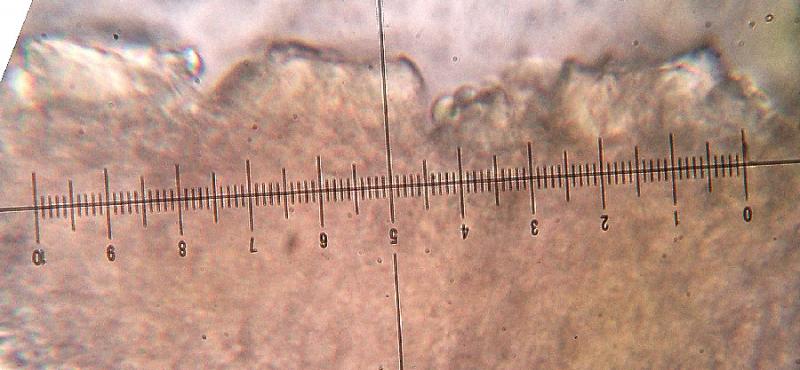
this orbilia (0,4-1,1mm) was found found dry on a weathered stump of Quercus sp.
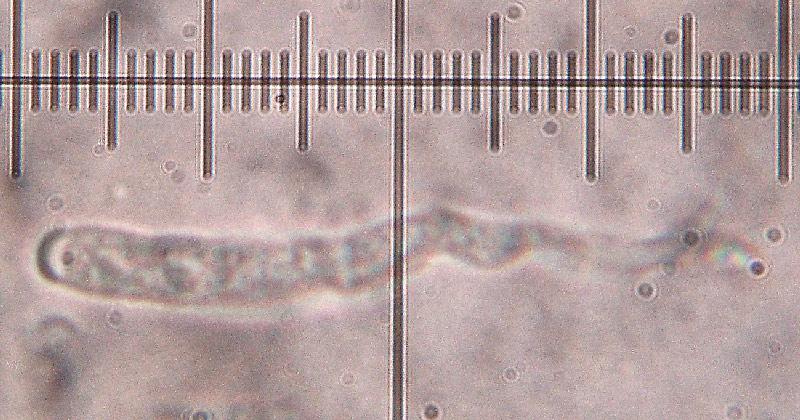
Ascus- 40-50 x 3-4µm, inamyloid in Melzer, and in Melzer+KOH, no croziers found
Spores- only observed in a ascus, narrow, straight, 9-12x 1,5 µm- probably immature
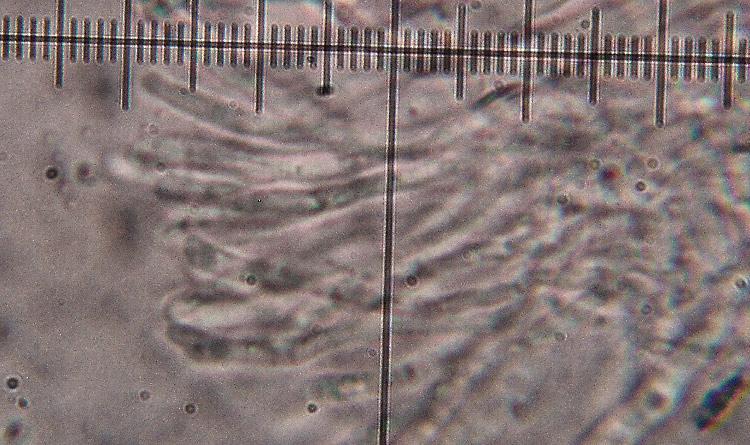
Paraphyses- slightly enlarged at the top, with oil content, septate,
There seemed to be crystalization around the walls of pharaphyses and at the base of the fungus
I think, i also observed an anamorphic state.
O. vinosa related?
Thank u for your help
Adam

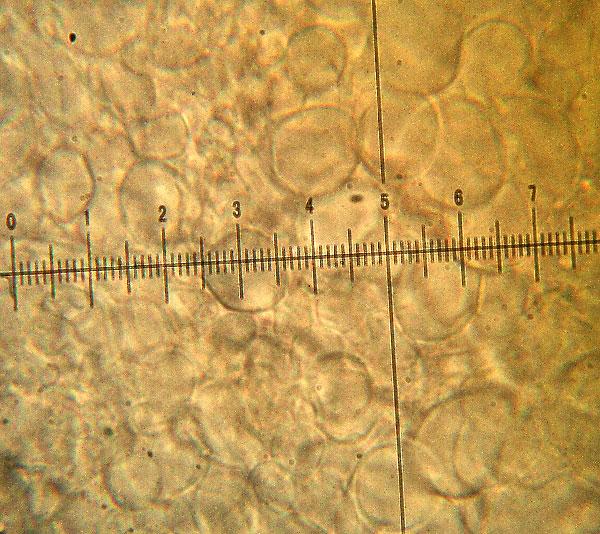
Hans-Otto Baral,
30-03-2016 18:01

Re : Pink Orbilia
Dear Adam
a nice collection, but when not clearly seeing the spores it will be difficult to classify. The apothecium looks mature, however. Your adaptaion seems not the best since the photos have some roughness.
Clearly this is a member of subgenus Hemiorbilia, based on the hemispherical, somewhat thick-walled ascus apex and the non-capitate paraphyses. Colour and marginal teeth could refer this to O. aprilis, which has spores max. ca. 10 µm, or perhaps to O. vinosa s.l.
Zotto
a nice collection, but when not clearly seeing the spores it will be difficult to classify. The apothecium looks mature, however. Your adaptaion seems not the best since the photos have some roughness.
Clearly this is a member of subgenus Hemiorbilia, based on the hemispherical, somewhat thick-walled ascus apex and the non-capitate paraphyses. Colour and marginal teeth could refer this to O. aprilis, which has spores max. ca. 10 µm, or perhaps to O. vinosa s.l.
Zotto
Adam Polhorský,
30-03-2016 18:28
Re : Pink Orbilia
Thank u Zotto, i am unable to get sharper pictures from my photosystem- they are already edited, originals were even worse.
I have one more orbilia coming up from Pinus sylvestris, i ll try my best there.
I ll keep this specimen in a humid chamber and try to catch some spores onto cover slips,
until then..
I have one more orbilia coming up from Pinus sylvestris, i ll try my best there.
I ll keep this specimen in a humid chamber and try to catch some spores onto cover slips,
until then..
Hans-Otto Baral,
30-03-2016 20:27
Re : Pink Orbilia
Yes, please try, and if you see more with the naked eyes, please try a pencil sketch.
What did the anamorph look like?
What did the anamorph look like?
Adam Polhorský,
31-03-2016 11:39
Re : Pink Orbilia
will do,
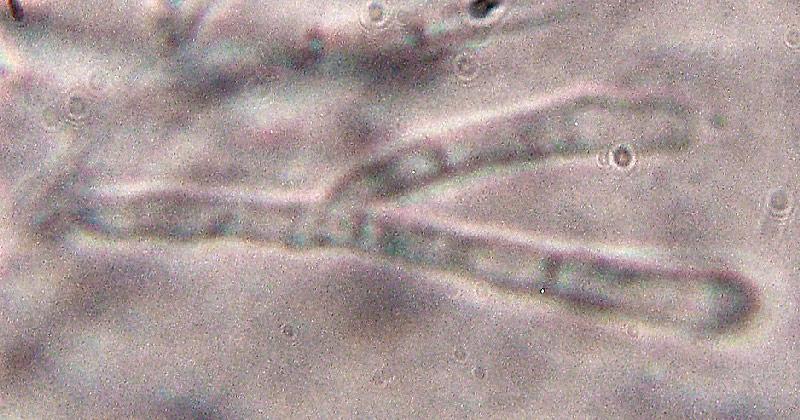
i thought i captured it in the last picture, or is it branching paraphysis- too hard to tell probably. I ll return to this collection, i examined the largest fruiting body, others are smaller.
There are 7 remaining, hopefully they ll reach maturity.
i thought i captured it in the last picture, or is it branching paraphysis- too hard to tell probably. I ll return to this collection, i examined the largest fruiting body, others are smaller.
There are 7 remaining, hopefully they ll reach maturity.
Hans-Otto Baral,
31-03-2016 11:44
Re : Pink Orbilia
these are branched paraphyses.