27-04-2026 20:52
 Lothar Krieglsteiner
Found on hanging tiwg of Olea europaea in dried-ou
27-04-2026 18:48
Tony MoverleyCollected 23rd April 2026, Norfolk, EnglandSwarms
27-04-2026 17:41
Lothar Krieglsteiner
.. Algarve, same leaf than the last post. The con
27-04-2026 18:05
Lothar Krieglsteiner
... still attached at standing tree. The green con
27-04-2026 17:16
Lothar Krieglsteiner
.. Algarve, moist lying.The conidiomata look like
27-04-2026 12:54
Steve ClementsBonjour. Ce petit champignon blanc résupiné et
27-04-2026 09:59
Pauline. PennaBonjour Can anyone advise me on these pycnidia fo

22-04-2026 20:54
 Enrique Rubio
Hi to everybody.This Pyrenopeziza grew in moist le
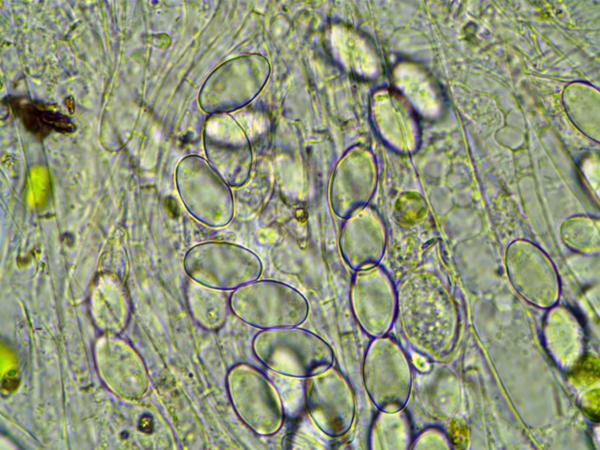
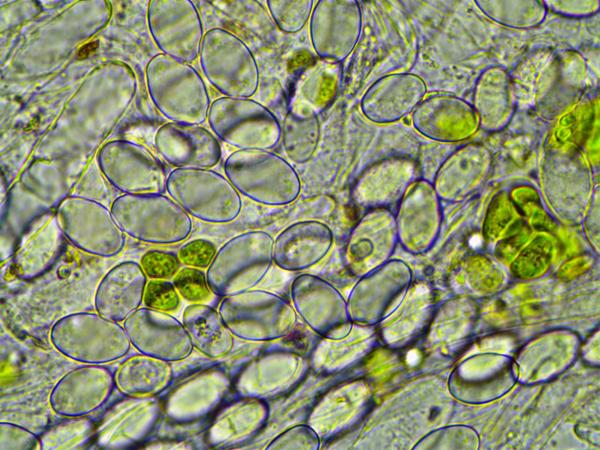
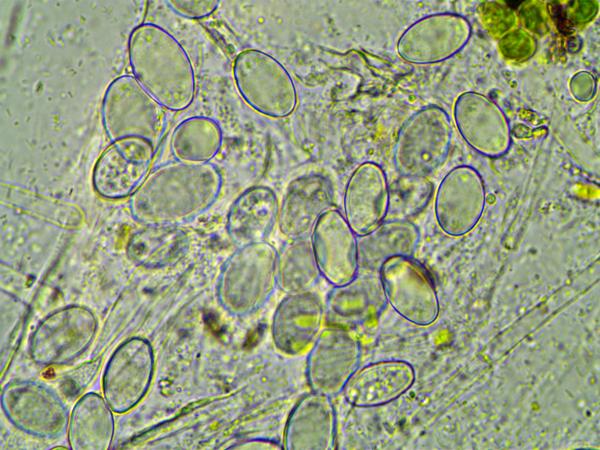
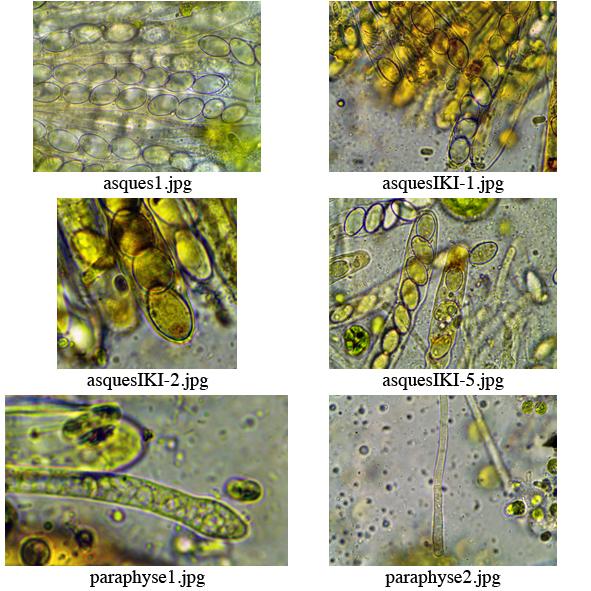
 Voici un asco sur place à feu que je pense être Tricharina gilva (mais ma première observation de l'espèce si c'est lui) :
a) asques octosporés, IKI-
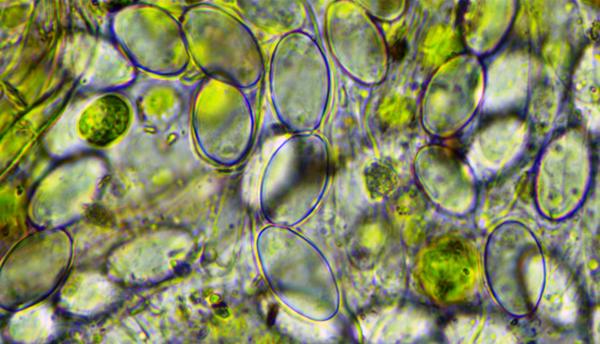
b) spores elliptiques, lisses et sans guttules : 17-19x10-12
c) poils hyalins, septés, à parois épaisses, coniques mais à apex arrondi
d) paraphyses filiformes, à extrémité graduellement élargie
Bernard
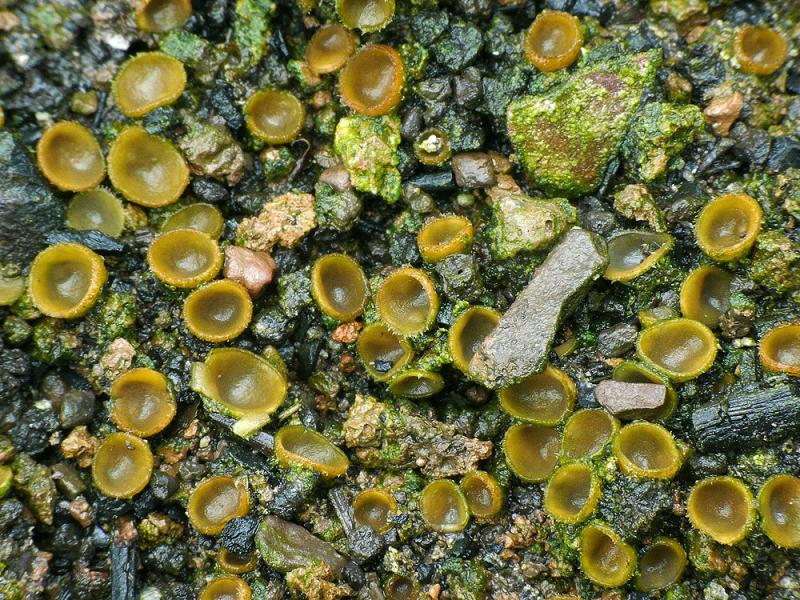
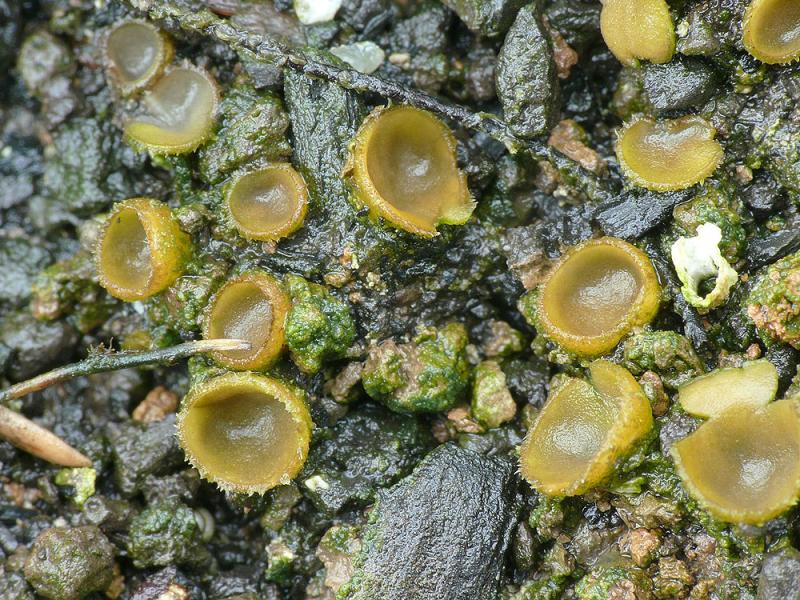
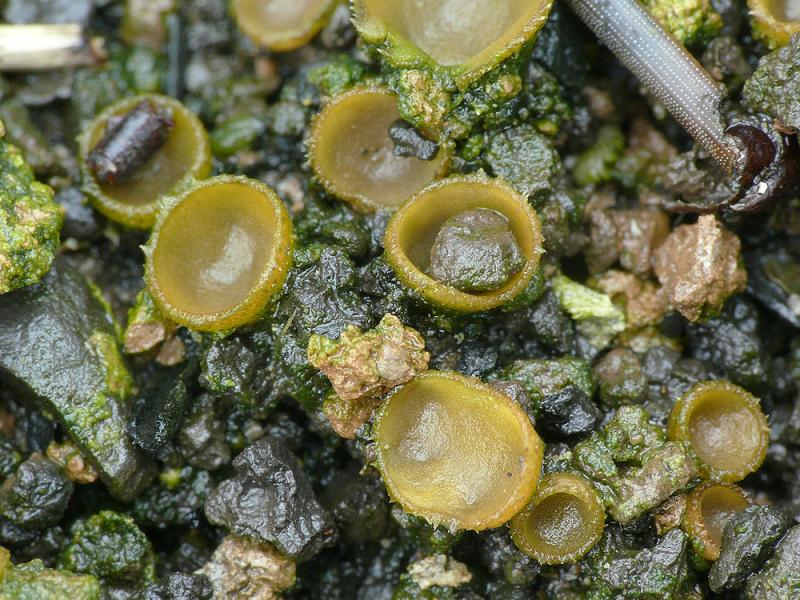
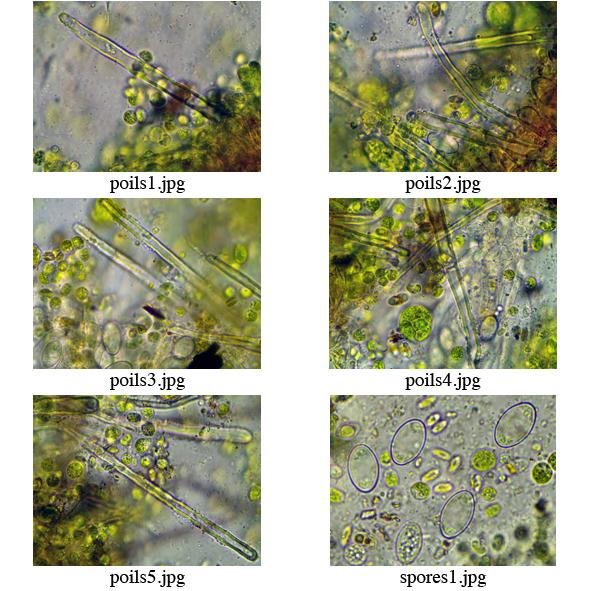

yes, it could be Tricharina gilva but I have to add "sensu latu" because there are different taxa which are intermingled under the epithet "gilva" .
Best, Uwe
J'aurais plutôt pensé à Tricharina praecox...
Gilbert

I would favor even Tricharina ascophanoides.
Here some literature, the last two unfortunately in german.
Greetings Peter.
DOUGOUD, R. (2002): Contribution à la connaissance de quelques Discomycètes operculés rares ou méconnus. Fungi non delineati. Pars. XVIII Alassio.
ENGEL, H., HÄFFNER, J. (1986): Tricharina ascophanoides (Boud.) Yang et Korf, ein seltener Ascomycet für die Bundesrepublik, gefunden in Nordwestoberfranken. Die Pilzflora Nordwestoberfrankens 10: 47-49.
LINDEMANN, U. (2013): Trouble with Tricharina Eckblad. About a difficult genus of the operculate discomycetes. Mycol. Bav. 14.
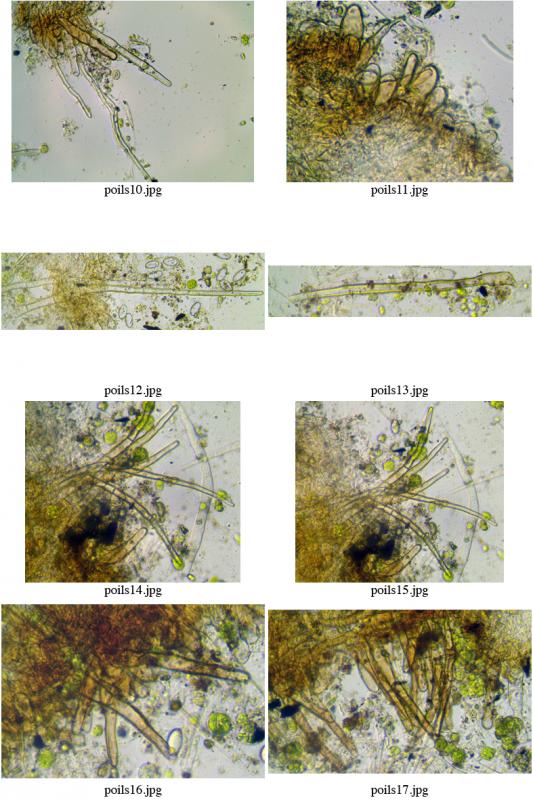
@ Peter: I didn't think of ascophanoides because of the straight hairs and the color of the apos. In my experience fruitbodies of ascophanoides are always brownish with a slightly reddish tint.
Best, Uwe
Thank you very much for your opinions and comments!
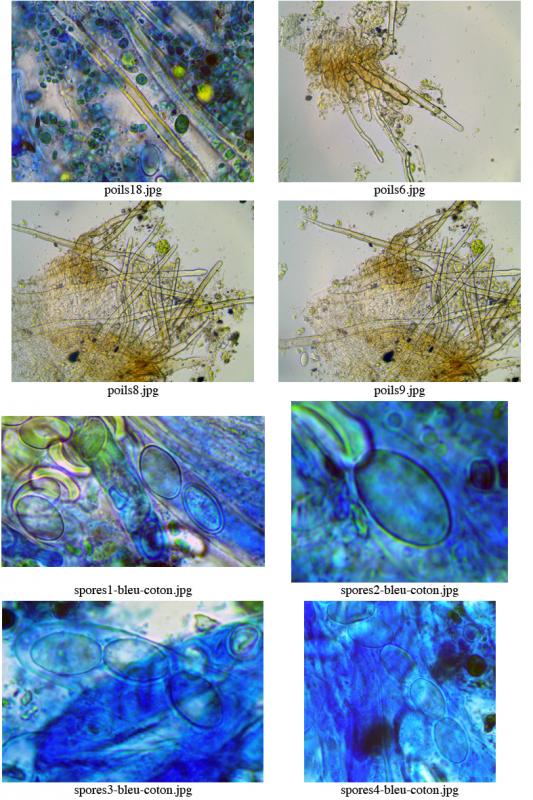
I have no information about Tricharina praecox but I'll redo preparations to show the hairs and spores in blue cotton.
I'll keep you informed.
Best regards
I observed spores in blue cotton and I have not seen ornamentation.
The hairs are brownish young then become hyaline.
Do you see more clearly?
Best regards,
Bernard
likely you are right, it is not Tr. ascoph. The title of your treatise has proved true one more time for me: " The trouble .... ".
How is the spores size valued here, actually? So big spores like from Bernard have not measured many Tricharina, also not from You suggested.
Look to you at the photos of Tr. ascoph. from DOUGOUD because of the colouring.
Greetings Peter.
I had forgotten the treatise:
YANG, C. S. and KORF R. P. (1985): A monograph of the genus Tricharina and of a new, segregate genus, Wilcoxina (Pezizales). Mycotaxon 24: 467-531.
I send you some literature
Greetings Peter.

könntest du mir
LINDEMANN, U. (2013): Trouble with Tricharina Eckblad. About a difficult genus of the operculate discomycetes. Mycol. Bav. 14.
YANG, C. S. and KORF R. P. (1985): A monograph of the genus Tricharina and of a new, segregate genus, Wilcoxina (Pezizales). Mycotaxon 24: 467-531.
Auch senden?
Mit bestem Dank
Ueli
if the spores are smooth (the ormentation can be only seen at mature spores, that means the spores have a refractive layer) it should be gilva s. lat. In the literature gilva-spores could be such as big as measured. But in my experience there is a difference of 1-2 µm in the lenght between immature spores (with observable content as you mostly showed us) and mature spores (with refractive layer).
Best, Uwe
J'ai mesuré 20 spores. Voici les résultats : 12,5-19,5x8-11
moyenne = 16,5x9,6
Q = 1,72
J'ai revérifié une nouvelle fois les spores dans le bleu coton : pas d'ornementation visible.
J'ai également mesuré la longueur de 5 grands poils : 210-228-270-280-290
Bernard