
27-04-2026 20:52
 Lothar Krieglsteiner
Found on hanging tiwg of Olea europaea in dried-ou
28-04-2026 22:51
 Bernard CLESSE
Bonsoir à toutes et tous,Pourriez-vous m'aider à
29-04-2026 08:01
Lothar Krieglsteiner
... on twig attached to small tree of Citrus auran
29-04-2026 10:44
Lothar Krieglsteiner
growing at moist, drying-out soil at the side of a
28-04-2026 20:33
Vitus SchäfftleinHello, I found Trochila ilicina on Ilex aquifoliu

28-04-2026 21:50
 Pablo Sandoval
Hola a todos,Espero se encuentren bien. Hace mucho
27-04-2026 18:05
Lothar Krieglsteiner
... still attached at standing tree. The green con
28-04-2026 20:07
Lothar Krieglsteiner
... on twig in the air at standing Ceratonia siliq
27-04-2026 18:48
Tony MoverleyCollected 23rd April 2026, Norfolk, EnglandSwarms
Arachnopeziza aurata?
Garcia Susana,
15-12-2015 09:51
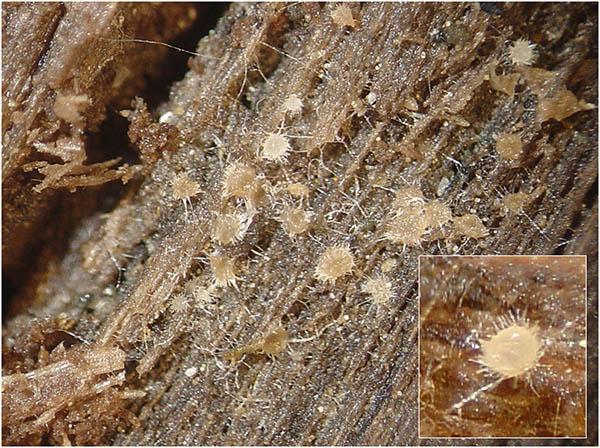
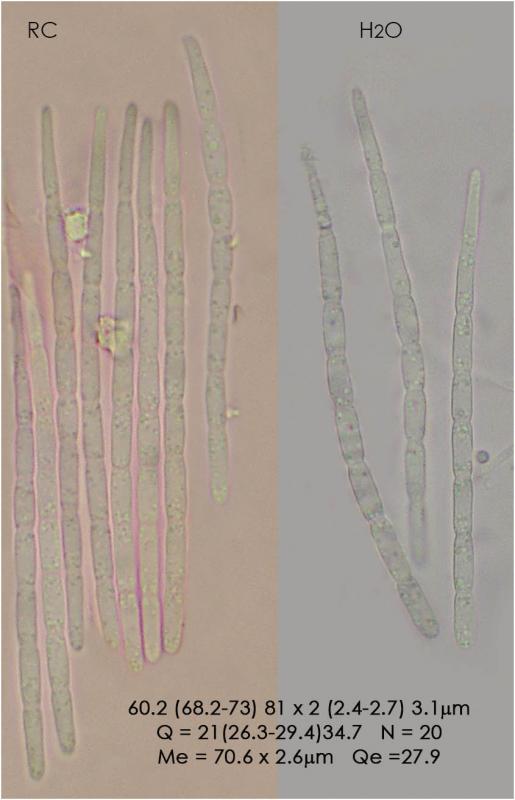
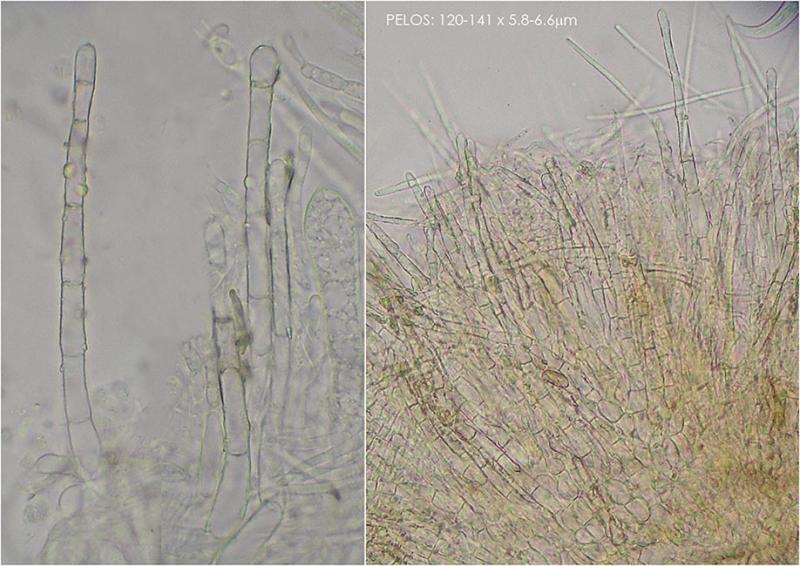
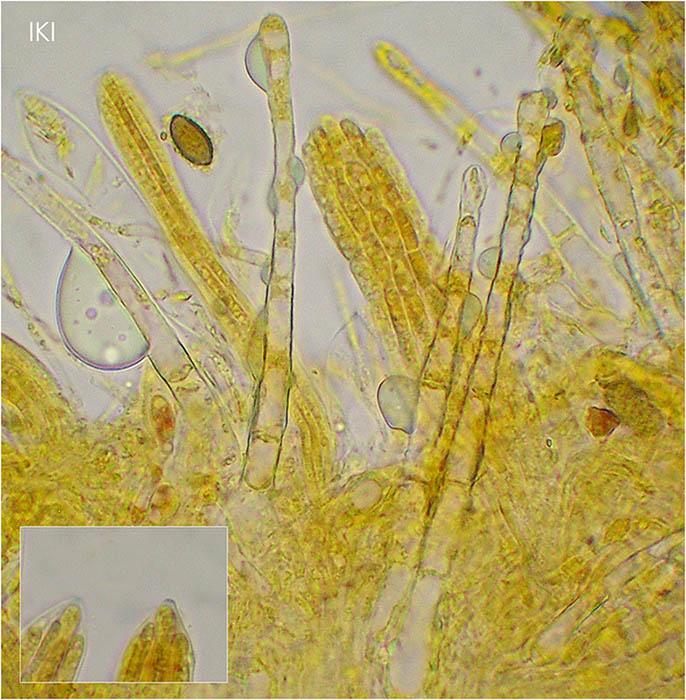
I have found these apothecia whose characteristics make me think at Arachnopeziza aurata. But I find a difference in the shape of hairs: I've seen described A. aurata with hairs that narrows towards the apex, in this case however, there is a widening. The spores, have in this case, narrowing pronounced at the level of the septation (perhaps due to the state of maturation). You think that is A. aurata?
Gracias, un saludo
Susana


Hans-Otto Baral,
15-12-2015 18:37

Re : Arachnopeziza aurata?
I am not sure. Except for the hairs which partly also taper in your sample, I see no clear difference to A. aurata. But I agree such apically wide hairs I do not see in that species.
What was the substrate?
What was the substrate?
Garcia Susana,
15-12-2015 23:02
Re : Arachnopeziza aurata?
I don't know that substrate is. It was a very small and very damaged piece of wood.
The more likely it is that A. aurata, turning to look at the pictures of the DVd I think that there is no big difference in the hairs.
Thanks Zotto.
The more likely it is that A. aurata, turning to look at the pictures of the DVd I think that there is no big difference in the hairs.
Thanks Zotto.