12-06-2026 14:50
 François Freléchoux
Bonjour, Voici la brève description d'une Mollis
10-06-2026 21:16
François Freléchoux
Bonsoir,Le dernier du jour, en attendant votre avi
11-06-2026 19:01
 William Slosse
Hello all,In an attempt to make a culture of a sus
11-06-2026 19:03
 Nicolas VAN VOOREN
Chers membres d'Ascofrance,Le site sera placé en

09-06-2026 18:32
Camille MertensSur morceau de roseau immergé 0,5 - 0,7 mm de dia
10-06-2026 12:54
Steve ClementsBonjour encore, Pouvez-vous m'aider, s'il vous pl
10-06-2026 21:07
François Freléchoux
Toutes les tiges de gentianes jaunes de l'an passÃ
10-06-2026 13:41
François Freléchoux
Bonjour à nouveau, Voici une trouvaille d'hier.
Trichonectria sp.
Maren Kamke,
22-08-2015 14:49
 Hi eveybody,
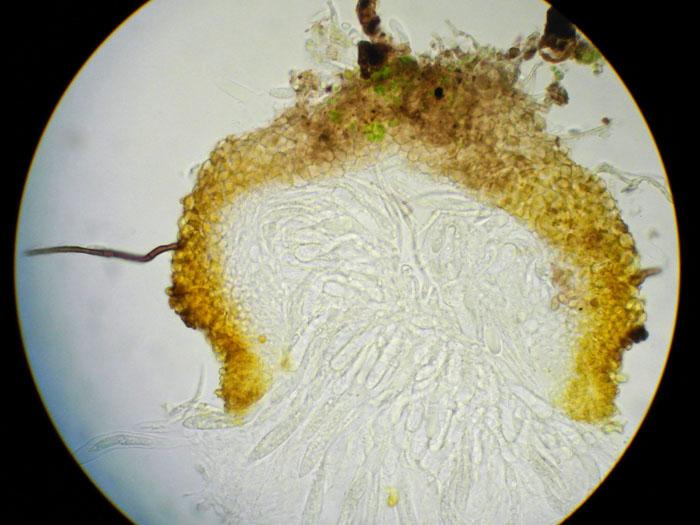
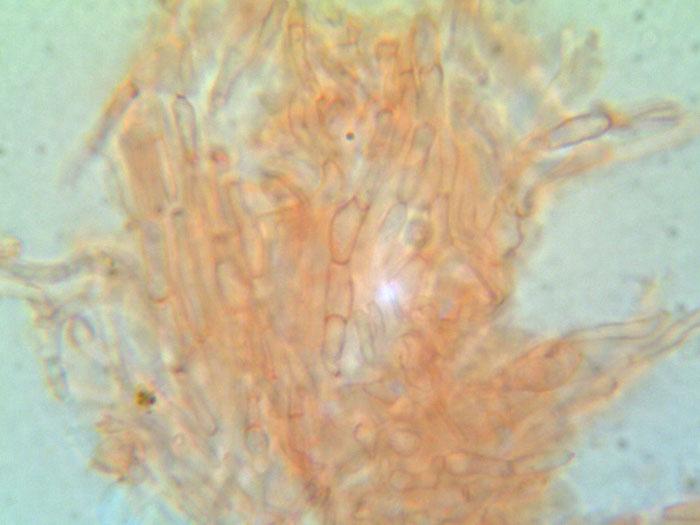
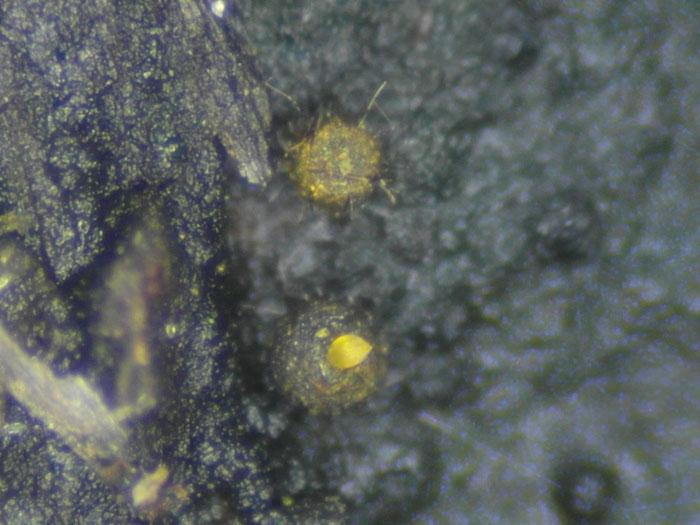
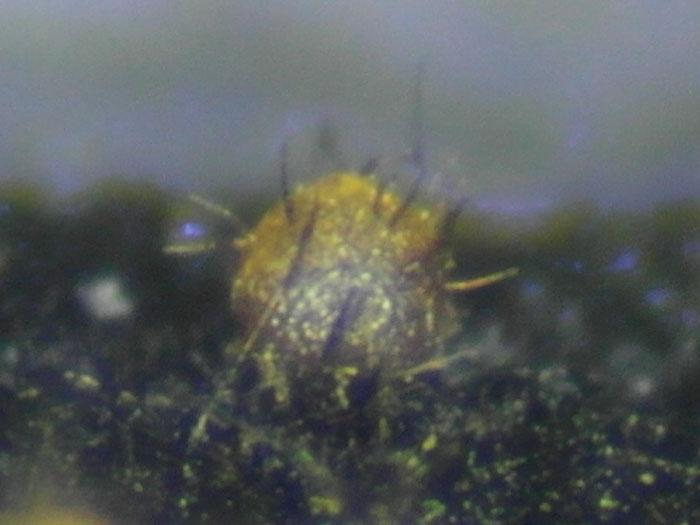
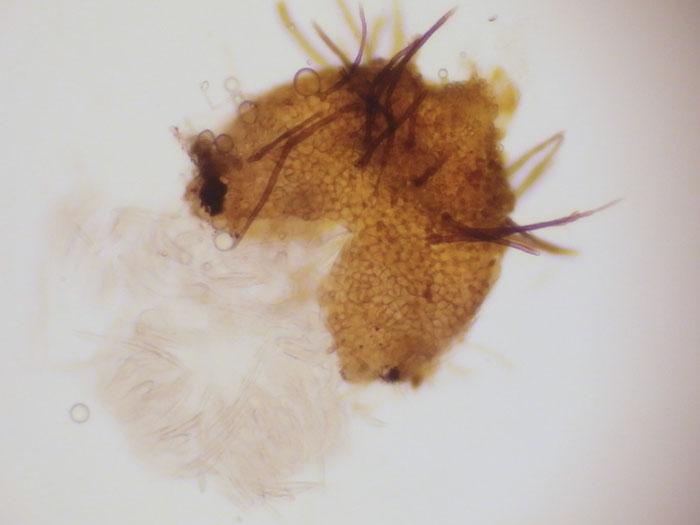
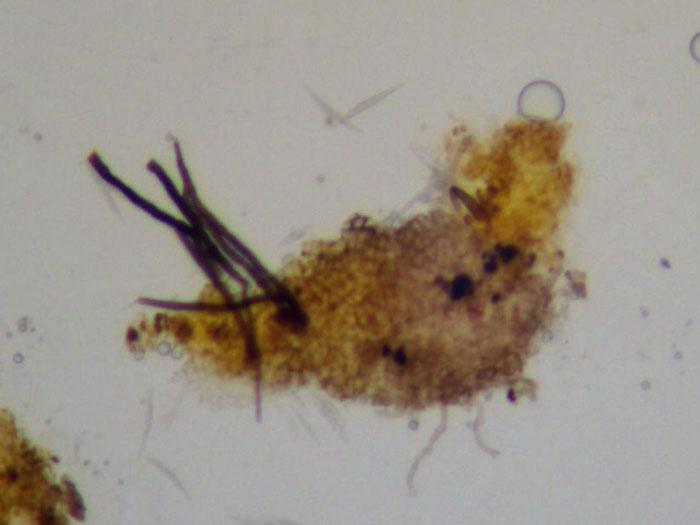
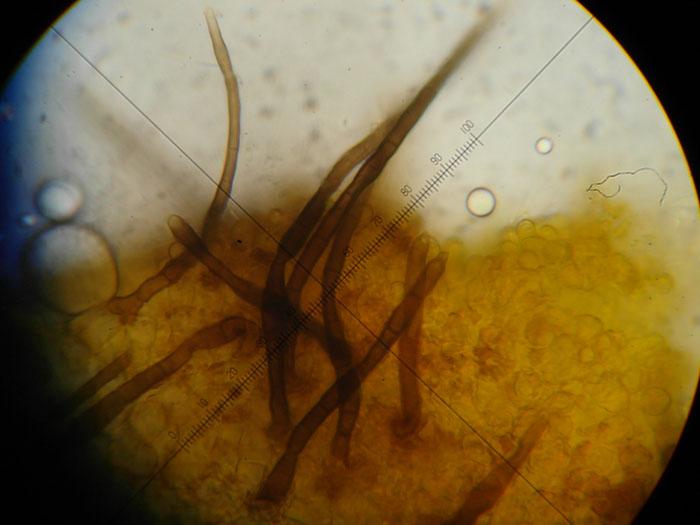
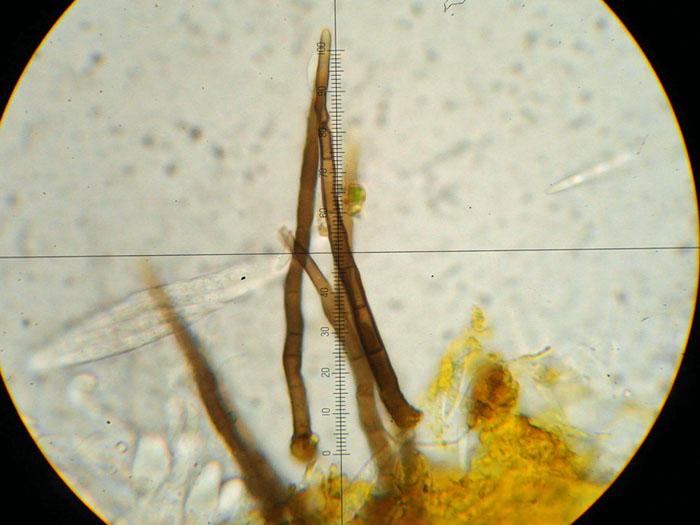
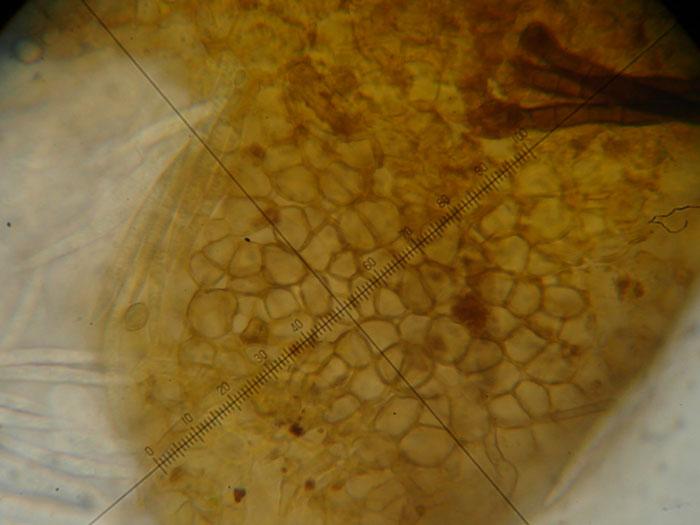
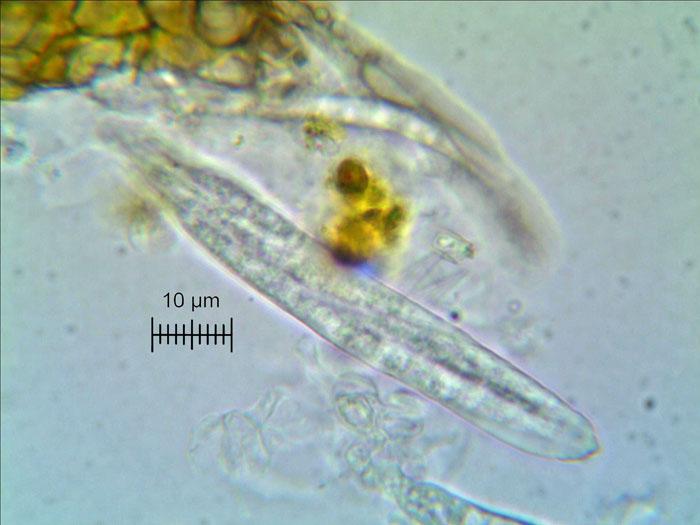
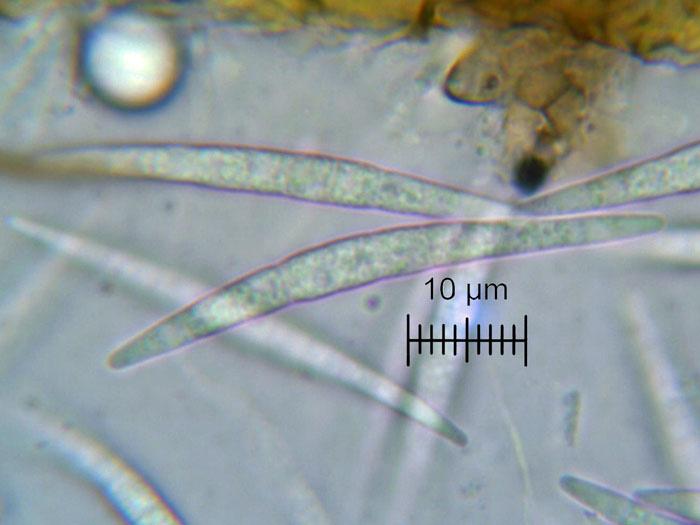
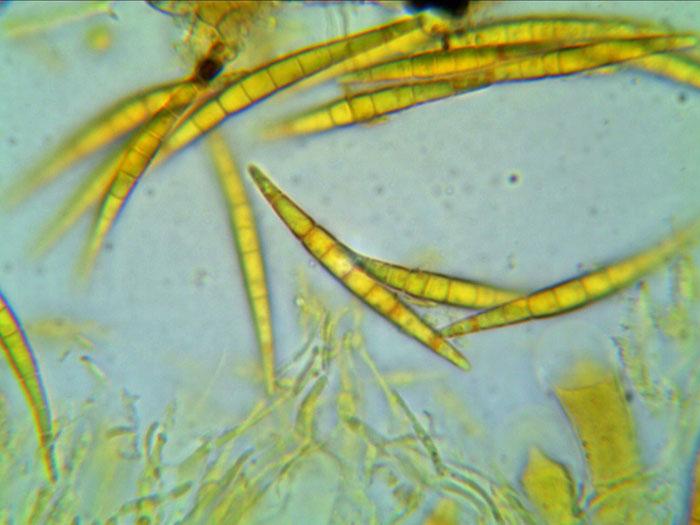
on Pyrenomycetes sp. on bark of an immersed twig of deciduous wood, I found this Trichonectria sp. It measures 0,25 mm, yellow with thickwalled dark brown, septate setae, 50-100 x 4-6 µm. Asci 79-150 * 10-13, 8-spored. Spores hyalin (40,5-50) 43,05 x 3,83 (3,3-4) µm, 7-9-septate mostly 8. Ascomata slightly brown with KOH.
Regards, Maren
Christian Lechat,
22-08-2015 19:07

Re : Trichonectria sp.
Dear Maren,
I think that your fungus is not Hypocreales, maybe you should search in the Tubeufiaceae.
Regards,
Christian
I think that your fungus is not Hypocreales, maybe you should search in the Tubeufiaceae.
Regards,
Christian
Martin Bemmann,
22-08-2015 23:00

Re : Trichonectria sp.
Yes Maren,
here is a key: http://www.fieldmycology.net/GBCHKLST/key.asp?KeyID=1
At a first glance I would tend to T. cylindrothecia without ever having encountered it.
The setae/hairs could be the conidiophores of the anamorph state in this case.
Maybe this is a start...
Best regards
Martin
here is a key: http://www.fieldmycology.net/GBCHKLST/key.asp?KeyID=1
At a first glance I would tend to T. cylindrothecia without ever having encountered it.
The setae/hairs could be the conidiophores of the anamorph state in this case.
Maybe this is a start...
Best regards
Martin
Chris Yeates,
23-08-2015 13:29

Re : Trichonectria sp.
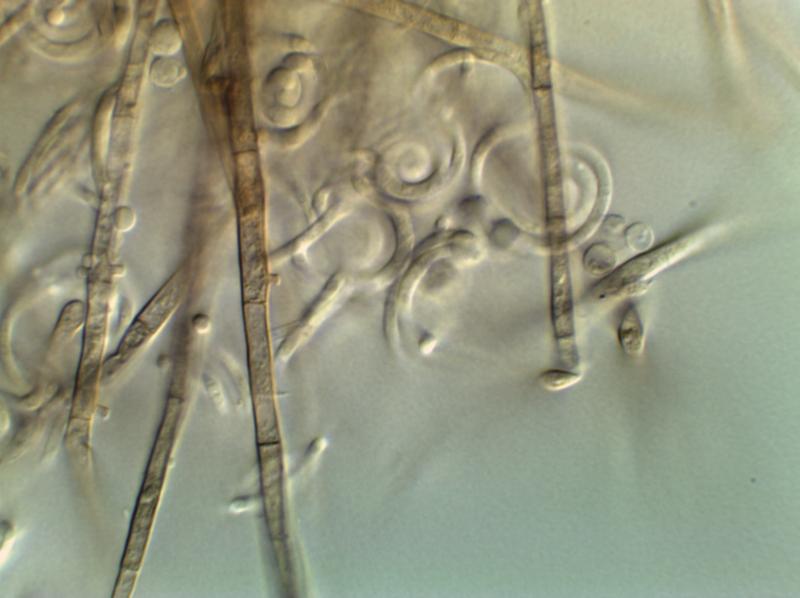
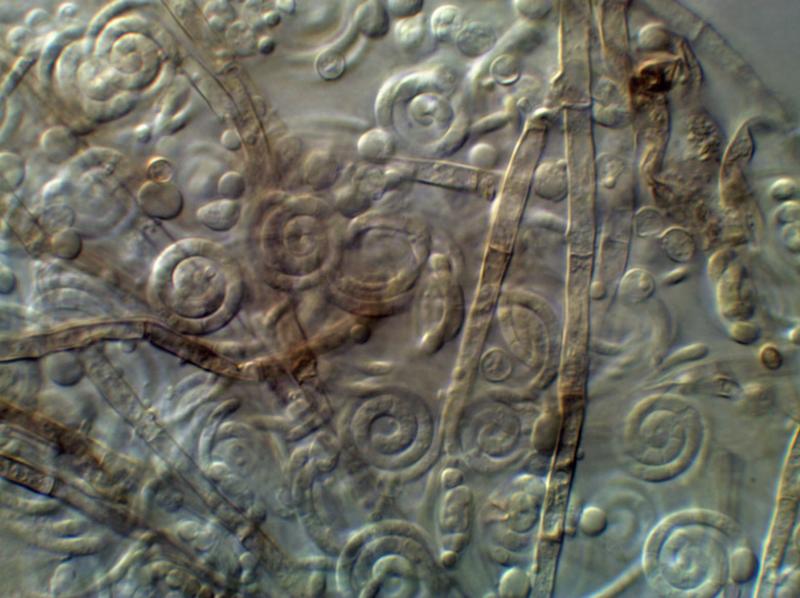
Those setae don't look like conidiophores of a Helicomyces anamorph (I'm not sure that one is actually known for T. cylindrothecia). If they were I would expect they would have formed numerous helical conidia (see images) which Maren would surely not have missed.
best wishes
Chris
best wishes
Chris
Maren Kamke,
23-08-2015 20:42
Re : Trichonectria sp.
Hi everybody,
thank you very much for your competent help. The key leads to T. cylindrothecia, but I didn't find any of the structures Chris mentioned. I have to check on other Genera in the Tubeufiaceae. Chris, could you send me this key, please http://ascofrance.fr/forum/27570/main-key-in-rossman-1987-the-tubeufiaceae. />Regards Maren
thank you very much for your competent help. The key leads to T. cylindrothecia, but I didn't find any of the structures Chris mentioned. I have to check on other Genera in the Tubeufiaceae. Chris, could you send me this key, please http://ascofrance.fr/forum/27570/main-key-in-rossman-1987-the-tubeufiaceae.
Martin Bemmann,
23-08-2015 21:17
Re : Trichonectria sp.
Dear Maren,
I did send you Rossman 1987. But I am afraid....
Best regards
Martin
I did send you Rossman 1987. But I am afraid....
Best regards
Martin
Maren Kamke,
23-08-2015 22:30
Re : Trichonectria sp.
I don't think, this is a Tubeufia species, maybe some Acanthostigma sp. But it does not fit well in any of the Genera.
Have a nice week
Regards, Maren
Have a nice week
Regards, Maren
Chris Yeates,
23-08-2015 22:41
Re : Trichonectria sp.
Hi Maren
I wasn't saying that there had to be conidia, just that I didn't think the setae were conidiophores.
The attached may prove useful - available from Cyberliber, but only at a page a time ...
Fig. 6 shows T. cylindrothecia, with an accompanying helicosporous anamorph (I think Helicomyces roseus has now been proved to be the anamorph through molecular studies).
Do you have access to the "Key to the saprobic genera of Tubeufiaceae" Crane, Shearer and Barr; Canadian Journal of Botany (1998)?
LG
Chris
I wasn't saying that there had to be conidia, just that I didn't think the setae were conidiophores.
The attached may prove useful - available from Cyberliber, but only at a page a time ...
Fig. 6 shows T. cylindrothecia, with an accompanying helicosporous anamorph (I think Helicomyces roseus has now been proved to be the anamorph through molecular studies).
Do you have access to the "Key to the saprobic genera of Tubeufiaceae" Crane, Shearer and Barr; Canadian Journal of Botany (1998)?
LG
Chris
 Tubeufia-1980-12-137-0001.pdf
Maren Kamke,
24-08-2015 19:41
Re : Trichonectria sp.
Good evening,
I'm now pretty sure it is a Tubeufia. I could determine Pseudoparaphyses. The keys of Crane (thank you, Martin) and Rossmann lead only to this genus.
The Tubeufia key of Barr leads to Tubeufia cerea a common pyrenomycete. The perethecia don't become black during drying.
Regards, Maren
I'm now pretty sure it is a Tubeufia. I could determine Pseudoparaphyses. The keys of Crane (thank you, Martin) and Rossmann lead only to this genus.
The Tubeufia key of Barr leads to Tubeufia cerea a common pyrenomycete. The perethecia don't become black during drying.
Regards, Maren