27-04-2026 20:52
 Lothar Krieglsteiner
Found on hanging tiwg of Olea europaea in dried-ou
28-04-2026 22:51
 Bernard CLESSE
Bonsoir à toutes et tous,Pourriez-vous m'aider à
29-04-2026 08:01
Lothar Krieglsteiner
... on twig attached to small tree of Citrus auran
29-04-2026 10:44
Lothar Krieglsteiner
growing at moist, drying-out soil at the side of a
28-04-2026 20:33
Vitus SchäfftleinHello, I found Trochila ilicina on Ilex aquifoliu

28-04-2026 21:50
 Pablo Sandoval
Hola a todos,Espero se encuentren bien. Hace mucho
27-04-2026 18:05
Lothar Krieglsteiner
... still attached at standing tree. The green con
28-04-2026 20:07
Lothar Krieglsteiner
... on twig in the air at standing Ceratonia siliq
27-04-2026 18:48
Tony MoverleyCollected 23rd April 2026, Norfolk, EnglandSwarms
Hello,
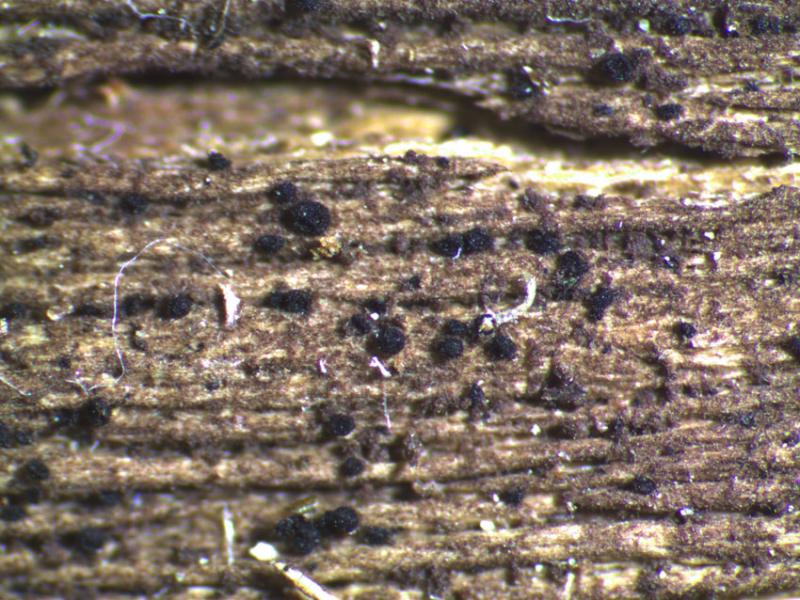
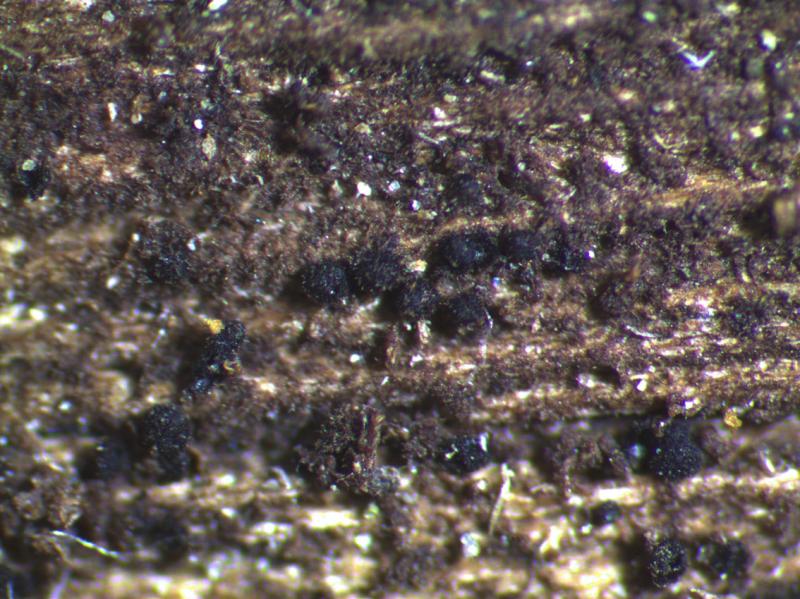
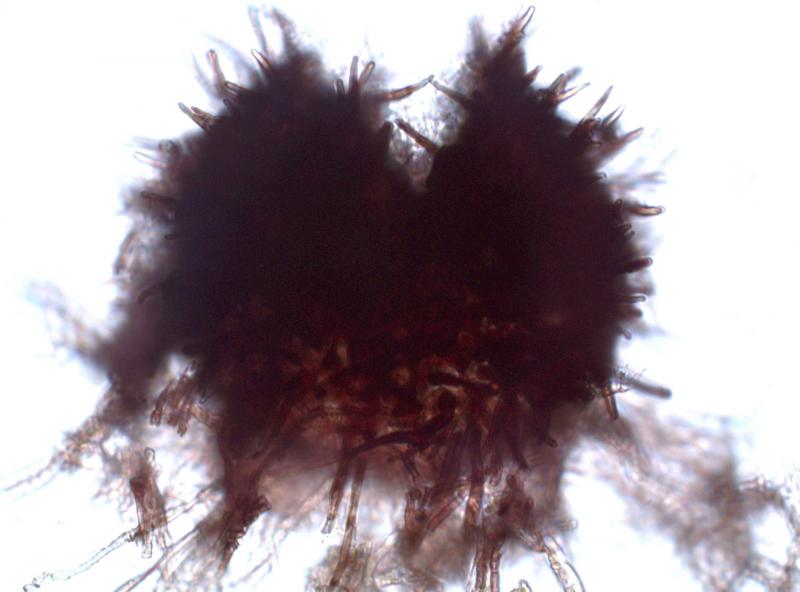
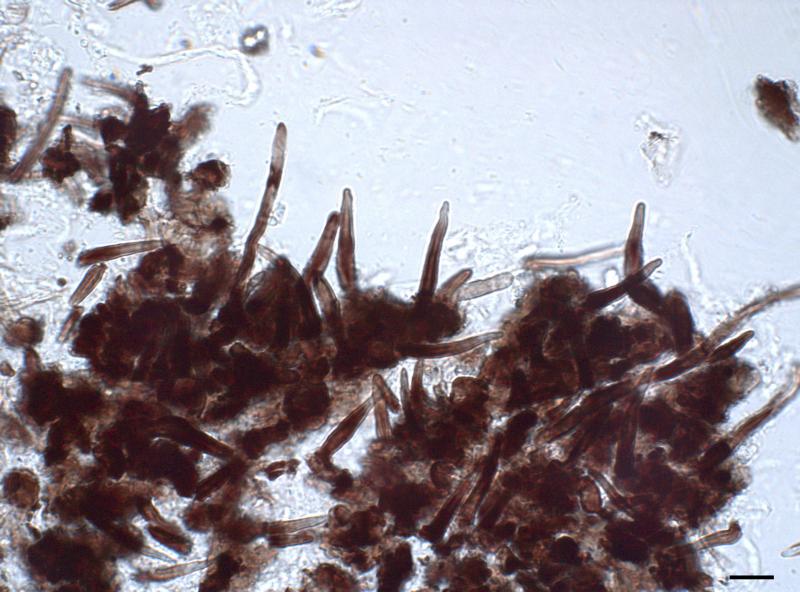
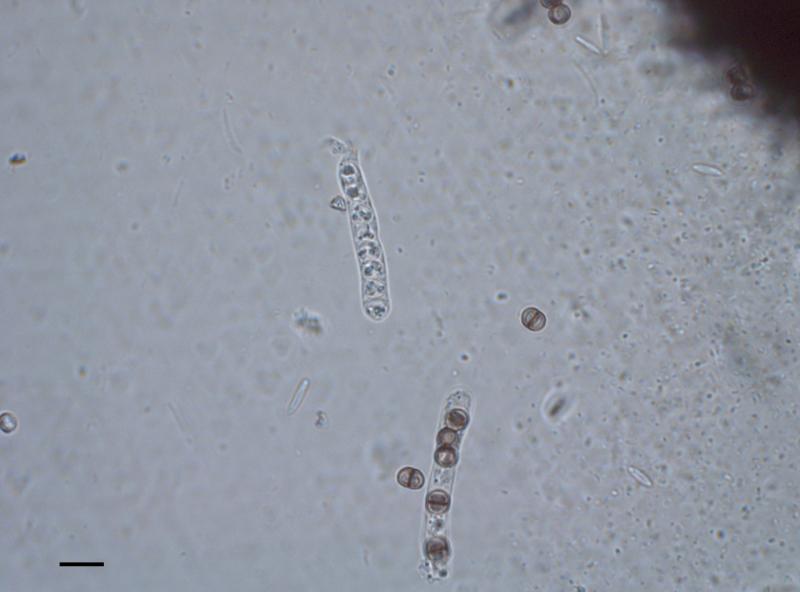
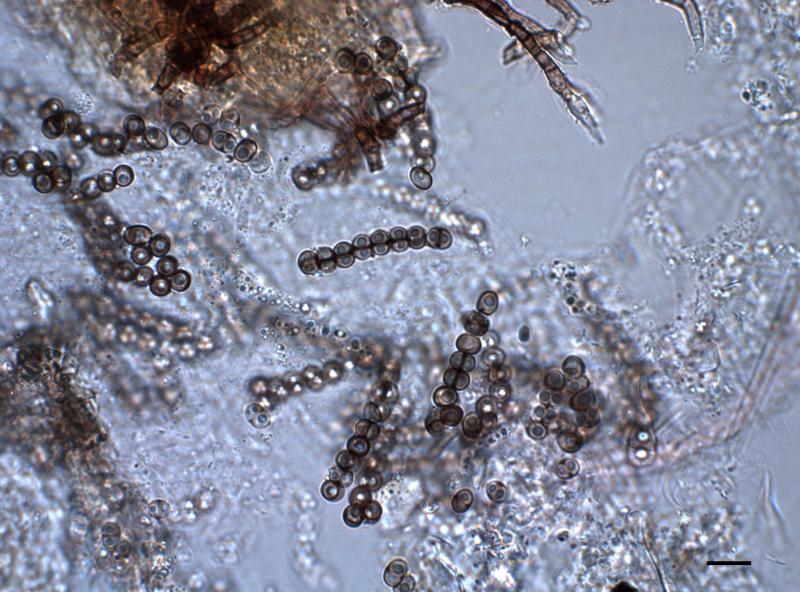
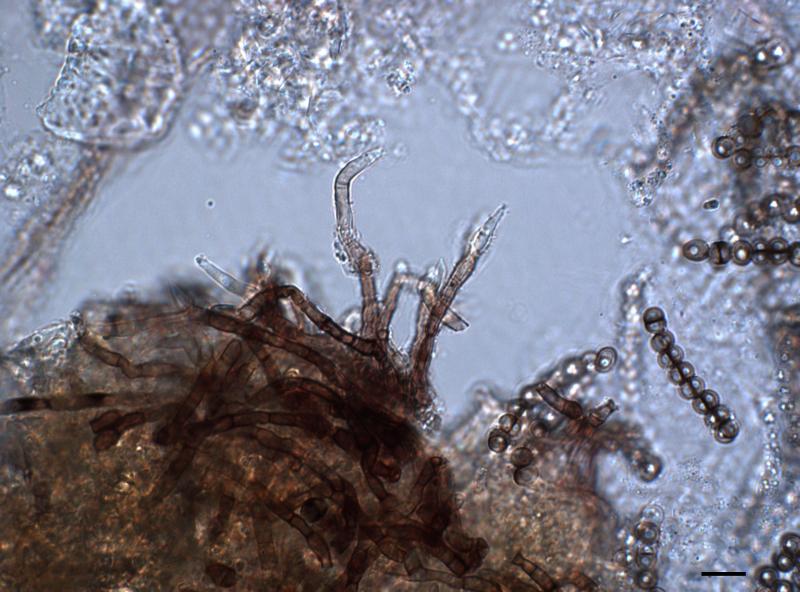
I am struggling with a very characteristic ascomycete. Maybe someone can provide a clue. It is probably cleistothecial. The ascomata are globose, non-collabent when dry, with short setae, and appear to be associated with a reddish brown anamorphic state, which can be seen in the macro photos. The spores are very characteristic, ovoid in outline, 1-septate, and brown, 5-5.5 x 4-4.5 µm. Asci unitunicate without a well developed apical apparatus, IKI and KOH + IKI negative. Found inside Sambucus bark in Sweden. Scale bars = 10 um.
Many thanks in advance!
Ibai.
Thank you Thomas!
I will search in that direction.
Cheers,
Ibai.
I have found something similar in PEI Canada. Check Reblova, 2002. Synaptospora olandica. Sydowia 54:282-285.
Good luck.
Adrian Carter
Thank you for the tips! Yes, it must be a Synaptospora. Following Reblova´s key in Sydowia, it keys out as S. olandica, but I did not see spores fusing in pairs, and they look like darker even within asci. The anarmorph state I have seen fits the one described by Reblova for S. olandica, but the conidia were not septate. I will leave it as S. cf. olandica for now.
Thank you all!
Cheers,
Ibai.

OOOOH hey, maybe you can send me this collection for study? It is maybe the same found on freshwater logs in austria, where I did not manage to find any more fruitbodies.
This species was originally identified by Fournier with probably acuatic ecology. I think we do not know if it really belongs to Helminthosphaeria, but I guess it does.
regards,
björn
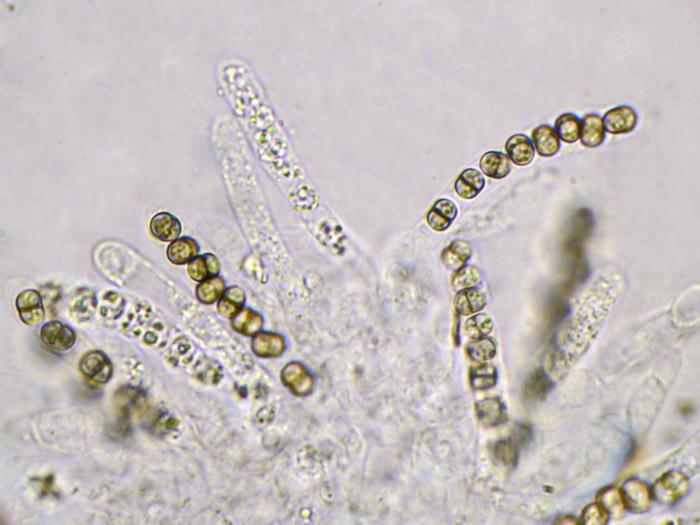
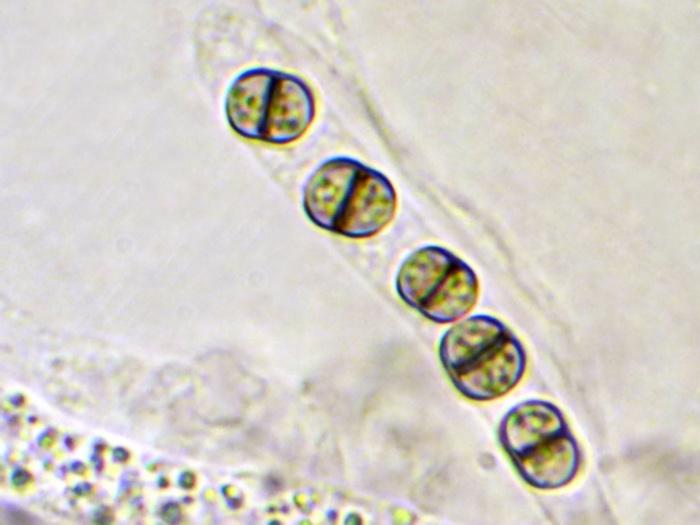
Oh yes, thanks! Your fungus looks the same! The specimen is in UPS but I can try to make it available for you. I will email you privately on this.
Cheers!
Ibai.
I accidentally collected something similar but it is probably closer to Synaptospora olandica. It was not on a broad-leaved tree but on the bare wood of Picea abies (mountain forest in the Czech Republic). Sporocarps are clearly less than 0.5 mm wide, max. 0.2 - 0.3 mm. Photos and a drawing are attached.
I have no experience with these species. What do you think about it?
Thanks,
Vaclav
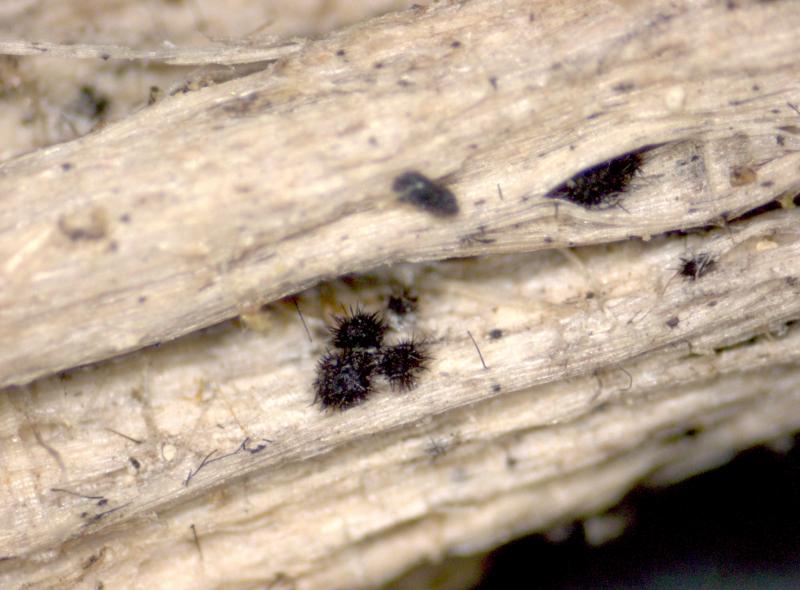
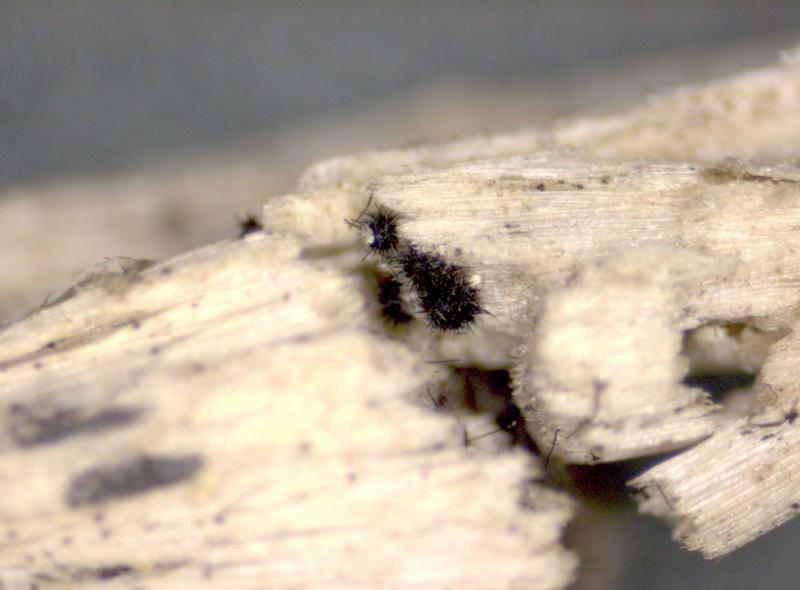
 synaptospora-0002.PDF
to ID an unkwon ascomycete, photos of microstructures will always help. I can hardly interpret how the spores had looked like under the microscope, each species has its own characteristics, even if these are very inconspicuous. On drawings these features get lost quickly (unless you draw so brilliantly that it looks like a photo...).
regards,
björn
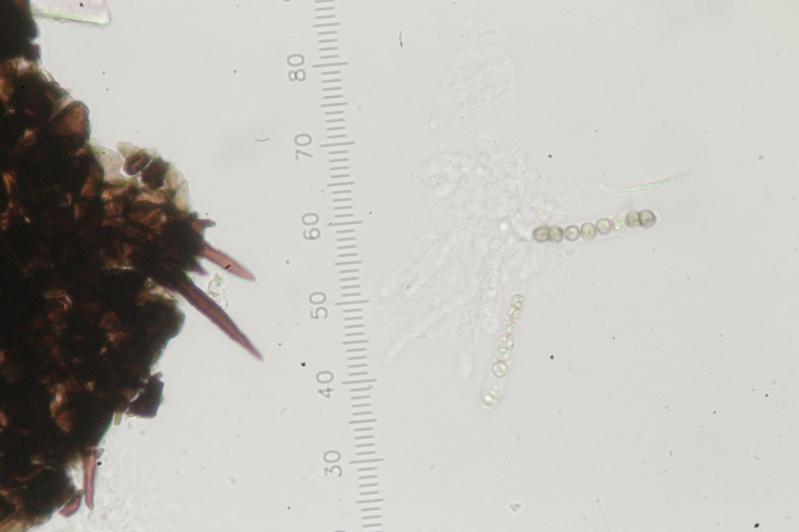
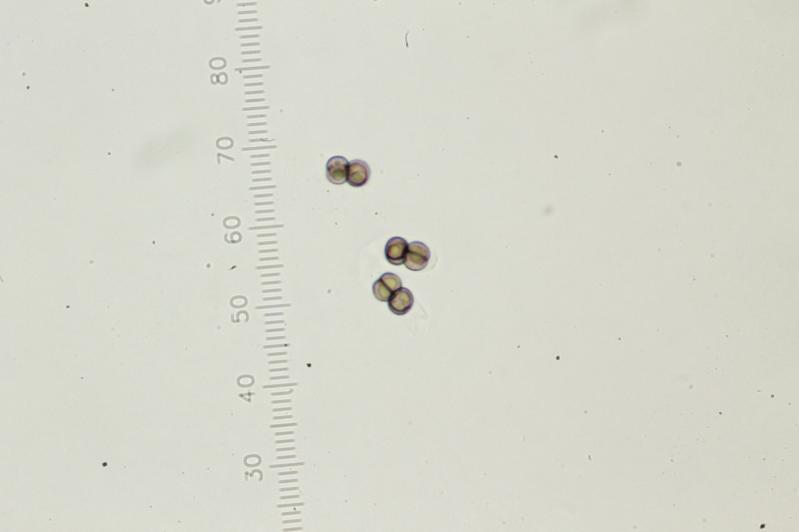
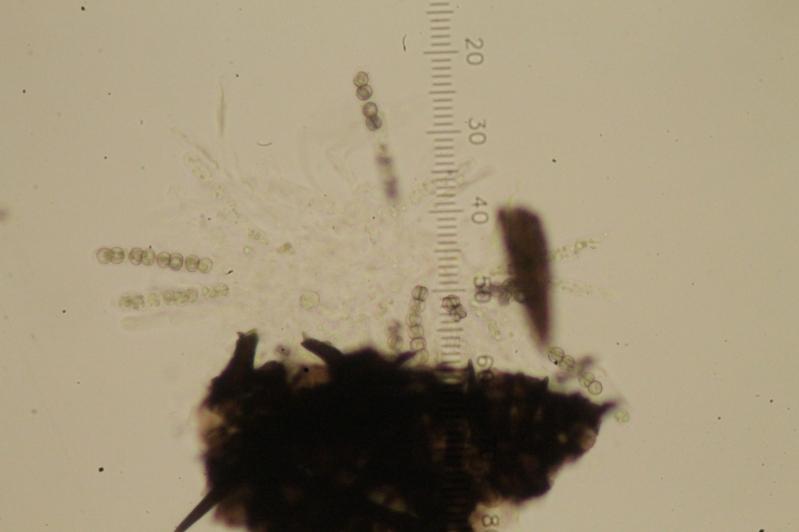
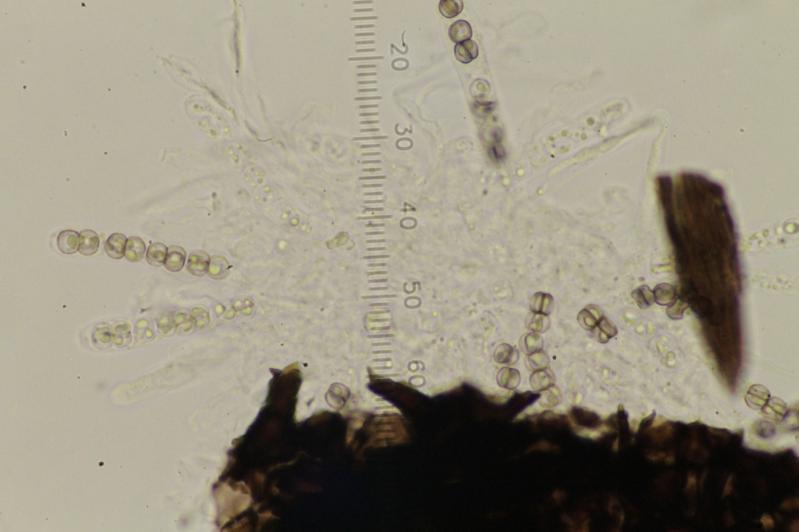
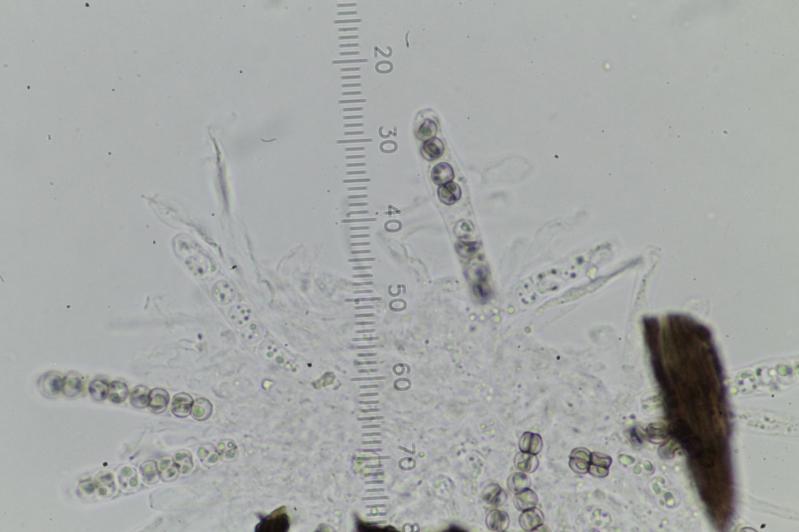
I have tried to take photos through the ocular...
The magnification of objectives is 40x and 60x so one scale is 2.5 um and 1.66 um, respectively.
Václav