
03-06-2026 19:45
 Miguel Ángel Ribes
Good afternoonI'm completely baffled by this suppo
03-06-2026 14:39
Thomas FlammerApothecia yellow, glassy-transparent, 80 - 120 ymS

16-03-2014 13:39
 Enrique Rubio
HI to all I'm looking for B. Hein's article on Wi
02-06-2026 14:33
 Nicolas VAN VOOREN
Hello.I'm searching for a PDF copy of the followin
18-10-2022 00:12
Valencia Lopez Francisco JavierHola amigos/asRecientemente encontré esta colecci
02-06-2026 17:58
Louis DENYBonjour forum, Sur feuille de Populus tremula, en
Hi again
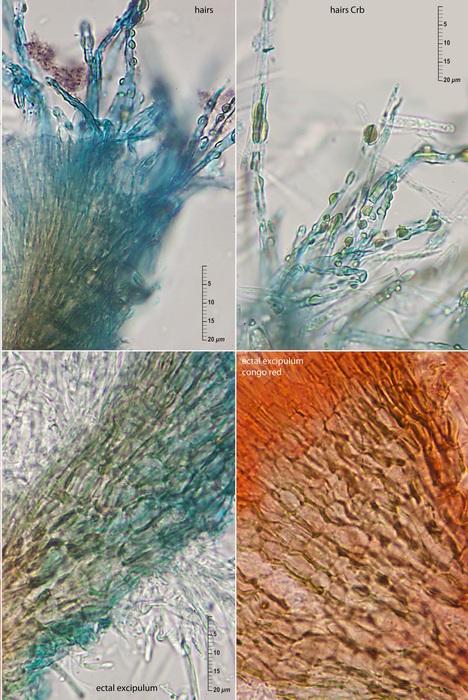
This Amicodisca species grew on wood, under the bark of a 10 cm thick branch of Quercus petraea lying on the ground at 950 m of altitude. The apothecia, 0.2-0.4 mm broad, have a greyish brown hymenium and very pale yellowish hairs with lumps of a resinous sustance. They are macroscopically not well preserved due to the dry weather but the microscopical characters are in good condition.
I feeel this fungus is very close to Amicodisca svrcekii a fungus with wide apical pore faintly MLZ +, spores ellipsoid to suballantoid, aseptate, containing 2 polar lipid guttules, 8-11 x 1.8-2.5 as described by Raitviir and Huhtinen. Two Baral's drawings show ascospores 8.5-14 (-17.7) x 2.7-3.2(-3.5) asci IKI 3bb and 8-10-11.5 x 2.6-2.9 asci IKI 3rb respectively and another one by Stip 10-14.5-3-4 asci IKI bb. In all these cases the ascospores show many small guttules and asci lacking croziers.
But my collection have ascospores 6.1-9.1 x 2.1-2.9 with scanty guttules, asci not arising from croziers and in special way CONSISTENTLY IKI NEGATIVE EVEN AFTER KOH-PRET.
For it I wonder if this character is sufficient as to consider this fungus as a different species
Thanks in advance for your opinion
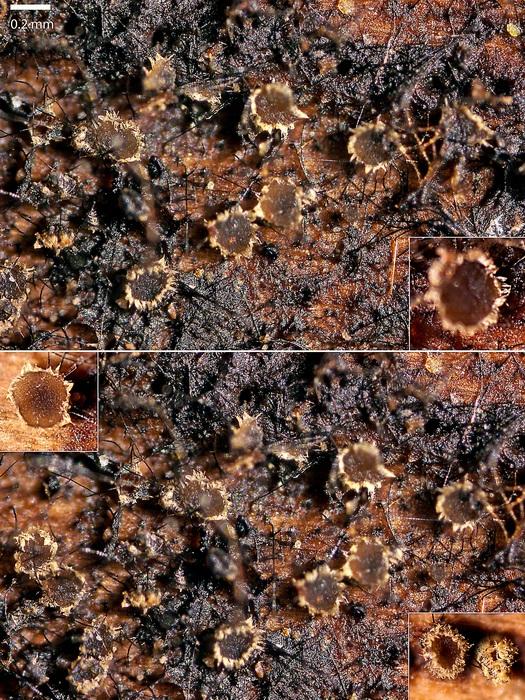
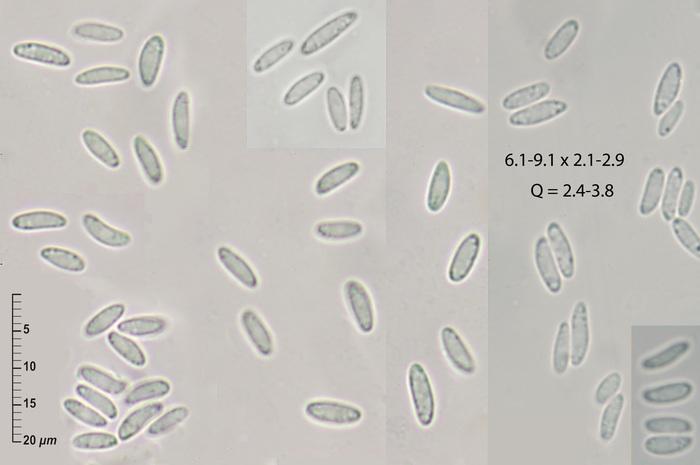
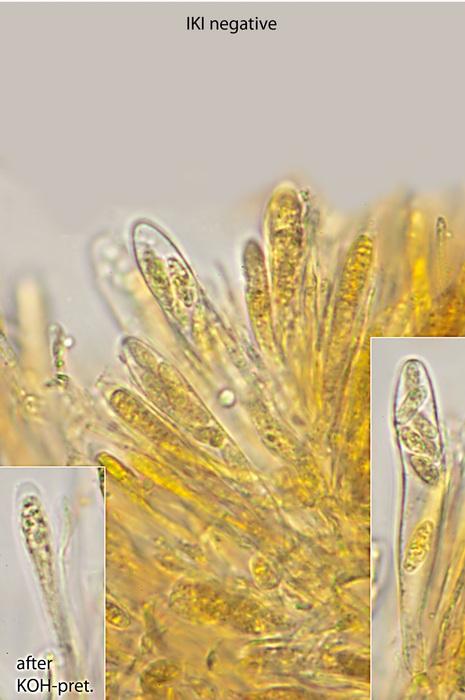
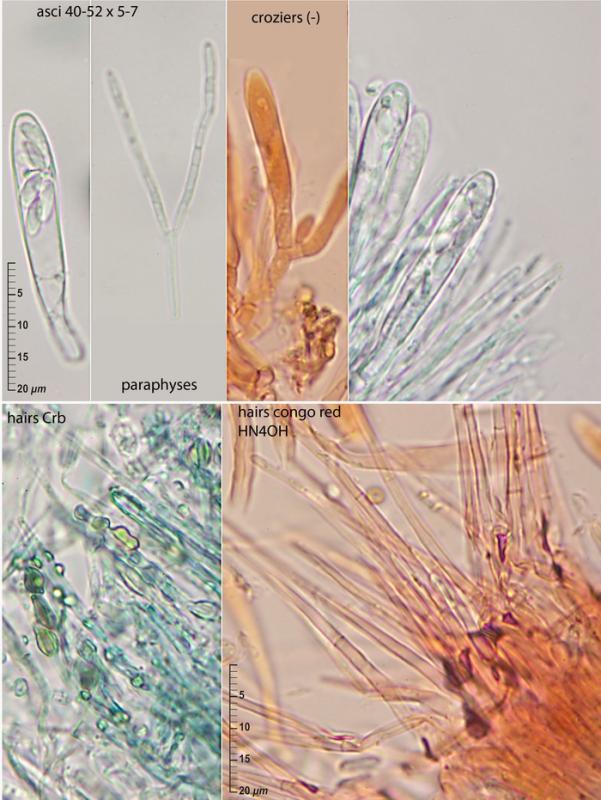
Alors Amicodisca ? Je ne sais pas!
Amicalement
Didier ARGAUD

Hi Didier and Zotto. As my pic shows the ascomata grow among conidiophores of a dematiaceous mould. So Dematioscypha dematiicola is a good choice.
Thanks
Amities
Didier

Stip