
03-05-2026 10:57
 Castillo Joseba
Me mandan el material seco de Galicia (España) re
02-05-2026 12:42
Alain BRISSARDBonjour à tousJeuidi 30 avril dernier on m'a remi
02-05-2026 13:06
Pauline. PennaBonjour Please can someone help me with this id
01-05-2026 22:45
 Thierry Blondelle
Bonjour à tous, Une récolte sur bouse séchée d
28-04-2026 20:07
 Lothar Krieglsteiner
... on twig in the air at standing Ceratonia siliq
14-04-2026 05:32
Ethan CrensonHi all, A few weeks back a friend pointed out som
28-04-2026 20:33
Vitus SchäfftleinHello, I found Trochila ilicina on Ilex aquifoliu
30-04-2026 10:28
Rot BojanHello, by appearance I would say that I am dealing
Hymenoscyphus ?
Carmel Sammut,
07-05-2015 22:17
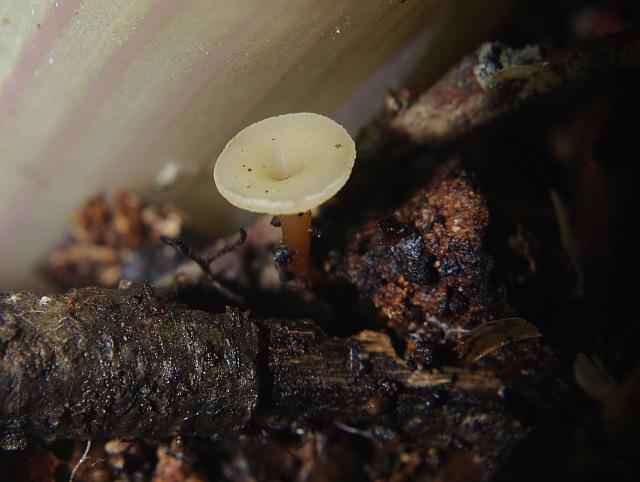
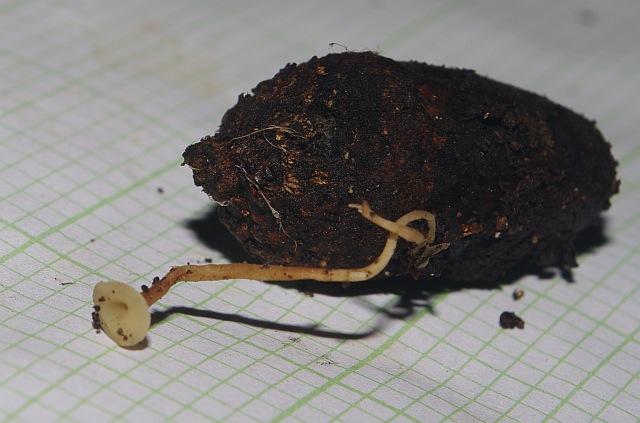
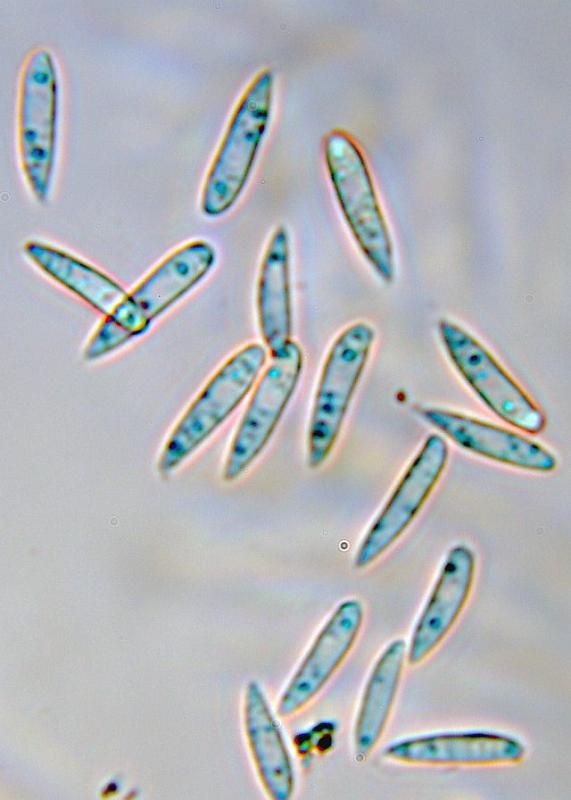
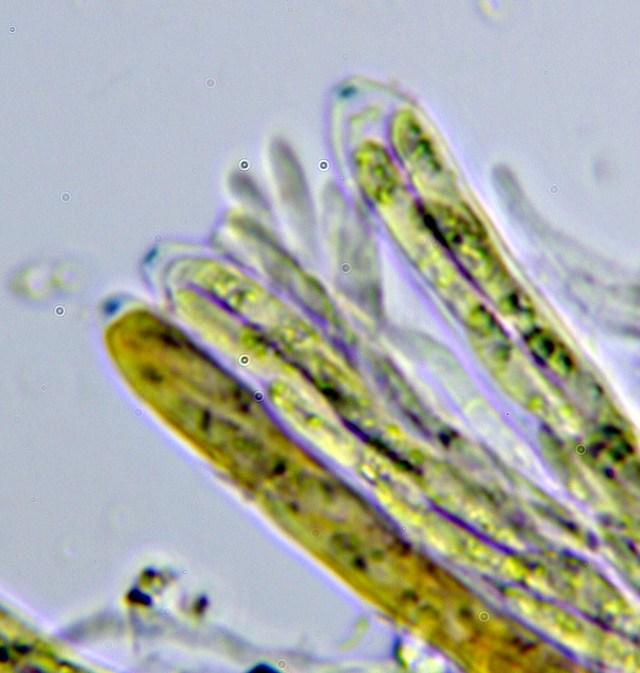
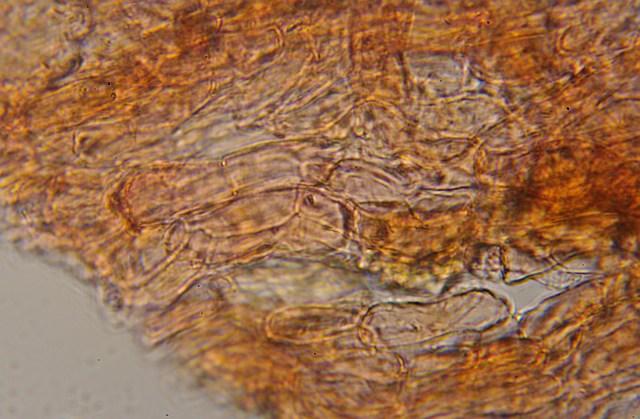
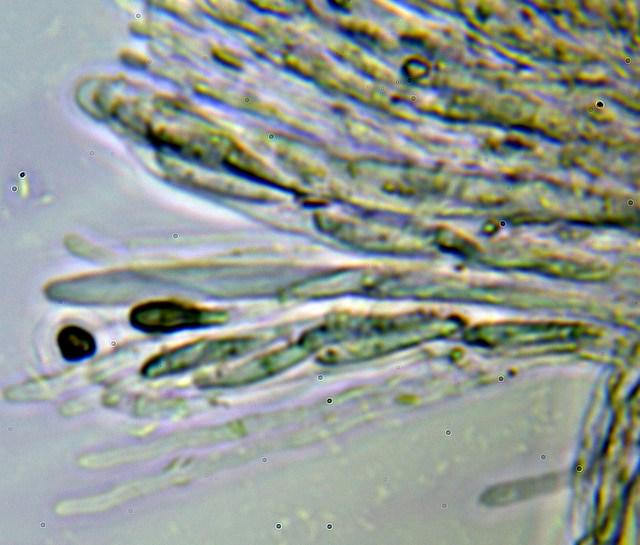
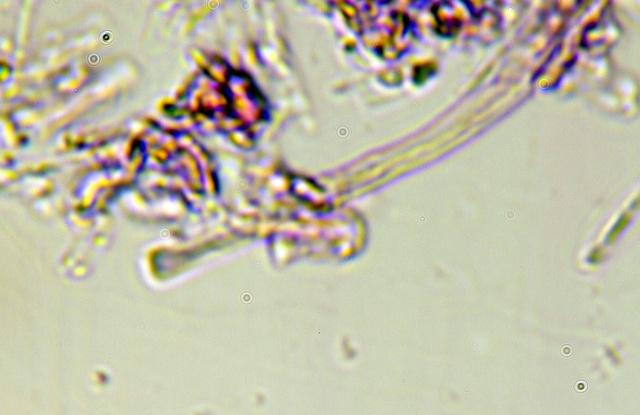
The specimen is solitary with a very long stipe. Asci IKI+ve - I think croziers +ve, Paraphyses cylindrical not inflated. Spores (16.3) 16.7 - 19.4 (22.3) x (2.8) 3.1 - 4.4 (4.7) µm with small oil drops - (some with a central septum?).
I'm not sure what it is any help would be apreciated.
Hans-Otto Baral,
07-05-2015 23:02

Re : Hymenoscyphus ?
Surely it is of the Hym. fructigenus group and maybe even that species. The ascus base I think is without croziers. In my area the species appears only from August onwards, but maybe on Malta this is different.
Carmel Sammut,
08-05-2015 18:50
Re : Hymenoscyphus ?
Thank you for your reply. The other collections of H. fructigenus were made in November and January and always on Q. ilex pods. Temperatures are too high in August and even at this time it is already dry and getting hotter finding less and less specimens every field trip!
Martin Bemmann,
08-05-2015 21:05

Re : Hymenoscyphus ?
Dear Carmel,
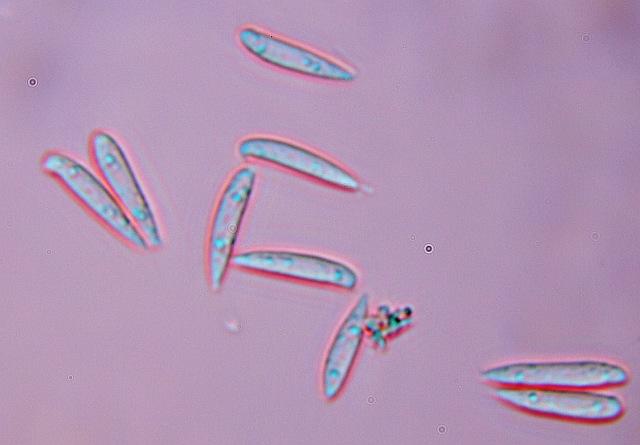
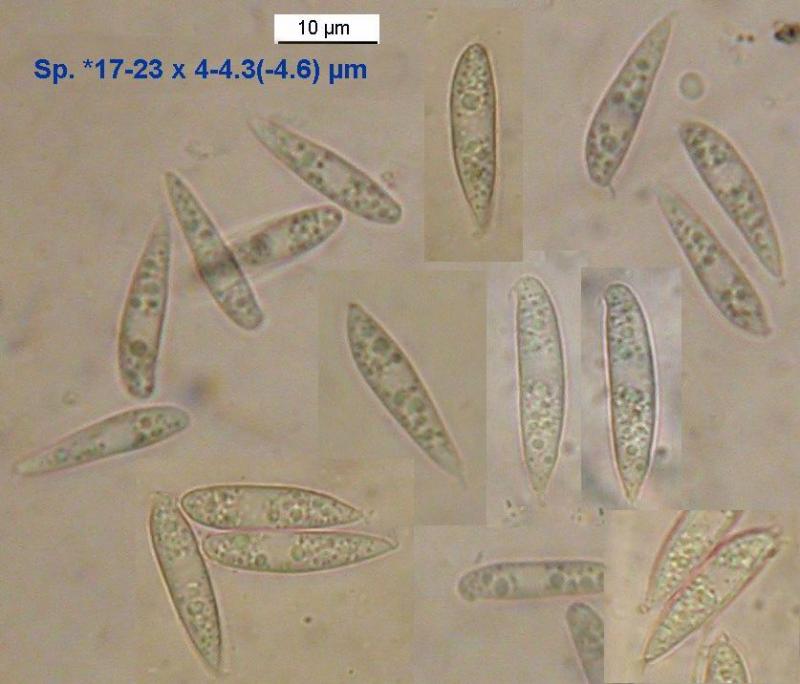
I suspect there are cilia at least at the acute ends of the spores. Could you check this?
There are several Hymenoscyphi of the "fructigenus" type, but on Quercus ilex (new to me) would be nice to know the spore type.
Regards
Martin
I suspect there are cilia at least at the acute ends of the spores. Could you check this?
There are several Hymenoscyphi of the "fructigenus" type, but on Quercus ilex (new to me) would be nice to know the spore type.
Regards
Martin
Carmel Sammut,
08-05-2015 22:14
Re : Hymenoscyphus ?
Unfortunately I cannot be much help as I do not have an oil immersion lens. I had the impression that there were some cilia on some spores at the acute end but it was not clear on the spores of this specimen and on another collection that I have which I considered as the typical H. fructigenus. I am attaching another photo taken from the same specimen.
I have the dried material if you wish I can post it. This collection was a single specimen and there is only a bit of material available. If you want I can send the other collection as well.
I have the dried material if you wish I can post it. This collection was a single specimen and there is only a bit of material available. If you want I can send the other collection as well.
Hans-Otto Baral,
08-05-2015 23:41
Re : Hymenoscyphus ?
There exist actually short setulae in H. fructigenus on oak, at least in some spores. See my photos.
Martin Bemmann,
08-05-2015 23:53
Re : Hymenoscyphus ?
Thank you Carmel and Zotto,
I am now even more convinced that there are setae such as reported in Bernard Declerqc's provisional key also from seed cupules of Quercus robur.
Best regards
Martin
I am now even more convinced that there are setae such as reported in Bernard Declerqc's provisional key also from seed cupules of Quercus robur.
Best regards
Martin