Accès membres

Mot de passe perdu? S'inscrire

03-02-2013 19:50

Nina Filippova

Good time), I've compared this specimen with the

15-02-2026 04:32

Tomaz Vucko Tomaz Vucko

One more specimen that is giving me some descent a

17-02-2026 17:26

Nicolas Suberbielle Nicolas Suberbielle

Bonjour à tous, Je recherche cette publication :

08-12-2025 17:37

Lothar Krieglsteiner Lothar Krieglsteiner

20.6.25, on branch of Abies infected and thickened

17-02-2026 09:41

Maren Kamke Maren Kamke

Good morning, I found a Diaporthe species on Samb

17-02-2026 13:41

Isabelle Charissou

Bonjour, est-ce que quelqu'un pourrait me fournir

16-02-2026 18:34

Thierry Blondelle Thierry Blondelle

Bonjour,La micro de cet anamorphe de Hercospora su

16-02-2026 21:25

Andreas Millinger Andreas Millinger

Good evening,failed to find an idea for this fungu

16-02-2026 17:14

Joanne Taylor

Last week we published the following paper where w

16-02-2026 16:53

Isabelle Charissou

Bonjour, quelqu'un pourrait-il me transmettre un

« < 1 2 3 4 5 > »
Peziza varia?
Andy Overall, 24-04-2015 13:55
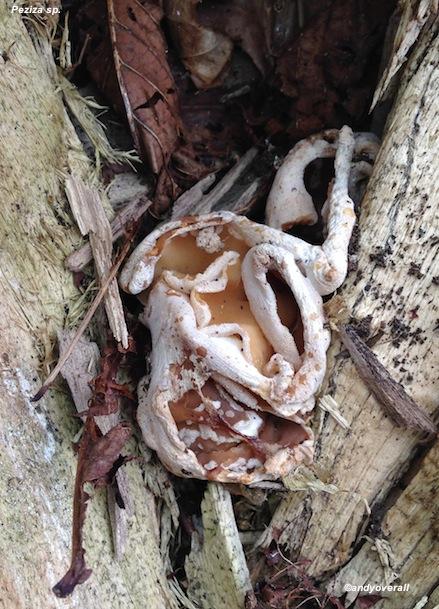
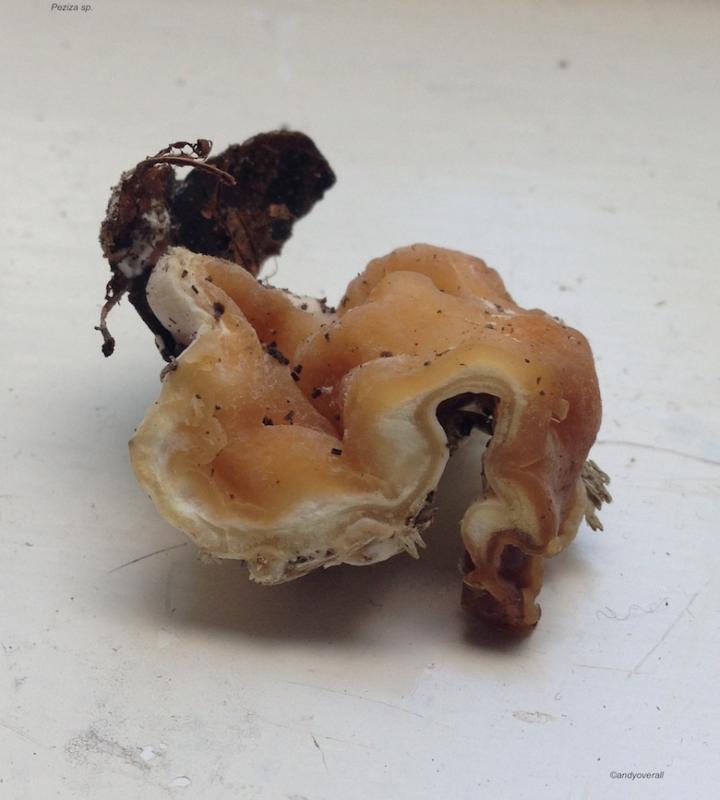
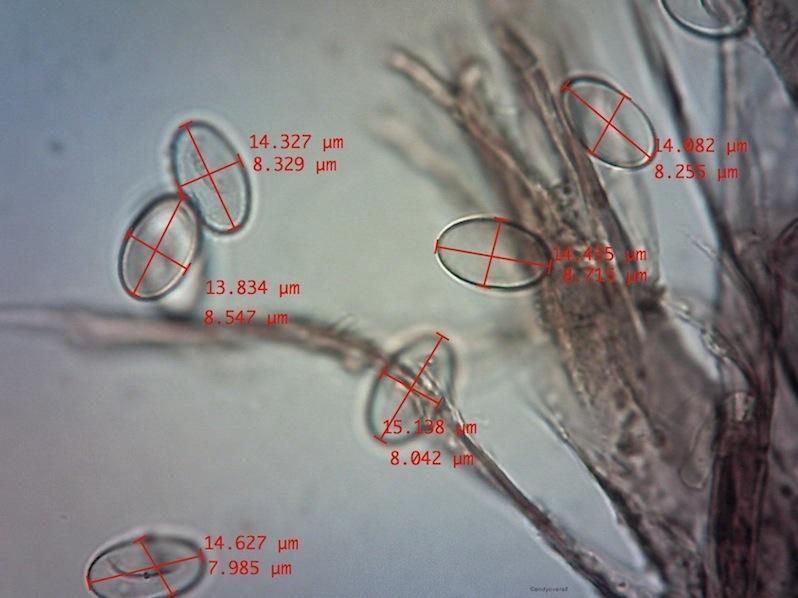
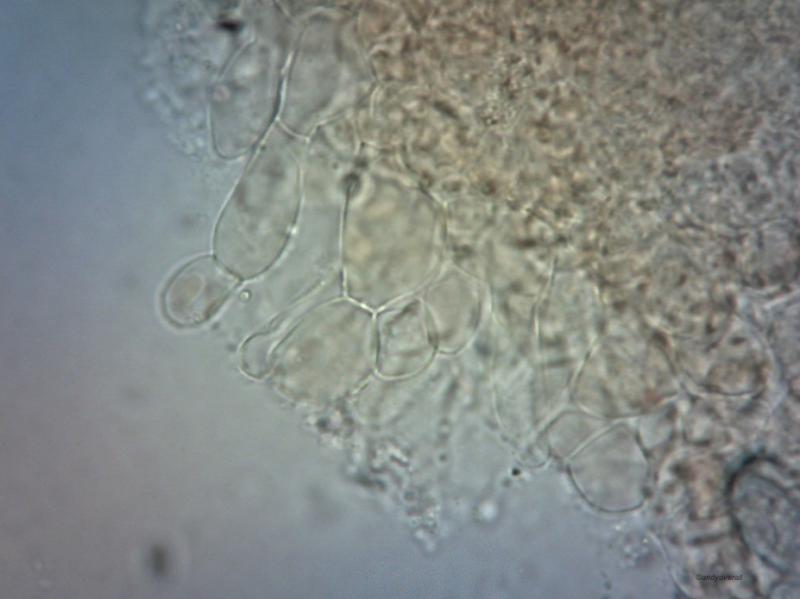
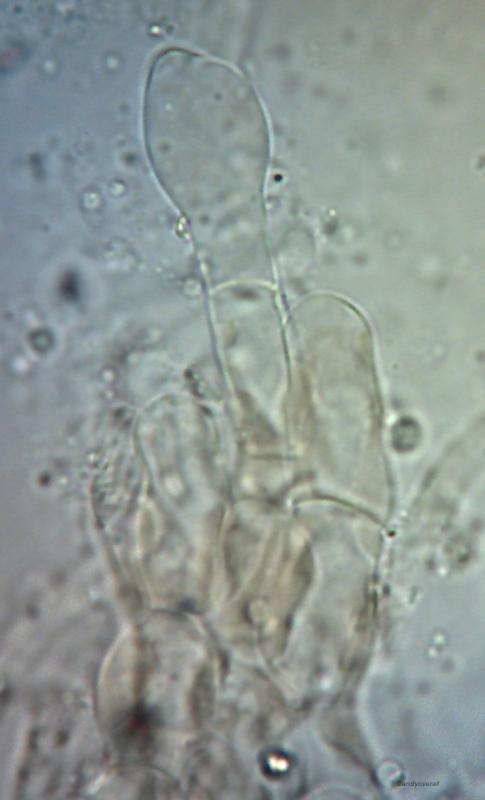
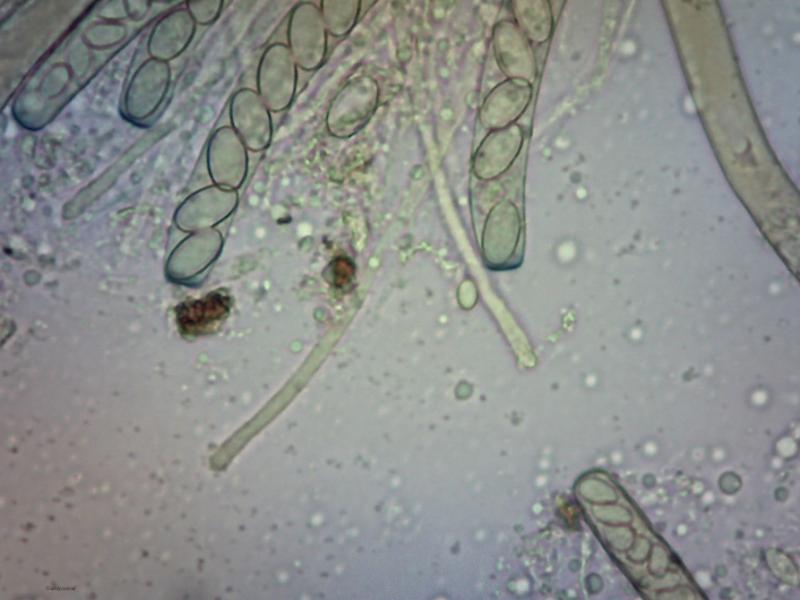
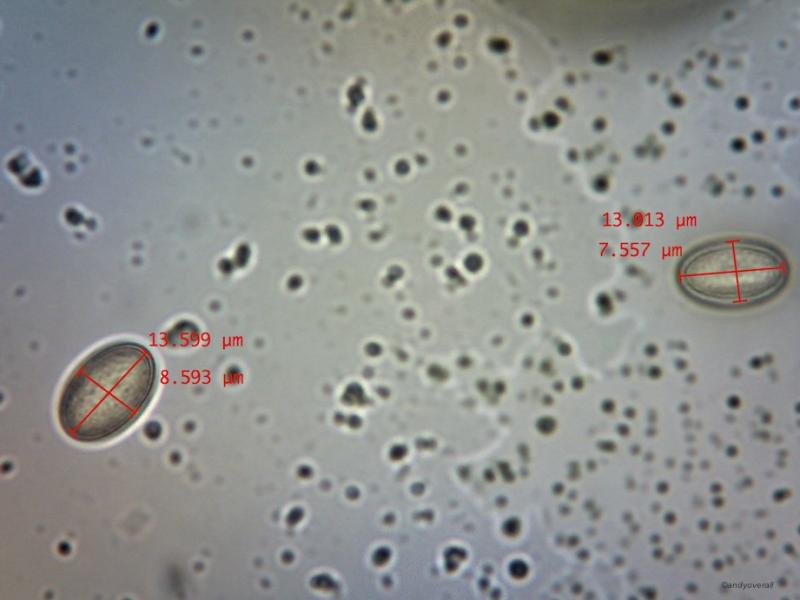
I found this Peziza just inside a fallen, dead, hollowed out Poplar tree.  It was fruiting on the pulped wood inside the hollow. The spores vary in length from 12-15µm (-17µm) x 8 -8.5 (8.7). They are very faintly punctate and aguttulate. My first choice would have been P. micropus due to the simple paraphyses, however, having taken a section of the flesh, not only did I observe layers in the flesh but under the microscope I noticed chain-like cells similar to those associated with P. varia, but the chained cells did not have long, projecting end cells, hence my quandry. Please find a series of pictures, of the ascomata in situ, cut in section and microscopic shots of spores, paraphyses and the chained cells. Any help toward clarification most appreciated.
Thanks in advance Andy
  • message #35399
  • message #35399
  • message #35399
  • message #35399
  • message #35399
  • message #35399
  • message #35399