
03-06-2026 19:45
 Miguel Ángel Ribes
Good afternoonI'm completely baffled by this suppo
03-06-2026 14:39
Thomas FlammerApothecia yellow, glassy-transparent, 80 - 120 ymS

16-03-2014 13:39
 Enrique Rubio
HI to all I'm looking for B. Hein's article on Wi
02-06-2026 14:33
 Nicolas VAN VOOREN
Hello.I'm searching for a PDF copy of the followin
18-10-2022 00:12
Valencia Lopez Francisco JavierHola amigos/asRecientemente encontré esta colecci
02-06-2026 17:58
Louis DENYBonjour forum, Sur feuille de Populus tremula, en
Orbilia on Diatrype
Steve Clements,
13-04-2015 10:08
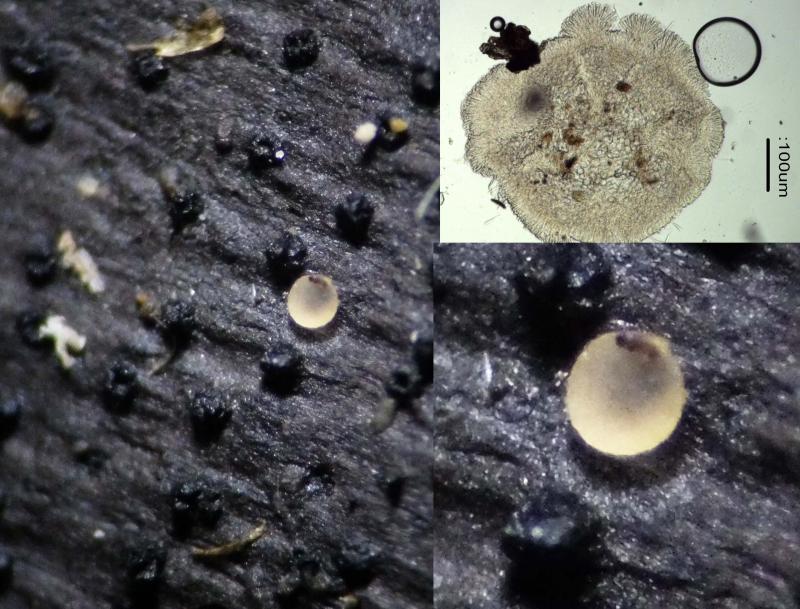
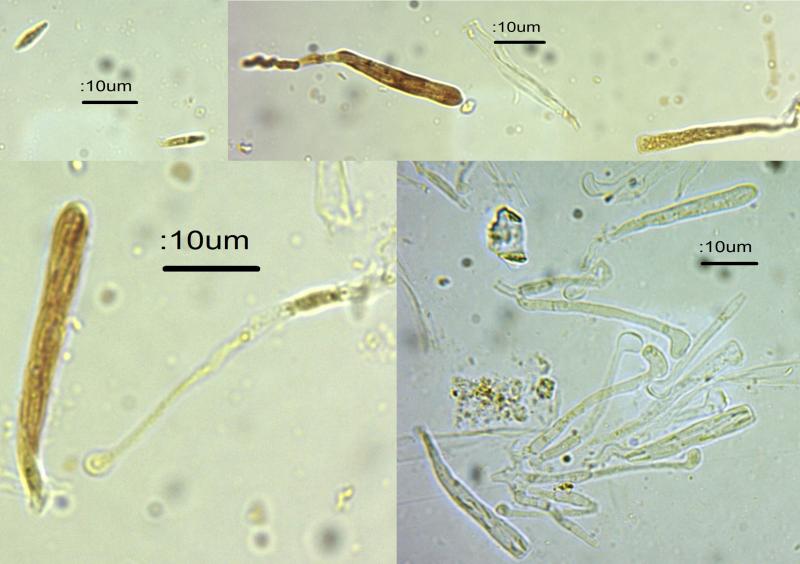
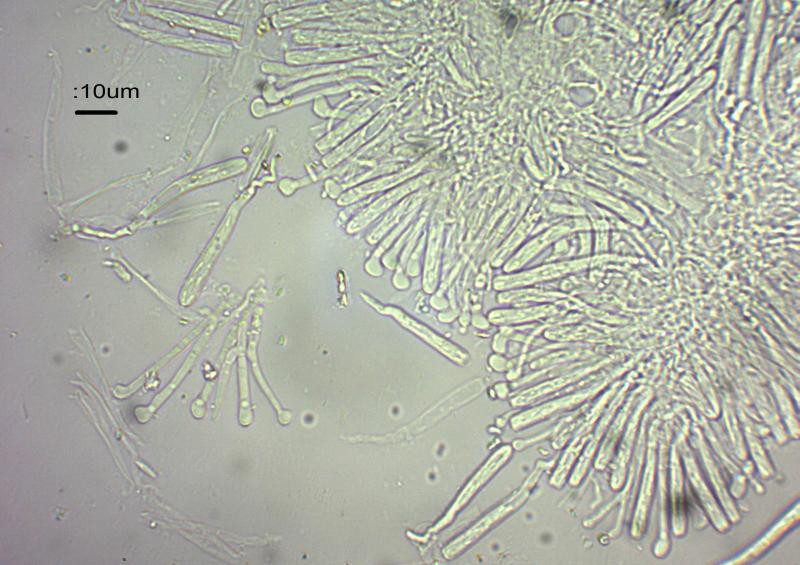
I found this Orbilia very sparsley distributed on what looks like Diatrype stigma (effete). The spores were difficult to find – I think I found a few, approx 8 x 2. The asci were typically 45 x4, some with square apices. The base looked oddly twisted. The asci tips did not react to Lugol. Although some paraphyses were typical Orbilia-type spoon-shaped , others looked more like golf clubs. I've looked for Orbilia on Diatrype on the internet but don't see one which looks the same colour as this – it's pale yellow – there were half a dozen scattered ascocarps all the same pallid shade. Orbilia alnea has been recorded on Diatrype stigma but is a much stronger yellow.
The FRDBI and Peter Thompson list only Orbilia alnea on Diatrype stigma.
I failed to get a match using keys by Ellis and Ellis and Peter Thompson.
Could anyone offer some advice on Orbilia? – I believe they are difficult to get spores from in general.
With regards,
Steve
Hans-Otto Baral,
13-04-2015 11:01

Re : Orbilia on Diatrype
Hi Steve
I think your Orbilia grows only facultatively on a pyrenomycete. The living spores have an elongate spore body (visible on your second photo, lower right, in two asci), with the lower spores pointing downwards.
This is Orbilia luteorubella or a close species (O. rosea ined.). From the apo colour I think more to O. rosea (its anamorph is Anguillospora rosea).
These species always occur at water bodies (ponds, rivulets ...), being periodically submerged.
Zotto
I think your Orbilia grows only facultatively on a pyrenomycete. The living spores have an elongate spore body (visible on your second photo, lower right, in two asci), with the lower spores pointing downwards.
This is Orbilia luteorubella or a close species (O. rosea ined.). From the apo colour I think more to O. rosea (its anamorph is Anguillospora rosea).
These species always occur at water bodies (ponds, rivulets ...), being periodically submerged.
Zotto
Steve Clements,
13-04-2015 17:50
Re : Orbilia on Diatrype
Thank you Zotto,
it was indeed by a stream, and likely to be submerged.
Steve
it was indeed by a stream, and likely to be submerged.
Steve