03-06-2026 14:39
Thomas FlammerApothecia yellow, glassy-transparent, 80 - 120 ymS
16-03-2014 13:39
 Enrique Rubio
HI to all I'm looking for B. Hein's article on Wi
02-06-2026 14:33
 Nicolas VAN VOOREN
Hello.I'm searching for a PDF copy of the followin
18-10-2022 00:12
Valencia Lopez Francisco JavierHola amigos/asRecientemente encontré esta colecci
02-06-2026 17:58
Louis DENYBonjour forum, Sur feuille de Populus tremula, en

28-07-2011 18:31
 Alex Akulov
Dear FriendsToday I made the pdf file of Velenovsk
 Bonsoir tous
I am not too optimistic here as the pages of ASCOFrance have had many requests regarding Didymella and which have not had responses ;-).
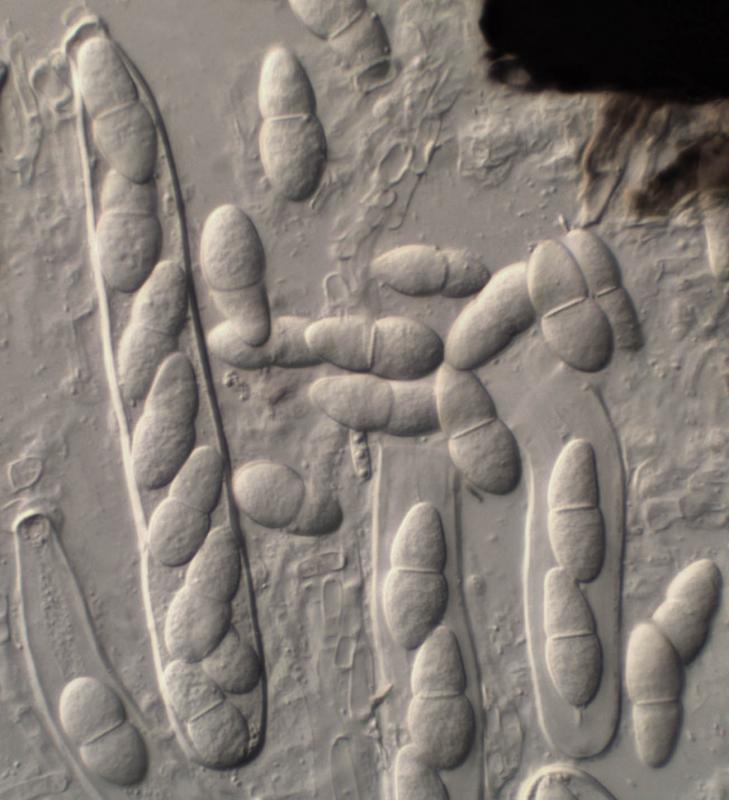
I am fairly certain of the genus, based on appearance and growth form of the pseudothecia and the bitunicate asci with pseudoparaphyses and hyaline one-septate spores. If it is a Didymella it is clearly a member of the section with apiosporous spores. There were numerous pseudothecia on the previous year's dead stems of Dipsacus fullonum, including those still standing. Ascospores were quite large for this genus: 22-27.6 x 9.7-11µm.
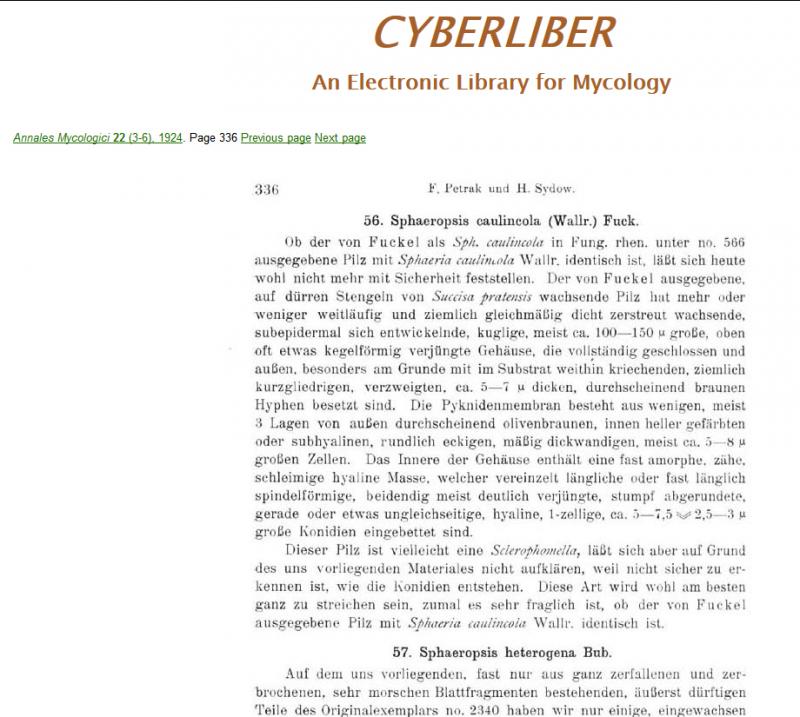
There is a Didymella caulicola which I see has been recorded twice on Dipsacus from Esher Common by Brian Spooner, these being the only British records. The only description I have been able to find is this 'protologue' which is clearly totally inadequate:
http://www.librifungorum.org/Image.asp?Nav=yes&FirstPage=378&LastPage=1161&NextPage=950
If by any chance anyone has access to: Sphaeria caulicola Moug., in Roumeguère, Fungi Selecti Galliaei Exs.: no. 573 (1880) I would be grateful. Also grateful for any comments / suggestions. It strikes me that Didymella species are to quite an extent restricted to a host family or genus. It would be good to put a name to this as it is a very nice collection in excellent condition.
Cordialement
Chris
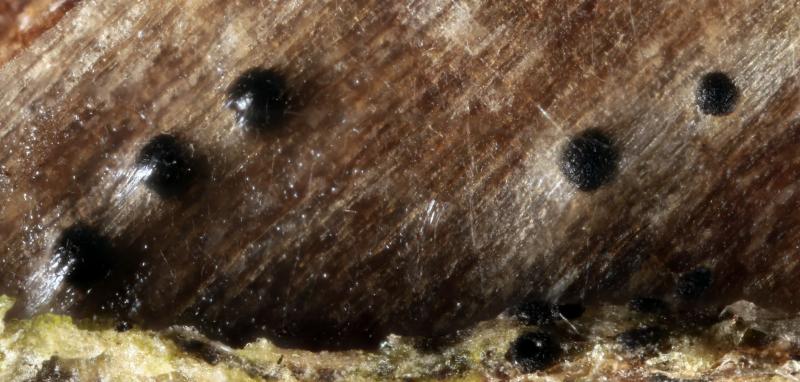
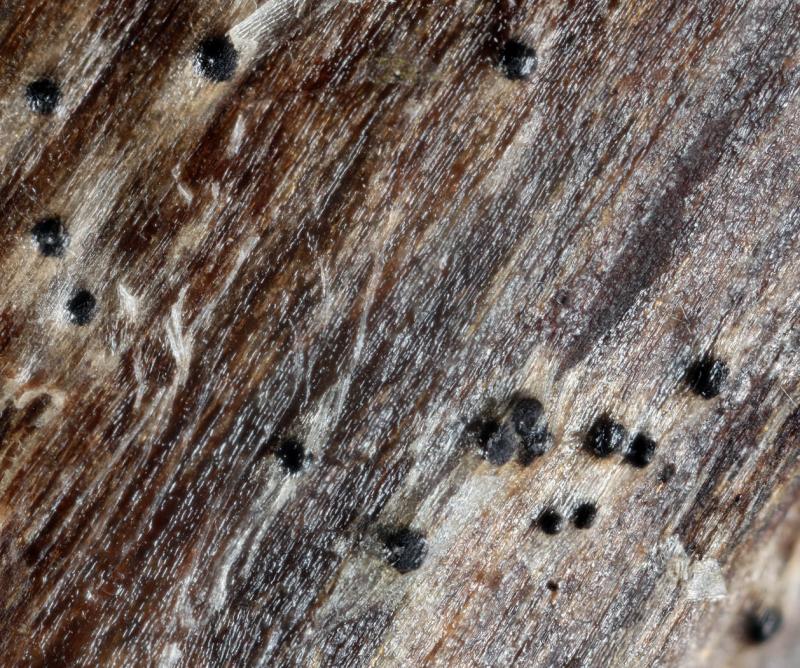
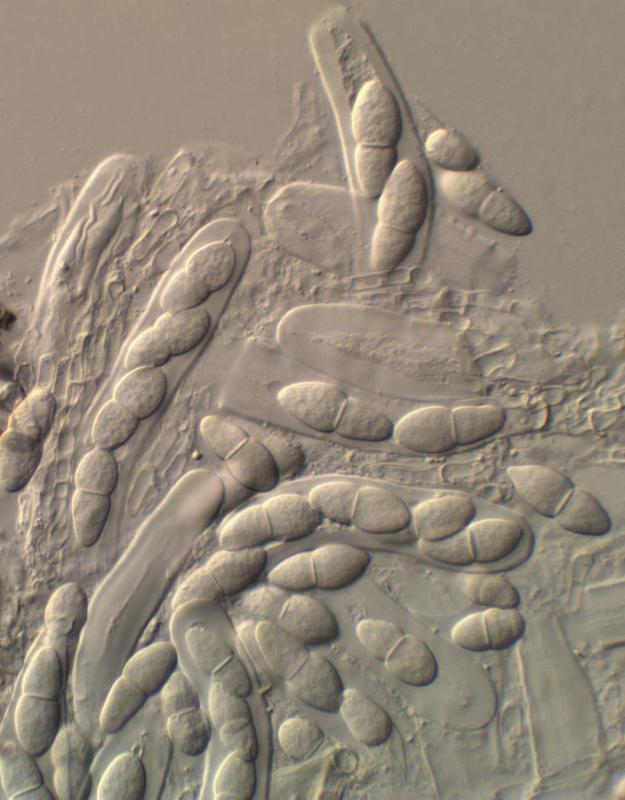
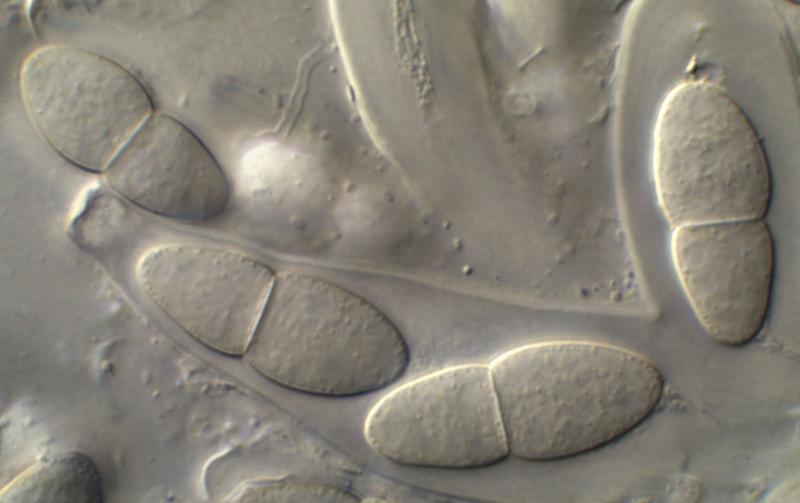
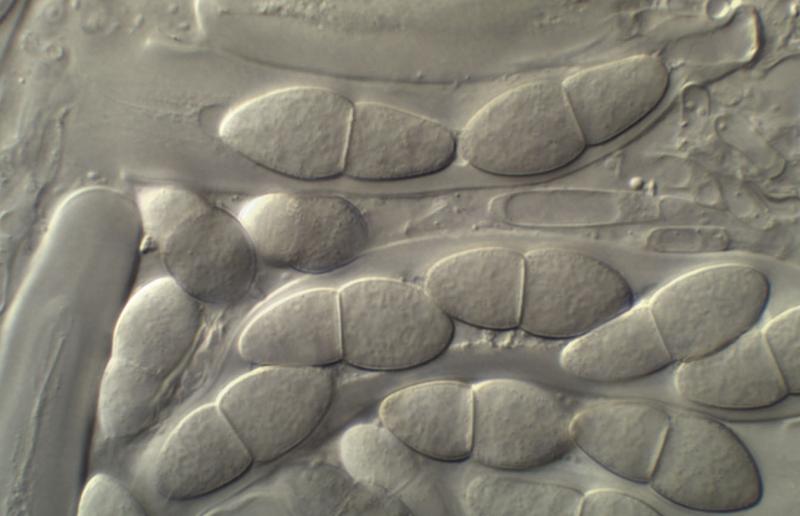
Hi Chris
I collected a bitunicate ascomycete (probably a Didymella) from dead standing stems of Dipsacus fullonum last year which may well be the same species. Spores were hyaline, 1-septate, apiosporous, 19-27 x 9-12 µm, i.e. closely resembling the spores in your collection. I have retained the specimen.
No help in providing a name I'm afraid!
Marcus
Hello Chris,
I have a very similar collection in the herbarium here (1698), collected from dead stems of Senecio (Ragwort). I came to the conclusion that it was probably Didymella macrospora Corbaz. Material was sent to [K] and confirmed, [K (M)158460]
Regards,
Peter
I have managed to find the email from Kew regarding this species. The information given above is not completely accurate.
The collection was sent to [K] for opinion that it was an unknown (to me) Didymella. The reply was that it was to be accessed into the herbarium as cf D macrospora pending further investigation. No further information has since been given
PeterW
Didymella is yet another of those genera that needs a lot of work on, so no guarantees, but you'd be welcome to send part of the specimen to Kew and I'll do my best with it. But if you're happy with Peter's probable ID, then no problem.
yes I'm very happy to send material to you at Kew (it's a good and plentiful collection).
Following Peter Wilberforce's kind contribution (above) and Martin Bemmann's similarly kind sending me Corbaz's thesis (which includes the protologue of D. macrospora) it is clear that, based on spore measurements of this unusually large-spored Didymella, my collection (and probably that of Marcus Yeo) should be referred (even if on a 'cf.' basis) to Didymella macrospora - though the fact that the type collection was on a species of Lathyrus makes one wonder.
In any case should some brave mycologist take on this genus in the future it is better that material like this will be available at Kew for them to study.
Thanks again
Chris
I sent you a message some while ago about setting up a "Fungi of Yorkshire" section of the FGB&I website, if you'd like to explore this option then do say. That's not to mean that you should stop posting your nice image plates on Ascofrance, they're a big asset to any website and I'd encourage you to keep on going.
Peter, I'll change the identification to cf. in the Kew database. I think the change will eventually migrate to FRDBI with an update from Herbtrak but with only one person able to make the change it probably won't happen soon.
Good wishes to all
Paul

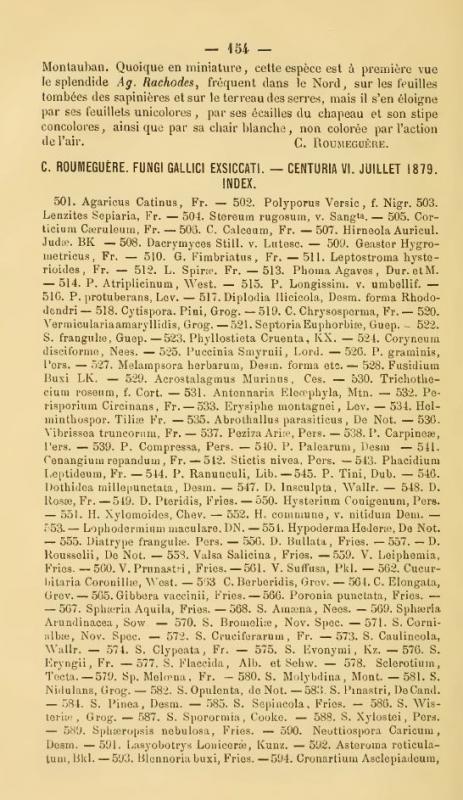
in Roumerguere's index to Centuria VI (1879) of his Fungi Gallici no. 573 is Sphaeria caulincola Wallr. (see attachment from Revue mycologique 1, 1979).
Regards
Martin
"We have 3 collections here [at Kew] tentatively referred to D. caulicola, all on Dipsacus. Mine from Esher has spores 18 – 23 x 8 – 9.5 um, slightly constricted and slightly tapered at the ends as usual. An old collection has spore sketch, size 20 x 9 um, and one from Alick [Henrici] says spores to 28 um long."
So I think any name given is likely to be tentative - is anyone sequencing this genus? It does contain a number of economically important species.
Amitiés
Chris