

05-05-2026 22:40
Gernot FriebesHi,I believe this is a Plagiostoma growing on a Sa
06-05-2026 11:25
 Castillo Joseba
Me mandan el material seco de Galicia (España) re
06-05-2026 17:23
Thomas Læssøehttps://svampe.databasen.org/observations/10594257
28-04-2026 20:07
 Lothar Krieglsteiner
... on twig in the air at standing Ceratonia siliq
04-05-2026 18:13
 Stephen Martin Mifsud
ID request for what seems to be a true aquatic fun
04-05-2026 16:39
Stephen Martin Mifsud
ID request: This specimen was collected in Malta o
28-07-2011 18:31
 Alex Akulov
Dear FriendsToday I made the pdf file of Velenovsk
04-05-2026 09:50
Castillo Joseba
Me mandan el material seco de Galicia,(España) re
 Good morning
I know August is a holiday month, but now I have time to send this species.
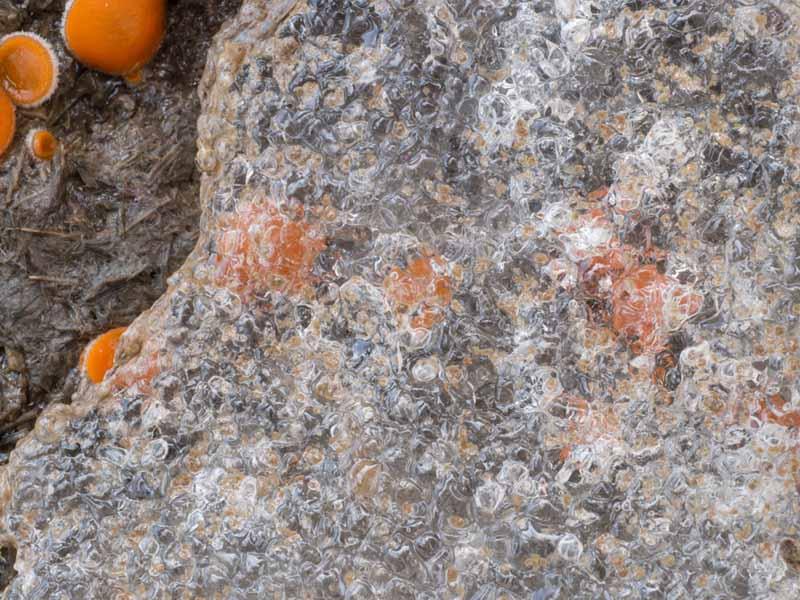
This Cheilymenia was in a snowfield (see first picture) and I think there is not doubt about his identification, but I prefer your opinion.
Spores eliptical and slightly ornamented, size (18.6) 19.3 - 21.9 (22.5) x (10.3) 10.6 - 11.7 (12.9) µm; Q = (1.6) 1.7 - 2.0 (2.2) ; N = 91; Me = 20.6 x 11.2 µm ; Qe = 1.9.
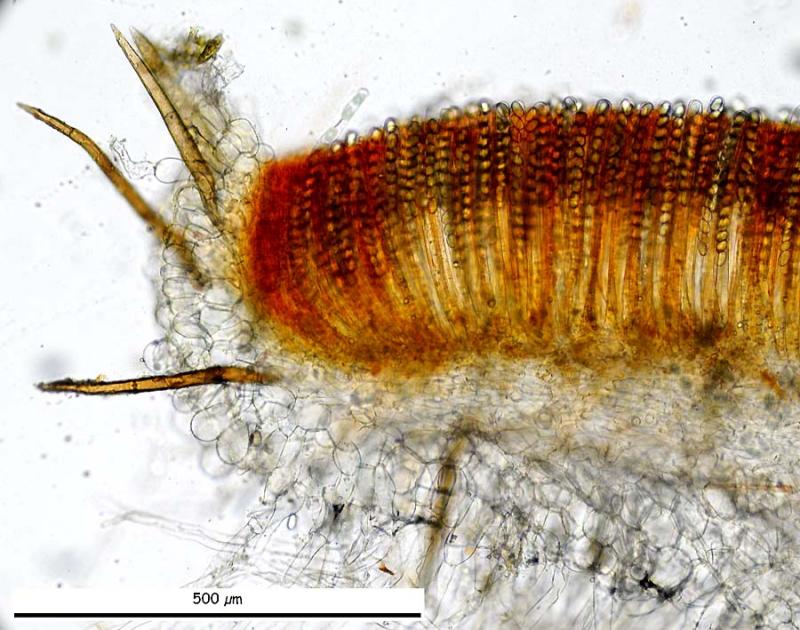
Hairs size (222.7) 235.0 - 401.2 (435.2) x (16.4) 19.1 - 27.5 (37.2) µm
N = 27; Me = 319.6 x 23.9 µm
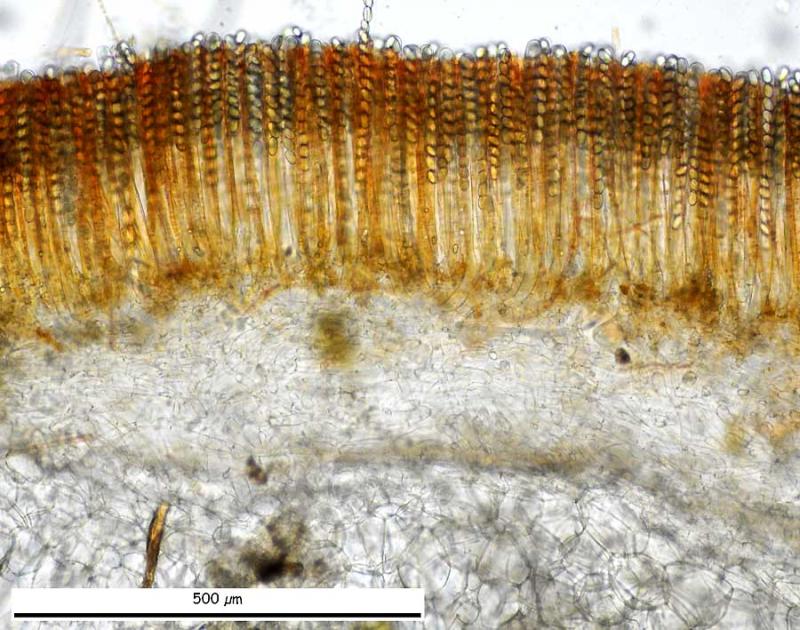
Moniliform paraphysis and croziers.
Hifal system at base very developed.
Thank you for your opinion
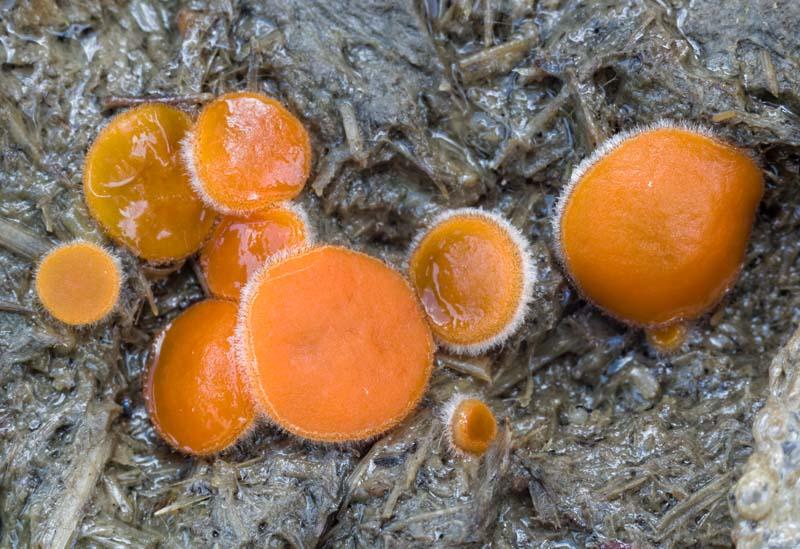
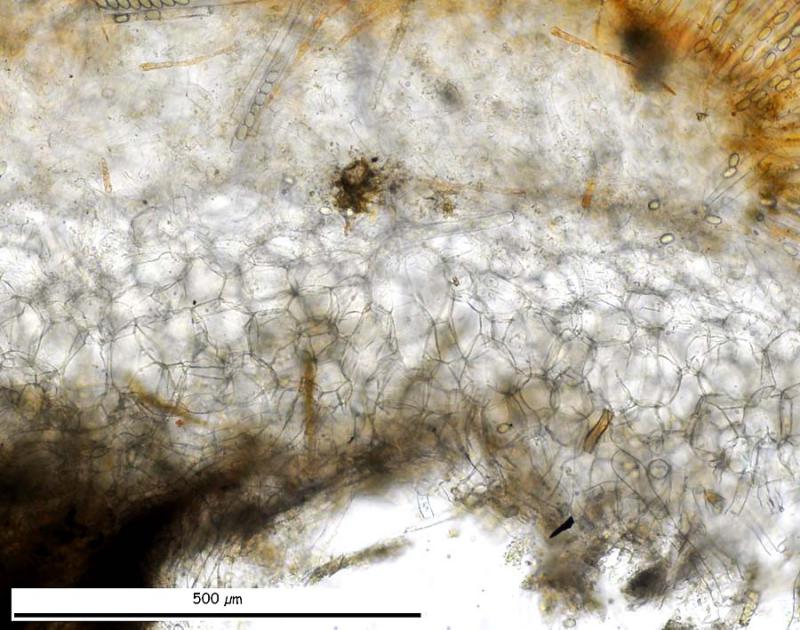
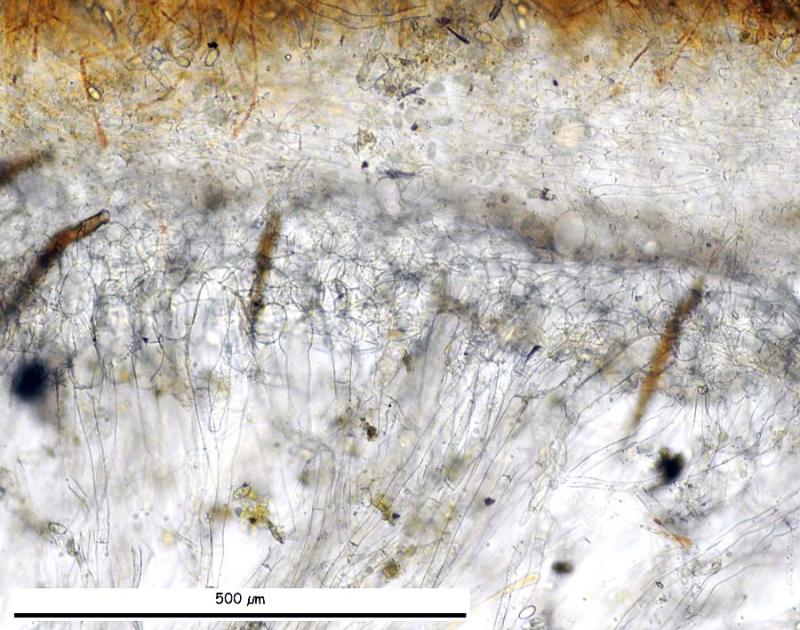
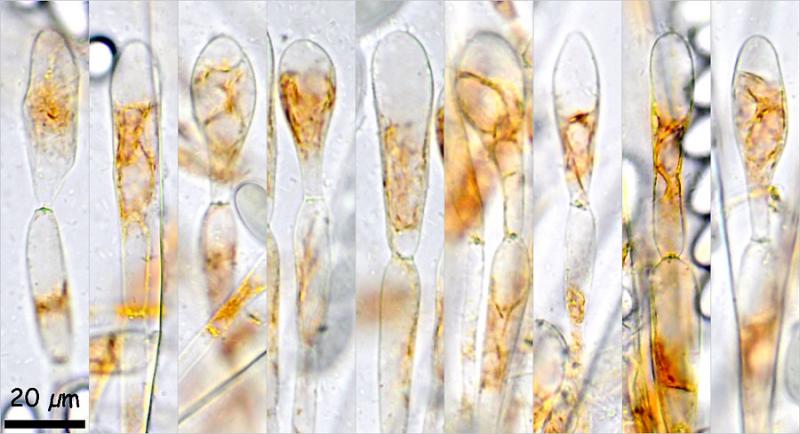
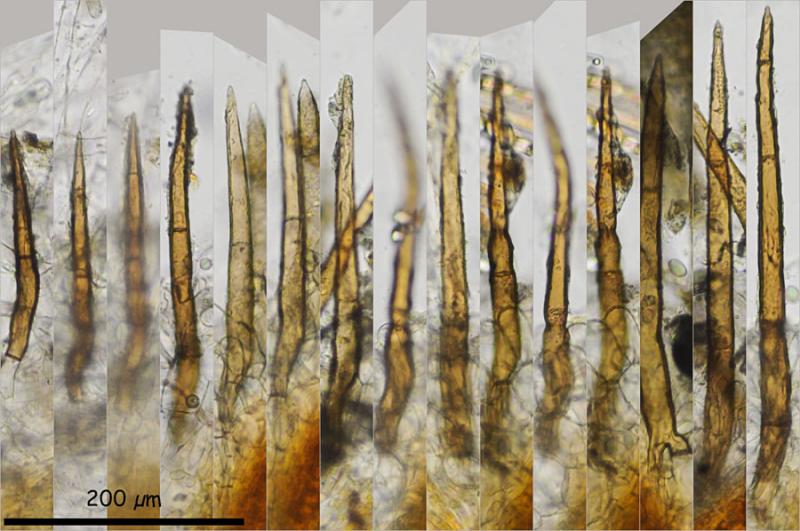
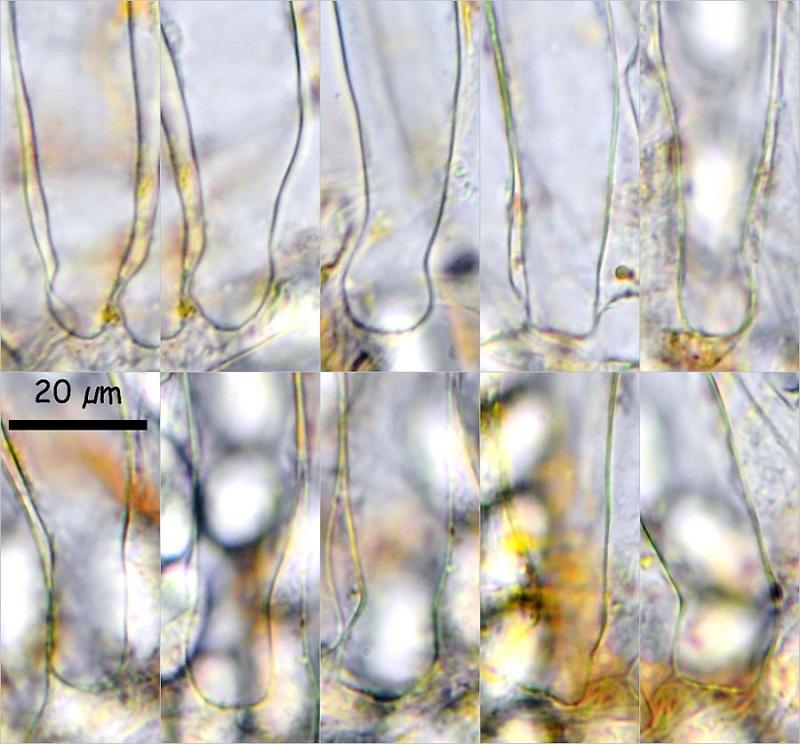
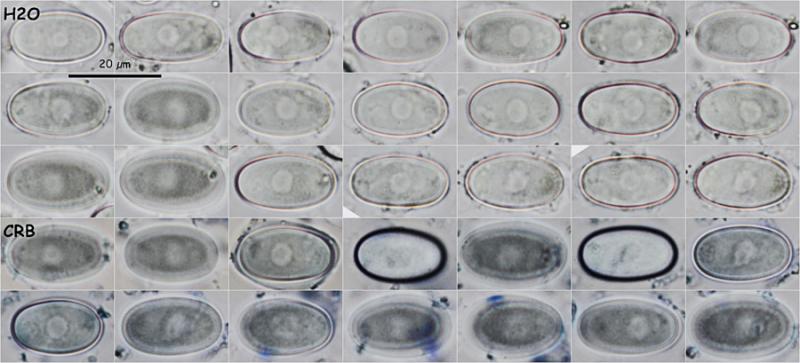
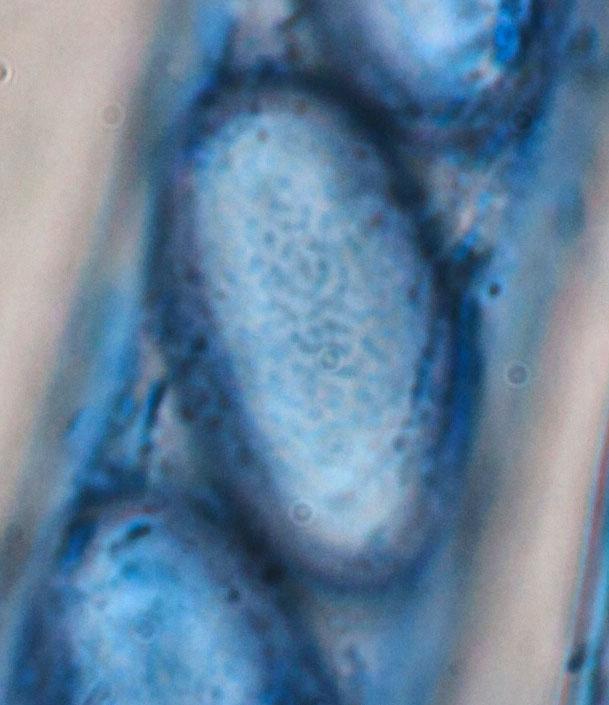

You do not specify the substrate, but it looks good on the picture that there is dung. This is a difficult species to determine, but I think C.denissi corresponds to your description. Have you also checked the length of asci?
Michel.
Of course, substrate is cow dung, and this are measures of living asci at 600x:
(267.5) 280.0 - 310.6 (326.3) x (17.1) 17.6 - 20.4 (21.2) µm; N = 24; Me = 295.6 x 19.1 µm
Why is so difficult to determine this species? According to Moravec, the nearest species is C. liskae, who have shorter hairs (90-300 x 10-30), bi, tri o multifurcate; asci shorter and wider (150-180x18-27) and longer spores (18-22,5 x 10⁻¹³).
The doubt is that Moravec spores measure for C. denisii are 14-21 x 8-13,5, and asci 170-240 x 13,5-18, both shorter than mine, perhaps died material?
Thank you Michel

surely the asci show such enormous shrinkage as is seen between your and Moravec's ascus sizes. The spore data are more equal when considering perhaps immature spores included in Moravec's data. Moravec probably mostly measured dead elements as far as I know his papers.
I have only a few pages of Moravec's monograph. On Fig. 23 I wonder why he figured a dead (b) and a living ascus (c) and addressed them to different varieties. Was he unaware of ascus shrinkage?
In your sample I am impressed especially of the carotenoid crystals in the paraphyses. I know this feature only in Scutellinia, and in one species of Cheilymenia (crucipila), which was later transferred to Scutellinia, I think for molecular reasons.
Maybe Cheilymenia dennisii is also a masked Scutellinia despite of the low lipid content in the spores?
Zotto
I think my measures are on living state (attached picture).
Another discrepance with Moravec is about croziers, he said no croziers, and I think mine has it.
Very interesting hypothesis about Cheilymenia / Scutellinia ¿?, of course I have no answer.
Thank you
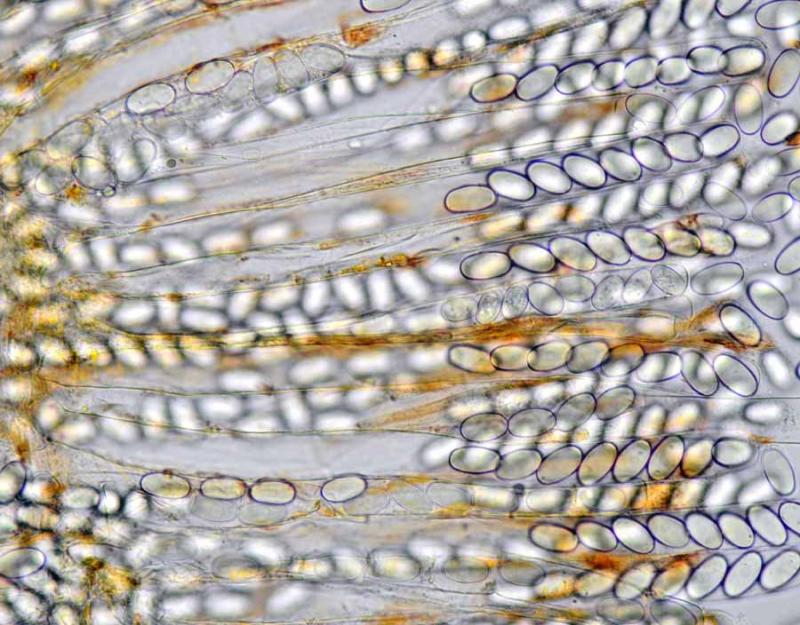
But I was wondering about the ascus base, it looks to me like lacking croziers.
Thanks.